 Send
Send Share
Share
 Details

 Download
 Similars
 Diaporama
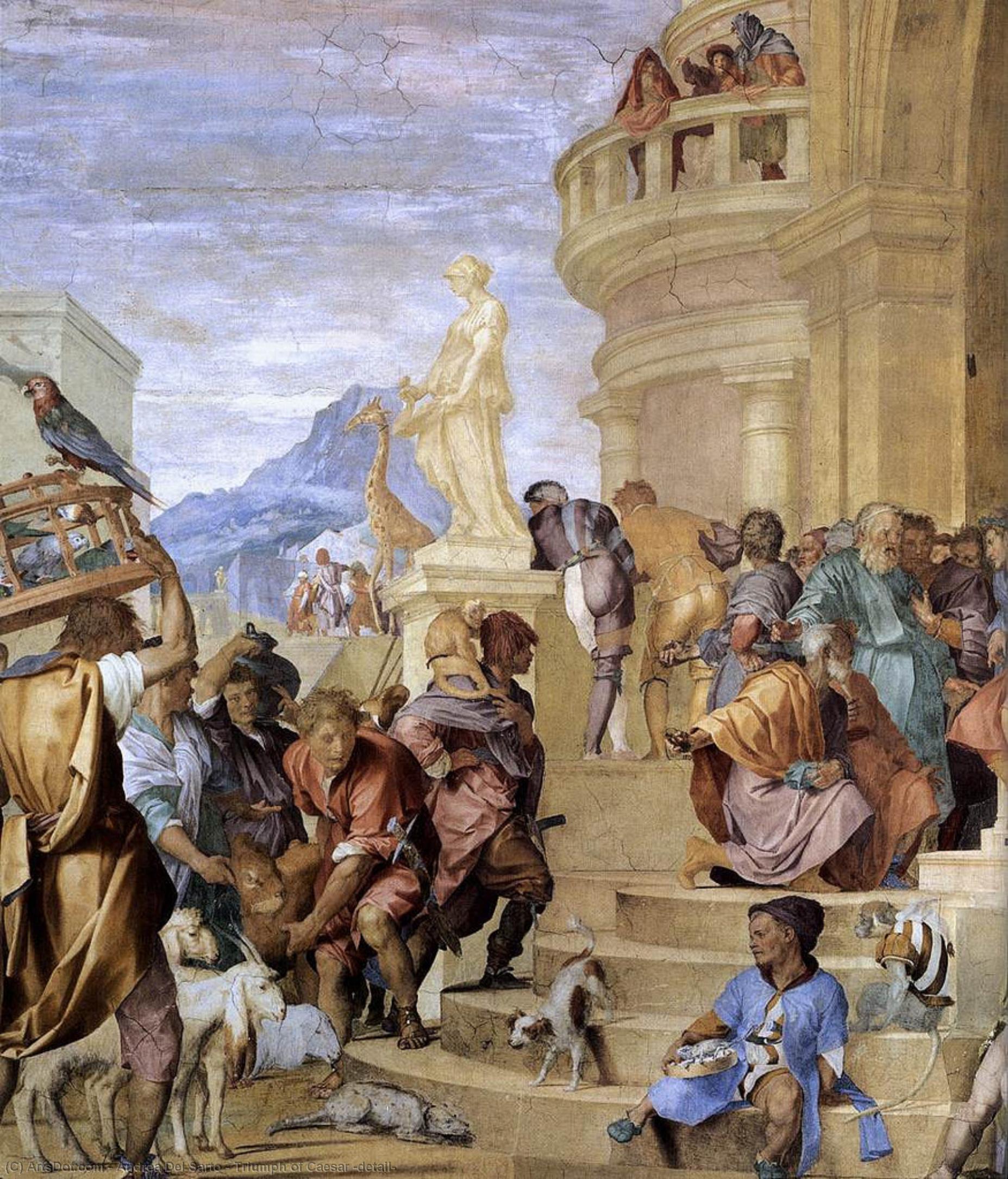
Triumph of Caesar (detail)


 Read More
Giclée / Art Print
Museum-quality giclée or canvas print with fast production and flexible finish options. ( Buy Hand Made Painting Buy Image)




































Pick from our preset sizes that match the artwork's original proportions.

You may enter your own dimensions to fit a specific frame or space. If your selected size does not match the original image's proportions, we will either crop the artwork or extend the image with a mirrored or solid-fill edge. A digital mockup will be sent for your approval before production begins.
Please note that the on-screen preview does not reflect the actual cropping or extension. Only the mockup will accurately show the final composition.
While custom sizes are available, we recommend selecting a dimension from the predefined list to preserve the original proportions.
Worldwide Delivery () in 2 weeks instead of standard 4/5 weeks. (24 August)

Free Worldwide Express Shipping

High-Quality Linen Canvas

Full Shipping Insurance

Customs Tax Refund Guarantee

True Color Matching Guarantee

60-Day Return Policy (Defects Only)

100% Money-Back Guarantee

Bulk Discount Offer
 Glass option is only available in size under 110 CM

Triumph of Caesar (detail)
Giclée / Art Print
Reproduction Size
-


Total Price
$ 63
Collectible Description
A Moment Frozen in Glory
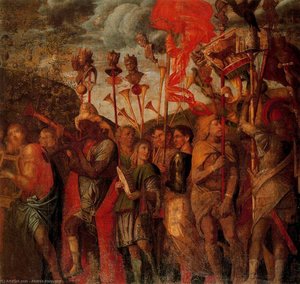
In the delicate detail of Triumph of Caesar, we are invited into a world where the grandeur of antiquity meets the refined grace of the Italian High Renaissance. This exquisite fresco fragment, captured by the masterful hand of Andrea del Sarto around 1520, serves as a window into a celebratory epoch. The scene centers on a monumental statue, yet it is the human connection to this icon that breathes life into the composition. As figures gather around the pedestal, their gazes and gestures create a rhythmic movement that draws the viewer into the heart of the festivities. There is a profound sense of communal reverence; whether standing in awe or kneeling in devotion, the crowd becomes a living tapestry of emotion, all anchored by the commanding presence of Caesar as he leads this triumphant procession.
The atmosphere is one of vibrant energy and shared triumph. Amidst the swirling drapery and the noble silhouettes of the onlookers, a subtle touch of domesticity appears in the form of a small dog resting near the bottom corner—a charming detail that grounds the epic scale of the event in a moment of palpable reality. For the discerning collector or interior designer, this piece offers more than just historical documentation; it provides a sophisticated focal point that evokes themes of leadership, legacy, and the enduring power of human achievement. The composition possesses an inherent balance that allows it to anchor a room with both authority and elegance.
The Mastery of the Florentine Hand
To study this work is to witness the technical brilliance of Andrea del Sarto, often referred to as the painter without errors. His technique in this fresco detail showcases the seamless transition between the High Renaissance ideal of harmony and the emerging complexity of Mannerism. The artist employs a sophisticated use of light and shadow to sculpt the figures, giving them a three-dimensional weight that feels remarkably lifelike even within a two-dimensional medium. His ability to manipulate color—even in the subtle, muted tones characteristic of fresco work—creates a sense of depth and atmospheric perspective that pulls the eye through the layers of the crowd.
The brushwork, though part of a larger monumental scheme, reveals a meticulous attention to texture and form. The way the light catches the edge of a shield or the fold of a tunic demonstrates a profound understanding of anatomy and material. For those seeking a high-quality reproduction, these nuances are essential; a faithful recreation must capture this specific luminosity and the soft, blended transitions that define Sarto’s signature style. Bringing such a piece into a contemporary space allows for a dialogue between the classical past and modern aesthetics, offering an infusion of historical soul and artistic prestige.
Symbolism and Lasting Inspiration
Beyond its visual splendor, the Triumph of Caesar carries deep symbolic weight. The statue serves as a totem of stability and the triumph of order over chaos, a theme that resonated deeply in the political landscape of 16th-century Florence. The act of gathering around a central figure reflects the social structures of the era, celebrating the collective identity forged through shared victory. This piece is not merely a depiction of a historical event but an exploration of how greatness is perceived and memorialized by the people.
For the art lover, this detail offers a contemplative experience, inviting one to reflect on the nature of fame and the passage of time. For the interior designer, it serves as a versatile masterpiece capable of inspiring a wide range of decor styles—from the opulent grandeur of a classical library to the refined minimalism of a modern gallery. Owning a reproduction of this caliber is an investment in a legacy of beauty, providing a constant source of intellectual and aesthetic inspiration within any curated collection.
Related Artworks
Artist Biography
early life and training
andrea del sarto, a prominent figure in italian high renaissance, was born on july 16, 1486, in gualfonda, near florence. his early life led him to become an apprentice to an orfèvre, followed by training under the painter and wood sculptor gian barile. later, he worked with piero di cosimo and raffaellino del garbo.artistic career
andrea's collaboration with franciabigio led to their first joint project, the baptism of christ, for the scalzo congregation in florence. this marked the beginning of a long series of monochromatic frescoes in grisaille. as time passed, andrea developed his unique style, eventually joining the arte dei medici e degli speziali in 1508.notable works and commissions
- the holy family, a painting commissioned by zanobi strozzi for the chapel at his villa of rovezzano, now housed in the pinacoteca of the gallerie nazionali di arte antica (palazzo barberini) in rome, italy.
- cenacolo di andrea del sarto, a fresco covering over 40 square meters, depicting jesus and his disciples during the last supper, located at the museo del cenacolo di andrea del sarto in florence.
- storie di miracoli di san filippo benizzi, a series of frescoes for the loggia dei servi di maria, showcasing his early skill with monochromatic grisaille.
legacy and influence
despite being overshadowed by contemporaries like leonardo da vinci, michelangelo, and raphael, andrea del sarto's work is characterized by its unique blend of high renaissance and mannerism. his legacy can be seen in the numerous artworks he left behind, each a testament to his skill as a painter, decorator, portraitist, and colorist. view more works by andrea del sarto on ArtsDot: [https://ArtsDot.com/@/andrea del sarto](https://ArtsDot.com/@/andrea-del-sarto) explore the pinacoteca of the gallerie nazionali di arte antica (palazzo barberini) on ArtsDot: /en/art/show/art-d3afwr-en/ read more about andrea del sarto's life and works on wikipedia: [https://fr.wikipedia.org/wiki/andrea_del_sarto](https://fr.wikipedia.org/wiki/andrea_del_sarto)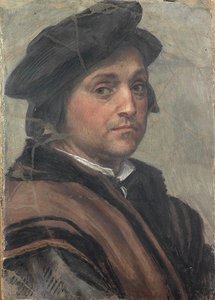
Andrea del Sarto
1486 - 1530 , Italy
Quick Facts
- Artistic Movement Or Style: High Renaissance & Mannerism
- Artists Or Movements Influenced By This Artist: ['Giorgio Vasari']
- Artists Who Influenced This Artist:
- Leonardo da Vinci
- Raphael
- Gian Barile
- Date Of Birth: July 16, 1486
- Date Of Death: September 29, 1530
- Full Name: Andrea d'Agnolo di Francesco di Luca
- Nationality: Italian
- Notable Artworks:
- The Last Supper
- Holy Family
- Saint John the Baptist
- Place Of Birth: Florence, Italy
Related Articles

The Fresco as Family Legacy: Preserving Heritage Through Wall Art
Explore the rich history & enduring legacy of fresco painting. Discover how to preserve family heritage through stunning wall art. Expert insights & restoration guidance.
Andrea del Sarto: Florentine Grace, Technical Mastery & Artistic Ambition
Explore the life & art of Andrea del Sarto, a Florentine Renaissance master renowned for harmonious compositions & technical brilliance. Discover his frescoes, portraits, and lasting influence on art history.

The Enduring Legacy of Fresco Painting: Techniques, History & Contemporary Relevance
Explore the rich history & enduring artistry of fresco painting – from Giotto to Michelangelo! Discover techniques, conservation efforts, & modern applications. Learn how ArtsDot brings this timeless art form to your home.

The Enduring Legacy of Fresco: Technique, History & Artistic Expression Across Cultures
Explore the rich history & enduring legacy of fresco painting! Discover ancient techniques, Giotto's masterpieces, and modern applications. Expert insights for art lovers & professionals.

Art That Lives With You: The Emotional Power of a Custom Interior Fresco
Discover the emotional power & timeless beauty of custom interior frescoes. Explore history, design tips & expert guidance from – creating lasting legacies.