 Preview
 Send
Send Share
Share
 Details

 Download
 Similars
 X-Ray
X-Ray Diaporama
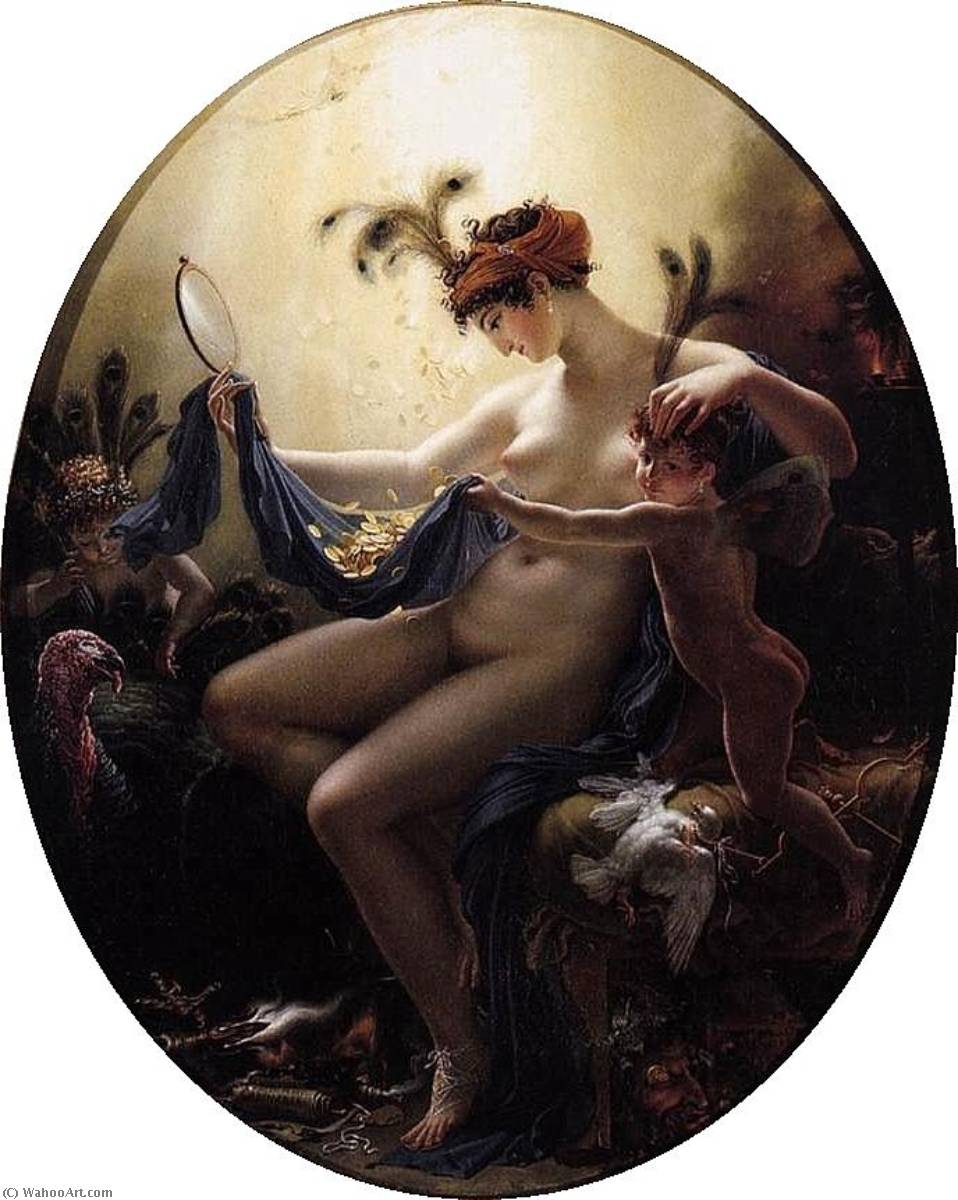
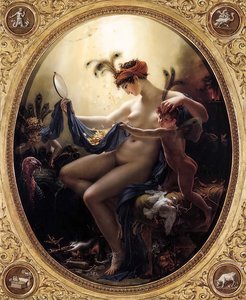
Mademoiselle Lange as Danae
 Oil On Canvas
- WallArt
- Neoclassicism
 1799
1799- 19th Century
 65.0 x 54.0 cm
 Minneapolis Institute of Art
 Read More
Giclée / Art Print
Museum-quality giclée or canvas print with fast production and flexible finish options. ( Buy Hand Made Painting Buy Image)




P118B $10

P118H $10

P118W $10

P438Z $10

P508JH $12

P508YH $12

P805H $10

P805Z $10

P919BZ $10

P919G $10

P919XJ $10

P959ZH $10

P968JZ $12

W106C $8

W218G $10

W218JH $8

W218Y $10

W307PJ $10

W316G $10

W316PJ $8

W316Y $10

W398PJ $8

W4111J $10

W500HY $15

W500JH $15

W692G $12

W849H $8

W940BG $15

W953PJ $8




Pick from our preset sizes that match the artwork's original proportions.

You may enter your own dimensions to fit a specific frame or space. If your selected size does not match the original image's proportions, we will either crop the artwork or extend the image with a mirrored or solid-fill edge. A digital mockup will be sent for your approval before production begins.
Please note that the on-screen preview does not reflect the actual cropping or extension. Only the mockup will accurately show the final composition.
While custom sizes are available, we recommend selecting a dimension from the predefined list to preserve the original proportions.
Worldwide Delivery () in 2 weeks instead of standard 4/5 weeks. (30 August)

Free Worldwide Express Shipping

High-Quality Linen Canvas

Full Shipping Insurance

Customs Tax Refund Guarantee

True Color Matching Guarantee

60-Day Return Policy (Defects Only)

100% Money-Back Guarantee

Bulk Discount Offer
 Glass option is only available in size under 110 CM

Mademoiselle Lange as Danae
Giclée / Art Print
Reproduction Size
-


Total Price
$ 63
The Enigmatic Venus of Girodet
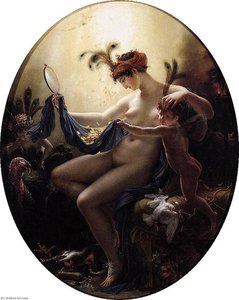
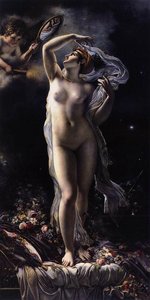
Anne-Louis Girodet de Roussy-Trioson’s “Mademoiselle Lange as Danae,” painted in 1799, isn't merely a depiction of the Greek goddess; it’s a meticulously crafted tableau of revenge, beauty, and veiled scandal. This neoclassical masterpiece, housed within an elegant oval frame, captures a pivotal moment – or rather, a carefully orchestrated disruption – in the life of the celebrated actress Anne Françoise Elisabeth Lange. Girodet, a student of Jacques-Louis David and a master of subtly shifting artistic styles, transforms a mythological scene into a pointed commentary on vanity, infidelity, and the precarious nature of fame.
The painting immediately draws the eye to Lange herself, presented as a reclining figure, embodying both classical grace and a disconcerting sense of self-awareness. She’s not passively receiving the golden rain of Zeus; instead, she’s actively engaged in gathering it, her posture suggesting a deliberate calculation, a possessive hunger for wealth and recognition. The composition is remarkably balanced, yet subtly unsettling – the carefully arranged objects around her, from the doves symbolizing fidelity to the broken mirror reflecting an incomplete image, all contribute to a sense of unease.
A Calculated Retaliation: The Story Behind the Canvas
The story behind “Mademoiselle Lange as Danae” is as captivating as the painting itself. Lange, a rising star in Parisian theatre circles, had commissioned Girodet to create a portrait, only to be utterly appalled by the finished product. She deemed it unflattering and demanded its immediate removal from the Salon, famously declaring that it compromised not just her beauty but also the artist’s reputation. Furious at this rejection, Girodet retaliated with breathtaking precision. He swiftly painted a second version of the same scene – “Mademoiselle Lange as Danae” – which he then replaced the original with in the Salon. This new depiction is a stark contrast: Lange is now portrayed as a grasping, avaricious woman, her beauty overshadowed by an air of moral decay.
This act of artistic vengeance isn’t simply about damaging Lange's reputation; it’s a demonstration of Girodet’s skill and audacity. The painting becomes a carefully constructed narrative, laden with symbolism designed to expose the actress’s perceived flaws – her alleged promiscuity, her obsession with wealth, and her lack of virtue. The inclusion of details like the broken mirror, the doves bound in chains, and the sly satyr lurking in the background all reinforce this damning interpretation.
Decoding the Symbols: A Language of Vanity and Betrayal
Girodet’s genius lies not only in his technical skill but also in his masterful use of symbolism. The shower of gold coins, a traditional motif associated with Danae, is here transformed into a symbol of Lange's greed and her willingness to sacrifice her integrity for material gain. The putto holding the mirror represents vanity – Lange’s obsession with her own image and her desire for eternal beauty. The peacock feathers, adorning both the doves and the infant, are emblems of luxury and extravagance, hinting at a life of indulgence and perhaps even illicit affairs.
Even seemingly innocuous details contribute to the painting's complex narrative. The broken sandal suggests a fallen status, while the scroll bearing the play title “ASINARIA COMŒDIA” is consumed by flames, symbolizing the destruction of her career and reputation. The careful arrangement of objects – each with its own symbolic weight – creates a layered visual language that invites interpretation and speculation.
A Masterpiece Bridging Worlds
“Mademoiselle Lange as Danae” is more than just a beautiful painting; it’s a fascinating glimpse into the social and artistic dynamics of late 18th-century France. It's a testament to Girodet's skill, his willingness to push boundaries, and his ability to transform mythological allegory into a potent commentary on human nature. The painting’s enduring appeal lies in its captivating story, its exquisite detail, and its unsettling blend of beauty and betrayal. Reproductions capture the depth and nuance of this remarkable work, offering a window into a world of ambition, revenge, and artistic genius.
Related Artworks
Artist Biography
A Bridge Between Worlds: The Life and Art of Anne-Louis Girodet
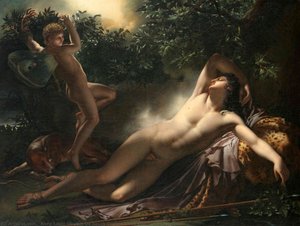
Anne-Louis Girodet de Roussy-Trioson, a name perhaps less instantly recognizable than his teacher Jacques-Louis David, nevertheless occupies a pivotal position in the transition from Neoclassicism to Romanticism. Born in Montargis, France, in 1767, Girodet’s artistic journey was one of both rigorous academic training and burgeoning emotional expression—a delicate balance that defined his unique style and secured his place as a significant figure in French art. His early life was marked by loss; the deaths of both parents left his upbringing to a guardian, Benoît-François Trioson, a physician who would later become his adoptive father and whose influence remained constant throughout Girodet’s career. This familial connection ultimately led to the artist adopting “Trioson” as part of his name in 1806, signifying a deep personal bond alongside his artistic identity. Initially drawn to architecture, Girodet soon found himself captivated by painting, entering David's studio and immersing himself in the prevailing Neoclassical aesthetic—an emphasis on clarity, precision, and moral gravitas. This foundation proved crucial, instilling within him a mastery of form and composition that would remain evident even as his work began to diverge from strict classical principles. His triumph at the Prix de Rome with a depiction of the story of Joseph and his brethren at the young age of 22 signaled a promising future, and his subsequent years in Italy (1789-1793) were formative, resulting in acclaimed works like *Hippocrate refusant les presents d'Artaxerxes* and *Endymion-dormant*.From Neoclassical Rigor to Romantic Sensibility
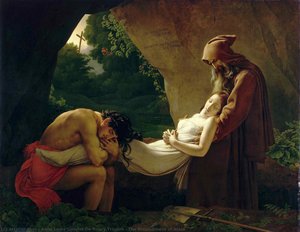
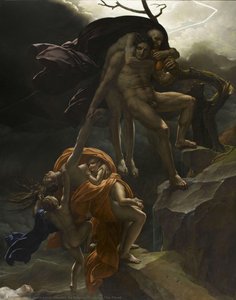
Girodet’s artistic evolution wasn’t a sudden break from the past, but rather a gradual infusion of new sensibilities into the established framework of Neoclassicism. While he retained the clarity and precision characteristic of David's school, his work increasingly embraced emotional intensity and explored themes previously considered unconventional. This shift is particularly evident in pieces like *Scène de déluge* (The Deluge), a monumental canvas showcasing dramatic action and raw emotion, and *Atala au tombeau*, a poignant portrayal of tragic beauty that resonated deeply with the growing Romantic fascination with pathos and exoticism. However, it was perhaps *Pygmalion et Galatée*, an ambitious project consuming eight years of his life, that most fully exemplifies Girodet’s artistic vision. Now housed in the Louvre, this work demonstrates not only meticulous attention to detail but also a willingness to delve into mythological themes with a heightened sense of psychological complexity and sensuality. His talent extended beyond mythological and literary subjects; he was sought after for portraits, including those of members of the Bonaparte family, where he skillfully balanced Neoclassical formality with an attempt to capture individual character. *La révolte du Caire*, depicting a historical event, further showcased his ability to convey dynamic action and emotional depth.A Pioneer of Erotic Undertones and Literary Inspirations
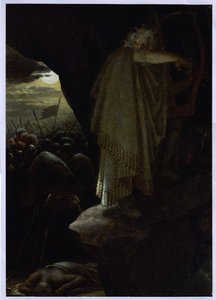
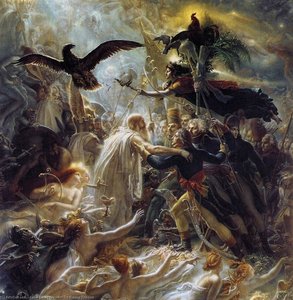
What truly set Girodet apart from many of his contemporaries was his willingness to incorporate elements of eroticism into his paintings—a daring move that challenged artistic norms and paved the way for later artists to explore similar themes with greater freedom. This wasn’t mere sensationalism; rather, it reflected a broader Romantic interest in passion, desire, and the complexities of human experience. His fascination with literature also profoundly influenced his art. He didn't simply illustrate stories; he sought to capture their emotional core, often choosing subjects that allowed for dramatic expression and psychological exploration. The influence of writers like Chateaubriand is particularly noticeable, as seen in portraits and scenes inspired by the author’s works. This literary bent distinguished him from artists solely focused on historical or mythological narratives, adding another layer of intellectual depth to his creations. Girodet's *Ossian and the French Generals* stands as a testament to this fusion of literature and art, blending imagery drawn from Macpherson’s Ossianic poems with portraits of fallen heroes—a unique and evocative composition that captured the spirit of its time.Legacy and Enduring Influence
Despite sometimes being overshadowed by his more politically prominent contemporaries like David, Anne-Louis Girodet left an indelible mark on the art world. His contribution to the early Romantic movement is undeniable; he helped bridge the gap between the rational order of Neoclassicism and the emotional intensity of Romanticism. He was a respected member of both the Académie de peinture and the Institut de France, receiving honors including the Légion d'honneur—acknowledgements of his artistic merit and societal standing. His works continue to be admired for their technical brilliance, dramatic power, and psychological insight. They can be found in prestigious museums such as the Musée Girodet in his hometown of Montargis, dedicated to his life and work, and the Louvre in Paris, ensuring that his legacy endures for generations to come. Girodet’s willingness to challenge conventions and explore new artistic territories makes him a compelling figure—a true pioneer who helped shape the course of French painting. He remains a vital link between two defining movements in art history, demonstrating that innovation often arises from a thoughtful synthesis of tradition and experimentation.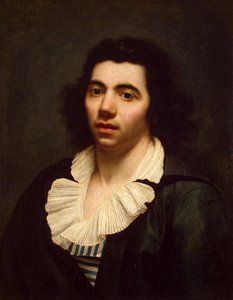
Anne-Louis Girodet
1767 - 1824 , France
Quick Facts
- Artistic Movement Or Style: Neoclassicism & Romanticism
- Artists Or Movements Influenced By This Artist: ['Early Romanticism']
- Artists Who Influenced This Artist: ['Jacques-Louis David']
- Date Of Birth: 1767
- Date Of Death: 1824
- Full Name: Anne-Louis Girodet de Roussy-Trioson
- Nationality: French
- Notable Artworks:
- Scène de déluge
- Atala au tombeau
- Pygmalion et Galatée
- La révolte du Caire
- Place Of Birth: Montargis, France
Related Articles
Anne-Louis Girodet: Bridging Neoclassicism & Romanticism with Emotional Truth
Explore the captivating world of Anne-Louis Girodet, a pivotal figure bridging Neoclassicism & Romanticism. Discover his masterpieces and unique artistic vision with ArtsDot.
The Revival of Antiquity: Exploring Ideals of Beauty & Power in Neoclassical Portraiture
Explore the captivating world of Neoclassical portraiture! Discover the power & ideals behind masterpieces by David, Girodet & more. Expert analysis, custom reproductions & art appraisal at ArtsDot.
Echoes of Olympus: Mythological Narratives in Western Art Through the Ages
Explore the captivating history of mythological narratives in Western art! From ancient Greece to modern masterpieces, discover iconic artworks & symbolism. Expert analysis and high-quality reproductions at ArtsDot.
The Enduring Legacy of Neoclassical Art: Order, Reason & Antiquity's Revival
Explore the enduring legacy of Neoclassical art! Discover masterpieces by David, Girodet & Garnier. Expert analysis, custom reproductions & art appraisal at ArtsDot.
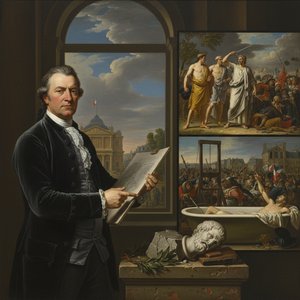
Jacques-Louis David: Neoclassical Ideals & Revolutionary Witness
Explore the life & art of Jacques-Louis David, leading Neoclassical painter of the French Revolution. Discover iconic works like 'The Death of Marat' and his lasting impact on art history. Expert analysis & high-quality reproductions at ArtsDot.