

 Preview
 Send
Send Share
Share
 Details

 Download
 Similars
 X-Ray
X-Ray Diaporama
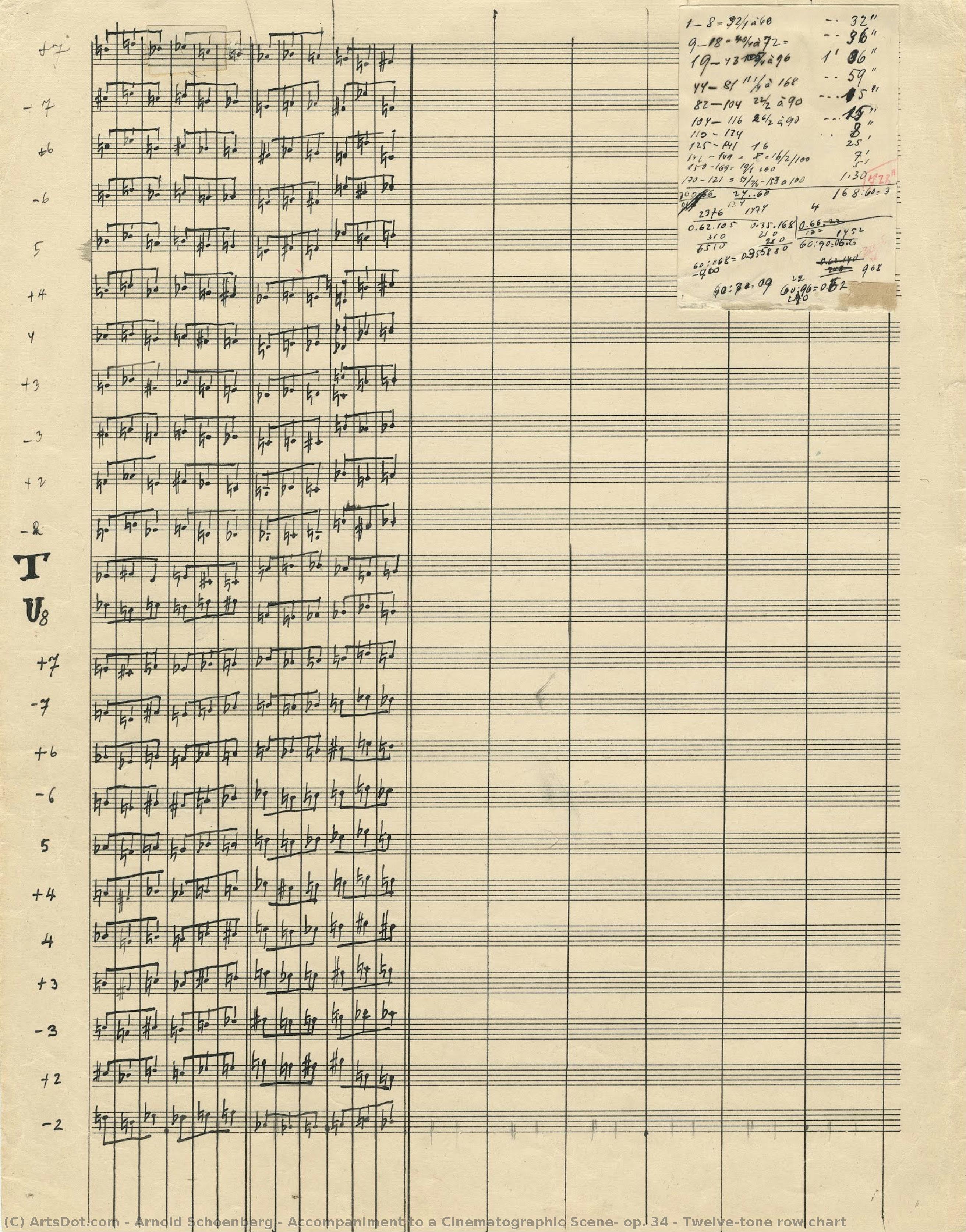
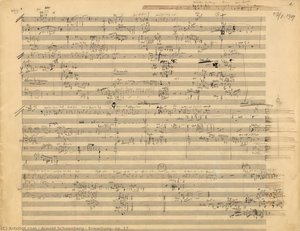
Accompaniment to a Cinematographic Scene, op. 34 - Twelve-tone row chart
 Acrylic On Canvas
- WallArt
- Twelve-tone row
 1929
1929 11.0 x 33.0 cm
 Arnold Schönberg Center
 Read More
Purchase a high-resolution, enhanced digital image, far superior to the online preview.
Each file is meticulously prepared by our in-house specialists using advanced tools and expert manual retouching. We ensure every image has exceptional clarity, precise color accuracy, and fine detail.
The final file is delivered via email within 72 hours, optimized for immediate use in professional, editorial, and print environments. This is the same quality trusted by top-tier design studios, publishers, and galleries.
Digital Image
Download a high-resolution file for personal display, printing, and creative projects. ( Buy Print Buy Hand Made Painting)
Included in Every Digital Image Order
Expert Digital Delivery, Guaranteed
When you choose ArtsDot.com, you're not just getting an image - you're receiving a professionally enhanced digital artwork, crafted with precision and backed by a satisfaction guarantee. Here's everything that comes with your order, automatically:

Fast Email Delivery
Your high-resolution digital image file will be emailed to you within 72 hours of ordering - ready for immediate use.

AI-Enhanced Digital File
Your artwork is professionally optimized using advanced AI tools and manual editing, ensuring maximum detail, clarity, and color accuracy.

Free Lifetime Re-Delivery
Accidentally deleted or lost your file? No worries - we'll resend it to you anytime, free of charge.

No Import Fees - Ever
Enjoy your artwork instantly with zero customs, duties, or delivery fees - digital downloads are always tax-free.

Color Accuracy Guarantee
We ensure your digital image reflects the original colors as closely as possible using professional tools and color management.

60-Day Satisfaction Guarantee
If you're not satisfied with your digital image, we'll revise it or refund 100% within 60 days - no questions asked.

100% Money-Back Guarantee
Not satisfied? Get a full refund within 60 days of receiving your digital file - no questions asked.

Bulk Order Discounts
Buy 3 images, save 10% - Buy 5, save 15% - Buy 10+, save 20%. Great for creative projects, galleries, and agencies.
Collectible Description
Accompaniment to a Cinematographic Scene, op. 34 - A Symphony of Shadows and Light
Arnold Schoenberg’s “Accompaniment to a Cinematographic Scene,” Op. 34, stands as an arresting testament to the composer's pioneering spirit—a bold foray into film music that simultaneously embodies his revolutionary tonal language and reflects his profound engagement with visual art.
- Historical Context: Composed in 1929 amidst the burgeoning avant-garde movement of Weimar Germany, this opus emerged from a commission by Heinrichshofen Verlag in Magdeburg. Schoenberg’s refusal to compromise artistic integrity—a stance solidified by his unwavering belief in formal independence—contrasted sharply with prevailing cinematic conventions of the time. He deliberately eschewed leitmotivic repetition and narrative structure, prioritizing instead an exploration of thematic concepts like “threatening danger,” “fear,” and “catastrophe.”
- Musical Style: Departing from traditional harmonic progressions, Schoenberg’s music utilizes a twelve-tone row—a cornerstone of atonality—as its foundational element. This systematic arrangement of all twelve chromatic tones eschews tonal centers, creating an unsettling yet intellectually stimulating sonic landscape. The piece unfolds in distinct episodes: an introductory passage, the twelve-tone theme itself, a song form section, rhythmic ostinato passages, and four contrasting episodes culminating in a dramatic climax.
- Technique & Notation: Schoenberg’s meticulous notation reveals his dedication to precision and innovation. He transcribed the twelve-tone row with transposition levels—a technique designed to emphasize tonal relationships despite the absence of conventional harmony—demonstrating his mastery of musical notation while simultaneously challenging established aesthetic norms. The sheet music itself is a visual representation of this conceptual framework, highlighting Schoenberg’s commitment to exploring new expressive possibilities.
- Symbolism & Emotional Impact: Inspired by the cinematic imagery of “threatening danger,” “fear,” and “catastrophe,” Op. 34 seeks to evoke visceral responses from listeners. The music's fragmented structure mirrors the disorientation experienced during moments of crisis, mirroring the visual aesthetic of abstract film. Schoenberg’s deliberate avoidance of tonal resolution underscores his desire to resist comforting illusions, prompting contemplation on existential themes.
- Legacy & Influence: “Accompaniment to a Cinematographic Scene” represents more than just a musical composition; it embodies Schoenberg's broader artistic vision—a fusion of music and visual art that anticipates the expressive ambitions of later avant-garde composers. Its enduring fascination stems from its audacious challenge to harmonic conventions and its profound engagement with psychological states, securing its place as an iconic work within the canon of 20th-century classical music.
Related Artworks
Artist Biography
early life and musical beginnings
arnold schoenberg, an austrian-american composer, was born on september 13, 1874, in vienna, austria. his early life was marked by a humble beginning, with his father being a shoe-shopkeeper. despite this, schoenberg's innate passion for music led him to largely self-educate himself in the field.- schoenberg explored film music and wrote more tonal music, completing his chamber symphony no. 2 in 1939.
- he satirized fascist tyrants in ode to napoleon (1942), after byron.
- post-war vienna offered him honorary citizenship, but he was ill, as depicted in his string trio (1946).
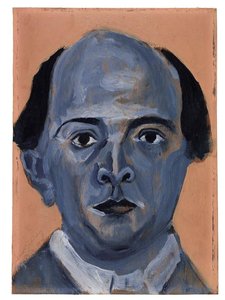
arnold schoenberg
1874 - 1951 , Austria
Quick Facts
- Artistic Movement Or Style: Twelve-tone technique; Expressionism
- Artists Or Movements Influenced By This Artist:
- Anton Webern
- Alban Berg
- Artists Who Influenced This Artist:
- Johannes Brahms
- Richard Wagner
- Date Of Birth: September 13, 1874
- Date Of Death: 1951
- Full Name: Arnold Schoenberg
- Nationality: Austrian-American
- Notable Artworks:
- Suite, op. 29
- Music Typewriter
- Staffliner
- Place Of Birth: Vienna, Austria

