 Preview
 Send
Send Share
Share
 Details

 Download
 Similars
 X-Ray
X-Ray Diaporama
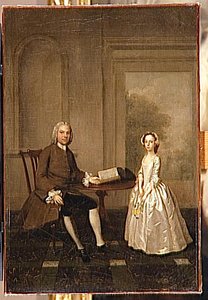
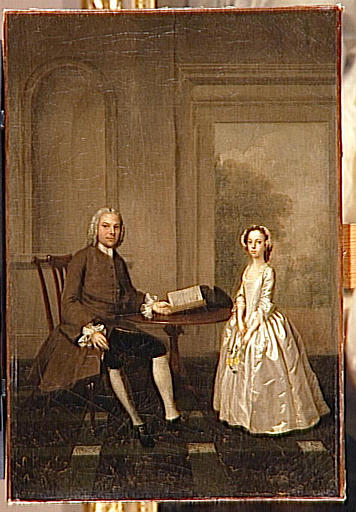
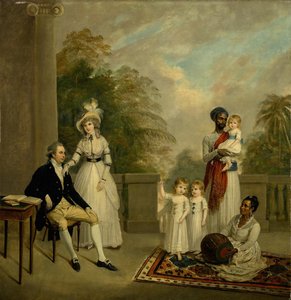
PORTRAIT D'UN HOMME ET DE SA FILLE


 Read More
Hand Made Oil Reproduction
Hand-painted oil on canvas in your size and frame, made to order by our artists. ( Buy Print Buy Image)




P118B $10

P118H $10

P118W $10

P438Z $10

P508JH $12

P508YH $12

P805H $10

P805Z $10

P919BZ $10

P919G $10

P919XJ $10

P959ZH $10

P968JZ $12

W106C $8

W218G $10

W218JH $8

W218Y $10

W307PJ $10

W316G $10

W316PJ $8

W316Y $10

W398PJ $8

W4111J $10

W500HY $15

W500JH $15

W692G $12

W849H $8

W940BG $15

W953PJ $8




Pick from our preset sizes that match the artwork's original proportions.

You may enter your own dimensions to fit a specific frame or space. If your selected size does not match the original image's proportions, we will either crop the artwork or extend the painting with additional hand-painted elements. A digital mockup will be sent for your approval before production begins.
Please note that the on-screen preview does not reflect the actual cropping or extension. Only the mockup will accurately show the final composition.
While custom sizes are available, we recommend selecting a dimension from the predefined list to preserve the original proportions.
After order, ArtsDot.com team will email client for instructions and provide a mockup preview
Worldwide Delivery () in 3/4 weeks instead of standard 5 weeks. (17 August). No compromise on quality.

Free Worldwide Express Shipping

High-Quality Linen Canvas

Full Shipping Insurance

Customs Tax Refund Guarantee

True Color Matching Guarantee

60-Day Return Policy (Defects Only)

100% Money-Back Guarantee

Bulk Discount Offer
 Glass option is only available in size under 110 CM

PORTRAIT D'UN HOMME ET DE SA FILLE
Reproduction Medium
Reproduction Size
-


Total Price
$ 288
Artwork Description
A Window into Georgian Society: Arthur William Devis’s “Portrait d’un Homme et de sa Fille”
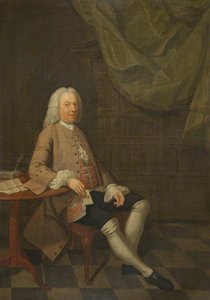
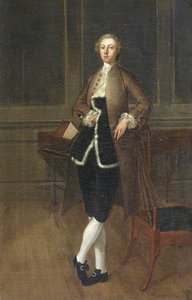
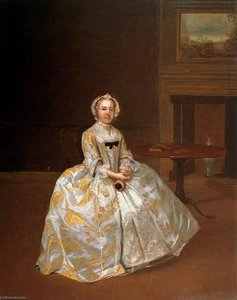
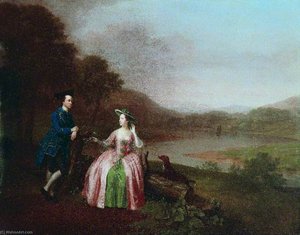
Arthur William Devis's "Portrait d'un Homme et de sa Fille" offers a remarkably intimate glimpse into the social fabric of 18th-century England. Completed around 1748, this painting transcends a simple depiction of familial affection; it’s a carefully constructed tableau reflecting the values, status, and subtle dynamics of a middle-class household during a period of significant societal change. The work, now housed within the Louvre's collection, invites us to observe not just two figures, but an entire world rendered in muted tones and understated elegance.
Devis belonged to a lineage deeply rooted in artistic tradition – his father, Anthony Devis, was himself a painter, establishing a family legacy of visual artists. This familial connection undoubtedly informed Devis’s approach, though he ultimately forged his own distinctive style, often categorized as “conversation piece” portraiture. These paintings weren't merely likenesses; they were designed to be engaging social scenes, intended for display and discussion within the home. The composition itself—a seated man with his daughter—immediately establishes a sense of familial connection, yet it’s the details that truly reveal the painting’s significance.
A Symphony of Earth Tones and Subtle Lines
The painting's visual language is dominated by a restrained palette of browns, beiges, and creams. These muted earth tones create an atmosphere of quiet dignity and understated wealth – indicative of the subjects’ social standing. Devis masterfully employs subtle gradations within these hues to build depth and texture; the man’s coat, for instance, possesses a rich, velvety quality, while his wig exhibits a more textured surface, hinting at its elaborate construction. The daughter's dress, a delicate blush pink, provides a gentle contrast against the darker background and the man’s attire, drawing the eye without overwhelming the overall composition.
Devis’s technique is characterized by meticulous detail and a smooth, blended brushstroke. Lines are used strategically to define forms—the precise angles of the chair, the architectural backdrop with its arched doorway—but facial features are rendered with a softer touch, contributing to a sense of realism and approachability. The overall effect is one of carefully controlled elegance, reflecting the formality expected in portraiture of the era while simultaneously conveying a feeling of intimacy.
Symbolism and Social Context
Beyond its aesthetic qualities, “Portrait d’un Homme et de sa Fille” carries significant symbolic weight. The man's dignified posture and attentive gaze suggest respect for his daughter, while her slightly forward stance indicates engagement and affection. The presence of a book on the small table is particularly noteworthy; it subtly alludes to the importance of education and intellectual pursuits within this social class. It’s a quiet declaration of values—a testament to the family's commitment to learning and refinement.
Considering the painting’s date, it offers a valuable window into Georgian society. The clothing styles – the man’s coat and wig, the daughter’s dress – are typical of the middle-class or upper-middle class, reflecting a period of relative prosperity and social stability. The architectural backdrop, with its arched doorway, further reinforces this sense of affluence and established status.
A Legacy Rediscovered
While Devis's work enjoyed some initial recognition, it largely faded from view after his death in 1787. It wasn’t until the 20th century that renewed interest in “conversation piece” portraits led to a reassessment of his contribution to British art history. Today, "Portrait d'un Homme et de sa Fille" stands as a testament to Devis’s skill and sensitivity—a captivating image that continues to resonate with viewers seeking an authentic glimpse into the past.
Related Artworks
Artist Biography
Arthur William Devis (1762–1822): The Gentle Hand of Portraiture and History
Arthur William Devis (19 February 1712 – 25 July 1787) was an English painter whose father, Anthony, was progenitor of what became a family dynasty of painters and writers. The place of Arthur Devis in art history is generally as painter of the type of portrait now called a conversation piece. After moving to London and apprenticeship to a Flemish topographical artist there, he switched to portraiture and acquired a considerable reputation, although this success did not last. Unable to adapt to later fashionable artistic currents, his commissions declined and his work was largely forgotten after his death until the 20th century revival of interest in the conversation piece.- Early Life & Training: Devis’s artistic talent emerged early on, fueled by a familial legacy steeped in artistic tradition. Following in the footsteps of his elder brother Thomas Anthony Devis, who was also a painter, he enrolled at the Royal Academy Schools in 1774, immersing himself in the rigorous training demanded by the era's leading artistic institution. His formative years were marked by exposure to influential figures like Sir Joshua Reynolds, whose teachings profoundly shaped Devis’s stylistic sensibilities.
- Notable Commissions & Travels: Devis gained recognition through his membership in the Free Society of Artists and continued to exhibit his work at the Royal Academy, attracting considerable acclaim. A pivotal moment arrived in 1783 when he was appointed as draughtsman on the British East India Company’s packet antelope under Captain Henry Wilson. Tragically, Devis suffered a serious injury during an encounter with Papuans near the Schouten Islands and subsequently endured a shipwreck on the Pelw islands—challenges that nevertheless spurred him to persevere in his artistic endeavors.
Style & Technique: The Delicate Stroke of Elegance
Devis’s artistic style is characterized by an exquisite sensitivity to detail and a masterful command of technique, particularly evident in his portraits. He favored graceful poses—often depicting subjects in moments of quiet contemplation—creating images imbued with understated beauty and psychological depth. His palette tended towards muted tones, reflecting the prevailing aesthetic preferences of the late 18th century, yet he achieved remarkable luminosity through careful layering of glazes and subtle gradations of color. Devis’s meticulous observation of anatomy combined seamlessly with an intuitive understanding of human expression, resulting in portraits that captured not only physical likeness but also inner character.- Conversation Pieces: Devis excelled at capturing the essence of domestic life through “conversation pieces”—genre paintings depicting scenes of familial gatherings or intimate interiors—a style highly valued during his time.
- Historical Subjects: Beyond portraiture, Devis undertook ambitious historical commissions, notably the depiction of Nelson’s death and a posthumous portrait honoring Admiral Horatio Nelson.
Significant Works & Legacy
Devis produced an impressive oeuvre encompassing approximately sixty-five paintings that graced the Royal Academy galleries between 1779 and 1821, cementing his reputation as one of London’s foremost artists. Among his most celebrated achievements include:- Portrait of Sir William Jones: This masterpiece resides at the British Library, showcasing Devis's exceptional skill in capturing dignified composure and intellectual curiosity.
- Nelson Portraits: His depictions of Nelson—both as Vice Admiral and posthumously—remain iconic representations of naval heroism and national pride.
- Other Notable Commissions: He undertook commissions for prominent figures such as King George III on horseback, Lord Howe, and Sir Roger Newdigate, demonstrating his versatility and artistic ambition.
arthur william devis
1712 - 1787 , United Kingdom
Quick Facts
- Artistic Movement Or Style: Portraiture; History Painting
- Artists Or Movements Influenced By This Artist: ['Conversation Piece']
- Artists Who Influenced This Artist: ['Joshua Reynolds']
- Date Of Birth: August 10, 1762
- Date Of Death: July 25, 1822
- Full Name: Arthur William Devis
- Nationality: English
- Notable Artworks:
- Death of Nelson
- Nelson Portraits
- Master Simpson
- King George III on Horseback
- Babington Plot
- Magna Carta
- Place Of Birth: London, United Kingdom
Related Articles
Arthur William Devis: A Provincial Eye on Georgian Life & Naval History
Explore the life & work of Arthur William Devis (1762-1822), a key figure in Georgian portraiture and naval history painting. Discover his intimate 'conversation pieces' and captivating depictions of colonial India. Learn more at ArtsDot.

The Enduring Legacy of Oil on Canvas: Technique, History & Aesthetic Impact
Explore the rich history & techniques of oil painting – from Renaissance masters to Impressionism. Discover pigments, layering methods, and why this timeless medium endures. Expert insights for artists & art enthusiasts.

Oil on Canvas: A Historical & Technical Exploration of a Timeless Artistic Medium
Explore the rich history & enduring techniques of oil painting on canvas. Discover the science behind its longevity, conservation practices, and contemporary relevance. Expert insights for art enthusiasts.

The Enduring Power of Painting: A Historical & Contemporary Exploration of Form and Emotion
Explore the rich history & enduring techniques of oil painting with ArtsDot. Discover masterpieces, learn about art collecting, and find authentic handmade reproductions crafted by skilled artists.
Capturing Kinship: Commission Affordable Oil Portraits as Enduring Family Legacies
Transform cherished photos into timeless oil portraits with ArtsDot. Commission a hand-painted family masterpiece that preserves your legacy for generations. Affordable, expert artistry & 100% satisfaction guaranteed.