 Preview
 Send
Send Share
Share
 Details

 Download
 Similars
 X-Ray
X-Ray Diaporama
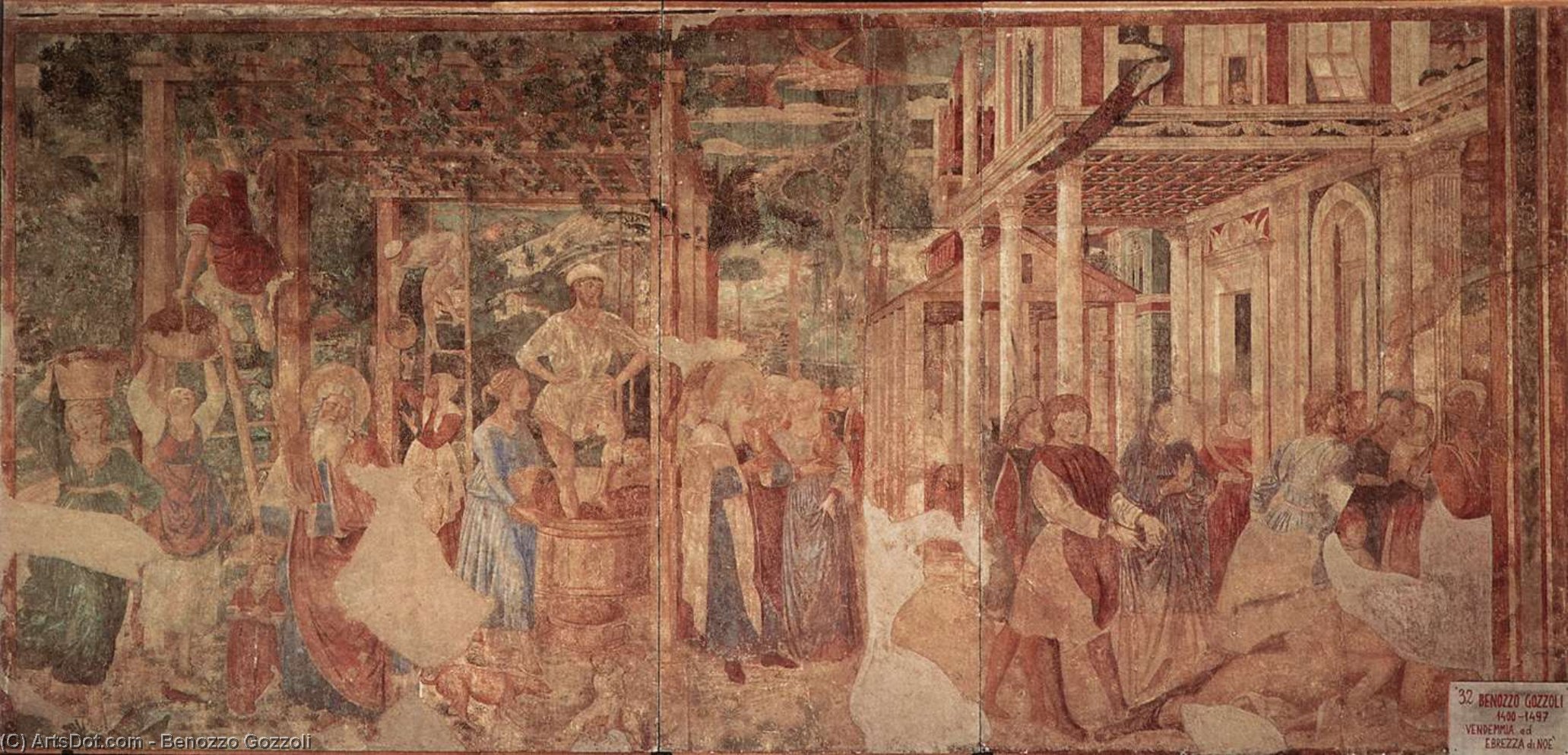
The Vintage and Drunkenness of Noah


 Read More
Giclée / Art Print
Museum-quality giclée or canvas print with fast production and flexible finish options. ( Buy Hand Made Painting Buy Image)




P118B $10

P118H $10

P118W $10

P438Z $10

P508JH $12

P508YH $12

P805H $10

P805Z $10

P919BZ $10

P919G $10

P919XJ $10

P959ZH $10

P968JZ $12

W106C $8

W218G $10

W218JH $8

W218Y $10

W307PJ $10

W316G $10

W316PJ $8

W316Y $10

W398PJ $8

W4111J $10

W500HY $15

W500JH $15

W692G $12

W849H $8

W940BG $15

W953PJ $8




Pick from our preset sizes that match the artwork's original proportions.

You may enter your own dimensions to fit a specific frame or space. If your selected size does not match the original image's proportions, we will either crop the artwork or extend the image with a mirrored or solid-fill edge. A digital mockup will be sent for your approval before production begins.
Please note that the on-screen preview does not reflect the actual cropping or extension. Only the mockup will accurately show the final composition.
While custom sizes are available, we recommend selecting a dimension from the predefined list to preserve the original proportions.
Worldwide Delivery () in 2 weeks instead of standard 4/5 weeks. (25 August)

Free Worldwide Express Shipping

High-Quality Linen Canvas

Full Shipping Insurance

Customs Tax Refund Guarantee

True Color Matching Guarantee

60-Day Return Policy (Defects Only)

100% Money-Back Guarantee

Bulk Discount Offer
 Glass option is only available in size under 110 CM

The Vintage and Drunkenness of Noah
Giclée / Art Print
Reproduction Size
-


Total Price
$ 63
Collectible Description
A Celebration of Revelry: Benozzo Gozzoli’s “The Vintage and Drunkenness of Noah”
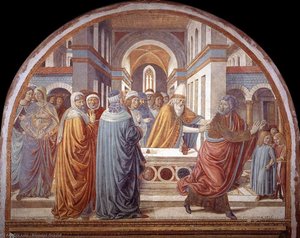
Benozzo Gozzoli's "The Vintage and Drunkenness of Noah," painted in 1469 for the Campo Santo of Pisa, isn’t merely a biblical narrative; it’s an exuberant snapshot of communal joy—a vibrant testament to human connection rendered with astonishing detail and a distinctly Florentine flair. More than just depicting the aftermath of the flood, Gozzoli captures a moment of unbridled celebration, a feast where stories are shared, laughter rings out, and the bonds between individuals deepen. The fresco’s immediate impact is one of warmth and conviviality, drawing the viewer into this lively scene with an almost palpable sense of merriment.
The composition itself is masterfully orchestrated. Gozzoli eschews a strictly linear approach, instead employing a dynamic arrangement where figures cluster together in groups, creating a rich tapestry of interaction. Notice how he uses varying scales to draw attention – the prominent figures at the center command our gaze, while those further back recede into the background, contributing to the overall depth and sense of space. The artist’s use of color is equally captivating; deep reds, blues, and greens dominate, punctuated by touches of gold that highlight key elements and imbue the scene with a luxurious quality. The faces are remarkably expressive, conveying a range of emotions – delight, amusement, and even a touch of drunken joviality—making each figure feel utterly alive.
A Renaissance Vision: Style, Technique, and Influences
Gozzoli’s style is firmly rooted in the International Gothic tradition, a movement that flourished throughout Italy during the 15th century. This style is characterized by its meticulous attention to detail, elaborate ornamentation, and a sense of heightened realism. However, Gozzoli departs from the rigid formality often associated with International Gothic, injecting a palpable energy and dynamism into his work. The figures are not static; they move, gesture, and engage in lively conversation, creating a scene that feels remarkably contemporary for its time.
Technically, “The Vintage and Drunkenness of Noah” is a remarkable achievement. Gozzoli employed the fresco technique—painting directly onto wet plaster—which demanded both speed and precision. The layering of pigments, carefully applied to create subtle gradations of color and texture, is particularly evident in the depiction of fabrics, skin tones, and facial features. The artist’s mastery of perspective and spatial relationships further enhances the illusion of depth and realism, making the scene feel remarkably immersive.
It's important to note that Gozzoli was heavily influenced by his early training under Fra Angelico, whose emphasis on spiritual grace and luminous color is still visible in the fresco’s overall atmosphere. However, Gozzoli also absorbed elements from other artistic traditions, including Giotto’s innovative use of space and form, as well as the vibrant colors and dynamic compositions of contemporary Florentine painting. This synthesis of influences resulted in a uniquely compelling style that reflects both the spiritual aspirations of the Renaissance and the exuberant spirit of the age.
Historical Context: The Campo Santo and its Artistic Legacy
The fresco’s location within the Campo Santo—a historic burial ground and civic center—adds another layer of significance to the work. The Campo Santo, originally built around sacred soil brought back from Golgotha during the Third Crusade, served as a repository for artistic masterpieces throughout its long history. The commission to decorate the Campo Santo with frescoes was a prestigious one, attracting some of Florence’s most talented artists, including Gozzoli, Tino di Camaino, and Giovanni Pisano.
The fresco cycle itself is part of a larger series depicting scenes from the Old Testament, reflecting the medieval tradition of illustrating biblical narratives for devotional purposes. However, Gozzoli's interpretation of these stories is remarkably humanistic, emphasizing the social and emotional aspects of the narrative rather than focusing solely on religious dogma. The scene of Noah’s revelry—a celebration of survival and renewal—is particularly poignant, suggesting a deeper message about the importance of community, joy, and shared experience.
Symbolism and Emotional Resonance
Beyond its immediate visual appeal, “The Vintage and Drunkenness of Noah” is rich in symbolism. The act of drinking wine represents not just indulgence but also fellowship, celebration, and the breaking down of social barriers. The figures gathered together—representing a diverse range of ages, genders, and social classes—symbolize the universality of human experience and the importance of connection. The scene can be interpreted as an allegory for the renewal of humanity after the flood, suggesting that joy and fellowship are essential components of a new beginning.
Ultimately, Gozzoli’s fresco is more than just a historical record or a religious illustration; it's a vibrant celebration of human life—a testament to the power of community, the joys of shared experience, and the enduring spirit of hope. Reproductions capture only a fraction of this original energy, but they offer a beautiful way to bring this remarkable work of art into your home.
Related Artworks
![Legend Of St Francis - [11] - St Francis Before The Sultan (trial By Fire) — Giotto Di Bondone, Proto-renaissance](/media/artworks/images-thumb/0d/32/0d328acfb6c90f7ef32707586e86044b.jpg)

![Life Of St John The Baptist - [02] - Birth And Naming Of The Baptist — Giotto Di Bondone, Proto-renaissance](/media/artworks/images-thumb/40/04/400440c3a22da4c684f7b86d3bba5106.jpg)
Artist Biography
early life and training
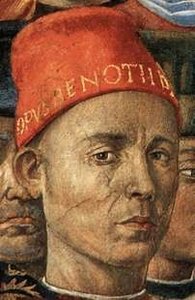
benozzo gozzoli, an italian renaissance painter from florence, was born in 1420. he is best known for his series of murals in the palazzo medici-riccardi, depicting festive, vibrant processions with fine attention to detail and a pronounced international gothic influence. as a young artist, gozzoli was a pupil and assistant of the renowned painter fra angelico. some of his early works, such as those in the convent of san marco in florence, were executed after fra angelico's designs. this training laid the foundation for gozzoli's future success.notable works and collaborations
* the journey of the magi to bethlehem (1459-1461): a fresco in the magi chapel of the palazzo medici-riccardi, showcasing gozzoli's mastery of international gothic style. * collaboration with lorenzo ghiberti on the paradise doors of the battistero di san giovanni (1444-1447). * work in rome, including a fresco of st. anthony and two angels in santa maria in aracoeli, under the patronage of pope eugene iv.artistic style and legacy
gozzoli's style, characterized by its attention to detail and international gothic influence, has been praised for its unique blend of elegance and sophistication. his prolific output, including numerous frescoes in tuscany and umbria, has earned him a place among the most important figures in italian renaissance art.- view gozzoli's artworks on ArtsDot: https://ArtsDot.com/@/benozzo-gozzoli
- explore the italian renaissance art movement on ArtsDot: /en/art/list/
- discover more about gozzoli's life and works on wikipedia: https://en.wikipedia.org/wiki/benozzo_gozzoli
Benozzo Gozzoli
1420 - 1497 , Italy
Quick Facts
- Artistic Movement Or Style: International Gothic
- Artists Or Movements Influenced By This Artist: ['Early Renaissance']
- Artists Who Influenced This Artist:
- Fra Angelico
- Lorenzo Ghiberti
- Date Of Birth: 1420
- Date Of Death: 1497
- Full Name: Benozzo di Lese
- Nationality: Florentine
- Notable Artworks:
- Journey of the Magi
- Scenes from St Francis
- Place Of Birth: Florence, Italy
Related Articles

The Fresco as Family Legacy: Preserving Heritage Through Wall Art
Explore the rich history & enduring legacy of fresco painting. Discover how to preserve family heritage through stunning wall art. Expert insights & restoration guidance.
Benozzo Gozzoli: Narrative Innovation & Secular Humanism in Early Renaissance Frescoes
Explore the innovative frescoes of Benozzo Gozzoli, a key Florentine Renaissance painter. Discover his unique blend of religious narrative, secular humanism & detailed portraiture in masterpieces like the Magi Chapel cycle.

The Enduring Legacy of Fresco Painting: Techniques, History & Contemporary Relevance
Explore the rich history & enduring artistry of fresco painting – from Giotto to Michelangelo! Discover techniques, conservation efforts, & modern applications. Learn how ArtsDot brings this timeless art form to your home.

The Enduring Legacy of Fresco: Technique, History & Artistic Expression Across Cultures
Explore the rich history & enduring legacy of fresco painting! Discover ancient techniques, Giotto's masterpieces, and modern applications. Expert insights for art lovers & professionals.
Art That Lives With You: The Emotional Power of a Custom Interior Fresco
Discover the emotional power & timeless beauty of custom interior frescoes. Explore history, design tips & expert guidance from – creating lasting legacies.