 Preview
 Send
Send Share
Share
 Details

 Download
 Similars
 X-Ray
X-Ray Diaporama
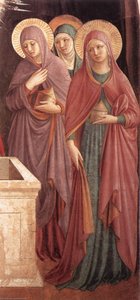
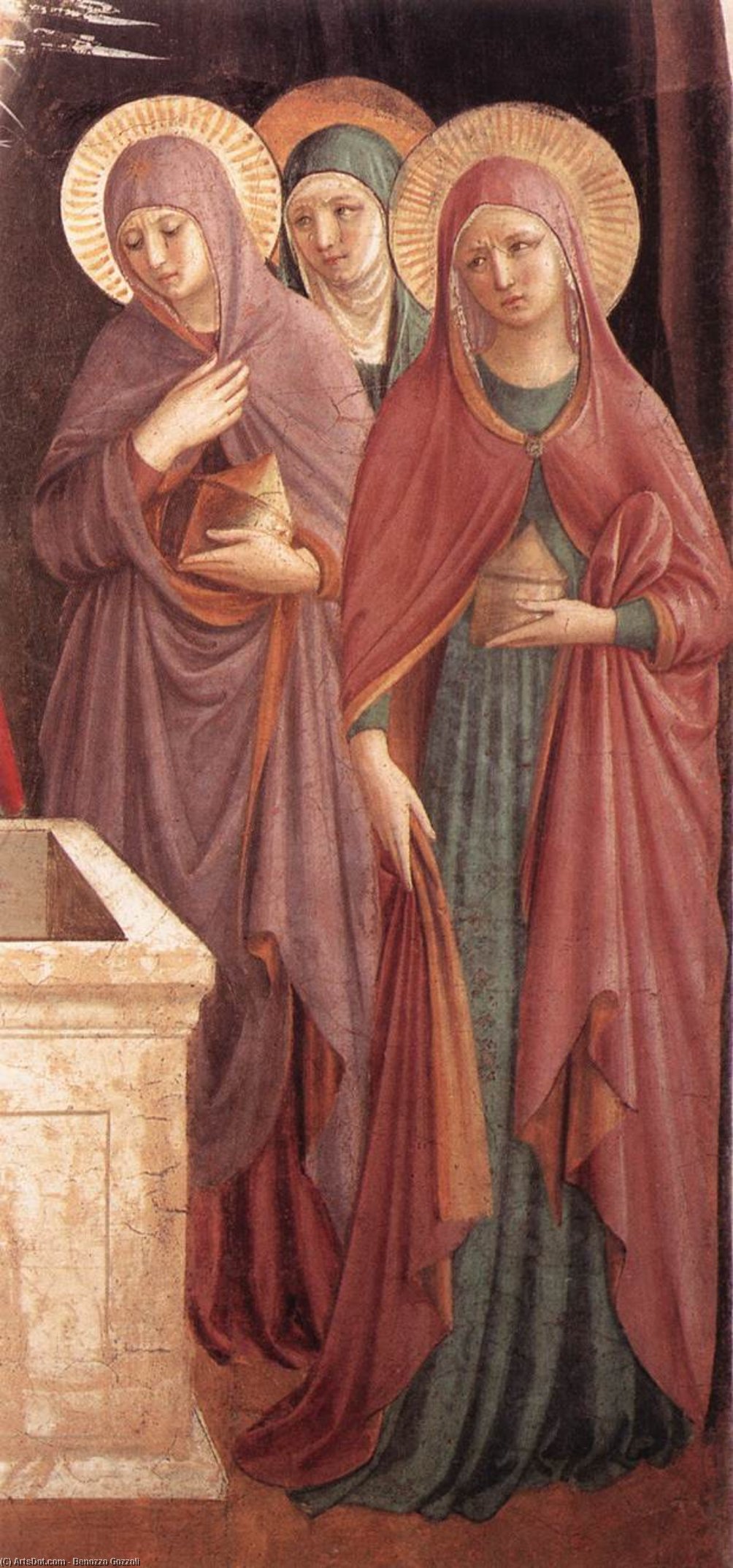
Women at the Tomb (detail)


 Read More
Giclée / Art Print
Museum-quality giclée or canvas print with fast production and flexible finish options. ( Buy Hand Made Painting Buy Image)




P118B $10

P118H $10

P118W $10

P438Z $10

P508JH $12

P508YH $12

P805H $10

P805Z $10

P919BZ $10

P919G $10

P919XJ $10

P959ZH $10

P968JZ $12

W106C $8

W218G $10

W218JH $8

W218Y $10

W307PJ $10

W316G $10

W316PJ $8

W316Y $10

W398PJ $8

W4111J $10

W500HY $15

W500JH $15

W692G $12

W849H $8

W940BG $15

W953PJ $8




Pick from our preset sizes that match the artwork's original proportions.

You may enter your own dimensions to fit a specific frame or space. If your selected size does not match the original image's proportions, we will either crop the artwork or extend the image with a mirrored or solid-fill edge. A digital mockup will be sent for your approval before production begins.
Please note that the on-screen preview does not reflect the actual cropping or extension. Only the mockup will accurately show the final composition.
While custom sizes are available, we recommend selecting a dimension from the predefined list to preserve the original proportions.
Worldwide Delivery () in 2 weeks instead of standard 4/5 weeks. (29 August)

Free Worldwide Express Shipping

High-Quality Linen Canvas

Full Shipping Insurance

Customs Tax Refund Guarantee

True Color Matching Guarantee

60-Day Return Policy (Defects Only)

100% Money-Back Guarantee

Bulk Discount Offer
 Glass option is only available in size under 110 CM

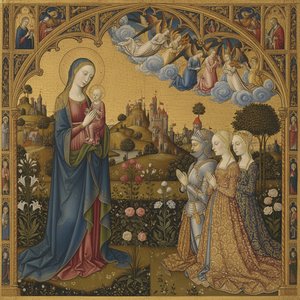
Women at the Tomb (detail)
Giclée / Art Print
Reproduction Size
-


Total Price
$ 63
Women at the Tomb (detail) – A Symphony of Color and Contemplation
Benozzo Gozzoli’s “Women at the Tomb,” housed in the Museo Nazionale di San Marco, Florence, stands as a testament to the artistic fervor of the Early Renaissance. Painted circa 1440, this fresco transcends mere depiction; it embodies a profound meditation on faith and grief within the framework of Gothic sensibilities.
The scene captures three women – identified as Mary Magdalene, Nicodemus, and Mary of Cleopas – gathered around an empty tomb. Gozzoli’s masterful technique employs tempera paint on plaster, resulting in luminous pigments that retain their vibrancy centuries later. The artist meticulously rendered drapery folds with astonishing realism, conveying movement and texture—a hallmark of the International Gothic style prevalent at the time.
Color plays a crucial role in communicating emotion. Purple dominates Mary Magdalene’s robe, symbolizing penitence and sorrow. Green adorns Nicodemus' garment, representing hope and renewal. And red highlights Mary of Cleopas’ attire, signifying divine compassion. These hues aren’t merely decorative; they are deliberately chosen to heighten the spiritual significance of the composition.
Beyond its visual splendor, “Women at the Tomb” carries symbolic weight. The tomb itself represents mortality and loss—the inescapable reality faced by all humankind. Yet, amidst this darkness, the women gaze upwards with unwavering faith, suggesting that divine grace offers solace and transcendence. Gozzoli’s careful positioning of figures and his subtle use of light contribute to a palpable atmosphere of solemn contemplation.
The fresco's influence extends beyond its immediate aesthetic qualities. It exemplifies the humanist spirit emerging from Florence during this period—a focus on human experience and emotion alongside religious devotion. Gozzoli’s work serves as an enduring reminder of the power of art to convey profound spiritual truths, captivating viewers with its beauty and prompting reflection on themes of grief, hope, and divine compassion.
Further research into Benozzo Gozzoli's artistic journey reveals collaborations with Lorenzo Ghiberti on the magnificent doors of San Giovanni Baptistery in Florence—a project that solidified his reputation as a leading innovator of Gothic style. His dedication to portraying biblical narratives with meticulous detail and emotional depth cemented his legacy as one of the most celebrated artists of the Early Renaissance.
A detailed examination of “Women at the Tomb” can be found on the Web Gallery of Art (http://www.wga.hu/html_m/g/gozzoli/1early/01marco1.html), where viewers can appreciate the fresco’s luminous colors and observe its masterful composition.
Moreover, exploring Benozzo Gozzoli's son Alessio di Benozzo (1473-1528) offers insight into the continuation of artistic traditions within Florence during the High Renaissance. Alessio’s devotional paintings demonstrate a refined aesthetic sensibility and an unwavering commitment to portraying biblical scenes with grace and solemnity.
Finally, delving into scholarly articles like “Benozzo Gozzoli: Narrative Innovation & Secular Humanism in Early Renaissance Frescoes” (https://en.wikipedia.org/wiki/en:Benozzo_Gozzoli:_Narrative_innovation_%26_secular_humanism_in_early_renaissance_frescoes) illuminates Gozzoli’s groundbreaking approach to storytelling—a blend of religious symbolism and humanist observation that distinguishes him as a pivotal figure in Renaissance art.
A high-quality reproduction of “Women at the Tomb” can be viewed here (/en/art/benozzo-gozzoli-women-at-the-tomb-detail-8XZGAT-en/).
Related Artworks
Artist Biography
early life and training
benozzo gozzoli, an italian renaissance painter from florence, was born in 1420. he is best known for his series of murals in the palazzo medici-riccardi, depicting festive, vibrant processions with fine attention to detail and a pronounced international gothic influence. as a young artist, gozzoli was a pupil and assistant of the renowned painter fra angelico. some of his early works, such as those in the convent of san marco in florence, were executed after fra angelico's designs. this training laid the foundation for gozzoli's future success.notable works and collaborations
* the journey of the magi to bethlehem (1459-1461): a fresco in the magi chapel of the palazzo medici-riccardi, showcasing gozzoli's mastery of international gothic style. * collaboration with lorenzo ghiberti on the paradise doors of the battistero di san giovanni (1444-1447). * work in rome, including a fresco of st. anthony and two angels in santa maria in aracoeli, under the patronage of pope eugene iv.artistic style and legacy
gozzoli's style, characterized by its attention to detail and international gothic influence, has been praised for its unique blend of elegance and sophistication. his prolific output, including numerous frescoes in tuscany and umbria, has earned him a place among the most important figures in italian renaissance art.- view gozzoli's artworks on ArtsDot: https://ArtsDot.com/@/benozzo-gozzoli
- explore the italian renaissance art movement on ArtsDot: /en/art/list/
- discover more about gozzoli's life and works on wikipedia: https://en.wikipedia.org/wiki/benozzo_gozzoli
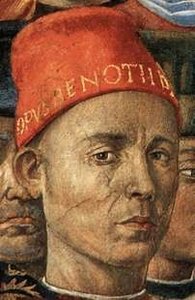
Benozzo Gozzoli
1420 - 1497 , Italy
Quick Facts
- Artistic Movement Or Style: International Gothic
- Artists Or Movements Influenced By This Artist: ['Early Renaissance']
- Artists Who Influenced This Artist:
- Fra Angelico
- Lorenzo Ghiberti
- Date Of Birth: 1420
- Date Of Death: 1497
- Full Name: Benozzo di Lese
- Nationality: Florentine
- Notable Artworks:
- Journey of the Magi
- Scenes from St Francis
- Place Of Birth: Florence, Italy
Related Articles
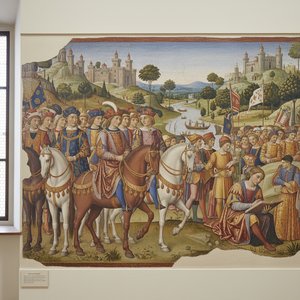
Benozzo Gozzoli: Narrative Innovation & Secular Humanism in Early Renaissance Frescoes
Explore the innovative frescoes of Benozzo Gozzoli, a key Florentine Renaissance painter. Discover his unique blend of religious narrative, secular humanism & detailed portraiture in masterpieces like the Magi Chapel cycle.

The Fresco as Family Legacy: Preserving Heritage Through Wall Art
Explore the rich history & enduring legacy of fresco painting. Discover how to preserve family heritage through stunning wall art. Expert insights & restoration guidance.
Beyond Borders: The Spiritual & Stylistic Innovations of International Gothic Art
Explore the exquisite beauty & spiritual depth of International Gothic art. Discover key artists like Simone Martini & Pol de Limbourg, its origins, symbolism, and lasting influence on European painting. Expert insights at ArtsDot.

The Enduring Legacy of Fresco Painting: Techniques, History & Contemporary Relevance
Explore the rich history & enduring artistry of fresco painting – from Giotto to Michelangelo! Discover techniques, conservation efforts, & modern applications. Learn how ArtsDot brings this timeless art form to your home.

The Enduring Legacy of Fresco: Technique, History & Artistic Expression Across Cultures
Explore the rich history & enduring legacy of fresco painting! Discover ancient techniques, Giotto's masterpieces, and modern applications. Expert insights for art lovers & professionals.