 Preview
 Send
Send Share
Share
 Details

 Download
 Similars
 X-Ray
X-Ray Diaporama
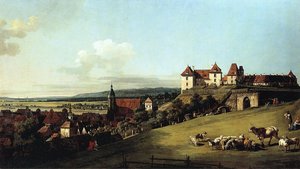
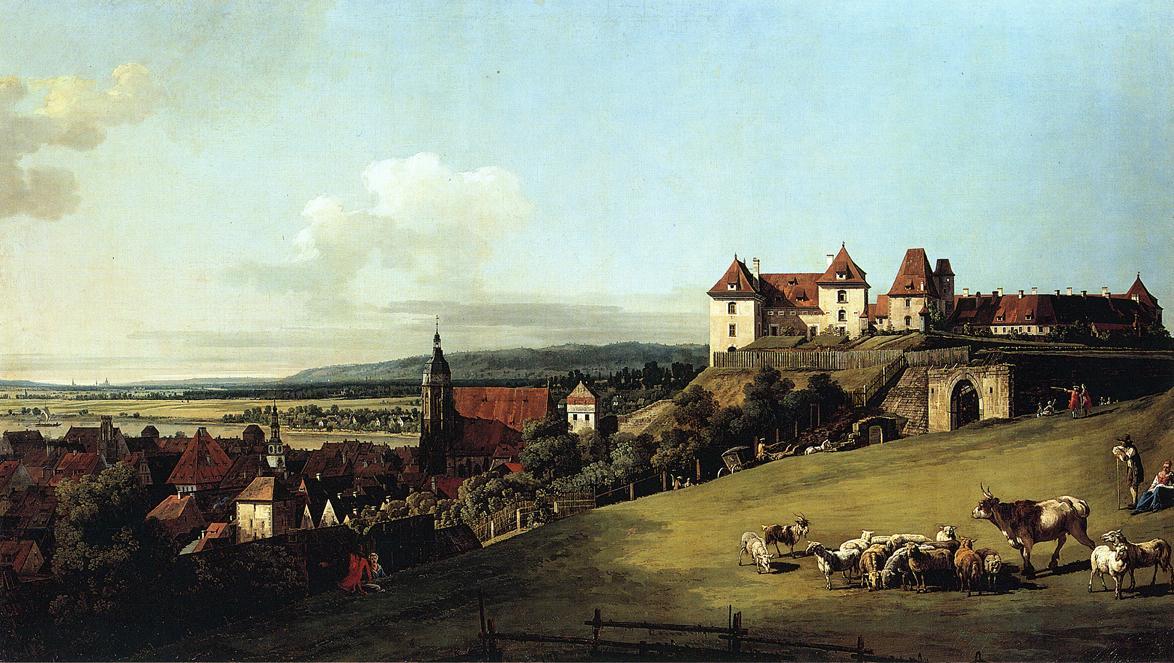
Fortress of Sonnenstein above Pirna
 Acrylic On Canvas
- WallArt
- Rococo/Neoclassicism
 1753
1753 132.0 x 235.0 cm
 Staatliche Kunstsammlungen
 Read More
Giclée / Art Print
Museum-quality giclée or canvas print with fast production and flexible finish options. ( Buy Hand Made Painting Buy Image)




P118B $10

P118H $10

P118W $10

P438Z $10

P508JH $12

P508YH $12

P805H $10

P805Z $10

P919BZ $10

P919G $10

P919XJ $10

P959ZH $10

P968JZ $12

W106C $8

W218G $10

W218JH $8

W218Y $10

W307PJ $10

W316G $10

W316PJ $8

W316Y $10

W398PJ $8

W4111J $10

W500HY $15

W500JH $15

W692G $12

W849H $8

W940BG $15

W953PJ $8




Pick from our preset sizes that match the artwork's original proportions.

You may enter your own dimensions to fit a specific frame or space. If your selected size does not match the original image's proportions, we will either crop the artwork or extend the image with a mirrored or solid-fill edge. A digital mockup will be sent for your approval before production begins.
Please note that the on-screen preview does not reflect the actual cropping or extension. Only the mockup will accurately show the final composition.
While custom sizes are available, we recommend selecting a dimension from the predefined list to preserve the original proportions.
Worldwide Delivery () in 2 weeks instead of standard 4/5 weeks. (27 August)

Free Worldwide Express Shipping

High-Quality Linen Canvas

Full Shipping Insurance

Customs Tax Refund Guarantee

True Color Matching Guarantee

60-Day Return Policy (Defects Only)

100% Money-Back Guarantee

Bulk Discount Offer
 Glass option is only available in size under 110 CM

Fortress of Sonnenstein above Pirna
Giclée / Art Print
Reproduction Size
-


Total Price
$ 63
Collectible Description
A Window into a Prussian Past: The Fortress of Sonnenstein
Bernardo Bellotto’s “Fortress of Sonnenstein Above Pirna,” painted in 1753, isn't merely a depiction of a fortified town; it’s a meticulously rendered snapshot of a specific moment in time – the cusp of the mid-18th century. The painting captures not just the physical structure of Sonnenstein Castle and the surrounding town of Pirna nestled within the Ore Mountains of Saxony, but also the atmosphere of a bustling community, a vibrant microcosm reflecting the social and political realities of Prussia under Frederick II. Bellotto’s genius lies in his ability to transform topographical detail into a compelling narrative, inviting the viewer to step back centuries and experience this scene as if they were present.
Bellotto was a master of the “veduta,” an Italian term for cityscape painting that gained immense popularity across Europe. Unlike simple landscape views, vedute sought to capture the essence of urban life – its architecture, its people, its energy. Bellotto’s style is characterized by a remarkable precision and a cool, almost detached observation. He eschewed dramatic lighting or exaggerated emotions in favor of a balanced composition and an acute awareness of perspective. This painting exemplifies his skill; every building, every road, every figure is rendered with painstaking accuracy, creating a sense of immense depth and realism.
The Castle as Symbol: Power and Protection
Sonnenstein Castle itself holds significant historical weight. Originally built in the 13th century, it evolved over centuries into a formidable fortress, reflecting the shifting political landscape of the region. By the mid-18th century, it served as a crucial strategic point, guarding against potential invasions and embodying the power of the Prussian monarchy. Bellotto’s depiction emphasizes this role through the castle's imposing presence – its towering walls, fortified gatehouse, and strategically positioned towers dominate the scene. The careful arrangement of figures around the castle underscores its importance as a center of authority and defense.
However, Sonnenstein wasn’t simply a symbol of military strength. It also housed a renowned library, attracting scholars and intellectuals from across Europe. Bellotto subtly hints at this intellectual life through the inclusion of individuals engaged in various activities – merchants conducting business, farmers tending their fields, and people strolling along the streets. This juxtaposition of military might and scholarly pursuits speaks to the complex nature of 18th-century Prussia, a nation that valued both power and enlightenment.
A Masterclass in Technique: Light, Shadow, and Perspective
Bellotto’s technical prowess is immediately apparent in his masterful use of light and shadow. He employs a subtle chiaroscuro – the dramatic contrast between light and dark – to create a sense of depth and volume. The warm glow of the sunlight illuminates the castle walls and the surrounding buildings, while shadows deepen the recesses and suggest the hidden corners of the town. The artist’s meticulous attention to perspective is equally impressive; the roads converge in the distance, creating an illusion of vastness, while the figures are rendered with a remarkable sense of scale.
Bellotto's use of color is restrained and harmonious, dominated by earthy tones – browns, grays, and ochres – that evoke the rugged landscape of the Ore Mountains. He employs subtle variations in hue to differentiate between different materials – the rough texture of the stone walls, the vibrant colors of the clothing worn by the townspeople, and the verdant green of the surrounding meadows. The painting is a testament to Bellotto’s ability to capture not just what he saw but also how it *felt*—the cool air, the warmth of the sun, the quiet energy of everyday life.
A Legacy Preserved: Reproduction and Inspiration
Bellotto's “Fortress of Sonnenstein Above Pirna” offers a rare glimpse into a bygone era. Today, high-quality reproductions allow us to appreciate the artist’s skill and vision on a grand scale. Whether adorning a study, a gallery wall, or a corporate lobby, this painting evokes a sense of timeless beauty and historical significance. It's more than just an image; it’s a portal to a specific place and time—a reminder of Prussia’s strategic importance, its intellectual vibrancy, and the enduring power of art to capture the essence of human experience.
Related Artworks
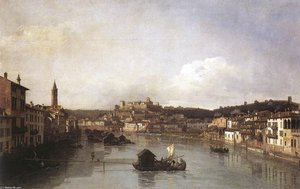
Artist Biography
early life and training
bernardo bellotto, a renowned italian painter, was born in venice around 1721/2 or on january 30, 1721. he was the nephew and pupil of the famous giovanni antonio canal canaletto, a prominent figure in the venetian school of painting.artistic style and career
bellotto's artistic style was characterized by his elaborate representation of architectural and natural vistas, as well as the unique quality of each place's lighting. he was known for his exceptional skill in capturing the essence of urban landscapes, which led to his invitation to work for various european monarchs.- he traveled to rome (1742), northern italy (1744-1745), and later moved to dresden (1747-1758) at the behest of king august iii of poland.
- his works in dresden preserved the city's pre-war beauty, now destroyed.
- he received an invitation from empress maria theresa to work in vienna (1758), where he painted the city's monuments.
notable works and legacy
some of bellotto's notable works include:- view of the grand canal: santa maria della salute and the dogana from campo santa maria zobenigo (1743)
- architectural capriccio with a self-portrait of bellotto in the costume of a venetian nobleman
museums and collections
bellotto's works can be found in various museums, including the pinacoteca di vicenza in italy. to explore more of his artwork, visit [https://ArtsDot.com/@/bernardo bellotto](https://ArtsDot.com/@/bernardo bellotto) and discover the world of art.references
* /en/art/show/art-d3baj3-en/ * [https://www.wikiart.org/en/bernardo-bellotto/](https://www.wikiart.org/en/bernardo-bellotto/) * [https://fr.wikipedia.org/wiki/bernardo_bellotto](https://fr.wikipedia.org/wiki/bernardo_bellotto)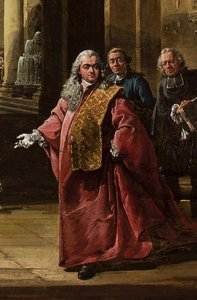
Bernardo Bellotto
1721 - 1780 , Italy
Quick Facts
- Artistic Movement Or Style: Vedute painting
- Artists Or Movements Influenced By This Artist: ['Urban reconstruction']
- Artists Who Influenced This Artist: ['Giovanni Canaletto']
- Date Of Birth: 1721
- Date Of Death: 1780
- Full Name: Bernardo Bellotto
- Nationality: Italian
- Notable Artworks:
- View of the Grand Canal
- Architectural Capriccio
- Place Of Birth: Venice, Italy
Related Articles

Romantic Landscapes: 10 Masterpieces for Your Home | ArtsDot
Journey through 10 Romantic landscape masterpieces by Friedrich, Turner & Cole. Explore emotional art, sublime nature scenes & iconic 19th-century paintings. Find museum-quality reproductions for your home at ArtsDot.com – discover the full collection online!

Evocations of Place: A Historical Journey Through Landscape Art
Explore the rich history of landscape art with ArtsDot. Discover renowned artists, movements like Impressionism & Romanticism, and expert guidance for collecting timeless pieces. Find your perfect serene escape today!

John Constable's Masterpieces: Explore 25 Iconic Landscapes for Your Home
Journey through John Constable's 25 most celebrated landscapes. Explore Romanticism, Dedham Vale & his masterful use of light in iconic paintings like 'Hay Wain'. Find museum-quality art reproductions and elevate your home decor on ArtsDot.com.
Evocations of Place: A Historical Journey Through Landscape Art
Explore the rich history of landscape art with ArtsDot. Discover renowned artists, movements like Impressionism & tonalism, and expert guidance for collecting timeless pieces. Find your perfect serene escape today!

Baroque Masterpieces: 10 Paintings That Defined an Era |
Journey through the drama & grandeur of Baroque art! Explore 10 masterpieces by Caravaggio, Rembrandt, Rubens & more. Discover stunning oil paintings, rich colors & timeless stories. Find museum-quality reproductions at .