 Preview
 Send
Send Share
Share
 Details

 Download
 Similars
 X-Ray
X-Ray Diaporama
The Sacrifice of Iphigenia


 Read More
Hand Made Oil Reproduction
Hand-painted oil on canvas in your size and frame, made to order by our artists. ( Buy Print Buy Image)




P118B $10

P118H $10

P118W $10

P438Z $10

P508JH $12

P508YH $12

P805H $10

P805Z $10

P919BZ $10

P919G $10

P919XJ $10

P959ZH $10

P968JZ $12

W106C $8

W218G $10

W218JH $8

W218Y $10

W307PJ $10

W316G $10

W316PJ $8

W316Y $10

W398PJ $8

W4111J $10

W500HY $15

W500JH $15

W692G $12

W849H $8

W940BG $15

W953PJ $8




Pick from our preset sizes that match the artwork's original proportions.

You may enter your own dimensions to fit a specific frame or space. If your selected size does not match the original image's proportions, we will either crop the artwork or extend the painting with additional hand-painted elements. A digital mockup will be sent for your approval before production begins.
Please note that the on-screen preview does not reflect the actual cropping or extension. Only the mockup will accurately show the final composition.
While custom sizes are available, we recommend selecting a dimension from the predefined list to preserve the original proportions.
After order, ArtsDot.com team will email client for instructions and provide a mockup preview
Worldwide Delivery () in 3/4 weeks instead of standard 5 weeks. (17 August). No compromise on quality.

Free Worldwide Express Shipping

High-Quality Linen Canvas

Full Shipping Insurance

Customs Tax Refund Guarantee

True Color Matching Guarantee

60-Day Return Policy (Defects Only)

100% Money-Back Guarantee

Bulk Discount Offer
 Glass option is only available in size under 110 CM

The Sacrifice of Iphigenia
Reproduction Medium
Reproduction Size
-


Total Price
$ 263
Artwork Description
A Moment Frozen in Time: Charles-André van Loo’s “The Sacrifice of Iphigenia”
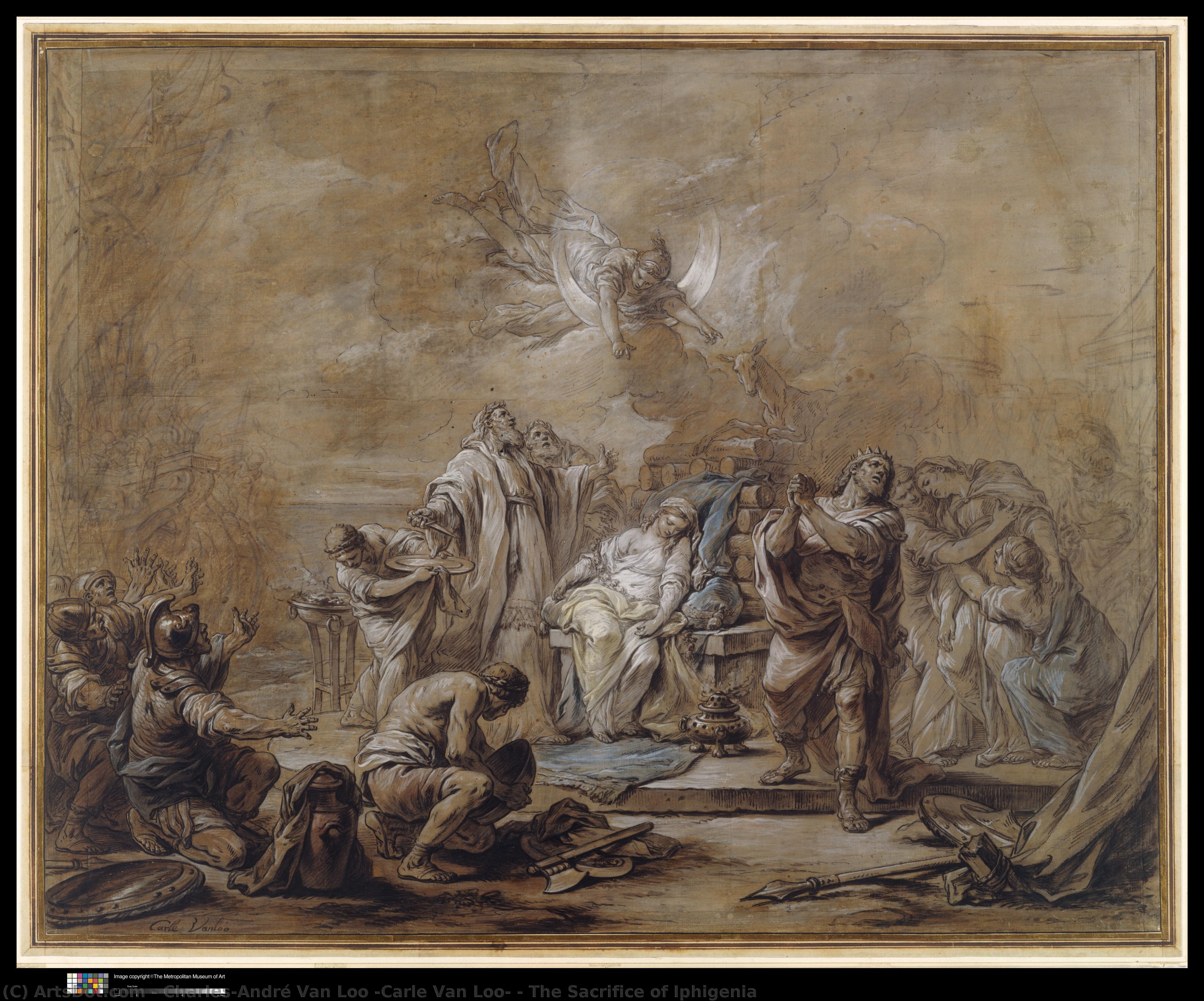
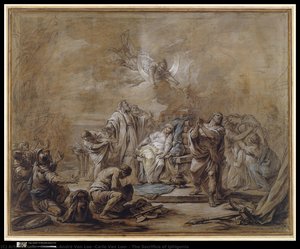
Charles-André van Loo's "The Sacrifice of Iphigenia," painted in 1757, is more than just a depiction of a tragic myth; it’s a masterclass in Baroque drama rendered with the elegance and meticulous detail characteristic of the Rococo style. Housed within The Metropolitan Museum of Art, this gouache on canvas transports us to a pivotal moment – the agonizing farewell of Agamemnon and his daughter Iphigenia before her sacrifice to appease Artemis. Van Loo doesn’t simply illustrate the event; he captures its emotional weight with an almost unbearable intensity, utilizing light, gesture, and composition to draw the viewer into the heart of the scene.
Rococo Grandeur and Baroque Intensity
Van Loo, a member of a distinguished artistic dynasty originating in the Netherlands, firmly established himself within the French court as a leading Rococo painter. However, “The Sacrifice of Iphigenia” transcends mere decorative elegance; it’s infused with the heightened drama and emotionalism often associated with Baroque painting. The composition is meticulously balanced – a vast, open space dominated by the figures, creating a sense of both grandeur and vulnerability. Notice how Van Loo employs diagonal lines, particularly in the positioning of Iphigenia and Agamemnon, to heighten the tension and direct our gaze towards the impending tragedy.
The use of color is equally significant. The cool blues and greens of the background contrast sharply with the warm tones of the figures’ clothing, emphasizing their isolation and highlighting the emotional turmoil within the scene. The subtle gradations of light and shadow – a hallmark of Baroque technique – create a sense of depth and volume, lending a palpable realism to the figures and their surroundings.
Symbolism and Mythological Resonance
The painting is steeped in symbolism, drawing upon the rich tapestry of Greek mythology. Iphigenia’s sacrifice represents a profound loss—the price of victory, the necessity of appeasing the gods, and the heartbreaking fate of innocence. The presence of the angel, a recurring motif in depictions of sacrificial scenes, underscores the divine judgment at play. Agamemnon's posture – his head bowed, hand raised in a gesture of despair – speaks volumes about his grief and acceptance of this terrible necessity. Even the details, such as the bowl and vase held by some figures, contribute to the narrative, hinting at rituals and offerings associated with Artemis.
A Window into 18th-Century French Court Life
Beyond its mythological subject matter, “The Sacrifice of Iphigenia” offers a glimpse into the artistic conventions and social dynamics of 18th-century France. Van Loo’s meticulous attention to detail—the elaborate costumes, the richly furnished background, the carefully rendered faces—reflects the opulence and sophistication of the French court. The painting served as both a historical record and a demonstration of artistic skill, intended to impress patrons and secure commissions. It's a testament to Van Loo’s ability to seamlessly blend classical mythology with the prevailing aesthetic sensibilities of his time.
Today, reproductions of “The Sacrifice of Iphigenia” continue to captivate viewers with their dramatic intensity and emotional resonance. Whether adorning a grand salon or a more intimate space, this painting serves as a powerful reminder of the enduring themes of sacrifice, loss, and the complex relationship between humanity and the divine.
Related Artworks
Artist Biography
Early Life and Training
- Born: February 15, 1705, in Nice, France
- Family Background: Son of Louis-Abraham van Loo and younger brother of Jean-Baptiste van Loo. Member of a successful dynasty of Dutch painters.
- Early Education: Initial training in Turin, followed by studies in Rome (1712) under Benedetto Luti and Pierre Legros.
- Parisian Studies: Attended the Académie royale, winning first prize for drawing in 1723 and historical painting in 1727.
Artistic Career and Notable Works
- Style: Primarily known as a Rococo painter, characterized by elegance, grace, and ornate detail.
- Subject Matter: Diverse range including portraits, mythological scenes, historical paintings, allegories, and genre scenes.
- Significant Works:
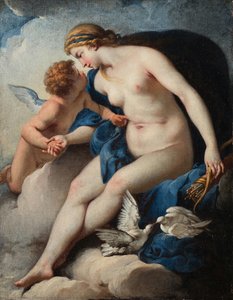
- Venus and Amor (Kunsthalle Bremen) - Demonstrates mastery of the Rococo style.
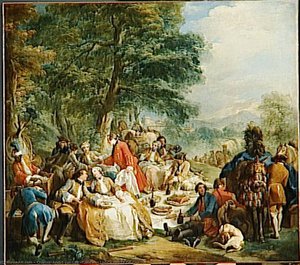
- Halt of the Hunt (The Metropolitan Museum of Art) – Captures aristocratic activities.
- Portrait of Marie Leszczynska, Queen of France – A notable royal portrait.
- Jupiter and Antiope - Showcases mythological themes.
- Self Portrait – Provides insight into the artist's self-perception.
- Perseus and Andromeda (multiple versions) – Illustrates skill in depicting classical mythology.
- Mademoiselle Clairon as Medea (small version) - A captivating Rococo portrait of 1760.
Patronage and Royal Recognition
- Royal Patronage: Enjoyed the patronage of Madame de Pompadour and the French court.
- Appointment to the Court: Became First Painter to King Louis XV in 1762, a prestigious position.
- Order of Saint Michael: Decorated with the Order of Saint Michael, signifying royal favor.
Influences and Legacy
- Family Influence: Heavily influenced by his father and brother, both accomplished painters.
- Rivalry: Competed with François Boucher, another prominent Rococo artist.
- Modern French School: His "simplicity of style and correctness of design" significantly influenced the modern French school of painting.
- Critical Fortune: While his critical standing fluctuated over time, his skill and the breadth of his work command respect.
Museum Collections & Further Exploration
- Museum Presence: Works are featured in prominent museums including the Louvre (The Marriage of the Virgin), Kunsthalle Bremen, and The Metropolitan Museum of Art.
- Further Resources:
- ArtsDot's Charles-André van Loo page: https://www.ArtsDot.com/artists/charles-andre-van-loo/
- ArtsDot's Greatest Artists of All Time page: https://www.ArtsDot.com/greatest-artists
- ArtsDot Virtual Museum: https://www.ArtsDot.com/
- Wikipedia Article: https://en.wikipedia.org/wiki/Charles-Andr%C3%A9_van_Loo
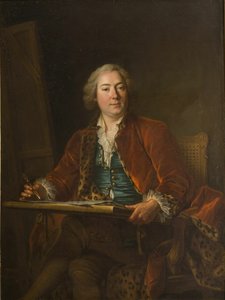
Charles-André van Loo
1705 - 1765 , France
Quick Facts
- Artistic Movement Or Style: Rococo painting
- Artists Or Movements Influenced By This Artist: ['Modern French school']
- Artists Who Influenced This Artist:
- Benedetto Luti
- Pierre Le Gros
- Date Of Birth: February 15, 1705
- Date Of Death: July 15, 1765
- Full Name: Charles-André van Loo
- Nationality: French
- Notable Artworks:
- Venus and Amor
- Halt of the Hunt
- Portrait of Marie Leszczynska
- Jupiter and Antiope
- Self Portrait
- Perseus and Andromeda
- Place Of Birth: Nice, France
Related Articles
Van Gogh's Masterpieces: Explore 25 Iconic Paintings & Art for Your Home
Journey through Vincent van Gogh's 25 most iconic paintings! Explore 'Starry Night', 'Sunflowers,' and more—discover the stories, techniques & emotions behind these Post-Impressionist masterpieces. Find museum-quality art reproductions for your home at ArtsDot.com.
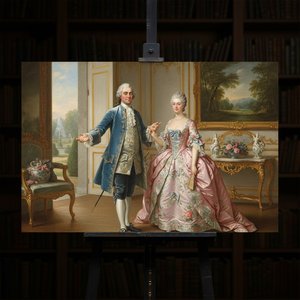
Charles-André van Loo: A Study in Rococo Portraiture & the French Court's Artistic Dynamics
Explore the elegant world of Charles-André van Loo, a master of Rococo portraiture at the French court. Discover his life, techniques, and enduring influence on 18th-century art. Hand-painted reproductions available.

Rembrandt's Masterpieces: Explore 25 Iconic Paintings & Prints | ArtsDot
Journey through Rembrandt van Rijn's 25 most iconic paintings & etchings. Explore Dutch Golden Age masterpieces, dramatic chiaroscuro, and timeless portraits. Find museum-quality art reproductions to elevate your home decor on ArtsDot.com.

Rococo's Radiant Legacy: 10 Masterpieces for Your Home |
Indulge in the elegance of Rococo! Explore 10 masterpieces by Fragonard, Boucher & Watteau. Discover the stories behind these iconic paintings and bring timeless art to your home with museum-quality reproductions from .

Early Netherlandish Masters: 10 Paintings That Revolutionized Art & Decor
Journey into the world of Early Netherlandish painting! Explore 10 masterpieces by Jan van Eyck, Rogier van der Weyden & more. Discover stunning detail, symbolism & Renaissance art for your home decor. Find museum-quality reproductions on ArtsDot.com