 Preview
 Send
Send Share
Share
 Details

 Download
 Similars
 X-Ray
X-Ray Diaporama
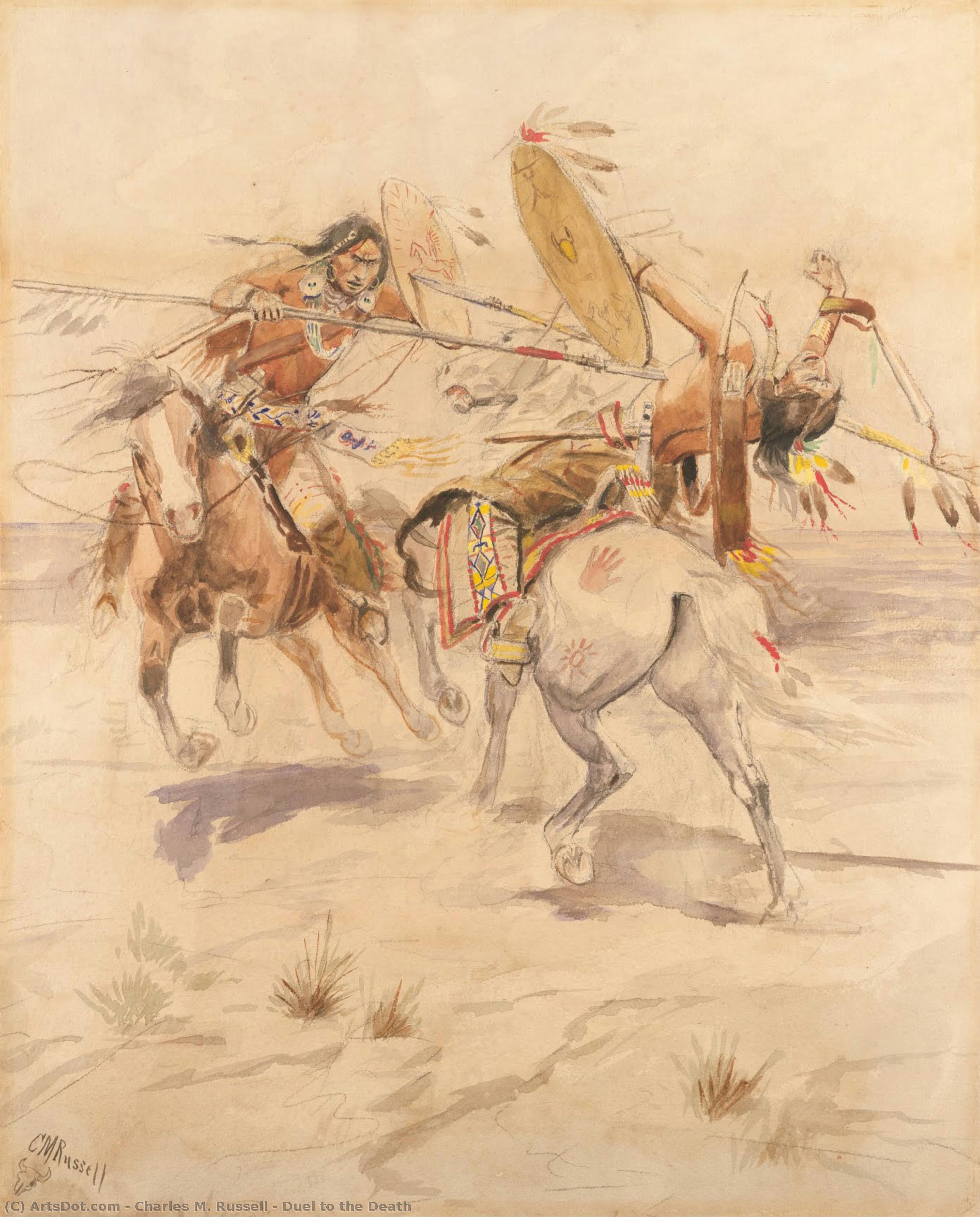
Duel to the Death


 Read More
Hand Made Oil Reproduction
Hand-painted oil on canvas in your size and frame, made to order by our artists. ( Buy Print Buy Image)




P118B $10

P118H $10

P118W $10

P438Z $10

P508JH $12

P508YH $12

P805H $10

P805Z $10

P919BZ $10

P919G $10

P919XJ $10

P959ZH $10

P968JZ $12

W106C $8

W218G $10

W218JH $8

W218Y $10

W307PJ $10

W316G $10

W316PJ $8

W316Y $10

W398PJ $8

W4111J $10

W500HY $15

W500JH $15

W692G $12

W849H $8

W940BG $15

W953PJ $8




Pick from our preset sizes that match the artwork's original proportions.

You may enter your own dimensions to fit a specific frame or space. If your selected size does not match the original image's proportions, we will either crop the artwork or extend the painting with additional hand-painted elements. A digital mockup will be sent for your approval before production begins.
Please note that the on-screen preview does not reflect the actual cropping or extension. Only the mockup will accurately show the final composition.
While custom sizes are available, we recommend selecting a dimension from the predefined list to preserve the original proportions.
After order, ArtsDot.com team will email client for instructions and provide a mockup preview
Worldwide Delivery () in 3/4 weeks instead of standard 5 weeks. (17 August). No compromise on quality.

Free Worldwide Express Shipping

High-Quality Linen Canvas

Full Shipping Insurance

Customs Tax Refund Guarantee

True Color Matching Guarantee

60-Day Return Policy (Defects Only)

100% Money-Back Guarantee

Bulk Discount Offer
 Glass option is only available in size under 110 CM

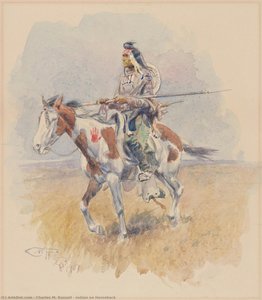
Duel to the Death
Reproduction Medium
Reproduction Size
-


Total Price
$ 288
Artwork Description
The Canvas of a Clash: Charles Marion Russell’s “Duel to the Death”
Charles Marion Russell's "Duel to the Death," painted in 1891, isn’t merely a depiction of two Native American warriors locked in combat; it’s a visceral embodiment of the rugged spirit and inherent drama of the American West. Born from Russell’s immersive life as a cowboy and his deep fascination with Indigenous cultures, this watercolor captures a moment suspended between fury and fatalism, brimming with the raw energy of a bygone era. The painting immediately commands attention – not through bombastic color or dramatic lighting, but through its masterful portrayal of movement, tension, and the unspoken narratives etched onto the faces of the warriors.
- Subject Matter: The scene unfolds on a windswept plain, dominated by two figures engaged in a deadly duel. Russell skillfully avoids romanticizing violence; instead, he presents it as a brutal necessity, a consequence of honor and tradition within a world governed by strict codes.
- Historical Context: Painted during the late 19th century, “Duel to the Death” reflects a period of profound transformation in the American West – a time of westward expansion, conflict between settlers and Native Americans, and the fading of traditional ways of life. Russell’s work serves as both a record of this era and a poignant commentary on its complexities.
A Symphony of Watercolor: Technique and Style
Russell's signature style is immediately recognizable in “Duel to the Death.” He eschews meticulous detail, opting instead for loose, expressive brushstrokes that convey a sense of immediacy and dynamism. The watercolor technique itself—characterized by washes of color, visible texture, and subtle gradations—perfectly captures the atmosphere of the scene: the swirling dust, the shifting light, and the palpable heat of the confrontation. Notice how he uses hatching and cross-hatching to build form and create a sense of depth, particularly in the horses’ muscular bodies. The painting isn't about photographic realism; it’s about capturing *feeling* – the weight of the moment, the potential for destruction, and the unwavering resolve of the warriors.
Russell’s deliberate use of muted earth tones—browns, tans, and ochres—grounds the scene in its Western setting. The subtle blues and greens suggest a vast, unforgiving landscape, while the flashes of red hint at the bloodshed to come.Decoding the Symbols: Narrative and Emotion
Beyond the literal depiction of a duel, “Duel to the Death” is rich with symbolic meaning. The warriors themselves represent opposing forces – tradition versus progress, perhaps, or the clash between two cultures. Their postures—rigidly alert, weapons poised—speak volumes about their commitment to honor and duty. The horses, powerful and untamed, mirror the spirit of the West itself. Russell’s masterful use of composition—the diagonal lines created by the horses' movement drawing the viewer's eye towards the central action—heightens the sense of drama and urgency. There is a quiet intensity in their faces, suggesting that they are not simply engaging in violence for sport but fulfilling a deeply ingrained obligation.
- The Horses: Representing both power and freedom, mirroring the spirit of the West.
- The Warriors’ Stances: Conveying unwavering resolve and adherence to honor.
- The Landscape: A vast, unforgiving backdrop symbolizing the challenges and dangers of frontier life.
A Legacy in Bronze and Watercolor
“Duel to the Death” stands as a testament to Charles Marion Russell’s extraordinary talent and his profound connection to the American West. His work continues to resonate with audiences today, offering a glimpse into a pivotal era of American history and reminding us of the enduring themes of courage, conflict, and the complexities of cultural identity. Reproductions of this iconic painting capture not only its visual beauty but also the emotional power that made it one of Russell’s most celebrated works. It's an evocative piece, inviting contemplation on the price of honor and the spirit of a nation forged in the crucible of the frontier.
Related Artworks
Artist Biography
A Life Etched in the West
Charles Marion Russell, affectionately known as “C.M.” or “Kid” Russell, wasn’t born into the world he would so vividly immortalize on canvas and in bronze. Born in St. Louis, Missouri, in 1864, his early life was steeped not in formal artistic training but in a consuming fascination with the American West—a realm initially experienced through stories and sketches, fueled by an almost romantic yearning for open spaces and untamed freedom. This nascent passion would eventually propel him westward, abandoning traditional schooling at sixteen to become a working cowboy in Montana’s Judith Basin. It was a bold move, a deliberate immersion into the life he so vividly imagined, and it proved pivotal in shaping his artistic vision. Russell didn't merely *depict* the West; he lived it, breathed its dust, and absorbed its rhythms. This firsthand experience would become the bedrock of his enduring legacy. For eleven years, he embraced the rugged existence of a cowboy, ranch hand, and hunter, experiences that provided an intimate understanding of the landscape, the animals, and, most importantly, the people who inhabited it—the cowboys, Native Americans, and trappers whose lives he would so powerfully portray.From Wrangler to Chronicler
Russell’s artistic journey wasn't one of deliberate academic progression but rather an organic unfolding born from necessity and observation. While working as a cowboy, he began sketching scenes from his daily life—branding cattle, rounding up horses, encounters with wildlife—capturing moments that resonated with the raw beauty and inherent drama of the West. These weren’t polished works intended for galleries; they were personal records, visual diaries documenting a way of life rapidly disappearing. His early work was characterized by a remarkable naturalism, a keen eye for detail honed by years spent observing the nuances of his surroundings. He wasn't interested in romanticizing or idealizing the West; he sought to portray it as it *was*, with all its hardships and glories. A breakthrough came after illustrating a postcard depicting cattle struggling through a harsh winter—a scene so evocative that it sparked demand for his work, allowing him to transition from ranch hand to full-time artist in 1893. This marked the beginning of a prolific career spanning painting, sculpture, and writing, all unified by his unwavering commitment to portraying the authentic spirit of the American West. He wasn’t simply an artist; he was a visual historian, meticulously documenting a vanishing world before it faded into memory.Capturing a Vanishing World: Themes and Techniques
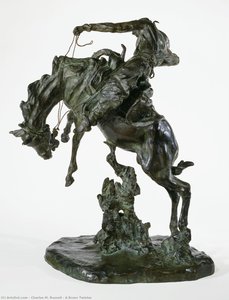
Russell’s art is profoundly imbued with narrative—each canvas tells a story, often steeped in the mythology and realities of frontier life. His subjects are diverse yet consistently focused on the interactions between cowboys, Native Americans, and the untamed landscape. He didn't shy away from depicting conflict, but his portrayals were rarely sensationalized; instead, they conveyed a sense of respect for all involved, acknowledging the complexities of a changing world. A Bad Hoss, painted in 1904, exemplifies this—a dynamic scene capturing the struggle between cowboy and bucking bronco, embodying both the skill and danger inherent in the cowboy lifestyle. Similarly, Battle of Belly River (1905) showcases his ability to depict dramatic historical events with precision and emotional depth. His technique evolved over time, moving from a more illustrative style towards looser brushwork and bolder color palettes. He was a master storyteller, using composition, light, and shadow to create compelling narratives that resonated deeply with audiences eager to connect with the romance and ruggedness of the West. His later works often featured a heightened sense of drama and emotional intensity, reflecting his growing maturity as an artist and his deepening understanding of the human condition. He understood that the true beauty of the West lay not just in its landscapes but also in the resilience and spirit of those who inhabited it.Legacy and Enduring Influence
Charles Marion Russell’s impact on American art is undeniable. He wasn't simply a painter of Western scenes; he defined them for generations. His work helped to shape the popular image of the cowboy, the Native American, and the vast landscapes of the West, influencing countless artists who followed in his footsteps. He became known as “the cowboy artist” not just for his subject matter but also for his authentic portrayal of Western life—a portrayal rooted in personal experience rather than romanticized fantasy. Today, his paintings and sculptures are highly sought after by collectors and museums worldwide. The C.M. Russell Museum Complex in Great Falls, Montana, stands as a testament to his enduring legacy, housing an extensive collection of his work and preserving the spirit of the West he so passionately captured. His murals, like Lewis and Clark Meeting Indians at Ross' Hole, continue to inspire awe and admiration, serving as powerful reminders of a pivotal moment in American history. Russell’s art transcends mere representation; it is a celebration of courage, resilience, and the enduring power of the human spirit—a legacy that continues to captivate audiences more than a century after his death.Beyond the Canvas: A Voice for Change
Russell wasn't just an artist; he was also an advocate. He developed a deep respect for Native American cultures during his time in Montana and Canada, and he used his art to challenge prevailing stereotypes and promote understanding. He actively supported the Chippewa tribe’s efforts to secure a reservation in Montana, even lobbying Congress on their behalf. This commitment to social justice is often overlooked but represents an important dimension of his character and artistic vision. He believed that it was crucial to document and preserve Native American traditions before they were lost forever—a belief reflected in many of his paintings and sculptures. His art wasn’t simply about depicting the West; it was about bearing witness to a changing world and advocating for those whose voices were often marginalized. This dedication to authenticity, coupled with his artistic talent, cemented his place as one of America's most important and beloved artists—a chronicler of a vanishing way of life and a champion of cultural understanding.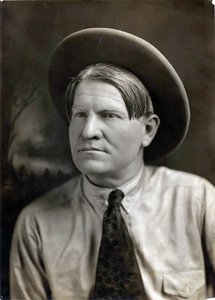
Charles Marion Russell
1864 - 1926 , United States of America
Quick Facts
- Artistic Movement Or Style: Western art
- Artists Or Movements Influenced By This Artist: ['Western artists']
- Date Of Birth: March 19, 1864
- Date Of Death: October 24, 1926
- Full Name: Charles Marion Russell
- Nationality: American
- Notable Artworks:
- Big Nose George...
- When the Plains...
- Peace Talk
- A Bad Hoss
- Battle of Belly...
- Place Of Birth: St. Louis, USA
Related Articles
Charles Marion Russell: Capturing the American West Through a Romantic Lens
Explore the captivating world of Charles Marion Russell, 'the cowboy artist.' Discover his life, iconic paintings, advocacy for Native Americans, and investment potential. A guide for discerning art collectors.

Watercolor Wonders: 10 Masterpieces That Redefined Art History | ArtsDot
Journey through 10 legendary watercolor masterpieces by Sargent, Turner & Homer! Explore iconic landscapes, portraits & floral art that redefined history. Find museum-quality reproductions and curated decor ideas at ArtsDot.com.

Ephemeral Visions: Exploring the Artistic Legacy & Contemporary Practice of Watercolor Painting
Explore the captivating world of watercolor painting! Discover its rich history, essential techniques, influential artists & collecting tips. A comprehensive guide for art enthusiasts from ArtsDot.

Ephemeral Visions: Exploring the Artistic Legacy & Nuances of Watercolor Painting
Explore the captivating world of watercolor painting! Discover its rich history, essential techniques, influential artists & collecting tips from art experts. A comprehensive guide for enthusiasts.

Ephemeral Visions: Exploring the History & Emotional Resonance of Watercolor Painting
Explore the captivating history of watercolor painting, from ancient techniques to modern masters like Kandinsky & Blake. Discover essential artists, collecting tips & the emotional power of this luminous medium. Expert insights for art enthusiasts.
![Wild Horse Hunters [No. 2]](/media/artworks/images/thumbnails/6a/6b/6a6b08c840334ee098142709d50244ef.jpg)