 Preview
 Send
Send Share
Share
 Details

 Download
 Similars
 X-Ray
X-Ray Diaporama
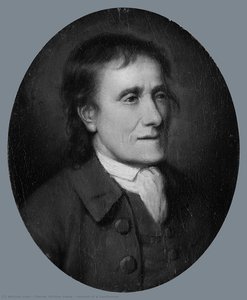
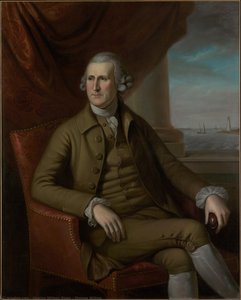
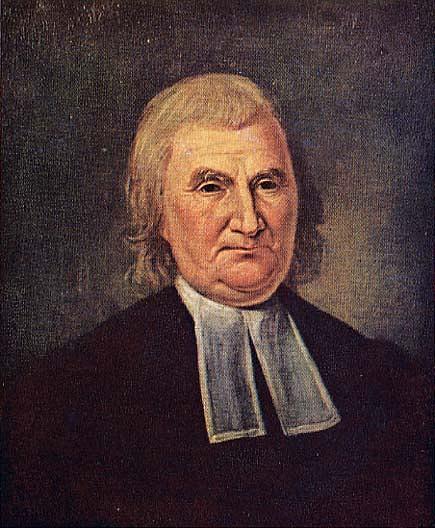
John Witherspoon (1723 1794), (painting)


 Read More
Hand Made Oil Reproduction
Hand-painted oil on canvas in your size and frame, made to order by our artists. ( Buy Print Buy Image)




P118B $10

P118H $10

P118W $10

P438Z $10

P508JH $12

P508YH $12

P805H $10

P805Z $10

P919BZ $10

P919G $10

P919XJ $10

P959ZH $10

P968JZ $12

W106C $8

W218G $10

W218JH $8

W218Y $10

W307PJ $10

W316G $10

W316PJ $8

W316Y $10

W398PJ $8

W4111J $10

W500HY $15

W500JH $15

W692G $12

W849H $8

W940BG $15

W953PJ $8




Pick from our preset sizes that match the artwork's original proportions.

You may enter your own dimensions to fit a specific frame or space. If your selected size does not match the original image's proportions, we will either crop the artwork or extend the painting with additional hand-painted elements. A digital mockup will be sent for your approval before production begins.
Please note that the on-screen preview does not reflect the actual cropping or extension. Only the mockup will accurately show the final composition.
While custom sizes are available, we recommend selecting a dimension from the predefined list to preserve the original proportions.
After order, ArtsDot.com team will email client for instructions and provide a mockup preview
Worldwide Delivery () in 3/4 weeks instead of standard 5 weeks. (17 August). No compromise on quality.

Free Worldwide Express Shipping

High-Quality Linen Canvas

Full Shipping Insurance

Customs Tax Refund Guarantee

True Color Matching Guarantee

60-Day Return Policy (Defects Only)

100% Money-Back Guarantee

Bulk Discount Offer
 Glass option is only available in size under 110 CM

John Witherspoon (1723 1794), (painting)
Reproduction Medium
Reproduction Size
-


Total Price
$ 263
Artwork Description
A Portrait of Revolutionary Resolve: John Witherspoon by Charles Willson Peale
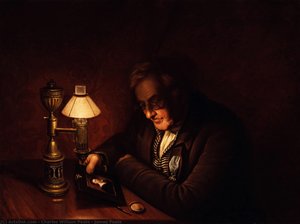
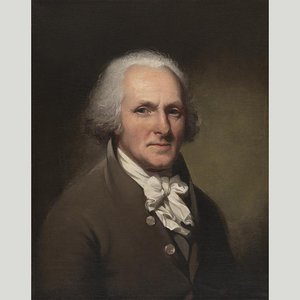
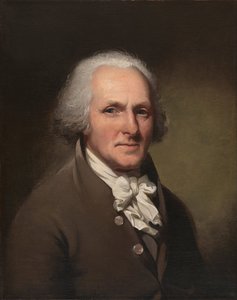
This striking black and white portrait, painted in 1783 by Charles Willson Peale, captures the dignified presence of John Witherspoon (1723-1794), a pivotal figure in American history. More than just a likeness, it's a visual testament to the ideals of the burgeoning nation. Witherspoon, a Scottish-born Presbyterian minister and president of Princeton University, was also a signatory of the Declaration of Independence and a staunch advocate for American independence. The monochromatic palette lends an air of gravitas and timelessness, evoking the historical context of the late 18th century with remarkable clarity. This piece offers a window into a crucial period of transition and revolution.Style & Technique: Neoclassical Portraiture
Peale’s style firmly aligns with the Neoclassical movement prevalent during his time. Neoclassicism, inspired by classical Greek and Roman art, emphasized order, symmetry, and a return to idealized forms. This portrait exemplifies these principles through its balanced composition, restrained color scheme (achieved here through skillful manipulation of light and shadow), and dignified portrayal of the subject. The oil on canvas technique allows for rich textural detail – observe the subtle rendering of Witherspoon’s ruffled shirt collar and the carefully painted strands of his gray beard. Peale's meticulous attention to detail, a hallmark of his work, brings a sense of realism while maintaining an overall air of formality befitting a man of Witherspoon’s stature.Historical Context & Significance
Painted just after the end of the Revolutionary War, this portrait reflects a nation forging its identity. John Witherspoon's role as a leading intellectual and political figure made him a compelling subject for Peale, who frequently depicted prominent figures of the era. The painting isn’t merely a record of appearance; it serves as a visual document of the American Revolution and the individuals who shaped its course. The absence of color focuses attention on Witherspoon's character and intellect, reinforcing his importance beyond mere physical representation. It is important to note that Peale was deeply involved in documenting the era, often portraying key figures like George Washington, further solidifying his legacy as a chronicler of American history.Symbolism & Emotional Impact
While seemingly straightforward, the portrait subtly conveys Witherspoon’s character and convictions. His direct gaze suggests intelligence and unwavering resolve. The simple black coat and white collar denote both his ministerial role and his commitment to republican ideals – a rejection of aristocratic extravagance. The overall impression is one of quiet strength and intellectual authority. The black and white rendering amplifies the emotional impact, creating a sense of solemnity and historical weight. This isn't a portrait designed to elicit frivolous emotion; rather, it aims to inspire respect for Witherspoon’s contributions and a deeper understanding of the challenges faced by those who fought for American independence.A Timeless Addition
This reproduction of Charles Willson Peale’s “John Witherspoon” offers a unique opportunity to bring a piece of American history into your home or office. Whether you are an art enthusiast, a collector seeking historically significant works, or an interior designer looking for impactful statement pieces, this portrait provides both aesthetic appeal and intellectual depth. Its understated elegance makes it suitable for a variety of décor styles, while its historical importance ensures it will be a conversation starter for years to come.Related Artworks
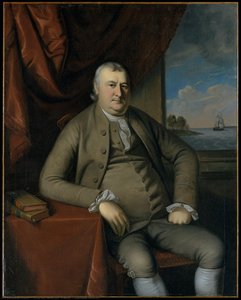
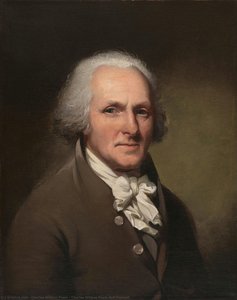
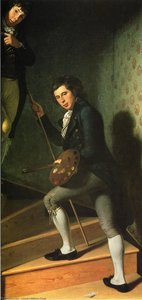
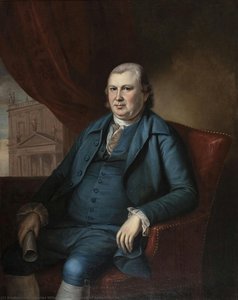
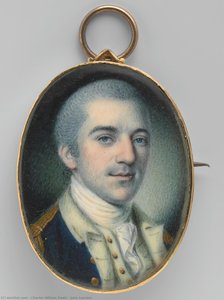
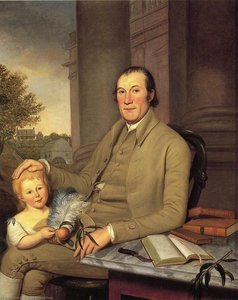
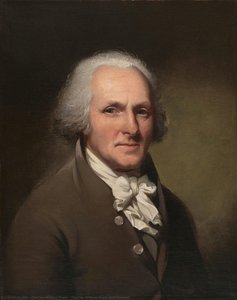
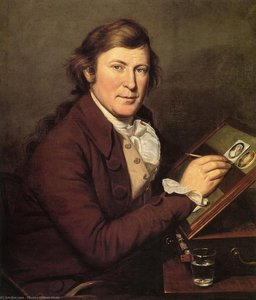
Artist Biography
Charles Willson Peale: A Life of Art, Science, and Patriotism
- Born: April 15, 1741, Chester, Queen Anne's County, Maryland
- Died: February 22, 1827, Philadelphia, Pennsylvania
Early Life and Artistic Training
- Peale’s early life was marked by financial hardship following his father’s death. He apprenticed as a saddler before discovering his passion for art.
- He received initial training from John Hesselius and briefly studied with John Singleton Copley, demonstrating an early aptitude for portraiture.
- A crucial period in his development was his time studying under Benjamin West in London (1767-1770). This exposure to European artistic trends significantly influenced his style.
Artistic Career and Major Works
- Portraiture: Peale is best known for his portraits of prominent figures from the American Revolution, including numerous depictions of George Washington (nearly sixty in total). These portraits are valuable historical documents as well as artistic achievements.
- Style: His style evolved over time, initially influenced by West’s Neoclassical approach but later incorporating elements of realism and a desire to capture likeness accurately.
- Notable Works:
- George Washington (1772): Marked the beginning of his long association with Washington.
- The Staircase Group (c. 1795): A striking example of trompe l'oeil, depicting his sons Raphael and Titian as if they were part of the architectural setting.
Scientific Pursuits and Peale’s American Museum
- Peale was a passionate naturalist and scientist, organizing expeditions to study natural history.
- He founded Peale's American Museum in Philadelphia (1784), one of the first museums in the United States. It housed botanical, biological, and archaeological specimens.
- The museum played a significant role in popularizing science and education in America. He was particularly known for his displays of mastodon bones, acquired through an expedition in 1801.
- He taught himself taxidermy to preserve specimens for the museum, demonstrating his diverse skills.
Legacy and Historical Significance
- Peale’s work bridges the gap between art and science, reflecting the Enlightenment ideals of his time.
- His portraits provide invaluable visual records of key figures in American history.
- The founding of Peale's American Museum was a pioneering effort that helped establish the museum as an important institution for education and scientific exploration.
- He influenced subsequent generations of artists and scientists, contributing significantly to the development of American culture.
- His family legacy continued through his sons, including James Peale and Rubens Peale, who also became accomplished artists and contributed to the museum's collection.
Charles Willson Peale
1741 - 1827 , United Kingdom
Quick Facts
- Artistic Movement Or Style: Neoclassical painting
- Artists Who Influenced This Artist:
- John Hesselius
- John Singleton Copley
- Benjamin West
- Date Of Birth: April 15, 1741
- Date Of Death: February 22, 1827
- Full Name: Charles Willson Peale
- Nationality: American
- Notable Artworks:
- Staircase Group
- George Washington portraits
- Place Of Birth: Chester, United Kingdom
Related Articles
Charles Willson Peale: Portraiture, Enlightenment Ideals & Shaping American Identity
Explore the life & art of Charles Willson Peale – Revolutionary portraitist, scientist, and founder of America’s first museum. Discover his iconic paintings of Washington & the Enlightenment ideals that shaped a nation.

John Singer Sargent's 25 Masterpieces: Portraits & Beyond | ArtsDot
Explore 25 iconic John Singer Sargent paintings – from dazzling portraits to Impressionist landscapes. Discover the stories behind Madame X, El Jaleo & more! Find museum-quality art reproductions and elevate your home decor with ArtsDot.com.

John Constable's Masterpieces: Explore 25 Iconic Landscapes for Your Home
Journey through John Constable's 25 most celebrated landscapes. Explore Romanticism, Dedham Vale & his masterful use of light in iconic paintings like 'Hay Wain'. Find museum-quality art reproductions and elevate your home decor on ArtsDot.com.

Titian Ramsay Peale II: A Legacy of Botanical Precision & Artistic Innovation
Explore the life & art of Titian Ramsay Peale II, a master of botanical precision and wildlife painting. Discover his legacy bridging art & natural history at ArtsDot.

Grant Wood & American Regionalism: Identity, Myth & the Rural Landscape
Explore the world of Grant Wood & American Regionalism with ArtsDot. Discover the symbolism behind 'American Gothic', recurring themes, and the movement's lasting impact on art history. High-quality reproductions available.