 Preview
 Send
Send Share
Share
 Details

 Download
 Similars
 X-Ray
X-Ray Diaporama
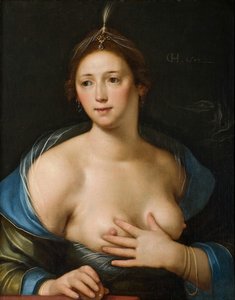
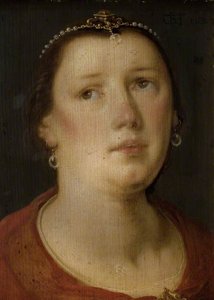
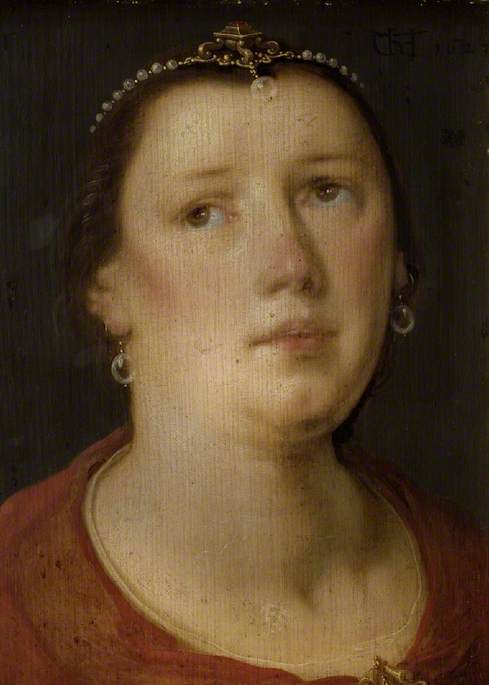
Female Head
 Acrylic On Canvas
- WallArt
- Dutch Golden Age
 24.0 x 18.0 cm
 Fitzwilliam College
 Read More
Hand Made Oil Reproduction
Hand-painted oil on canvas in your size and frame, made to order by our artists. ( Buy Print Buy Image)




P118B $10

P118H $10

P118W $10

P438Z $10

P508JH $12

P508YH $12

P805H $10

P805Z $10

P919BZ $10

P919G $10

P919XJ $10

P959ZH $10

P968JZ $12

W106C $8

W218G $10

W218JH $8

W218Y $10

W307PJ $10

W316G $10

W316PJ $8

W316Y $10

W398PJ $8

W4111J $10

W500HY $15

W500JH $15

W692G $12

W849H $8

W940BG $15

W953PJ $8




Pick from our preset sizes that match the artwork's original proportions.

You may enter your own dimensions to fit a specific frame or space. If your selected size does not match the original image's proportions, we will either crop the artwork or extend the painting with additional hand-painted elements. A digital mockup will be sent for your approval before production begins.
Please note that the on-screen preview does not reflect the actual cropping or extension. Only the mockup will accurately show the final composition.
While custom sizes are available, we recommend selecting a dimension from the predefined list to preserve the original proportions.
After order, ArtsDot.com team will email client for instructions and provide a mockup preview
Worldwide Delivery () in 3/4 weeks instead of standard 5 weeks. (16 August). No compromise on quality.

Free Worldwide Express Shipping

High-Quality Linen Canvas

Full Shipping Insurance

Customs Tax Refund Guarantee

True Color Matching Guarantee

60-Day Return Policy (Defects Only)

100% Money-Back Guarantee

Bulk Discount Offer
 Glass option is only available in size under 110 CM

Female Head
Reproduction Medium
Reproduction Size
-


Total Price
$ 263
Artwork Description
Cornelis Cornelisz van Haarlem’s Female Head: A Window Into Renaissance Portraiture
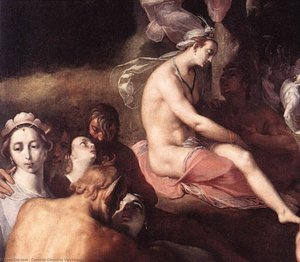
The painting “Female Head,” attributed to Cornelis Cornelisz van Haarlem (1562–1638), stands as a testament to the burgeoning artistic spirit of the Dutch Golden Age and offers a fascinating glimpse into the stylistic conventions prevalent during its formative years. Executed around 1590, this portrait exemplifies the Mannerist style—a reaction against the idealized beauty championed by earlier Renaissance artists—characterized by heightened realism, dramatic lighting, and an exploration of psychological complexity. It’s housed in The Fitzwilliam Museum in Cambridge, England, where it continues to captivate viewers with its subtle nuances and masterful execution.- Subject Matter & Style: Van Haarlem's depiction focuses on a woman’s face—a motif common in portraiture during the period—but eschews the smooth, polished surfaces favored by Raphael or Leonardo da Vinci. Instead, he employs a textured brushstroke technique that lends an immediacy and palpable presence to his subject. The woman’s gaze is direct, conveying confidence and introspection; this deliberate choice reflects the Mannerist preoccupation with capturing inner emotion rather than merely presenting an outward appearance.
- Technique & Materials: Painted on panel—a favored medium for portraitists of the time—the artwork utilizes oil paint mixed with resin to achieve a luminous sheen and remarkable detail. Van Haarlem’s meticulous layering of glazes creates depth and dimension, capturing subtle variations in skin tone and highlighting the contours of the face with precision. The artist skillfully manipulates light and shadow to sculpt the woman's features, emphasizing her gaze and creating an atmosphere of contemplative serenity.
- Historical Context: Van Haarlem’s work emerged during a period of significant political upheaval—the Eighty Years’ War against Spain—which profoundly impacted artistic patronage and intellectual discourse. The artist was deeply influenced by the humanist ideals championed by figures like Erasmus and Pico della Mirandola, who emphasized human dignity and potential for spiritual enlightenment. This influence is evident in Van Haarlem's portrayal of the woman as a symbol of feminine virtue and intellect—a reflection of prevailing societal attitudes toward women during the Renaissance.
- Symbolism & Emotion: Beyond its technical brilliance, “Female Head” resonates with symbolic significance. The crown adorning the woman’s head represents authority and nobility, yet it is positioned slightly askew, hinting at vulnerability and perhaps a subtle critique of patriarchal structures. The artist's masterful use of chiaroscuro—the dramatic interplay between light and dark—amplifies the emotional impact of the portrait, conveying a sense of quiet contemplation and inner strength.
- Legacy & Influence: Cornelis van Haarlem’s “Female Head” served as an important precursor to Frans Hals' groundbreaking portraits of Dutch citizens during the Golden Age. Hals adopted Van Haarlem’s expressive brushwork and psychological realism—techniques that would become hallmarks of his distinctive style—solidifying Van Haarlem’s position as a pivotal figure in the artistic canon. Its enduring appeal testifies to the power of art to capture not only likeness but also the essence of human experience.
Explore this captivating artwork at The Fitzwilliam Museum and immerse yourself in the splendor of Renaissance portraiture.
Discover more about Cornelis van Haarlem’s artistic journey on Wikipedia.
Related Artworks
Artist Biography
A Forerunner of the Dutch Golden Age: The Life and Art of Cornelis Cornelisz van Haarlem
Cornelis Cornelisz van Haarlem, born in 1562 within the burgeoning artistic hub of Haarlem, Netherlands, stands as a pivotal figure bridging the late Mannerist period with the dawn of the Dutch Golden Age. His journey was one of stylistic evolution and significant influence, particularly on the celebrated portraitist Frans Hals. Initially steeped in the highly stylized conventions prevalent at the time, van Haarlem’s early training under Pieter Pietersz in his native city and later Gillis Coignet in Antwerp laid a foundation for a career marked by both technical prowess and an eventual embrace of more naturalistic representation. The political turmoil of the Eighty Years' War cast a long shadow over his youth; when Spanish forces besieged Haarlem in 1573, his parents fled, leaving young Cornelis to be raised by Pieter Pietersz, solidifying his artistic path. This early experience likely instilled within him a sense of resilience and a deep connection to the cultural identity of his hometown, themes that would subtly permeate his later work.From Mannerist Grandeur to Netherlandish Realism
Van Haarlem’s initial artistic output was characterized by large-scale compositions featuring dramatically posed figures—often Italianate nudes—with an emphasis on artifice and exaggerated anatomy. These works, while demonstrating considerable skill, reflected the prevailing Northern Mannerist aesthetic heavily influenced by artists like Bartholomeus Spranger whose drawings were introduced to Haarlem by Carel van Mander in 1585. However, a distinct shift began to emerge as van Haarlem matured. He gradually moved away from these highly stylized forms towards a more grounded and realistic approach rooted in the Netherlandish tradition. This transformation wasn’t abrupt but rather a considered evolution, reflecting not only his artistic growth but also a broader cultural movement within the Netherlands toward greater naturalism and emotional depth. His evolving style mirrored a changing society—one increasingly focused on individual expression and observable reality.Key Works and Civic Recognition
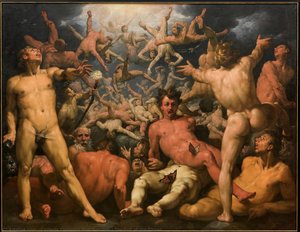
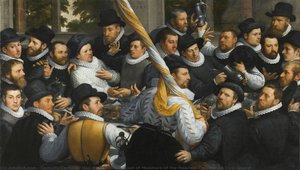
Throughout his career, van Haarlem secured numerous commissions that attest to his growing reputation and skill. One of his earliest significant works, The Banquet of the Haarlem Civic Guard (1583), showcased his emerging talent as a portraitist and ability to capture group dynamics with impressive detail. This piece, along with subsequent civic commissions, cemented his position within the community and established him as a reliable and capable artist. The Fall of the Titans (1588-1590), a monumental mythological scene, demonstrates his mastery of complex compositions and narrative storytelling. These large-scale paintings weren’t merely displays of technical skill; they were statements of civic pride and artistic ambition. He became deeply involved in the Haarlem art community, participating in informal drawing groups with Hendrick Goltzius and Carel van Mander—a collective often referred to as the “Haarlem Mannerists” or the "Haarlem Academy"—where ideas were exchanged and new artistic directions explored.A Lasting Legacy: Influence on Frans Hals and Beyond
Cornelis van Haarlem’s influence extended far beyond his own prolific output. He is particularly remembered for his profound impact on Frans Hals, one of the most celebrated portrait painters of the Dutch Golden Age. While the exact nature of their relationship remains a subject of scholarly debate, it's clear that van Haarlem served as an important mentor and source of inspiration for the younger artist. His emphasis on capturing individual character and psychological depth in his portraits likely paved the way for Hals’s groundbreaking approach to portraiture—an approach characterized by spontaneity, vitality, and a remarkable ability to convey personality. Van Haarlem's role as city painter of Haarlem further solidified his legacy, ensuring that his artistic vision continued to shape the cultural landscape of the region. His students included Salomon de Bray, Cornelis Jacobsz Delff, and Gerrit Pietersz Sweelink, continuing his influence into subsequent generations. His work can be found in prominent museum collections today, including the Rijksmuseum in Amsterdam and the Frans Hals Museum in Haarlem, ensuring that his artistic contributions continue to inspire and captivate audiences worldwide.Exploring Van Haarlem’s World Today
The enduring appeal of Cornelis van Haarlem's art is readily accessible through various online resources. Platforms like ArtsDot.com offer a comprehensive collection of his paintings, allowing enthusiasts to delve into the breadth and depth of his oeuvre. Detailed biographical information and critical analyses can be found on Wikipedia, providing valuable context for understanding his artistic development and historical significance. The Getty Museum and National Gallery websites also provide insights into specific works within their collections. Through these digital avenues, van Haarlem’s legacy is preserved and shared with a global audience, ensuring that this important forerunner of the Dutch Golden Age continues to receive the recognition he deserves. His paintings remain powerful testaments to an era of artistic innovation and cultural transformation.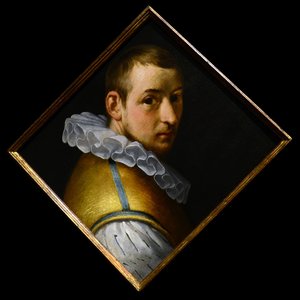
Cornelis Cornelisz van Haarlem
1562 - 1638 , Netherlands
Quick Facts
- Artistic Movement Or Style: Northern Mannerism
- Artists Or Movements Influenced By This Artist: ['Frans Hals']
- Artists Who Influenced This Artist:
- Pieter Pietersz
- Gillis Coignet
- Date Of Birth: 1562
- Date Of Death: 1638
- Full Name: Cornelis Cornelisz van Haarlem
- Nationality: Dutch
- Notable Artworks:
- Banquet of the Haarlem Civic Guard
- The Fall of the Titans
- Place Of Birth: Haarlem, Netherlands
Related Articles
Van Gogh's Masterpieces: Explore 25 Iconic Paintings & Art for Your Home
Journey through Vincent van Gogh's 25 most iconic paintings! Explore 'Starry Night', 'Sunflowers,' and more—discover the stories, techniques & emotions behind these Post-Impressionist masterpieces. Find museum-quality art reproductions for your home at ArtsDot.com.

Dutch Masters: 10 Golden Age Paintings That Still Inspire |
Journey into the Dutch Golden Age! Explore 10 iconic paintings by Rembrandt, Vermeer & Hals. Discover the stories behind these Baroque masterpieces and find museum-quality art reproductions to elevate your home decor on .

Rembrandt's Masterpieces: Explore 25 Iconic Paintings & Prints | ArtsDot
Journey through Rembrandt van Rijn's 25 most iconic paintings & etchings. Explore Dutch Golden Age masterpieces, dramatic chiaroscuro, and timeless portraits. Find museum-quality art reproductions to elevate your home decor on ArtsDot.com.
Cornelis van Poelenburch: Bridging Mannerism & the Dutch Baroque Landscape
Discover Cornelis van Poelenburch, a pivotal Dutch Baroque landscape painter bridging Mannerism & Italianate styles. Explore his life, key works, and lasting influence on 17th-century art with ArtsDot.
Adriaen van Ostade: A Master of Dutch Genre Painting & Social Commentary
Explore the life & work of Adriaen van Ostade, a leading Dutch Golden Age painter. Discover his realistic genre scenes, social commentary, and lasting influence on art history. Learn more at ArtsDot.