 Preview
 Send
Send Share
Share
 Details

 Download
 Similars
 X-Ray
X-Ray Diaporama
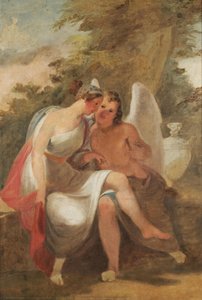
Eros and Psyche - allegory of love
 Oil On Canvas
- WallArt
- Baroque
 1812
1812- 19th Century
 127.0 x 86.0 cm
 Grão Vasco National Museum
 Read More
Giclée / Art Print
Museum-quality giclée or canvas print with fast production and flexible finish options. ( Buy Hand Made Painting Buy Image)




P118B $10

P118H $10

P118W $10

P438Z $10

P508JH $12

P508YH $12

P805H $10

P805Z $10

P919BZ $10

P919G $10

P919XJ $10

P959ZH $10

P968JZ $12

W106C $8

W218G $10

W218JH $8

W218Y $10

W307PJ $10

W316G $10

W316PJ $8

W316Y $10

W398PJ $8

W4111J $10

W500HY $15

W500JH $15

W692G $12

W849H $8

W940BG $15

W953PJ $8




Pick from our preset sizes that match the artwork's original proportions.

You may enter your own dimensions to fit a specific frame or space. If your selected size does not match the original image's proportions, we will either crop the artwork or extend the image with a mirrored or solid-fill edge. A digital mockup will be sent for your approval before production begins.
Please note that the on-screen preview does not reflect the actual cropping or extension. Only the mockup will accurately show the final composition.
While custom sizes are available, we recommend selecting a dimension from the predefined list to preserve the original proportions.
Worldwide Delivery () in 2 weeks instead of standard 4/5 weeks. (27 August)

Free Worldwide Express Shipping

High-Quality Linen Canvas

Full Shipping Insurance

Customs Tax Refund Guarantee

True Color Matching Guarantee

60-Day Return Policy (Defects Only)

100% Money-Back Guarantee

Bulk Discount Offer
 Glass option is only available in size under 110 CM

Eros and Psyche - allegory of love
Giclée / Art Print
Reproduction Size
-


Total Price
$ 63
Collectible Description
A Moment of Tender Allegory: *Eros and Psyche* by Domingos António de Sequeira
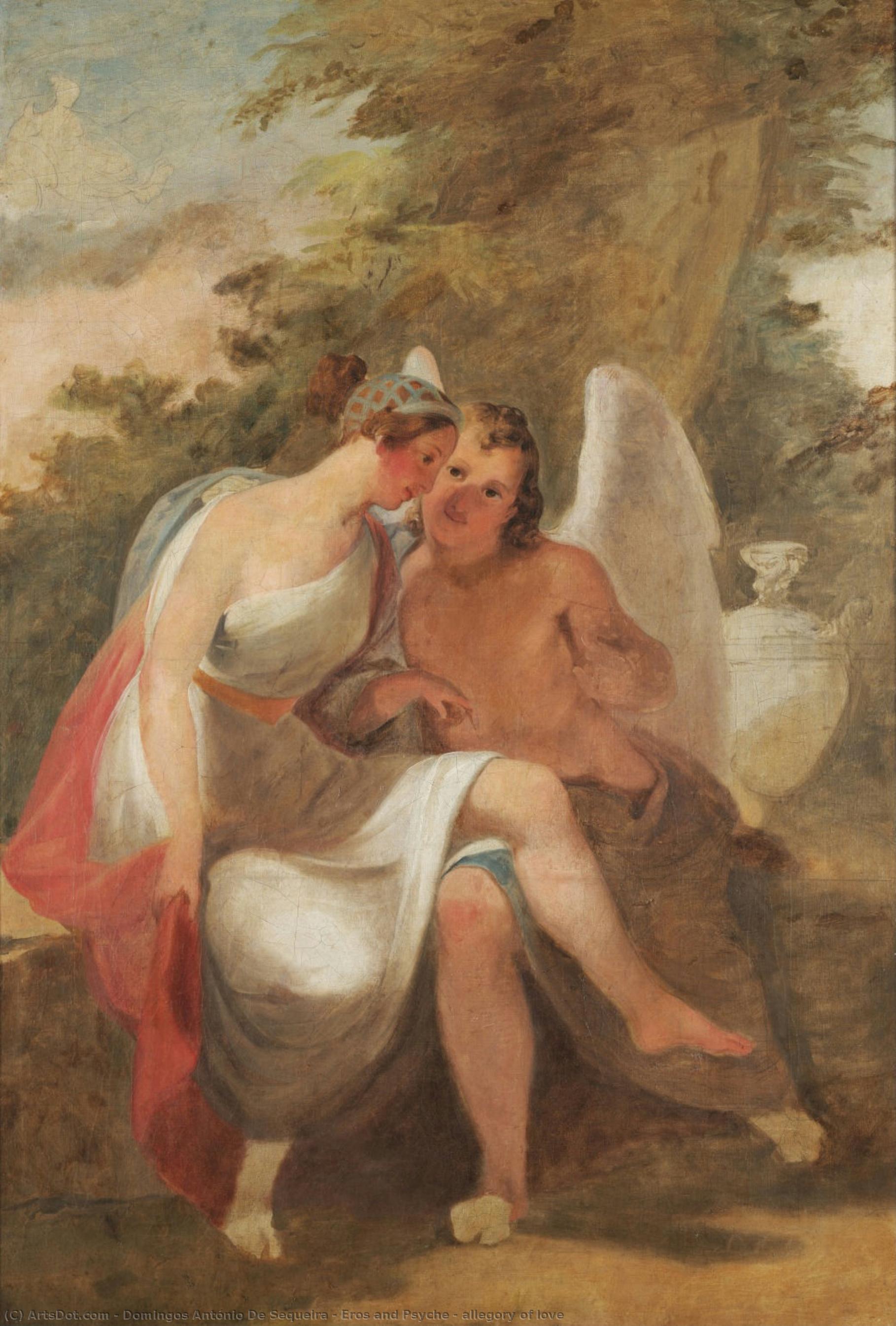
Domingos António de Sequeira’s unfinished study, *Eros and Psyche*, offers a poignant glimpse into the burgeoning Romantic sensibility of early 19th-century Portugal. Executed in 1812, this work transcends a simple depiction of figures; it is an exploration of nascent emotion, a delicate dance between vulnerability and connection, rendered with a remarkable sensitivity to light and form. The painting’s immediate appeal lies in its intimate scene – a young woman seated on the ground, receiving support from an angel-like figure. This pairing, suggestive of the legendary Greek myth of Psyche and Eros, immediately invites contemplation on themes of love, devotion, and perhaps even unfulfilled desire.
- Subject Matter: The core narrative draws upon the classical tale of Psyche and Eros (Venus and Cupid), a story steeped in mythology concerning passionate love, transformation, and overcoming obstacles.
- Composition: Sequeira masterfully employs a pyramidal composition, anchoring the scene with the woman’s seated posture and directing the viewer's eye towards the angel’s offering of support. The subtle gestures – the hand reaching out, the pointed finger – amplify the sense of interaction and shared attention.
- Technique: The artist’s brushwork is characterized by loose, expressive strokes, particularly evident in the rendering of the background foliage and the woman's dress. This technique, combined with areas of undefined color, speaks to the painting’s unfinished state – a deliberate choice that adds to its raw emotional power and invites the viewer to complete the scene in their imagination.
The Influence of Canaletto: A Venetian Echo
Domingos António de Sequeira's work reveals a fascinating connection to the artistic legacy of Giovanni Antonio Canal, better known as Canaletto (1697-1768). While Canaletto is celebrated for his meticulously detailed *vedute* – views of cities – particularly Venice and London – Sequeira’s approach shares a similar emphasis on capturing atmospheric effects and the subtle nuances of light. The influence can be seen in the careful observation of form, the use of tonal gradations to create depth, and the overall sense of realism that permeates the painting. This connection highlights the broader artistic currents shaping European art during this period, demonstrating how ideas and techniques traveled across continents.
- Canaletto’s Legacy: Sequeira's work reflects Canaletto's dedication to portraying urban life with a keen eye for detail and an understanding of light's transformative power.
- Shared Techniques: Both artists employed similar brushwork techniques, prioritizing observation and rendering the effects of natural light on architectural forms.
Symbolism and Emotional Resonance
Beyond its mythological subject matter, *Eros and Psyche* is rich in symbolic meaning. The angel’s gesture – offering support to the young woman – represents protection, guidance, and perhaps even divine intervention. The woman's posture, both vulnerable and engaged, embodies the complexities of love and desire. The unfinished nature of the work further enhances its emotional impact, suggesting a moment of contemplation, hesitation, or perhaps the very beginning of an intense relationship. The inclusion of the white pot and the glimpse of blue sky adds to the idyllic setting, evoking feelings of serenity and hope.
- Allegorical Interpretation: The painting can be interpreted as an allegory for the transformative power of love – a journey from innocence to experience.
- Emotional Depth: Sequeira’s skillful use of composition and technique creates a palpable sense of intimacy and vulnerability, inviting viewers to connect with the emotional core of the scene.
A Timeless Masterpiece - Reproduction Details
This meticulously hand-painted reproduction captures the essence of Sequeira's original study, faithfully recreating its delicate beauty and evocative atmosphere. Printed on high-quality canvas using archival inks, this artwork is designed to last for generations. The dimensions of 127 x 86 cm make it suitable for a variety of interior spaces, from formal living rooms to intimate studies. Perfect for collectors seeking a piece of Portuguese Romanticism or for interior designers aiming to infuse their projects with a touch of timeless elegance and emotional depth.
Related Artworks


![L’enlèvement De Psyché [the Abduction Of Psyche] — Oscar Pereira Da Silva, Academic Historicism](/media/artworks/images-thumb/5f/a0/5fa0456cb481bd203147aae9eef9336a.jpg)
Artist Biography
Giovanni Antonio Canal, Known as Canaletto: A Venetian Master of Light and City
Giovanni Antonio Canal, universally known as Canaletto (1697-1768), stands as a pivotal figure in the history of Western art. Born into a family steeped in theatrical design – his father was a scene painter – Canaletto’s artistic journey began not with grand commissions but with humble beginnings assisting his father and brother, crafting backdrops for Venetian opera houses. This early exposure to visual storytelling, combined with an innate observational skill, laid the foundation for his extraordinary career as a *veduta* painter, specializing in meticulously rendered views of Venice and later, London. His legacy rests not just on technical mastery but also on capturing the very essence of urban life – the play of light, the bustle of commerce, and the quiet dignity of everyday existence.
Canaletto’s artistic development was profoundly shaped by his Venetian surroundings. The city itself—a labyrinth of canals, bridges, and palazzi bathed in the unique quality of northern Italian light—provided an inexhaustible source of inspiration. Initially, he produced small-scale paintings for private patrons, intimate studies of architectural details and local scenes – works like “The Stonemason’s Yard” (circa 1727) exemplify this early period. These pieces demonstrate a remarkable attention to detail, a keen understanding of perspective, and an ability to imbue even the most mundane subjects with a sense of atmosphere. However, recognizing the lucrative potential of catering to the burgeoning tourist trade, Canaletto shifted his focus towards larger-scale, more elaborate *vedute* designed for sale to visitors. This shift didn’t represent a decline in quality; rather, it showcased his ability to synthesize observation and artistic skill into commercially successful works.
The Rise of the Workshop and the ‘Formulaic’ Painting
As Canaletto's fame grew, he increasingly relied on a workshop system to meet the demands of a rapidly expanding market. While he remained the principal designer and oversaw the overall composition and color palette, his assistants – notably his nephew Bernardo Bellotto – executed much of the painting process. This collaborative approach allowed Canaletto to produce an astonishing volume of work, documenting Venice’s architectural evolution and capturing its vibrant social life. These later works, often depicting grand ceremonies or public events like “Regatta on the Grand Canal” (1730), are characterized by their polished surfaces, bright colors, and a certain degree of schematic precision. Critics initially questioned the authenticity of these paintings, suggesting that Canaletto was merely a facilitator, relying on his assistants to carry out the actual painting. However, careful examination reveals Canaletto’s meticulous control over the design, color scheme, and overall aesthetic – he wasn't simply delegating; he was orchestrating.
A Journey North: London and Beyond
In 1746, at the invitation of Joseph “Consul” Smith, a wealthy British merchant and art collector, Canaletto embarked on a significant chapter in his career – a decade spent painting in England. This period marked a crucial evolution in his style. He moved beyond purely topographical representations, incorporating elements of *capriccio*, imaginary landscapes that blended real and invented features. His London paintings—including “Eton College” (1746) and views of Warwick Castle and Alnwick Castle – demonstrate a heightened sense of drama and an exploration of compositional possibilities. The English market proved exceptionally receptive to Canaletto’s work, fueled by Smith's astute business acumen and the patronage of King George III. The success in England solidified his reputation as one of Europe’s leading landscape painters.
Legacy and Influence
Canaletto’s impact on art history is undeniable. He elevated *veduta* painting to a new level of sophistication, establishing a standard for accuracy, detail, and atmospheric rendering that influenced generations of artists. His meticulous observation, combined with his artistic sensibility, created images that are not merely representations of reality but evocative glimpses into the soul of cities. Beyond his technical achievements, Canaletto’s work offers a unique window into 18th-century Venice and London—a testament to the enduring appeal of urban landscapes and the power of art to capture the spirit of a place and its people. His legacy continues to inspire artists today, reminding us of the beauty and complexity that can be found in the everyday world.
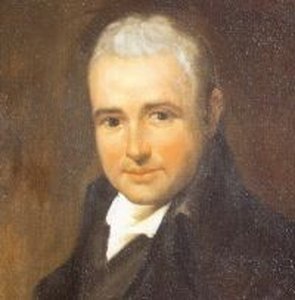
domingos antónio de sequeira
1768 - 1837 , Portugal
Quick Facts
- Artistic Movement Or Style: Veduta painting
- Artists Or Movements Influenced By This Artist:
- William Marlow
- Samuel Scott
- Artists Who Influenced This Artist:
- Luca Carlevaris
- Bernardo Bellotto
- Date Of Birth: 18 October 1697
- Date Of Death: 19 April 1768
- Full Name: Giovanni Antonio Canal
- Nationality: Italian
- Notable Artworks:
- The Stonemason's Yard
- Regatta on the Grand Canal
- Eton College
- A View of Venice
- Place Of Birth: Venice, Italy
Related Articles

Jacopo Tintoretto's Masterpieces: 25 Paintings That Define Venetian Drama | ArtsDot
Explore 25 breathtaking masterpieces by Jacopo Tintoretto, the Venetian master of drama and light. Discover the stories behind iconic Renaissance paintings & find museum-quality art reproductions to elevate your home decor on ArtsDot.com.

The Enduring Motif of Love in Art History: A Cross-Cultural Exploration of Representation and Emotion
Explore the rich history of love in art! Discover iconic masterpieces, artistic techniques & cultural symbolism from antiquity to modern times. Expert analysis for collectors.

The Golden Light of Innovation: Exploring the Venetian Renaissance Art Movement (1430–1580)
Explore the Golden Age of Venetian art (1430–1580). Discover Giorgione, Titian & Tintoretto's techniques, the 'colorito' revolution, and lasting influence. Expert insights for collectors & enthusiasts.
Romantic Masterpieces: 10 Artworks to Stir Your Soul |
Fall in love with art! Explore 10 iconic romantic paintings – from Renaissance classics to Impressionist masterpieces. Discover the stories behind artists like Monet & Klimt, and find museum-quality reproductions for your home at .
Pietro Longhi's Venetian Scenes: A Study of Rococo Society & Domestic Life
Explore the captivating world of Pietro Longhi's Venetian scenes! Discover insightful analysis of his Rococo masterpieces & social commentary on 18th-century life. Learn about this 'Venetian Hogarth' and his lasting artistic legacy.