 Preview
 Send
Send Share
Share
 Details

 Download
 Similars
 X-Ray
X-Ray Diaporama
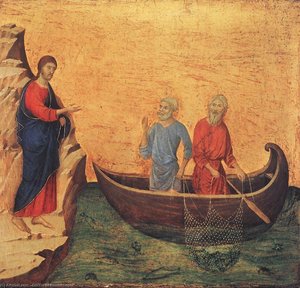
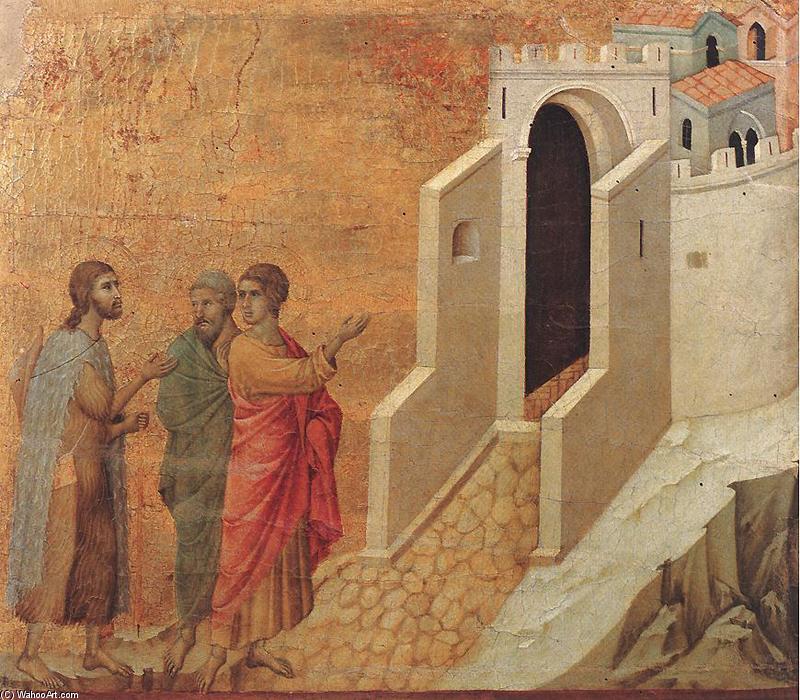
Road to Emmaus
 Acrylic On Canvas
- WallArt
- Sienese Gothic Revival
 1308
1308 51.0 x 57.0 cm
 Museo dell'Opera del Duomo
 Read More
Hand Made Oil Reproduction
Hand-painted oil on canvas in your size and frame, made to order by our artists. ( Buy Print Buy Image)




P118B $10

P118H $10

P118W $10

P438Z $10

P508JH $12

P508YH $12

P805H $10

P805Z $10

P919BZ $10

P919G $10

P919XJ $10

P959ZH $10

P968JZ $12

W106C $8

W218G $10

W218JH $8

W218Y $10

W307PJ $10

W316G $10

W316PJ $8

W316Y $10

W398PJ $8

W4111J $10

W500HY $15

W500JH $15

W692G $12

W849H $8

W940BG $15

W953PJ $8




Pick from our preset sizes that match the artwork's original proportions.

You may enter your own dimensions to fit a specific frame or space. If your selected size does not match the original image's proportions, we will either crop the artwork or extend the painting with additional hand-painted elements. A digital mockup will be sent for your approval before production begins.
Please note that the on-screen preview does not reflect the actual cropping or extension. Only the mockup will accurately show the final composition.
While custom sizes are available, we recommend selecting a dimension from the predefined list to preserve the original proportions.
After order, ArtsDot.com team will email client for instructions and provide a mockup preview
Worldwide Delivery () in 3/4 weeks instead of standard 5 weeks. (16 August). No compromise on quality.

Free Worldwide Express Shipping

High-Quality Linen Canvas

Full Shipping Insurance

Customs Tax Refund Guarantee

True Color Matching Guarantee

60-Day Return Policy (Defects Only)

100% Money-Back Guarantee

Bulk Discount Offer
 Glass option is only available in size under 110 CM

Road to Emmaus
Reproduction Medium
Reproduction Size
-


Total Price
$ 263
Artwork Description
The Road to Emmaus: A Journey of Faith and Emerging Italian Vision
Duccio di Buoninsegna’s “Road to Emmaus,” painted in 1308, is more than just a depiction of a biblical scene; it's a pivotal moment in the evolution of Italian art. Born in Siena around 1255, Duccio wasn’t simply replicating established Byzantine models; he was actively pushing against them, laying the groundwork for the naturalism and emotional depth that would define the Sienese School and, ultimately, much of Renaissance painting. This particular work captures a scene from Luke's Gospel – the resurrected Christ revealing himself to two disciples on their journey back from Jerusalem. Yet, it’s in the *way* Duccio renders this familiar story that we truly appreciate his genius.
The composition immediately draws the eye. Three figures dominate the foreground, standing on a gently sloping hillside bathed in a diffused light – a characteristic of Sienese painting at the time, moving away from the stark contrasts of Byzantine illumination. These men, clad in flowing robes, are engaged in animated conversation, their gestures and expressions hinting at a profound revelation. Notice how Duccio avoids rigid formality; these aren’t idealized saints but figures imbued with humanity – they stumble, they look at each other with questioning eyes, mirroring the very experience of encountering the divine. The two individuals glimpsed in the upper left and right corners add to the sense of depth and movement within the scene, subtly suggesting a wider world beyond the immediate narrative.
A Symphony of Color and Texture – Duccio’s Innovative Technique
Duccio's mastery lies not just in his subject matter but also in his technique. He employed a layered fresco method, applying pigments to wet plaster, creating an astonishingly rich surface texture. Observe the delicate modeling of the figures’ faces, the subtle variations in color that suggest fabric and form – a significant departure from the flatter, more stylized representations common in earlier Byzantine art. The use of *tempera* alongside the fresco technique further enhanced the luminosity and vibrancy of the colors, particularly the warm reds and golds used to depict Christ's garments. This combination created an effect of almost palpable warmth and radiance, drawing the viewer into the scene.
- Color Palette: Dominated by earth tones – ochre, umber, and sienna – punctuated by vibrant reds and blues for emphasis.
- Texture: The layered fresco technique results in a remarkably tactile surface, conveying depth and volume.
- Light & Shadow: Diffused light creates a serene atmosphere, highlighting the figures and emphasizing their emotional engagement.
Symbolism and Spiritual Resonance – Unpacking the Narrative
The “Road to Emmaus” is rich in symbolic meaning. The road itself represents the journey of faith, a path fraught with doubt and uncertainty. The three men symbolize the disciples who initially failed to recognize Christ’s resurrection but were later enlightened through his revelation. Christ's presence isn’t overtly dramatic; he’s depicted as a commonplace figure, blending into the landscape – a deliberate choice by Duccio to emphasize the *experience* of encountering the divine rather than a spectacular display. The doorway glimpsed on the right side of the painting could represent entry into salvation or the broader Christian community.
Furthermore, the setting itself—a humble hillside—contrasts sharply with the opulent settings often found in Byzantine art. This shift reflects Duccio’s desire to connect religious themes with the everyday realities of human life, a key characteristic of the burgeoning Italian Renaissance aesthetic. The scene is not about grandeur or power but about intimacy and personal transformation.
A Timeless Masterpiece – Bringing “Road to Emmaus” Home
Duccio’s “Road to Emmaus” stands as a testament to his artistic vision and his pivotal role in shaping the course of Italian painting. ArtsDot offers meticulously crafted, hand-painted reproductions that faithfully capture the beauty, detail, and emotional depth of this extraordinary work. Whether you are an art collector, an interior designer seeking a touch of timeless elegance, or simply someone captivated by the power of religious imagery, a reproduction of “Road to Emmaus” will bring a profound sense of serenity and contemplation to your space. Its rich colors and textured surface evoke the spirit of Duccio’s original masterpiece, offering a tangible connection to one of the most significant moments in Christian art history.
Related Artworks
Artist Biography
The Sienese Luminary: Duccio di Buoninsegna and the Dawn of a New Italian Vision
Duccio di Buoninsegna, born in Siena around 1255, stands as a pivotal figure bridging the stylistic chasm between the Byzantine world and the burgeoning artistic sensibilities of Italy. While biographical details remain frustratingly scarce—the man himself often obscured by the brilliance of his art—his impact on the Sienese School and the trajectory of Italian painting is undeniable. He emerged during a period where religious iconography was deeply entrenched, yet a yearning for greater naturalism and emotional resonance was beginning to stir within artistic circles. Duccio wasn’t merely a painter; he was an innovator who dared to infuse sacred narratives with human feeling, subtly shifting the focus from rigid formality towards a more intimate connection between the divine and the earthly realm. His early training remains somewhat mysterious, though speculation suggests possible influences ranging from Florentine masters to direct exposure to Byzantine artistry—perhaps even travels to Constantinople itself. Whatever his formative experiences, they coalesced into a unique style that would define an era.
A Synthesis of Tradition and Innovation
Duccio’s artistic development wasn't a sudden rupture with the past but rather a graceful evolution. His initial works were deeply rooted in Byzantine conventions: the lavish use of gold leaf to evoke celestial light, stylized figures possessing an ethereal quality, and a meticulous attention to religious symbolism. However, even within these established parameters, Duccio began to subtly introduce elements that foreshadowed his later innovations. He experimented with spatial arrangements, hinting at depth where flatness had previously reigned supreme. His color palettes, while still vibrant, gained a newfound subtlety and harmony. More importantly, he started imbuing his figures with a nascent sense of humanity—a gentle curve of the mouth suggesting a smile, a slight tilt of the head conveying contemplation. This wasn’t a rejection of Byzantine ideals but a refinement, an infusion of life into what had often been static representations. He skillfully blended tradition and innovation, creating a style that was both reverent and remarkably fresh.
Masterpieces of Faith and Artistry
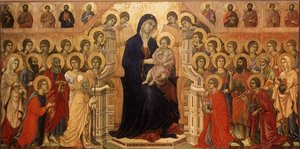
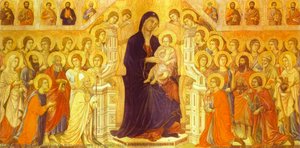
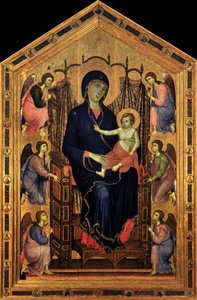
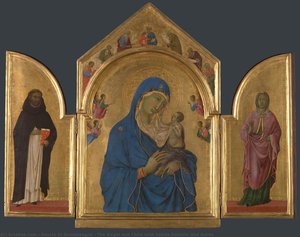
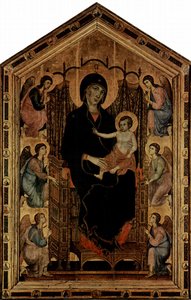
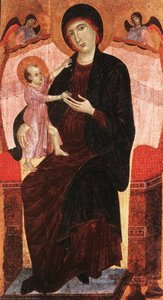
Two works stand as testaments to Duccio’s genius: the *Rucellai Madonna* (1285) and, most famously, the *Maestà* (1308-1311). The *Rucellai Madonna*, commissioned for a chapel in Florence, marked a significant departure from conventional Byzantine iconography. Its composition, while still adhering to traditional forms, displayed a greater sense of spatial organization and a more naturalistic depiction of the Virgin Mary and Child. But it was the *Maestà*—a monumental altarpiece created for Siena Cathedral—that truly cemented Duccio’s legacy. This sprawling masterpiece comprises numerous panels depicting scenes from the life of the Virgin Mary and Christ, each one a miniature work of art in itself. The Maestà is not merely a collection of paintings; it's a visual narrative, unfolding with breathtaking detail and emotional depth. Duccio’s mastery of light and shadow, his ability to convey complex emotions through subtle gestures, and his innovative use of perspective all converge in this single, awe-inspiring work. Beyond these monumental pieces, works like *Polyptych No. 28* demonstrate his continued compositional skill and meticulous attention to detail.
A Lasting Legacy: Shaping the Future of Italian Art
Duccio di Buoninsegna’s influence extended far beyond his lifetime. He revolutionized Italian painting, paving the way for the development of the Sienese School—a distinct artistic tradition characterized by its elegance, refinement, and emotional intensity. His emphasis on naturalism, spatial depth, and human emotion directly impacted subsequent generations of artists, influencing not only those within Siena but also painters in Florence and beyond. While Giotto is often credited with initiating the Renaissance style, Duccio’s contributions were equally crucial, laying the groundwork for the artistic innovations that would define the 14th century and beyond.
- He pioneered new approaches to depicting space and perspective.
- His paintings are renowned for their vibrant and harmonious color schemes.
- He infused his figures with a sense of humanity and emotional resonance.
Despite facing financial hardships during his life, Duccio’s artistic legacy endures. His masterpieces continue to inspire awe and admiration, serving as a powerful reminder of the transformative power of art. He helped define the Trecento art movement, leaving an indelible mark on the history of Western painting. Today, his works can be found in prominent museums worldwide, offering glimpses into a world where faith, artistry, and human emotion converged with breathtaking beauty.
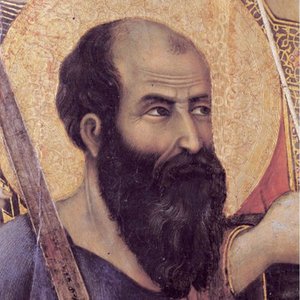
Duccio di Buoninsegna
1255 - 1319 , Italy
Quick Facts
- Artistic Movement Or Style: Gothic, Sienese School
- Artists Or Movements Influenced By This Artist:
- Sienese School
- Italian Gothic
- Artists Who Influenced This Artist: ['Byzantine art']
- Date Of Birth: c. 1255
- Date Of Death: 1319
- Full Name: Duccio di Buoninsegna
- Nationality: Italian
- Notable Artworks:
- Rucellai Madonna
- Maestà
- Polyptych No. 28
- Place Of Birth: Siena, Italy
Related Articles
Simone Martini: Innovation, Spirituality & Courtly Refinement in Sienese Painting
Explore the captivating world of Simone Martini, a pivotal figure in Sienese painting & the International Gothic style. Discover his innovative techniques, spiritual depth, and lasting influence on early Renaissance art.
Mario Sironi: A Poetic of Modern Italian Identity Through Symbolism & Social Commentary
Explore the profound works of Mario Sironi, a key figure in Italian Modernism. Discover his evolution from Futurism to Metaphysical painting and his powerful social commentary. Learn about his legacy at ArtsDot.
Giovanni Fattori: Realism, Identity & the Tuscan Landscape – A Macchiaioli Master
Explore the life & art of Giovanni Fattori, a leading figure of the Macchiaioli movement. Discover his revolutionary realism, captivating Tuscan landscapes, and lasting impact on Italian painting. Learn more at ArtsDot.
Proto-Renaissance Masters: 10 Artworks That Changed History | ArtsDot
Journey back to the dawn of Renaissance art! Explore 10 iconic Proto-Renaissance masterpieces by Giotto, Cimabue & Duccio. Discover their stories, techniques & lasting impact. Find museum-quality reproductions for your home at ArtsDot.com
Domenico Beccafumi: A Sienese Master Between Mannerism & Baroque Anticipation
Explore the captivating world of Domenico Beccafumi, a pivotal figure bridging Mannerism & Baroque art. Discover his unique style, religious masterpieces, and lasting legacy with ArtsDot.