 Send
Send Share
Share
 Details

 Download
 Similars
 Diaporama
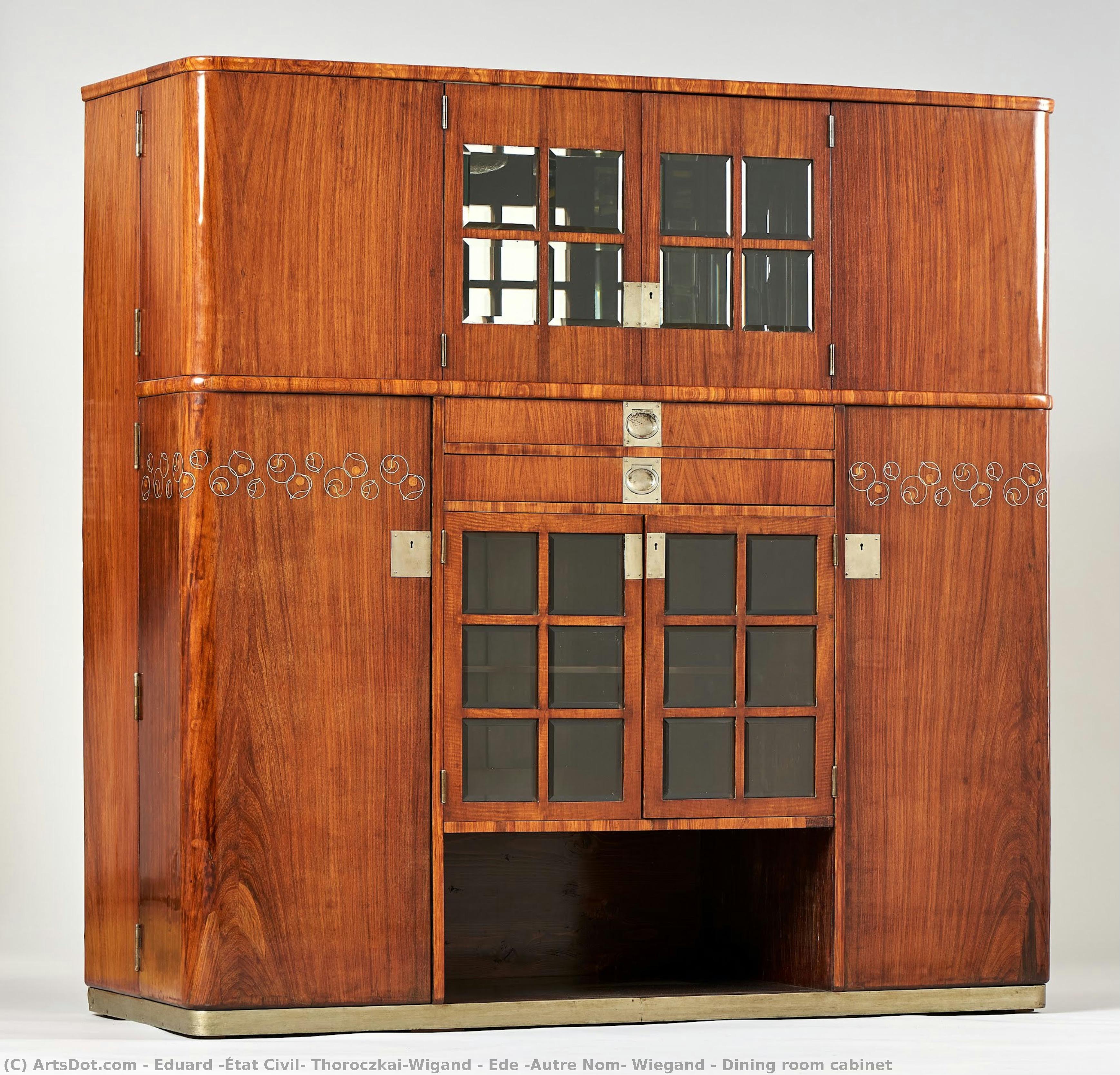
Dining room cabinet


 Read More
Giclée / Art Print
Museum-quality giclée or canvas print with fast production and flexible finish options. ( Buy Hand Made Painting Buy Image)




































Pick from our preset sizes that match the artwork's original proportions.

You may enter your own dimensions to fit a specific frame or space. If your selected size does not match the original image's proportions, we will either crop the artwork or extend the image with a mirrored or solid-fill edge. A digital mockup will be sent for your approval before production begins.
Please note that the on-screen preview does not reflect the actual cropping or extension. Only the mockup will accurately show the final composition.
While custom sizes are available, we recommend selecting a dimension from the predefined list to preserve the original proportions.
Worldwide Delivery () in 2 weeks instead of standard 4/5 weeks. (1 September)

Free Worldwide Express Shipping

High-Quality Linen Canvas

Full Shipping Insurance

Customs Tax Refund Guarantee

True Color Matching Guarantee

60-Day Return Policy (Defects Only)

100% Money-Back Guarantee

Bulk Discount Offer
 Glass option is only available in size under 110 CM

Dining room cabinet
Giclée / Art Print
Reproduction Size
-


Total Price
$ 63
Ede Toroczkai Wigand’s Viennese Echoes: A Study in Form and Material
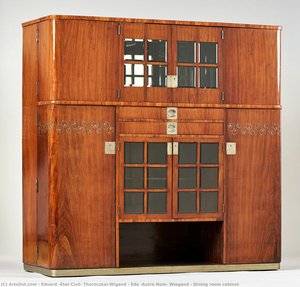
The dining room cabinet presented here offers a compelling glimpse into the artistic currents of early 20th-century Hungary, revealing the influence of Vienna's Secession movement while simultaneously grounding itself within a distinctly Hungarian aesthetic. Crafted by Ede Toroczkai Wigand in 1902, this piece is more than just a functional furnishing; it’s a carefully constructed dialogue between tradition and innovation, reflecting the burgeoning interest in handcrafted design and the desire to elevate everyday objects into works of art.
- A Fusion of Styles: Wigand's design demonstrates a sophisticated understanding of diverse influences. The initial inspiration clearly stems from French Art Nouveau’s flowing lines and organic forms, yet he deftly adapted these elements through a lens informed by the achievements of contemporary English and Scottish designers – a pragmatic approach that resulted in the ‘plank style’ so characteristic of his work.
- The Secession's Embrace: The most striking aspect of this cabinet is its direct engagement with the Viennese Secession. The armchair designs, meticulously documented as variations on Otto Wagner’s bent-wood models for the Austrian Postal Savings Bank, showcase a deliberate borrowing of form and technique. This wasn’t mere imitation; it was an acknowledgment of Vienna's position at the forefront of modern design experimentation.
- Materiality as Statement: The cabinet’s construction is equally significant. The cuboid shape with rounded edges, resting on a base adorned with silver-plated brass, speaks to a desire for both elegance and durability. The use of expensive materials – rosewood veneer, meticulously inlaid silver, and silver-plated fittings – elevates the piece beyond mere functionality, signifying status and reflecting the Secession’s emphasis on quality craftsmanship.
Technique and Craftsmanship: A Detailed Examination
Wigand's meticulous attention to detail is immediately apparent in the cabinet’s construction. The use of rosewood veneer suggests a desire for rich color and texture, while the silver inlay – particularly the stylized ‘peonies’ that adorn the lower drawer – demonstrates a mastery of intricate craftsmanship. These circular inlays, composed of silver, rosewood, and cedar, are not simply decorative; they contribute to the overall sense of luxury and refinement. The cabinet's construction utilizes traditional joinery techniques, highlighting the skill and patience required to create such a piece.
- Copper Medium: While the original was created using copper, this reproduction faithfully replicates the intended effect through modern materials, ensuring an accurate representation of Wigand’s vision.
- Hardware Details: The silver-plated brass banding and hinges further emphasize the cabinet's luxurious qualities and demonstrate a commitment to impeccable finishing.
Historical Context and Significance
The creation of this dining room cabinet in 1902 coincided with a period of significant artistic and architectural change in Hungary. Wigand’s work, showcased at the National Society of Applied Arts Christmas exhibition, aligned perfectly with the broader Arts and Crafts movement, advocating for handcrafted goods and rejecting mass-produced items. The subsequent purchase by the Museum of Applied Arts in Budapest underscores the cabinet's importance as a landmark piece within Hungarian design history. It represents a pivotal moment where Hungarian artistic sensibilities embraced international influences while simultaneously forging its own unique identity.
This reproduction offers an exceptional opportunity to experience firsthand the elegance and sophistication of Ede Toroczkai Wigand’s work, bringing a touch of Viennese Secession into your home or office. It is a testament to the enduring power of thoughtful design and meticulous craftsmanship – a piece that speaks volumes about its time and continues to resonate with collectors and interior designers today.
NoneRelated Artworks


Artist Biography
**early life and education**
eduard (état civil) thoroczkai-wigand , ede (autre nom) wiegand, a renowned hungarian architect, designer, and writer, was born on may 19, 1869, in budapest. he pursued his studies at the technical university of budapest, laying the foundation for his future career in architecture and furniture design.**contribution to arts and crafts movement**
wigand's work significantly contributed to the arts and crafts movement, influencing hungarian architecture with his unique style. his designs, characterized by simplicity, elegance, and functionality, have become a benchmark for architects and designers.**notable works and exhibitions**
- the dining room cabinet, created in 1902 using copper as a medium, is one of his most famous works.
- his writings on architecture and design helped popularize the arts and crafts movement in hungary.
- some of his notable works can be found in the artist's profile on ArtsDot, showcasing his mastery over various mediums.
- for a deeper understanding of wigand's influence, visit the zichy museum zala, hungary, which features an impressive collection of hungarian art and architecture. /en/art/show/art-d3b5p9-en/
- explore the hungarian national gallery, budapest, which houses an extensive collection of hungarian fine arts, including works by wigand's contemporaries. [https://ArtsDot.com/@@/a@d3b6x7-the-hungarian-national-gallery-budapest](https://ArtsDot.com/@@/a@d3b6x7-the-hungarian-national-gallery-budapest)
**legacy and later life**
ede toroczkai wigand passed away on january 22, 1945, in budapest, leaving behind a legacy that continues to inspire architects, designers, and artists. his work remains a testament to the enduring power of the arts and crafts movement in hungarian architecture. **key dates:**- may 19, 1869 - born in budapest
- 1902 - created the dining room cabinet
- january 22, 1945 - passed away in budapest
eduard (état civil) thoroczkai-wigand , ede (autre nom) wiegand
1869 - 1945 , Hungary
Quick Facts
- Artistic Movement Or Style:
- Fauvism
- Modernism
- Artists Or Movements Influenced By This Artist: ['Pablo Picasso']
- Artists Who Influenced This Artist:
- William-Adolphe Bouguereau
- Paul Cézanne
- Date Of Birth: December 31, 1869
- Date Of Death: November 3, 1954
- Full Name: Henri-Émile-Benoît Matisse
- Nationality: French
- Notable Artworks:
- The Red Studio
- Dance (Matisse)
- Blue Nude
- Place Of Birth: Le Cateau, Picardy, France
Related Articles
The Vienna Secession: A Rebellion of Form & Spirit in Fin-de-Siècle Art
Discover the revolutionary Vienna Secession art movement! Explore Klimt, Olbrich & more. Learn about its history, characteristics & lasting influence on modern art. High-quality reproductions available.
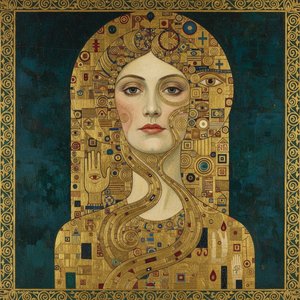
Gustav Klimt: A Golden Legacy of Sensuality & Symbolism in Viennese Art
Explore the captivating world of Gustav Klimt with ArtsDot. Discover his iconic paintings, the Vienna Secession movement, & enduring legacy. High-quality reproductions available.
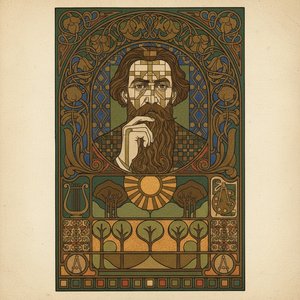
Koloman Moser: A Synthesis of Art Nouveau, Secessionism & the Gesamtkunstwerk Ideal
Explore the life & work of Koloman Moser, a pivotal figure in the Vienna Secession & Wiener Werkstätte. Discover his stunning graphic design, architecture, and applied arts – a true pioneer of Viennese Art Nouveau. Learn more at ArtsDot.
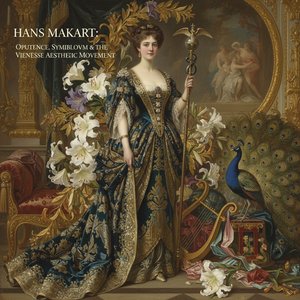
Hans Makart: Opulence, Symbolism & the Viennese Aesthetic Movement
Explore the opulent world of Hans Makart, a pivotal figure in Austrian art history. Discover his influence on Klimt & the Vienna Secession, signature style, and investment potential. Expert insights for collectors.
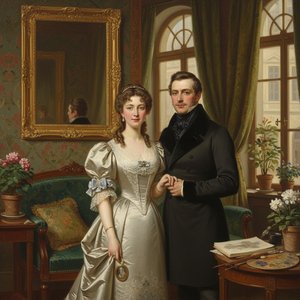
Friedrich von Amerling: Capturing Viennese Aristocracy & the Biedermeier Spirit
Explore the elegant portraits of Friedrich von Amerling, a master of Viennese Biedermeier art. Discover his life, style, and lasting influence on 19th-century Austrian painting. Find high-quality reproductions at ArtsDot.