 Preview
 Send
Send Share
Share
 Details

 Download
 Similars
 X-Ray
X-Ray Diaporama
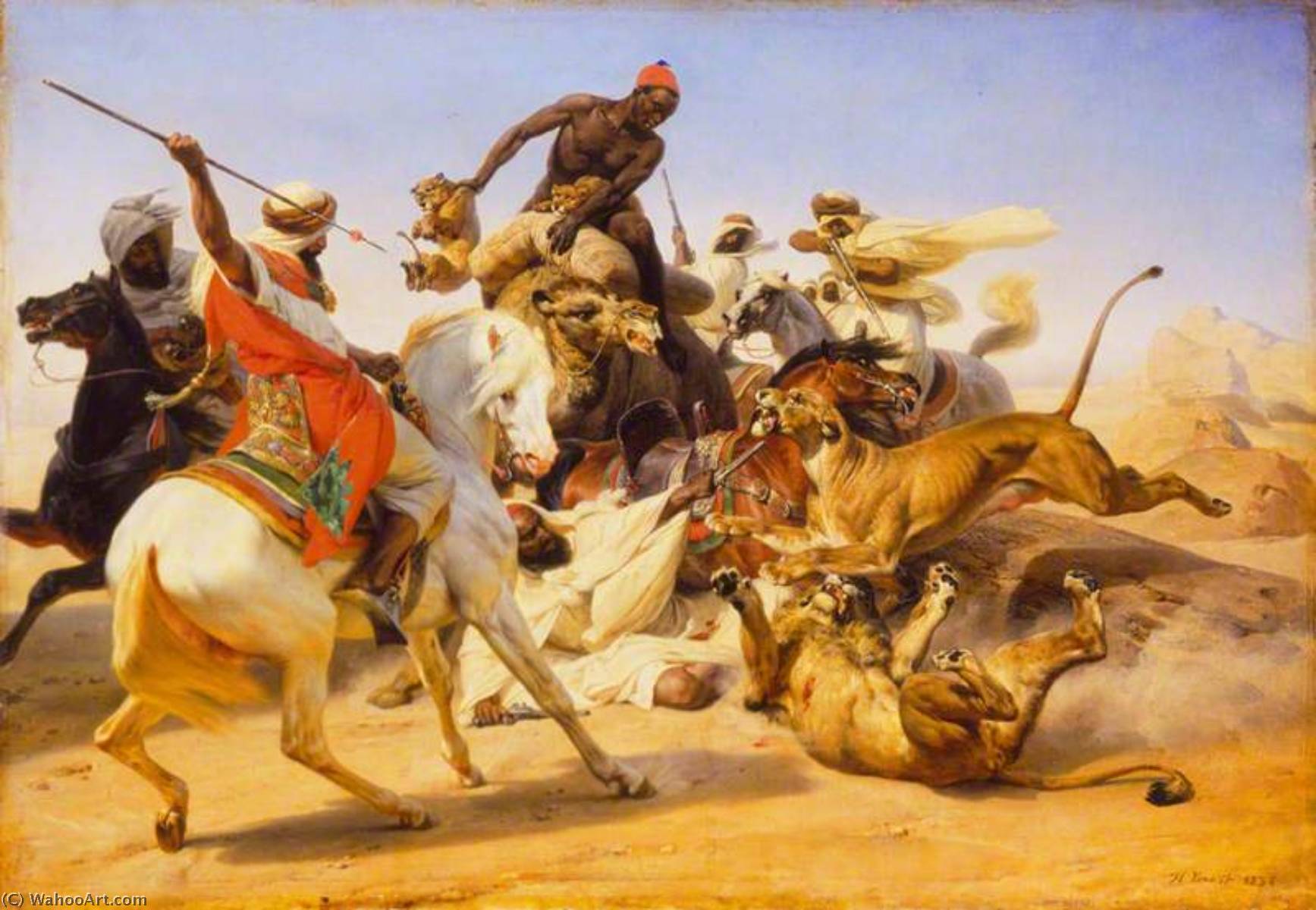
The Lion Hunt
 Oil On Canvas
- WallArt
- Romanticism
 1836
1836- 19th Century
 57.0 x 82.0 cm
 The Wallace Collection
 Read More
Hand Made Oil Reproduction
Hand-painted oil on canvas in your size and frame, made to order by our artists. ( Buy Print Buy Image)




































Pick from our preset sizes that match the artwork's original proportions.

You may enter your own dimensions to fit a specific frame or space. If your selected size does not match the original image's proportions, we will either crop the artwork or extend the painting with additional hand-painted elements. A digital mockup will be sent for your approval before production begins.
Please note that the on-screen preview does not reflect the actual cropping or extension. Only the mockup will accurately show the final composition.
While custom sizes are available, we recommend selecting a dimension from the predefined list to preserve the original proportions.
After order, ArtsDot.com team will email client for instructions and provide a mockup preview
Worldwide Delivery () in 3/4 weeks instead of standard 5 weeks. (16 August). No compromise on quality.

Free Worldwide Express Shipping

High-Quality Linen Canvas

Full Shipping Insurance

Customs Tax Refund Guarantee

True Color Matching Guarantee

60-Day Return Policy (Defects Only)

100% Money-Back Guarantee

Bulk Discount Offer
 Glass option is only available in size under 110 CM

The Lion Hunt
Reproduction Medium
Reproduction Size
-


Total Price
$ 263
Artwork Description
A Symphony of Chaos and Courage
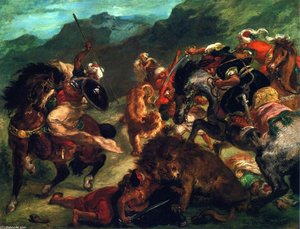
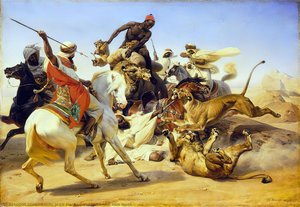
In the heart of the nineteenth century, few artists could capture the raw, unbridled energy of life as vividly as Emile Jean Horace Vernet. His masterpiece, The Lion Hunt, completed in 1836, serves as a breathtaking window into a world where the boundary between civilization and the wild is precariously thin. As one gazes upon this oil on canvas, the viewer is immediately thrust into a whirlwind of motion. The scene is not merely a depiction of a hunt; it is a visceral experience of survival. Mounted on powerful horses, a group of men lean forward with singular purpose, their spears poised to strike. The lions themselves are captured in mid-leap, their muscular forms rippling with predatory intent, creating a rhythmic tension that vibrates through the entire composition. This is art that breathes, capturing a fleeting moment of high drama where every muscle fiber and every drop of sweat feels palpably real.
The technical mastery displayed in this work is nothing short of extraordinary, making it a centerpiece worthy of the most discerning collections. Vernet utilizes a sophisticated interplay of light and shadow to sculpt the figures within the frame. The desert landscape, bathed under a clear, expansive blue sky, provides a stark, luminous backdrop that allows the darker, more intense tones of the foreground action to pop with cinematic clarity. Notice the meticulous attention to texture: the coarse sheen of the horses' coats, the dusty grit of the terrain, and the frantic expressions etched onto the faces of both man and beast. Through his expert use of color, Vernet achieves a profound sense of depth, guiding the eye from the immediate peril of the foreground into the vast, sun-drenched horizon, effectively creating a three-dimensional stage for this epic struggle.
The Legacy of Realism and Orientalist Allure
To understand the emotional weight of The Lion Hunt, one must consider Vernet’s place within the artistic evolution of his era. Moving away from the rigid, idealized constraints of Neoclassicism, Vernet embraced a more vernacular and realistic approach to storytelling. He was a painter of contemporary life and movement, often eschewing grand historical allegories in favor of the tangible, breathing world. This painting sits at the intersection of battle scene tradition and the burgeoning interest in Orientalist themes, where the exoticism of distant lands met the rigorous demands of French realism. The symbolism here is primal; it represents the eternal conflict between human will and the untamed forces of nature. It is a narrative of bravery, risk, and the intoxicating adrenaline of the chase.
For the art collector or interior designer, a high-quality reproduction of this work offers more than just visual decoration; it provides a focal point of profound character. The painting’s dynamic composition and rich palette make it an ideal statement piece for grand halls, libraries, or sophisticated living spaces where one wishes to evoke a sense of adventure and historical depth. It invites conversation, drawing the eye and commanding the room with its storied intensity. Bringing The Lion Hunt into a contemporary setting allows the timeless spirit of Vernet’s vision—the thrill of the hunt and the beauty of the struggle—to resonate within the modern home, bridging the gap between the nineteenth-century canvas and the elegance of today.
Related Artworks
Artist Biography
Émile Jean-Horace Vernet: A Life in Paint
Early Life and Family Legacy
Émile Jean-Horace Vernet was born on June 30, 1789, in Paris, France – remarkably, within the Louvre Palace while his parents resided there during the French Revolution. He came from a distinguished artistic lineage; his father was Carle Vernet, also a renowned painter, and his grandfather was Claude Joseph Vernet, celebrated for his marine landscapes. This familial background profoundly shaped his early exposure to art and laid the foundation for his own career.Artistic Development and Early Influences
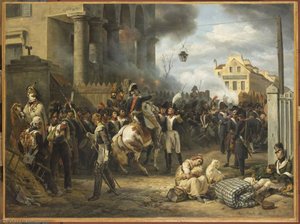
Vernet quickly developed a preference for depicting contemporary life rather than adhering to the high-minded seriousness of academic Classicism. He rejected idealized representations, favoring a more realistic and vernacular style. During Napoleon Bonaparte’s reign, he began portraying French soldiers with a newfound familiarity, diverging from the grand, Davidian approach. Early works like “The Taking of an Entrenched Camp” showcased his developing character and directness. His artistic development was also influenced by observing the realities of war and military life firsthand.Rise to Prominence During the Restoration
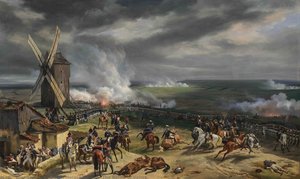
The Bourbon Restoration brought Vernet significant recognition. He secured a series of commissions from the Duc d'Orleans (the future King Louis-Philippe) for battle paintings. Critics were impressed by his speed and accuracy, noting that his works combined historical detail with compelling landscapes. His “Four Battles” series – including “The Battle of Jemappes,” “The Battle of Montmirail,” “The Battle of Hanau,” and “The Battle of Valmy” – established him as a leading battle painter of the era.Director of the French Academy in Rome
Vernet’s talent and reputation led to his appointment as director of the French Academy in Rome from 1829 to 1835. This period allowed him to study classical art and architecture, further refining his skills and broadening his artistic horizons. However, he remained committed to representing contemporary subjects upon his return to France.Patronage Under Louis-Philippe and the Second Empire
King Louis-Philippe became a prolific patron of Vernet, commissioning him to decorate the entire Constantine room at the Palace of Versailles within three years. These paintings depicted French colonization in Algeria, portraying scenes of military conquest and “civilizing” efforts. After the Revolution of 1848, Napoléon III also became a supporter, continuing Vernet’s commissions during the Second Empire. He continued to depict heroic representations of the French army, maintaining his commitment to realism.The Crimean War and Later Years
Vernet accompanied the French army during the Crimean War, producing paintings such as “The Battle of the Alma.” While not as well-received as his earlier works, these pieces demonstrated his dedication to documenting contemporary events. He famously refused a request to remove an unpopular general from one of his paintings, stating his commitment to historical truth.Major Achievements and Historical Significance
- Vernet’s realistic depictions of soldiers and battle scenes revolutionized military painting in France.
- His work provides valuable insights into 19th-century French society, politics, and colonial endeavors.
- He skillfully blended historical accuracy with artistic flair, creating compelling and visually striking compositions.
- His paintings served as powerful propaganda tools, shaping public perception of the French army and its campaigns.
Legacy
Émile Jean-Horace Vernet died in Paris on January 17, 1863. His work continues to be studied and admired for its historical significance and artistic merit. He is also a curious footnote in popular culture as the alleged relative of Sherlock Holmes (according to Arthur Conan Doyle’s story “The Adventure of the Greek Interpreter”). Vernet's legacy lies in his ability to capture the spirit of 19th-century France through vivid, realistic, and often dramatic depictions of war, colonialism, and everyday life.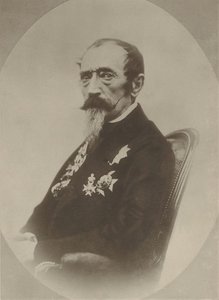
emile jean horace vernet
1789 - 1863
Quick Facts
- Birth Date: 1789
- Death Date: 1863
- Influenced By:
- Carle Vernet
- Claude Joseph Vernet
- Movement:
- Romanticism
- Orientalism
- Name: Émile Jean-Horace Vernet
- Nationality: French
- Notable Works:
- The Battle of Valmy
- Polish Prometheus
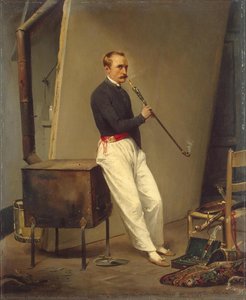
- The Artist's Studio
- Angel of Death
Related Articles
The Pursuit of Power & Prestige: Hunting Scenes in Western Art
Explore the rich history of hunting scenes in Western art, from royal pursuits to powerful allegories. Discover masterpieces & expert insights for discerning collectors. ArtsDot offers museum-quality reproductions.
William Henry Hunt: Luminosity & Detail in Early 19th-Century Watercolour Painting
Explore the captivating watercolour paintings of William Henry Hunt (1790-1864). Discover his mastery of naturalistic detail, luminous technique & influence on 19th-century art. Learn about collecting Hunt's work and its enduring value.
Sr. John E. Ferneley: Equestrian Portraiture & England's Social Fabric
Explore the captivating world of Sr. John E. Ferneley, a master of British sporting art. Discover his exquisite equestrian paintings & insights into 19th-century society. Invest in timeless masterpieces with ArtsDot.

Hokusai's Masterpieces: 25 Iconic Prints & Paintings for Art Lovers | ArtsDot
Journey through Katsushika Hokusai’s 25 most iconic artworks, including *The Great Wave*. Explore the ukiyo-e master's history, style & timeless Japanese woodblock prints. Find museum-quality reproductions for your home at ArtsDot.com.
Philip James de Loutherbourg: Romantic Visions of Maritime Life & the Sublime
Explore the dramatic naval scenes & landscapes of Philip James de Loutherbourg (1740-1812), a key figure in Romantic painting. Discover his legacy, theatrical innovations & iconic works like 'The Battle of the Nile' at ArtsDot.