 Preview
 Send
Send Share
Share
 Details

 Download
 Similars
 X-Ray
X-Ray Diaporama
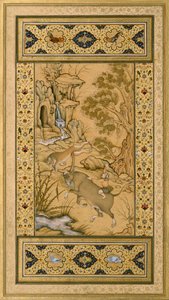
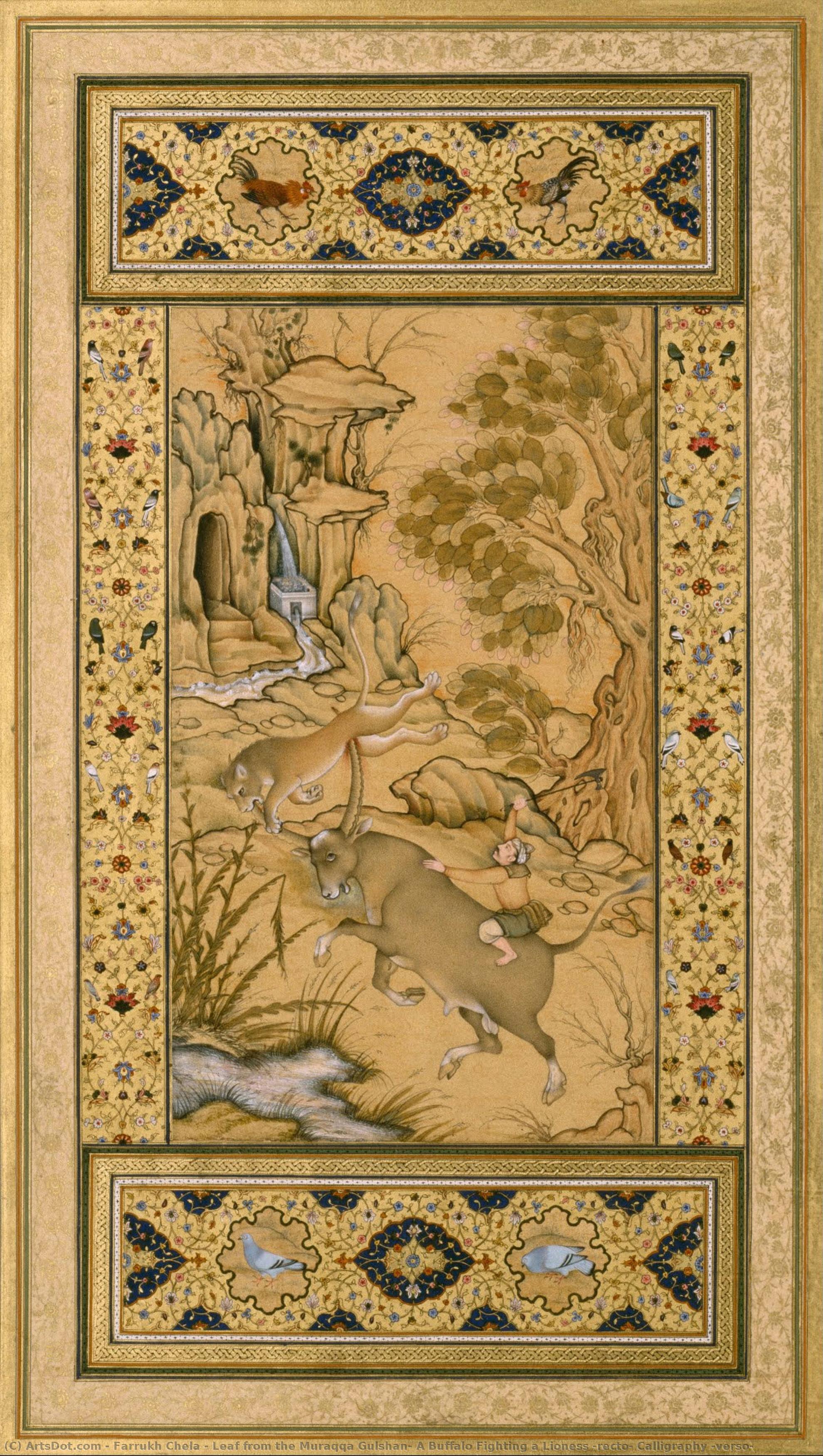
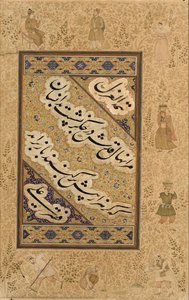
Leaf from the Muraqqa Gulshan: A Buffalo Fighting a Lioness (recto) Calligraphy (verso)


 Read More
Giclée / Art Print
Museum-quality giclée or canvas print with fast production and flexible finish options. ( Buy Hand Made Painting Buy Image)




P118B $10

P118H $10

P118W $10

P438Z $10

P508JH $12

P508YH $12

P805H $10

P805Z $10

P919BZ $10

P919G $10

P919XJ $10

P959ZH $10

P968JZ $12

W106C $8

W218G $10

W218JH $8

W218Y $10

W307PJ $10

W316G $10

W316PJ $8

W316Y $10

W398PJ $8

W4111J $10

W500HY $15

W500JH $15

W692G $12

W849H $8

W940BG $15

W953PJ $8




Pick from our preset sizes that match the artwork's original proportions.

You may enter your own dimensions to fit a specific frame or space. If your selected size does not match the original image's proportions, we will either crop the artwork or extend the image with a mirrored or solid-fill edge. A digital mockup will be sent for your approval before production begins.
Please note that the on-screen preview does not reflect the actual cropping or extension. Only the mockup will accurately show the final composition.
While custom sizes are available, we recommend selecting a dimension from the predefined list to preserve the original proportions.
Worldwide Delivery () in 2 weeks instead of standard 4/5 weeks. (26 August)

Free Worldwide Express Shipping

High-Quality Linen Canvas

Full Shipping Insurance

Customs Tax Refund Guarantee

True Color Matching Guarantee

60-Day Return Policy (Defects Only)

100% Money-Back Guarantee

Bulk Discount Offer
 Glass option is only available in size under 110 CM

Leaf from the Muraqqa Gulshan: A Buffalo Fighting a Lioness (recto) Calligraphy (verso)
Giclée / Art Print
Reproduction Size
-


Total Price
$ 63
Collectible Description
Related Artworks
Artist Biography
The Expressive Vision of Farrukh Chela
In the vibrant, sun-drenched workshops of the Mughal Empire, amidst the scent of pigments and the rustle of fine parchment, lived a painter whose brush captured the very soul of an era. Farrukh Chela, active from approximately 1580 to 1604, was not merely a craftsman but a vital storyteller within the opulent court of Emperor Akbar. While history often reserves its highest accolades for a select few royal favorites, Chela’s legacy is etched into the very fabric of Mughal manuscript illustration. He emerged during a period of unparalleled artistic synthesis, where Persian elegance met Indian vitality, creating a visual language that was as much about emotional truth as it was about technical precision.
Though the specific details of his early life remain shrouded in the mists of the sixteenth century, his presence is felt strongly in the workshops of Fatehpur Sikri. It was here, under the patronage of Akbar, that Chela honed a style that would become uniquely his own. He was part of a grand tradition of illustrators who breathed life into epic narratives, ranging from the sacred Hindu texts of the Ramayana and Mahabharata to the sophisticated Persian tales that graced the imperial library. His work served as a bridge between cultures, translating complex religious and historical themes into miniature masterpieces that could be held in the palm of a hand.
A Style Defined by Idiosyncrasy and Motion
What truly distinguishes Farrukh Chela from his contemporaries is an unmistakable, almost idiosyncratic, creative spirit. While many Mughal artists sought a refined, idealized perfection, Chela often embraced a more expressive and sometimes distorted anatomy to convey movement and psychological depth. His figures are rarely static; they are caught in the heat of battle, the tension of an elephant fight, or the quiet contemplation of a garden scene. This sense of dynamism is paired with a meticulous attention to detail—the delicate curve of a flowering branch, the intricate gold chains adorning a royal elephant, or the rugged texture of a rocky hillside.
His technique often reflected the dual influences of his time. One can observe the Persian influence in his use of landscape elements, such as stylized clouds and delicate flora, which evoke a sense of poetic brevity and grace. Yet, there is an underlying Indian robustness in his characterizations. In works like Jahangir Watching an Elephant Fight, the viewer is transported into the spectacle of the court, where the tension between man and beast is rendered with such clarity that the sounds of the crowd seem almost audible. This ability to blend the decorative with the dramatic allowed him to contribute significantly to the most prestigious manuscripts of the Mughal era.
Legacy in the Imperial Archives
The historical significance of Farrukh Chela lies in his role as a foundational pillar of the Mughal school. He was a prolific contributor, lending his hand to the major illustrated projects that defined Akbar's reign. His work has survived the centuries to reside in some of the world's most prestigious institutions, ensuring that his unique vision continues to inspire scholars and art lovers alike. To study Chela is to study the heartbeat of the Mughal Renaissance.
His enduring impact can be seen through several key contributions:
- Narrative Mastery: His ability to translate complex epic poetry into visual sequences that maintain emotional continuity.
- Stylistic Innovation: The introduction of a more idiosyncratic, expressive figure style that broke away from rigid formalism.
- Cultural Synthesis: The seamless integration of Persian aesthetic sensibilities with the vibrant, naturalistic traditions of Indian painting.
- Institutional Presence: A body of work preserved in global collections such as the Art Institute of Chicago, the Freer Gallery of Art, and the Chester Beatty Library.
Though he may be described by some historians as a "quiet titan," Farrukh Chela’s voice remains loud and clear through his pigments. He remains an essential figure for anyone seeking to understand the complex, beautiful, and deeply human world of Mughal miniature painting.
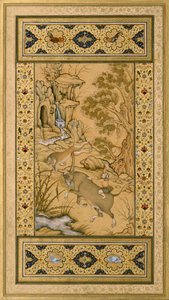
farrukh chela
1604 , India
Quick Facts
- Artistic Movement Or Style: Mughal Miniature Painting
- Date Of Death: 1604
- Full Name: Farrukh Chela
- Nationality: Indian
- Notable Artworks: ['Leaf from the Muraqqa Gulshan: A Buffalo Fighting a Lioness']
- Place Of Birth: India
Related Articles
Franz Xaver Winterhalter: Court Painter, Academician & Embodiment of Mid-19th Century Portraiture
Explore the life & art of Franz Xaver Winterhalter, the celebrated court painter of the 19th century. Discover his exquisite portraits of royalty and aristocracy – a symbol of prestige and refined taste.
Charles-André van Loo: A Study in Rococo Portraiture & the French Court's Artistic Dynamics
Explore the elegant world of Charles-André van Loo, a master of Rococo portraiture at the French court. Discover his life, techniques, and enduring influence on 18th-century art. Hand-painted reproductions available.
Agnolo Bronzino: Mastering Courtly Portraiture & the Enigmatic Gaze of Renaissance Florence
Explore the captivating world of Agnolo Bronzino, Renaissance master portraitist. Discover his elegant style, symbolic depth & lasting influence on art history. Expert insights for collectors.
Hans von Aachen: Mannerism's Courtly Visionary & Imperial Portraiture
Explore the captivating world of Hans von Aachen, a leading Mannerist painter renowned for his exquisite imperial portraits & mythological scenes. Discover his legacy and influence on 16th-century European art.
Diego Velázquez: Master of the Spanish Golden Age – Technique, Influence & Courtly Portraiture
Explore the life & work of Diego Velázquez, master of the Spanish Golden Age. Discover his innovative techniques, iconic paintings like Las Meninas, and lasting influence on art history. Expert insights for collectors.