 Preview
 Send
Send Share
Share
 Details

 Download
 Similars
 X-Ray
X-Ray Diaporama
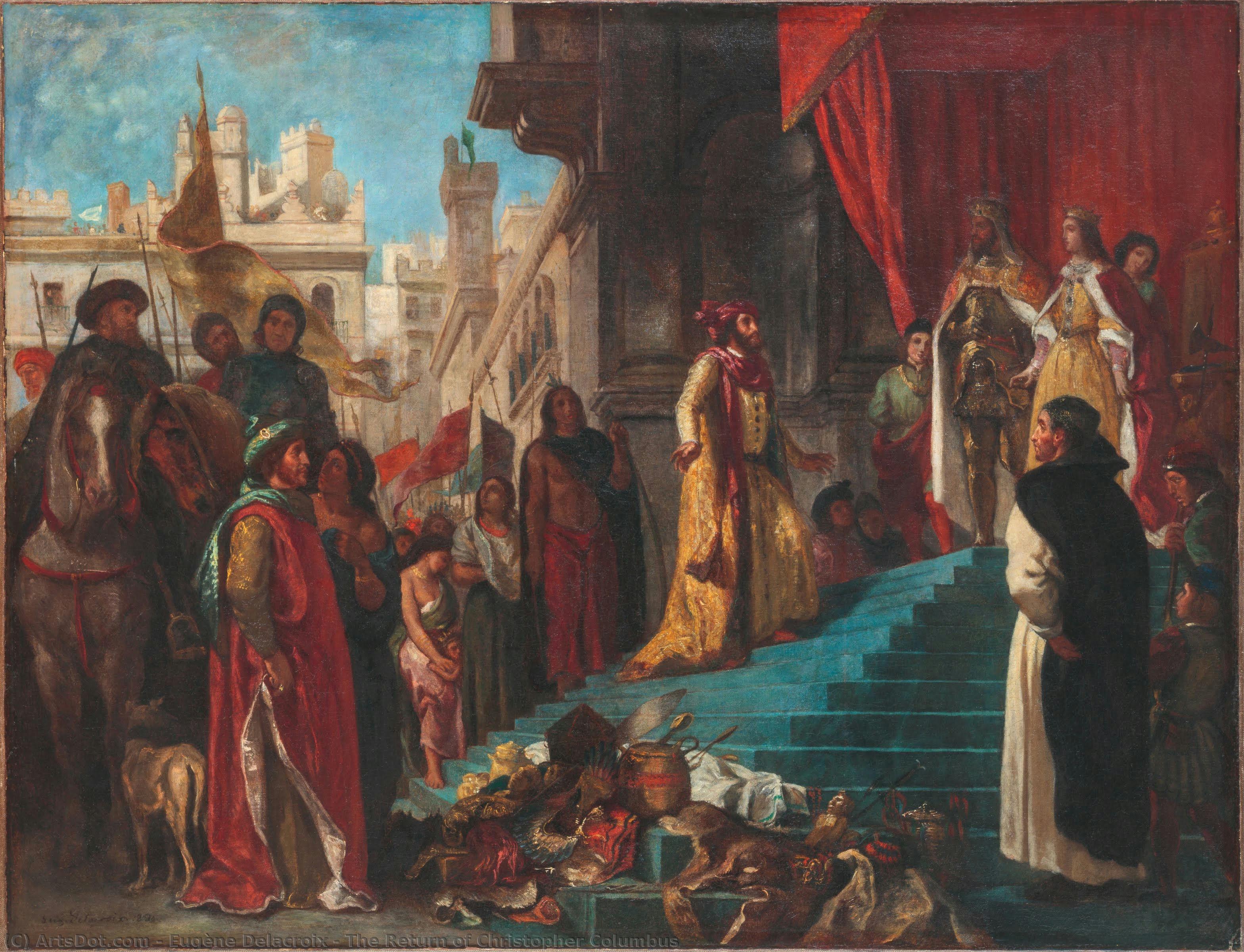
The Return of Christopher Columbus


 Read More
Hand Made Oil Reproduction
Hand-painted oil on canvas in your size and frame, made to order by our artists. ( Buy Print Buy Image)




P118B $10

P118H $10

P118W $10

P438Z $10

P508JH $12

P508YH $12

P805H $10

P805Z $10

P919BZ $10

P919G $10

P919XJ $10

P959ZH $10

P968JZ $12

W106C $8

W218G $10

W218JH $8

W218Y $10

W307PJ $10

W316G $10

W316PJ $8

W316Y $10

W398PJ $8

W4111J $10

W500HY $15

W500JH $15

W692G $12

W849H $8

W940BG $15

W953PJ $8




Pick from our preset sizes that match the artwork's original proportions.

You may enter your own dimensions to fit a specific frame or space. If your selected size does not match the original image's proportions, we will either crop the artwork or extend the painting with additional hand-painted elements. A digital mockup will be sent for your approval before production begins.
Please note that the on-screen preview does not reflect the actual cropping or extension. Only the mockup will accurately show the final composition.
While custom sizes are available, we recommend selecting a dimension from the predefined list to preserve the original proportions.
After order, ArtsDot.com team will email client for instructions and provide a mockup preview
Worldwide Delivery () in 3/4 weeks instead of standard 5 weeks. (16 August). No compromise on quality.

Free Worldwide Express Shipping

High-Quality Linen Canvas

Full Shipping Insurance

Customs Tax Refund Guarantee

True Color Matching Guarantee

60-Day Return Policy (Defects Only)

100% Money-Back Guarantee

Bulk Discount Offer
 Glass option is only available in size under 110 CM

The Return of Christopher Columbus
Reproduction Medium
Reproduction Size
-


Total Price
$ 263
Artwork Description
A Dramatic Tableau: The Return of Christopher Columbus
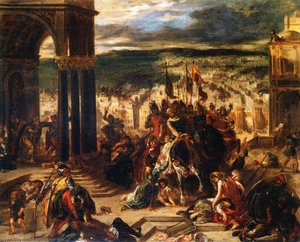
Eugène Delacroix’s “The Return of Christopher Columbus” isn't merely a historical painting; it’s a visceral embodiment of the Romantic spirit, a swirling vortex of color and emotion that captures the momentous return of the explorer to Spain in 1493. Completed in 1839, this monumental canvas transports us not just to a specific event, but to the very heart of ambition, triumph, and the complex legacy of exploration itself. Forget the sanitized depictions often presented; Delacroix offers a brutally honest, almost unsettling portrayal of a victory steeped in the shadows of conquest.
The scene explodes with opulent detail – a chaotic river of riches: gold bars glinting under the light, bolts of vibrant textiles cascading from carts, and gleaming weaponry reflecting the celebratory fervor. Yet, amidst this abundance, there’s an underlying tension, a palpable sense of unease. The sheer volume of plunder feels almost overwhelming, hinting at the immense cost borne by the indigenous populations whose lands were being systematically exploited.
Romanticism Unleashed: Color and Movement
Delacroix was a key figure in the Romantic movement, rejecting the rigid formality of Neoclassicism in favor of emotional intensity, dramatic lighting, and an embrace of color as a primary expressive tool. “The Return” is a testament to this philosophy. Bold swathes of crimson, gold, and deep blues dominate the composition, creating a dynamic sense of movement and energy. The brushstrokes are loose and visible, contributing to the painting’s raw, almost turbulent quality – a far cry from the smooth surfaces favored by earlier artistic traditions.
Notice how Delacroix masterfully uses chiaroscuro—the dramatic contrast between light and dark—to draw our eye to key elements. The figures of King Ferdinand and Queen Isabella, elevated on a dais, are bathed in golden light, symbolizing their power and the legitimacy of Columbus’s voyage. Conversely, the indigenous people, depicted with varying degrees of detail and often rendered as subordinate figures, exist largely in shadow, subtly suggesting the darker side of this historical narrative.
Symbolism and Narrative Layers
Beyond the immediate depiction of a triumphant return, “The Return” is laden with symbolism. The presence of captive indigenous individuals – some adorned with feathers, others bearing signs of hardship – serves as a stark reminder of the human cost of exploration. The horse, prominently featured on the left, represents power and conquest, echoing Columbus’s own ambition. Even the composition itself—a swirling mass of figures and objects—suggests chaos and uncertainty, reflecting the profound implications of this pivotal moment in history.
Delacroix himself was fascinated by exotic cultures and often incorporated elements of North African art into his work. This influence is evident in the painting’s vibrant palette and dynamic composition, which evoke a sense of both grandeur and unrestrained energy. The inclusion of two dogs at the bottom right corner adds an element of intrigue, perhaps symbolizing loyalty or even the darker aspects of human nature.
A Legacy of Ambition and Controversy
“The Return of Christopher Columbus” remains a powerfully evocative work, prompting viewers to confront uncomfortable truths about history. While celebrating Columbus’s arrival in the Americas, Delacroix doesn't shy away from depicting the violence and exploitation that accompanied it. The painting is not simply a glorification of exploration; it’s a complex meditation on ambition, power, and the enduring consequences of colonialism. It stands as a poignant reminder that even the most celebrated historical events are often intertwined with shades of darkness and injustice.
Related Artworks
Artist Biography
A Revolutionary Brush: The Life and Legacy of Eugène Delacroix
Ferdinand Victor Eugène Delacroix, born in Charenton-Saint-Maurice near Paris in 1798, was more than just a painter; he was the embodiment of Romanticism’s fervent spirit. Emerging as a leading figure in French art during a period of societal upheaval and shifting aesthetic ideals, Delacroix rejected the rigid formalism of Neoclassicism, instead embracing drama, emotion, and a vibrant palette that would forever alter the course of painting. His life, though marked by personal tragedy, became inextricably linked with his artistic vision—a quest to capture the sublime, explore exotic realms, and express the raw power of human experience.
Delacroix’s early years were shaped by a complex family history and a somewhat fragile health. Orphaned at sixteen, he found guidance in the influential figure of Charles-Maurice de Talleyrand-Périgord, who many believed to be his true father. This connection provided him with crucial patronage and access to the Parisian art world. He initially studied under Pierre-Narcisse Guérin, a respected academic painter, but it was the work of Théodore Géricault—particularly his monumental *The Raft of the Medusa*—that truly ignited Delacroix’s artistic passion. He even posed for Géricault, absorbing the elder artist's commitment to realism and emotional intensity.
From Historical Scenes to Exotic Visions
Delacroix burst onto the Salon scene in 1822 with *Dante and Virgil in Hell*, a work that immediately signaled his departure from established norms. Inspired by Dante Alighieri’s *Inferno*, the painting showcased a bold use of color, dynamic composition, and a palpable sense of psychological turmoil. This marked the beginning of a career dedicated to exploring themes of passion, conflict, and the human condition. While initially met with mixed reactions—some critics lauded his originality, others dismissed his work as chaotic and lacking in classical refinement—Delacroix persevered, developing a distinctive style characterized by loose brushwork, rich textures, and an emphasis on movement.
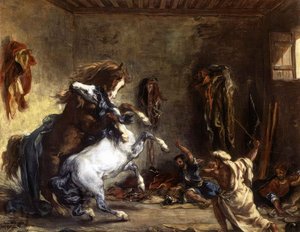
His fascination extended beyond historical and literary subjects. A pivotal journey to North Africa in 1832 profoundly impacted his artistic trajectory. Immersing himself in the vibrant culture of Morocco, Delacroix was captivated by the exotic landscapes, the nomadic lifestyle of the Arab tribes, and the intensity of their traditions. This experience infused his paintings with a newfound sense of color, light, and energy, as seen in works like *Arab Horses Fighting* and numerous studies of Algerian life. He wasn’t merely documenting these scenes; he was seeking to understand the underlying spirit of a culture vastly different from his own.
The Power of Color and Political Engagement
Delacroix's mastery of color is arguably his most enduring legacy. He drew inspiration from the Baroque exuberance of Rubens and the Venetian Renaissance masters, prioritizing chromatic intensity over precise draftsmanship. He understood that color could evoke emotion, create atmosphere, and convey meaning in ways that line alone could not. This innovative approach profoundly influenced subsequent generations of artists, paving the way for Impressionism and Post-Impressionism.
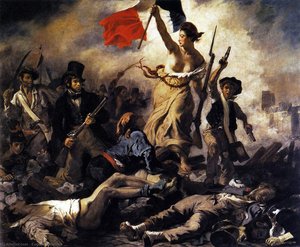
Beyond his aesthetic innovations, Delacroix was a politically engaged artist. His most iconic work, *Liberty Leading the People* (1830), is not simply a depiction of the July Revolution; it’s a powerful allegory for freedom and rebellion. The painting's dynamic composition, allegorical figures, and raw emotional power cemented its place in art history as a symbol of French national identity and revolutionary ideals. It wasn’t just about documenting an event; it was about capturing the spirit of a nation fighting for its liberty.
A Lasting Influence
Delacroix continued to paint prolifically throughout his life, exploring diverse themes ranging from Shakespearean tragedies to biblical narratives. He also made significant contributions as a lithographer, illustrating works by literary giants like William Scott and Johann Wolfgang von Goethe. His studio became a hub for artistic exchange, attracting aspiring painters who were drawn to his unconventional approach.
By the time of his death in 1863, Delacroix had firmly established himself as one of France’s greatest artists. His influence extended far beyond the Romantic movement, shaping the development of modern painting and inspiring countless artists with his bold use of color, dynamic compositions, and unwavering commitment to emotional expression. He remains a pivotal figure in art history—a testament to the power of individual vision and the enduring allure of the sublime.
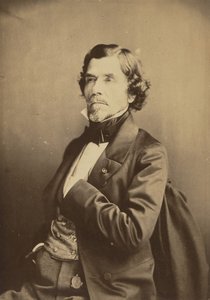
Eugène Delacroix
1798 - 1863 , France
Quick Facts
- Artistic Movement Or Style: Romanticism
- Artists Or Movements Influenced By This Artist:
- Impressionism
- Post-Impressionism
- Artists Who Influenced This Artist:
- Rubens
- Venetian Renaissance painters
- Date Of Birth: April 26, 1798
- Date Of Death: August 13, 1863
- Full Name: Eugène Delacroix
- Nationality: French
- Notable Artworks:
- Liberty Leading the People
- The Death of Sardanapalus
- Arab Horses Fighting
- Place Of Birth: Chantonnay, France
Related Articles
Ferdinand Delacroix: Romanticism's Revolutionary Brush – A Study of Passion, Politics, and Painterly Innovation
Explore the revolutionary art of Eugène Delacroix, leader of French Romanticism. Discover his masterful use of color, political engagement, and lasting influence on modern painting. Learn about key works & history.
Romanticism's Greatest Artworks: 10 Masterpieces for Your Home |
Journey through Romanticism's soul with 10 iconic artworks by Delacroix, Goya & Turner. Explore emotional landscapes and historical drama. Find museum-quality art reproductions to elevate your home at – Discover all masterpieces online!
The Evocative Brushstroke: Exploring Emotion, Individuality & the Sublime in Romanticism's Artistic Landscape
Explore the passionate world of Romanticism! Discover masterpieces by Friedrich & Goya, delve into the sublime, and understand the movement's lasting impact on art history. Expert analysis & insights at ArtsDot.
The Sublime and the Sensual: Exploring Emotion & Individuality in Romanticism's Artistic Revolution
Explore the passionate world of Romanticism! Discover masterpieces by Friedrich & Goya, delve into the sublime, and understand the movement's lasting impact on art history. Expert analysis & insights.
The Enduring Legacy of 18th & 19th Century Art: Movements, Masters & Societal Reflections
Explore the rich history of 18th & 19th-century art! Discover Romanticism, Realism, and iconic masters like Delacroix & Courbet. Expert insights & high-quality reproductions at ArtsDot.