 Preview
 Send
Send Share
Share
 Details

 Download
 Similars
 X-Ray
X-Ray Diaporama
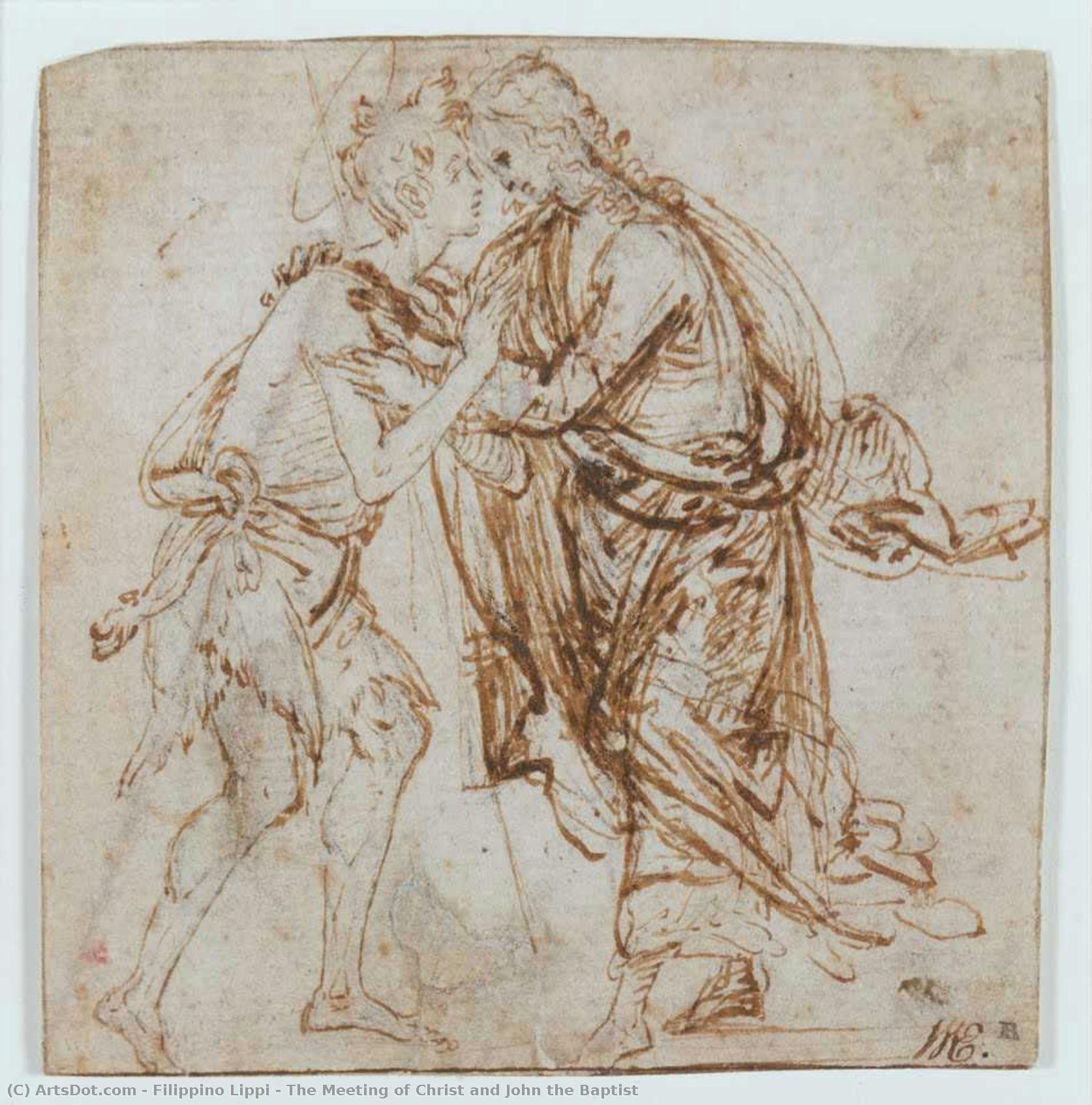
The Meeting of Christ and John the Baptist


 Read More
Giclée / Art Print
Museum-quality giclée or canvas print with fast production and flexible finish options. ( Buy Hand Made Painting Buy Image)




P118B $10

P118H $10

P118W $10

P438Z $10

P508JH $12

P508YH $12

P805H $10

P805Z $10

P919BZ $10

P919G $10

P919XJ $10

P959ZH $10

P968JZ $12

W106C $8

W218G $10

W218JH $8

W218Y $10

W307PJ $10

W316G $10

W316PJ $8

W316Y $10

W398PJ $8

W4111J $10

W500HY $15

W500JH $15

W692G $12

W849H $8

W940BG $15

W953PJ $8




Pick from our preset sizes that match the artwork's original proportions.

You may enter your own dimensions to fit a specific frame or space. If your selected size does not match the original image's proportions, we will either crop the artwork or extend the image with a mirrored or solid-fill edge. A digital mockup will be sent for your approval before production begins.
Please note that the on-screen preview does not reflect the actual cropping or extension. Only the mockup will accurately show the final composition.
While custom sizes are available, we recommend selecting a dimension from the predefined list to preserve the original proportions.
Worldwide Delivery () in 2 weeks instead of standard 4/5 weeks. (2 September)

Free Worldwide Express Shipping

High-Quality Linen Canvas

Full Shipping Insurance

Customs Tax Refund Guarantee

True Color Matching Guarantee

60-Day Return Policy (Defects Only)

100% Money-Back Guarantee

Bulk Discount Offer
 Glass option is only available in size under 110 CM

The Meeting of Christ and John the Baptist
Giclée / Art Print
Reproduction Size
-


Total Price
$ 63
The Meeting of Christ and John the Baptist – A Renaissance Dialogue
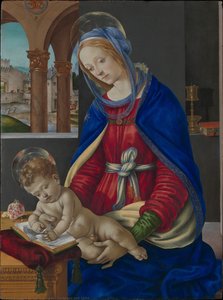
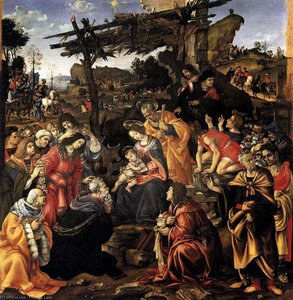
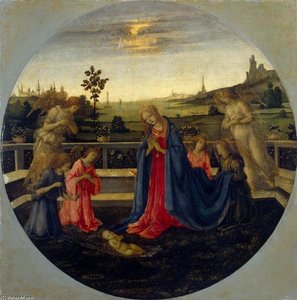
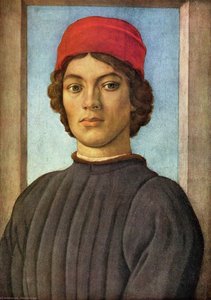
Filippino Lippi’s “The Meeting of Christ and John the Baptist,” painted in 1499, is more than just a depiction of two figures; it's a profound meditation on faith, prophecy, and the nascent promise of Christianity. Executed in tempera and oil on panel, this intimate work, measuring a modest 9 x 9 cm, resides within the Isabella Stewart Gardner Museum in Boston, offering a rare glimpse into the artist’s evolving style during a pivotal period of Florentine art history. The painting immediately draws the eye with its remarkably lifelike portrayal of Christ and John, rendered with an almost palpable sense of warmth and humanity – a departure from the more stylized figures common in earlier Renaissance works.
Lippi, born into a world shaped by the illegitimate status of his father, Fra Filippo Lippi, a renowned painter himself, possessed an artistic lineage steeped in both tradition and innovation. His early training under his father laid the foundation for a career marked by collaboration and experimentation. This particular piece reflects this duality; while influenced by the stylistic echoes of Sandro Botticelli – a former pupil of his father – it swiftly develops into a distinctly personal expression, characterized by animated forms, rich color palettes, and an evocative use of landscape. The background, subtly rendered yet brimming with detail, hints at a contemplative wilderness, mirroring the spiritual journey undertaken by both figures.
A Study in Symbolism and Narrative
The scene itself is deceptively simple: Christ and John stand close together, their arms gently encircling one another in an embrace that transcends mere physical contact. This intimate gesture speaks volumes about their shared destiny – a foreshadowing of the divine union between God and humanity. The positioning of the figures, with Christ slightly elevated, subtly emphasizes his role as the Messiah, while John’s posture suggests a receptive humility, embodying the spirit of repentance and preparation. The presence of other figures in the background—a woman near the top left corner and another towards the bottom right—adds layers to the narrative, perhaps representing the wider community witnessing this pivotal encounter or symbolizing the broader scope of John's prophetic ministry.
Crucially, the painting is deeply rooted in biblical prophecy. John’s role as “the voice crying out in the wilderness” (referencing Isaiah) anticipates the arrival of Christ, highlighting his function as a herald and forerunner. The very act of their meeting—a quiet, almost private communion—underscores the profound significance of this prophetic connection. Lippi masterfully captures the essence of John’s message: a call to repentance, a preparation for the coming of the Lord, and an invitation to embrace faith with sincerity and devotion.
The Artist's Hand and Renaissance Techniques
Filippino Lippi was a key figure in the transition from Early to High Renaissance art. His work demonstrates a remarkable command of technique, particularly evident in his skillful use of tempera and oil – a combination that allowed him to achieve both luminous color and subtle gradations of tone. The delicate rendering of fabric, the expressive quality of the faces, and the atmospheric perspective all testify to Lippi’s mastery of his craft. Notably, he worked alongside other prominent artists like Perugino, Ghirlandaio, and Botticelli on significant projects, absorbing influences while simultaneously forging his own distinctive style.
The painting's small scale belies its emotional depth. It is a testament to Lippi’s ability to convey complex theological ideas within a compact format, inviting viewers to contemplate the profound mysteries of faith and redemption. “The Meeting of Christ and John the Baptist” remains a poignant reminder of the enduring power of art to illuminate the human spirit and connect us to the timeless truths of our shared history.
Related Artworks
Artist Biography
Early Life and Training
- Born: April 1457, Prato, Italy
- Died: April 1504
- Parents: Fra Filippo Lippi (painter) and Lucrezia Buti
- Filippino was the illegitimate son of a renowned painter.
- Early training under his father laid the foundation for his artistic career.
Artistic Career and Development
- Early Period (1475-1480): Initial works, such as Madonnas, showed a less refined style. These were initially attributed to an anonymous artist known as "amico di Sandro."
- Evolution (1480-1485): Development of a more personal and effective approach in works like the *Journeys of Tobias*.
- Maturity (1485-1504): Mastery of the High Renaissance style, exemplified by *The Apparition of Christ to the Virgin*.
Major Works and Collaborations
- Collaboration with Perugino, Ghirlandaio, and Botticelli on frescoes at Lorenzo de' Medici’s villa.
- Completion of Masaccio's unfinished decoration in the Brancacci Chapel alongside Masolino.
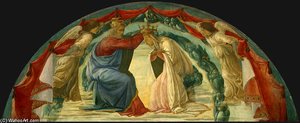
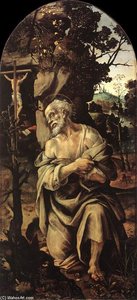
- Notable works include: *The Coronation of the Virgin*, *Tobias and the Angel*, *St Jerome*, and *Scene from the Life of St Thomas Aquinas*.
Influences and Artistic Style
- Early Influences: Sandro Botticelli, Fra Filippo Lippi.
- Style Characteristics: Animated form and line, warm colorism, detailed landscapes, expressive figures, and a blend of perspective geometry with intimate interiors.
- Roman Antiquities: Studies after Roman antiquities during his time in Rome influenced his work, incorporating an antique vocabulary into his art.
Historical Significance and Legacy
- A leading Florentine exponent of the tradition of great fresco cycles.
- His influence on the High Renaissance is undeniable.
- Works are found in museums worldwide, including the Uffizi Gallery in Florence.
- Known for bridging the gap between earlier Renaissance styles and the emerging High Renaissance aesthetic.
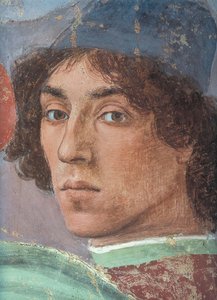
Filippino Lippi
1457 - 1504 , Italy
Quick Facts
- Artistic Movement Or Style: High Renaissance
- Artists Or Movements Influenced By This Artist: ['Raffaellino del Garbo']
- Artists Who Influenced This Artist:
- Fra Filippo Lippi
- Sandro Botticelli
- Date Of Birth: April 1457
- Date Of Death: April 1504
- Full Name: Filippino Lippi
- Nationality: Italian
- Notable Artworks:
- The Coronation of the Virgin
- Tobias and the Angel
- Scene from the Life of St Thomas Aquinas
- St Jerome
- Place Of Birth: Prato, Italy
Related Articles

John Singer Sargent's 25 Masterpieces: Portraits & Beyond | ArtsDot
Explore 25 iconic John Singer Sargent paintings – from dazzling portraits to Impressionist landscapes. Discover the stories behind Madame X, El Jaleo & more! Find museum-quality art reproductions and elevate your home decor with ArtsDot.com.

John Constable's Masterpieces: Explore 25 Iconic Landscapes for Your Home
Journey through John Constable's 25 most celebrated landscapes. Explore Romanticism, Dedham Vale & his masterful use of light in iconic paintings like 'Hay Wain'. Find museum-quality art reproductions and elevate your home decor on ArtsDot.com.
Filippino Lippi: Renaissance Innovation Bridging Faith & Humanism
Explore the captivating world of Filippino Lippi, a Renaissance master bridging faith & humanism through innovative art. Discover his key works, influences, and lasting legacy with ArtsDot.
Filippo Lippi: Bridging Renaissance Devotion & Artistic Innovation
Explore the life & revolutionary art of Filippo Lippi, a pivotal Renaissance painter. Discover his masterpieces, influence on Botticelli, and investment potential. Expert analysis at ArtsDot.

Gwen John: Intimacy, Modernity & the Quiet Power of Welsh Portraiture
Explore the captivating world of Gwen John, a pioneering Welsh artist renowned for her intimate portraits & subtle style. Discover her life, legacy, and how to bring her timeless beauty into your home with ArtsDot.