 Send
Send Share
Share
 Details

 Download
 Similars
 Diaporama
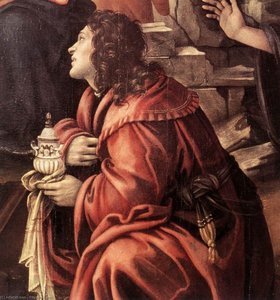
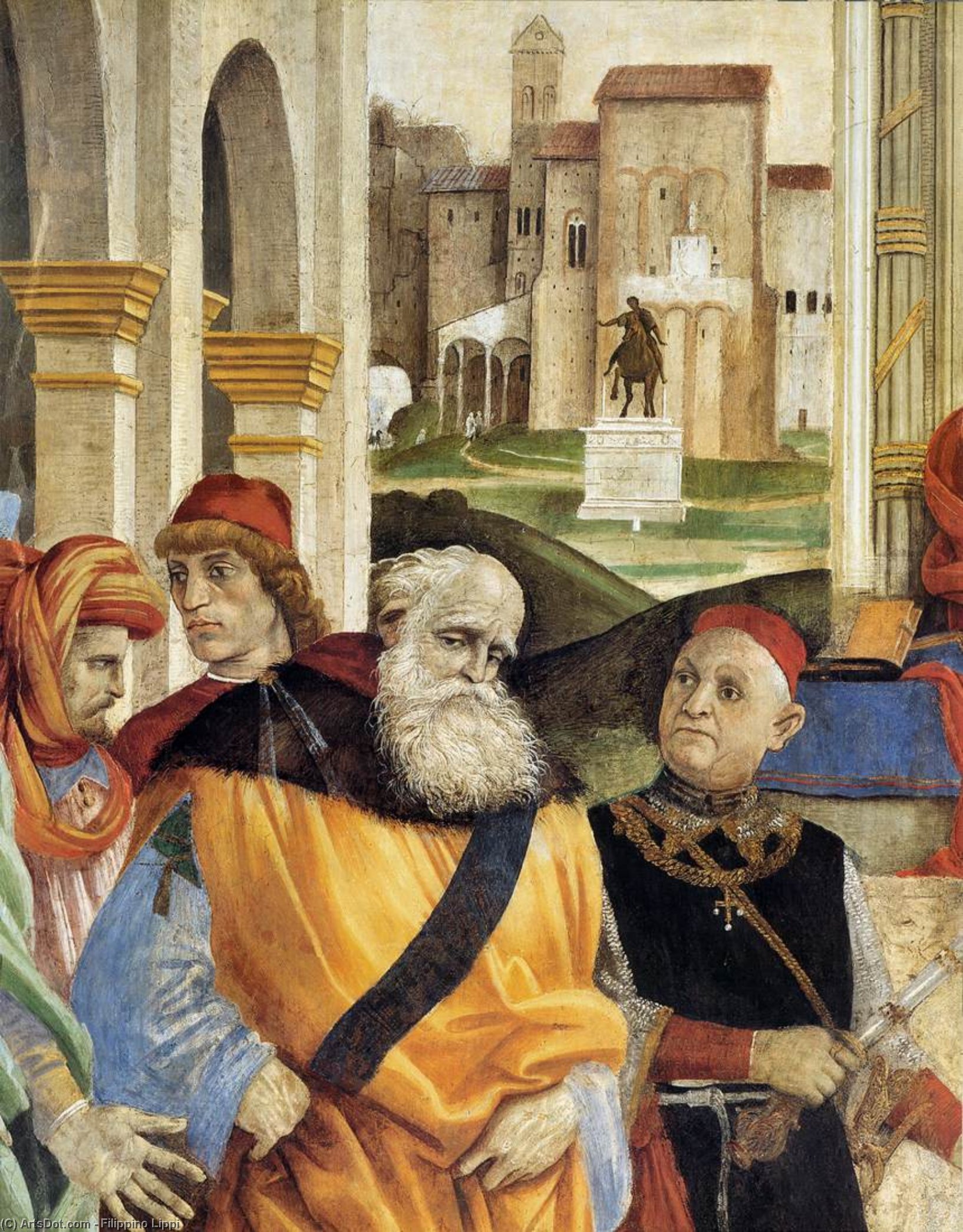
Triumph of St Thomas Aquinas over the Heretics (detail)


 Read More
Giclée / Art Print
Museum-quality giclée or canvas print with fast production and flexible finish options. ( Buy Hand Made Painting Buy Image)




































Pick from our preset sizes that match the artwork's original proportions.

You may enter your own dimensions to fit a specific frame or space. If your selected size does not match the original image's proportions, we will either crop the artwork or extend the image with a mirrored or solid-fill edge. A digital mockup will be sent for your approval before production begins.
Please note that the on-screen preview does not reflect the actual cropping or extension. Only the mockup will accurately show the final composition.
While custom sizes are available, we recommend selecting a dimension from the predefined list to preserve the original proportions.
Worldwide Delivery () in 2 weeks instead of standard 4/5 weeks. (30 August)

Free Worldwide Express Shipping

High-Quality Linen Canvas

Full Shipping Insurance

Customs Tax Refund Guarantee

True Color Matching Guarantee

60-Day Return Policy (Defects Only)

100% Money-Back Guarantee

Bulk Discount Offer
 Glass option is only available in size under 110 CM

Triumph of St Thomas Aquinas over the Heretics (detail)
Giclée / Art Print
Reproduction Size
-


Total Price
$ 63
A Renaissance Vision of Faith and Reason
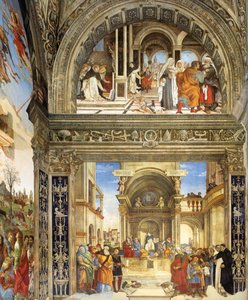
To gaze upon this detail from Filippino Lippi’s fresco, Triumph of St Thomas Aquinas over the Heretics, is to step directly into the vibrant intellectual ferment of late Quattrocento Italy. The scene pulses with a palpable energy, capturing not merely a historical event, but a profound moment of spiritual and scholarly triumph. We are immersed in a gathering—a community knit together by shared belief and rigorous thought. Within this meticulously rendered architectural setting, Lippi orchestrates a complex dialogue between the divine and the human, where the weight of theological dogma meets the soaring heights of humanist inquiry.
The composition is anchored by the commanding presence of St Thomas Aquinas, who sits with a serene, almost effortless authority amidst a swirling vortex of debate. He embodies the pinnacle of scholastic philosophy, serving as the bridge between Aristotelian logic and Christian revelation. Surrounding him, the allegorical figures of Philosophy, Astronomy, Theology, and Grammar act as celestial witnesses to his intellectual victory. This is not merely a religious painting; it is a sophisticated tapestry of Renaissance ideals, where every column and every gesture reinforces the era's commitment to balanced erudition and the reconciliation of classical wisdom with sacred truth.
Mastery of Technique and Luminous Detail
Executed in 1489 for the Carafa Chapel within the Santa Maria sopra Minerva Basilica in Rome, this masterpiece showcases Lippi’s extraordinary command over the fresco technique. Using tempera paint on plaster, the artist achieved a breathtaking luminosity that seems to radiate from within the very walls of the chapel. His mastery of pigment manipulation is particularly evident in the vibrant reds and regal golds that puncturing the scene, colors that were meticulously layered and glazed to create depth and a sense of enduring brilliance.
For the discerning collector or interior designer, the technical brilliance of this work offers an unparalleled sense of grandeur. The architectural precision—reminiscent of ancient Corinthian temples—provides a structured, classical elegance that can anchor any sophisticated space. Close examination reveals an astonishing level of detail, from the heavy folds of the robes to the dramatic interplay of light and shadow, ensuring that whether viewed as a large-scale focal point or a delicate detail, the work commands attention through its sheer painterly excellence.
An Emotional Resonance for Modern Spaces
Beyond its historical significance, this artwork carries an emotional weight that transcends the centuries. There is a sense of triumph and stability in Aquinas’s calm demeanor that provides a soothing counterpoint to the dynamic movement of the surrounding figures. It evokes a feeling of intellectual clarity and spiritual peace, making it an inspiring choice for those looking to infuse their environments with a sense of history, wisdom, and timeless grace.
Integrating a high-quality reproduction of this fresco into a curated collection allows one to possess a fragment of the High Renaissance. It serves as more than decoration; it is a conversation piece that invites contemplation on the enduring struggle between light and shadow, reason and faith. For those seeking to create an atmosphere of cultured sophistication, Lippi’s vision offers a window into a world where art, intellect, and soul are inextricably linked.
Related Artworks
Artist Biography
Early Life and Training
- Born: April 1457, Prato, Italy
- Died: April 1504
- Parents: Fra Filippo Lippi (painter) and Lucrezia Buti
- Filippino was the illegitimate son of a renowned painter.
- Early training under his father laid the foundation for his artistic career.
Artistic Career and Development
- Early Period (1475-1480): Initial works, such as Madonnas, showed a less refined style. These were initially attributed to an anonymous artist known as "amico di Sandro."
- Evolution (1480-1485): Development of a more personal and effective approach in works like the *Journeys of Tobias*.
- Maturity (1485-1504): Mastery of the High Renaissance style, exemplified by *The Apparition of Christ to the Virgin*.
Major Works and Collaborations
- Collaboration with Perugino, Ghirlandaio, and Botticelli on frescoes at Lorenzo de' Medici’s villa.
- Completion of Masaccio's unfinished decoration in the Brancacci Chapel alongside Masolino.
- Notable works include: *The Coronation of the Virgin*, *Tobias and the Angel*, *St Jerome*, and *Scene from the Life of St Thomas Aquinas*.
Influences and Artistic Style
- Early Influences: Sandro Botticelli, Fra Filippo Lippi.
- Style Characteristics: Animated form and line, warm colorism, detailed landscapes, expressive figures, and a blend of perspective geometry with intimate interiors.
- Roman Antiquities: Studies after Roman antiquities during his time in Rome influenced his work, incorporating an antique vocabulary into his art.
Historical Significance and Legacy
- A leading Florentine exponent of the tradition of great fresco cycles.
- His influence on the High Renaissance is undeniable.
- Works are found in museums worldwide, including the Uffizi Gallery in Florence.
- Known for bridging the gap between earlier Renaissance styles and the emerging High Renaissance aesthetic.
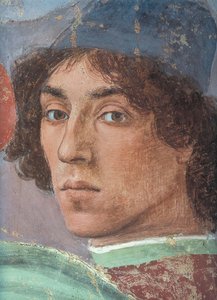
Filippino Lippi
1457 - 1504 , Italy
Quick Facts
- Artistic Movement Or Style: High Renaissance
- Artists Or Movements Influenced By This Artist: ['Raffaellino del Garbo']
- Artists Who Influenced This Artist:
- Fra Filippo Lippi
- Sandro Botticelli
- Date Of Birth: April 1457
- Date Of Death: April 1504
- Full Name: Filippino Lippi
- Nationality: Italian
- Notable Artworks:
- The Coronation of the Virgin
- Tobias and the Angel
- Scene from the Life of St Thomas Aquinas
- St Jerome
- Place Of Birth: Prato, Italy
Related Articles

The Fresco as Family Legacy: Preserving Heritage Through Wall Art
Explore the rich history & enduring legacy of fresco painting. Discover how to preserve family heritage through stunning wall art. Expert insights & restoration guidance.
Filippino Lippi: Renaissance Innovation Bridging Faith & Humanism
Explore the captivating world of Filippino Lippi, a Renaissance master bridging faith & humanism through innovative art. Discover his key works, influences, and lasting legacy with ArtsDot.

The Enduring Legacy of Fresco Painting: Techniques, History & Contemporary Relevance
Explore the rich history & enduring artistry of fresco painting – from Giotto to Michelangelo! Discover techniques, conservation efforts, & modern applications. Learn how ArtsDot brings this timeless art form to your home.

The Enduring Legacy of Fresco: Technique, History & Artistic Expression Across Cultures
Explore the rich history & enduring legacy of fresco painting! Discover ancient techniques, Giotto's masterpieces, and modern applications. Expert insights for art lovers & professionals.

Art That Lives With You: The Emotional Power of a Custom Interior Fresco
Discover the emotional power & timeless beauty of custom interior frescoes. Explore history, design tips & expert guidance from – creating lasting legacies.