 Preview
 Send
Send Share
Share
 Details

 Download
 Similars
 X-Ray
X-Ray Diaporama
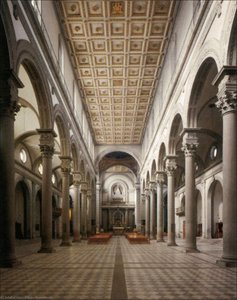
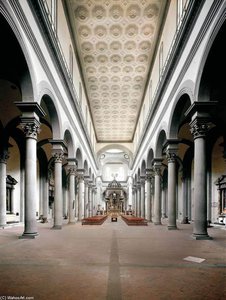
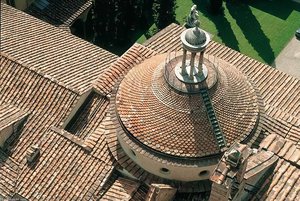
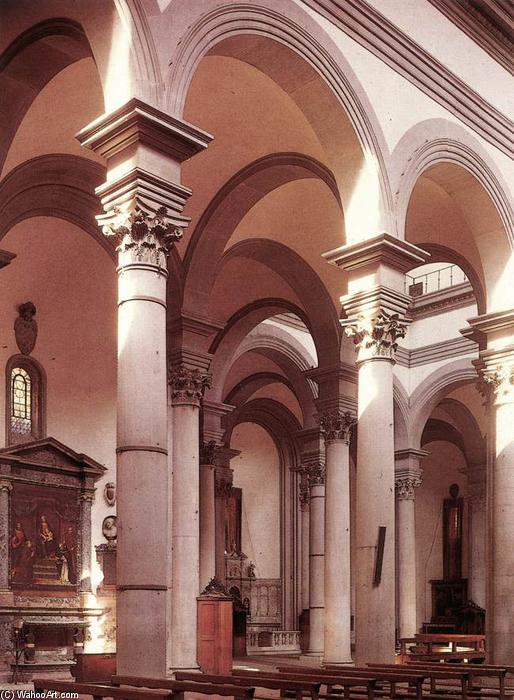
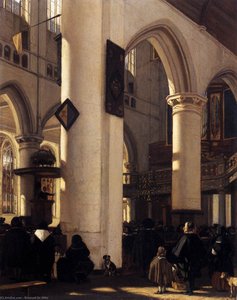
Interior of the church


 Read More
Giclée / Art Print
Museum-quality giclée or canvas print with fast production and flexible finish options. ( Buy Hand Made Painting Buy Image)




P118B $10

P118H $10

P118W $10

P438Z $10

P508JH $12

P508YH $12

P805H $10

P805Z $10

P919BZ $10

P919G $10

P919XJ $10

P959ZH $10

P968JZ $12

W106C $8

W218G $10

W218JH $8

W218Y $10

W307PJ $10

W316G $10

W316PJ $8

W316Y $10

W398PJ $8

W4111J $10

W500HY $15

W500JH $15

W692G $12

W849H $8

W940BG $15

W953PJ $8




Pick from our preset sizes that match the artwork's original proportions.

You may enter your own dimensions to fit a specific frame or space. If your selected size does not match the original image's proportions, we will either crop the artwork or extend the image with a mirrored or solid-fill edge. A digital mockup will be sent for your approval before production begins.
Please note that the on-screen preview does not reflect the actual cropping or extension. Only the mockup will accurately show the final composition.
While custom sizes are available, we recommend selecting a dimension from the predefined list to preserve the original proportions.
Worldwide Delivery () in 2 weeks instead of standard 4/5 weeks. (25 August)

Free Worldwide Express Shipping

High-Quality Linen Canvas

Full Shipping Insurance

Customs Tax Refund Guarantee

True Color Matching Guarantee

60-Day Return Policy (Defects Only)

100% Money-Back Guarantee

Bulk Discount Offer
 Glass option is only available in size under 110 CM

Interior of the church
Giclée / Art Print
Reproduction Size
-


Total Price
$ 63
Collectible Description
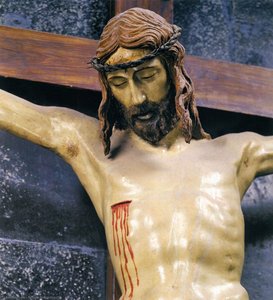
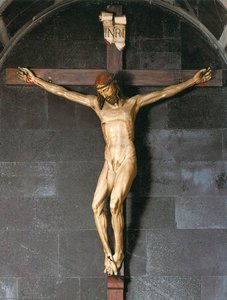
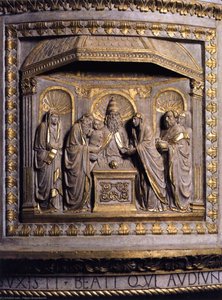
A Glimpse of Sacred Space: Filippo Brunelleschi’s “Interior of the Church”
Filippo Brunelleschi's "Interior of the Church," painted in 1444, isn’t merely a depiction of stone and light; it’s a profound meditation on space, perspective, and the very essence of Renaissance spirituality. Born amidst the fervor of Florence’s burgeoning artistic revolution, this work embodies Brunelleschi's groundbreaking approach to architecture and his nascent understanding of how to capture the illusion of depth on a two-dimensional surface – a technique that would forever alter the course of Western art.
The Architect’s Vision: Linear Perspective and Gothic Grandeur
Brunelleschi, already renowned for his audacious design of the Florence Cathedral's dome, was grappling with fundamental questions about representation. He meticulously studied the ruins of ancient Roman architecture, particularly the principles of linear perspective developed by Euclid centuries earlier. This newfound knowledge wasn’t simply applied to painting; it fundamentally reshaped Brunelleschi’s approach to *all* visual arts. “Interior of the Church” showcases this revolutionary thinking brilliantly. The composition draws the eye towards a central vanishing point, subtly suggested through the arrangement of arches and columns – a deliberate manipulation designed to create an illusion of vastness and depth within the relatively confined space of the panel.
- Gothic Influence: The painting clearly echoes the grandeur of Gothic architecture, with its soaring vaulted ceilings, pointed arches, and intricate detailing. However, Brunelleschi’s mastery lies in his ability to translate this monumental style onto a smaller scale.
- Mathematical Precision: Brunelleschi's understanding of geometry is evident in the precise proportions and harmonious arrangement of elements within the scene. The painting isn’t just aesthetically pleasing; it’s a testament to his intellectual rigor.
Symbolism and Spiritual Resonance
Beyond its technical brilliance, “Interior of the Church” carries profound symbolic weight. The scene depicts a sacred space – likely inspired by churches like the Basilica of Santa Maria Novella in Florence – radiating an atmosphere of solemnity and reverence. The muted color palette—primarily browns, golds, and creams—evokes a sense of age and timelessness, suggesting the enduring nature of faith. The placement of the crucifix above the baptismal font underscores the central role of Christ’s sacrifice within Christian theology. The light streaming through the windows, carefully rendered by Brunelleschi, symbolizes divine grace illuminating the earthly realm.
Note: While specific details about the church depicted are unknown, the overall composition and architectural style align closely with those found in Florentine churches of the period, particularly those influenced by Gothic design.A Legacy of Innovation
“Interior of the Church” stands as a pivotal work in the transition from medieval to Renaissance art. It represents Brunelleschi’s pioneering efforts to integrate mathematical principles with artistic expression, laying the groundwork for future generations of artists and architects. Reproductions of this piece offer a tangible connection to one of history's most innovative minds, inviting viewers to contemplate not only the beauty of the image but also the intellectual revolution it embodies. It is a window into a world where art and science converged, shaping the visual landscape of Europe for centuries to come.
Related Artworks
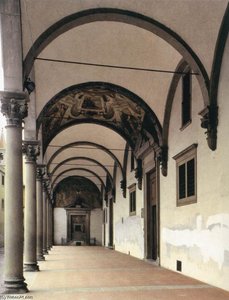
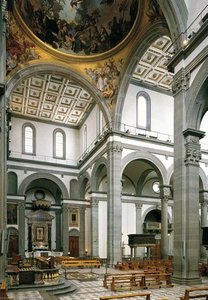

Artist Biography
A Renaissance Pioneer: The Life and Legacy of Filippo Brunelleschi
Filippo Brunelleschi, born in Florence in 1377, stands as a monumental figure bridging the medieval world and the burgeoning Renaissance. Initially destined for a life aligned with his father’s legal profession, young Filippo's artistic inclinations quickly asserted themselves. He was apprenticed to a goldsmith, a craft that honed his meticulous attention to detail and mastery of materials—skills that would prove invaluable in his later architectural endeavors. This early training wasn’t confined to mere technical skill; it fostered an understanding of form, proportion, and the expressive potential inherent in manipulating physical substances. His participation in the 1401 competition for the Florence Baptistery doors, though ultimately unsuccessful against Lorenzo Ghiberti, revealed a burgeoning talent and a bold artistic vision. This experience, while initially disheartening, proved pivotal, redirecting his energies toward architecture—a field where he would indelibly shape the course of Western art and engineering.Architectural Innovations and the Rebirth of Classical Ideals
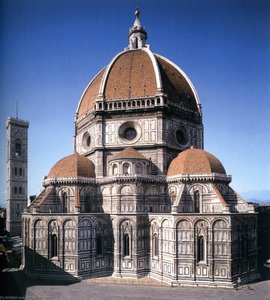
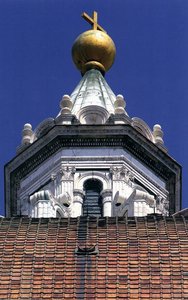
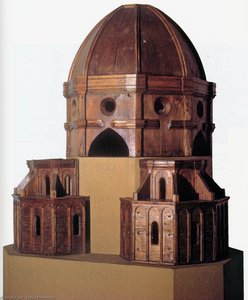
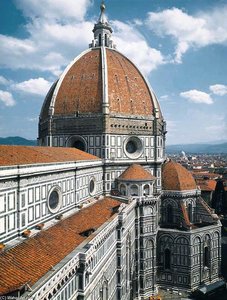
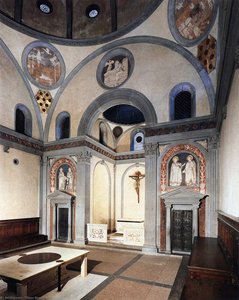
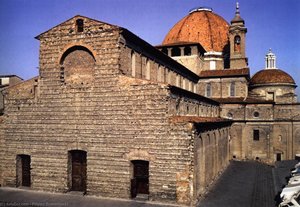
Brunelleschi’s architectural achievements are nothing short of revolutionary. He didn't simply build structures; he solved seemingly insurmountable problems, pushing the boundaries of what was thought possible. His most celebrated triumph is undoubtedly the dome of Florence Cathedral—a feat that had baffled architects for decades. The sheer scale and complexity of the project demanded innovative solutions, and Brunelleschi delivered them in abundance. Abandoning traditional scaffolding methods, he devised a self-supporting double shell structure, employing ingenious hoisting mechanisms and interlocking brick patterns to distribute weight and ensure stability. This wasn’t merely an engineering marvel; it was a testament to human ingenuity and a symbol of Florence's ambition. Beyond the dome, Brunelleschi championed a return to classical principles in his designs. He meticulously studied Roman ruins, absorbing their sense of proportion, harmony, and spatial organization. This influence is evident in works like the Old Sacristy of San Lorenzo, where he employed symmetrical layouts, rounded arches, and classical ornamentation to create spaces imbued with serenity and balance. Other notable projects—the Spedale degli Innocenti (foundling hospital), Palazzo Rucellai, and the Basilica di San Lorenzo—all bear the hallmarks of his distinctive style: a harmonious blend of classical inspiration and innovative structural solutions.The Dawn of Linear Perspective
Brunelleschi’s impact extends far beyond architecture; he is credited with rediscovering and formalizing the principles of linear perspective, a technique that fundamentally altered the course of art history. Prior to Brunelleschi, depictions of space lacked a consistent system for representing depth and realism. His meticulous investigations into optics and geometry led him to develop a method for creating illusions of three-dimensional space on a two-dimensional surface. This involved establishing a vanishing point—a single point on the horizon line toward which all parallel lines converge—and using mathematical calculations to accurately represent spatial relationships. The implications were profound. Linear perspective provided artists with a powerful tool for achieving greater realism and emotional impact in their work, influencing generations of painters and sculptors. It wasn’t simply about technical accuracy; it was about creating a more immersive and believable visual experience for the viewer.Influences and a Lasting Historical Significance
Brunelleschi's genius didn’t emerge in a vacuum. He drew inspiration from diverse sources, synthesizing them into something entirely new. The ancient Roman architecture he studied provided a foundation of classical principles, while his exposure to Gothic structures instilled an understanding of structural challenges and innovative building techniques. Crucially, the burgeoning humanist movement of the Renaissance—with its emphasis on human potential and achievement—resonated deeply with Brunelleschi’s own innovative spirit. He believed in the power of reason, observation, and experimentation, qualities that underpinned his groundbreaking work. His legacy is immense. He is rightfully regarded as one of the founding fathers of the Renaissance, a pivotal figure who ushered in a new era of artistic and intellectual flourishing. His engineering innovations continue to inform modern construction practices, while his development of linear perspective remains a cornerstone of representational art. But perhaps most importantly, Brunelleschi embodied a new way of thinking—a belief in human ingenuity, a commitment to rational inquiry, and a celebration of the beauty and order inherent in the natural world. He didn’t just change the skyline of Florence; he changed the way we see the world.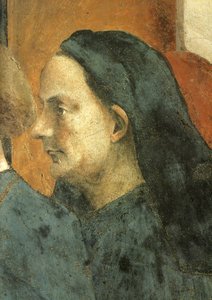
Filippo Brunelleschi
1377 - 1446 , Italy
Quick Facts
- Artistic Movement Or Style: Early Renaissance
- Artists Or Movements Influenced By This Artist:
- Renaissance architecture
- Linear perspective artists
- Artists Who Influenced This Artist: ['Ancient Roman architects']
- Date Of Birth: 1377
- Date Of Death: 1446
- Full Name: Filippo Brunelleschi
- Nationality: Italian
- Notable Artworks:
- Florence Cathedral Dome
- Old Sacristy San Lorenzo
- Spedale degli Innocenti
- Palazzo Rucellai
- Place Of Birth: Florence, Italy
Related Articles

Art That Lives With You: The Emotional Power of a Custom Interior Fresco
Discover the emotional power & timeless beauty of custom interior frescoes. Explore history, design tips & expert guidance from – creating lasting legacies.

The Fresco as Family Legacy: Preserving Heritage Through Wall Art
Explore the rich history & enduring legacy of fresco painting. Discover how to preserve family heritage through stunning wall art. Expert insights & restoration guidance.

The Enduring Legacy of Fresco Painting: Techniques, History & Contemporary Relevance
Explore the rich history & enduring artistry of fresco painting – from Giotto to Michelangelo! Discover techniques, conservation efforts, & modern applications. Learn how ArtsDot brings this timeless art form to your home.

The Enduring Legacy of Fresco: Technique, History & Artistic Expression Across Cultures
Explore the rich history & enduring legacy of fresco painting! Discover ancient techniques, Giotto's masterpieces, and modern applications. Expert insights for art lovers & professionals.
The Enduring Legacy of Fresco: Technique, History & Artistic Expression
Explore the rich history & enduring artistry of fresco painting. Discover techniques from Giotto to Michelangelo, conservation efforts, & modern applications. Learn how ArtsDot brings this timeless art form to your home.