 Preview
 Send
Send Share
Share
 Details

 Download
 Similars
 X-Ray
X-Ray Diaporama
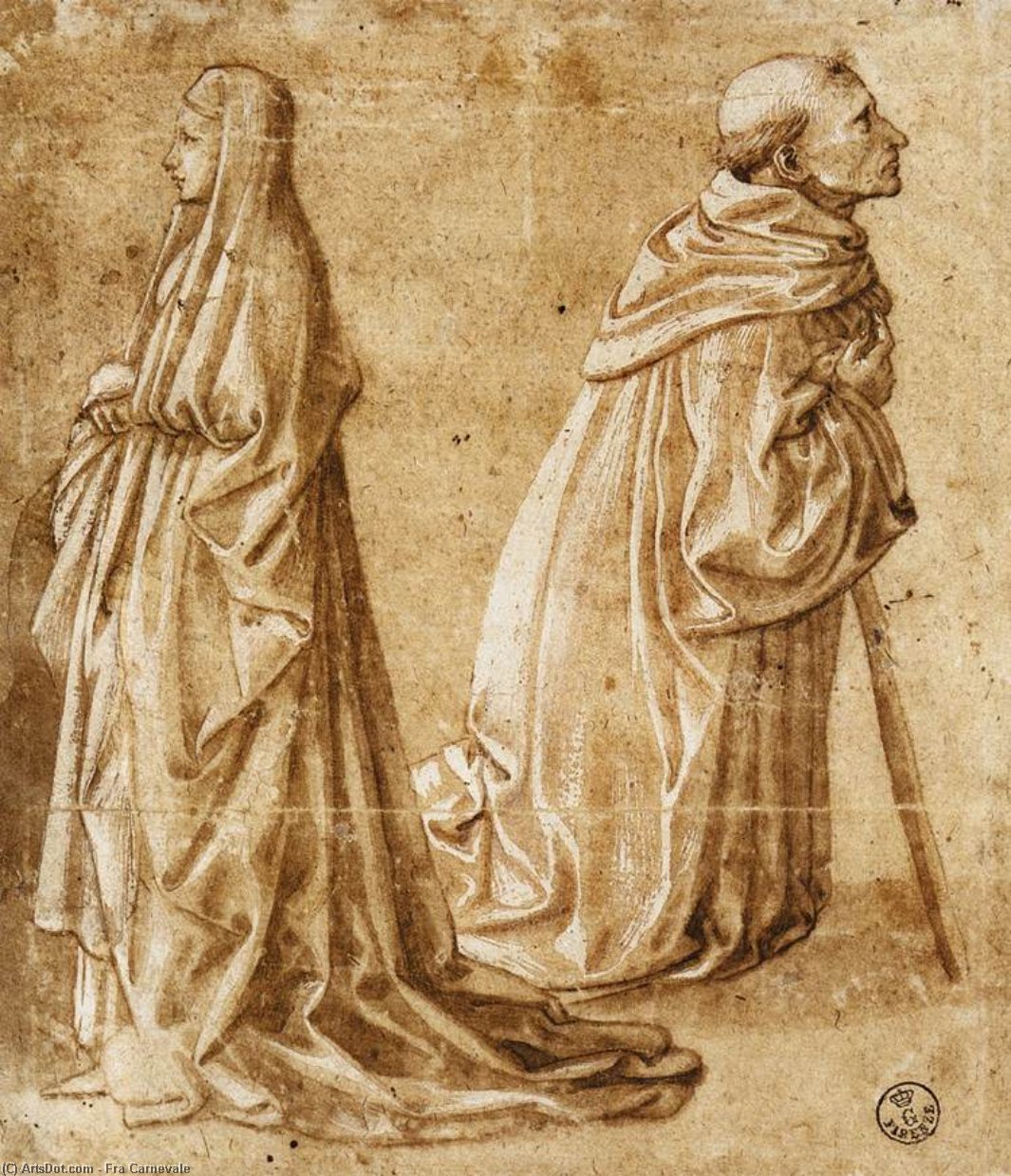
A Woman and a Kneeling Monk
 Acrylic On Canvas
- WallArt
- Quattrocento Renaissance
 1440
1440 163.0 x 139.0 cm
 Galleria degli Uffizi
 Read More
Giclée / Art Print
Museum-quality giclée or canvas print with fast production and flexible finish options. ( Buy Hand Made Painting Buy Image)




P118B $10

P118H $10

P118W $10

P438Z $10

P508JH $12

P508YH $12

P805H $10

P805Z $10

P919BZ $10

P919G $10

P919XJ $10

P959ZH $10

P968JZ $12

W106C $8

W218G $10

W218JH $8

W218Y $10

W307PJ $10

W316G $10

W316PJ $8

W316Y $10

W398PJ $8

W4111J $10

W500HY $15

W500JH $15

W692G $12

W849H $8

W940BG $15

W953PJ $8




Pick from our preset sizes that match the artwork's original proportions.

You may enter your own dimensions to fit a specific frame or space. If your selected size does not match the original image's proportions, we will either crop the artwork or extend the image with a mirrored or solid-fill edge. A digital mockup will be sent for your approval before production begins.
Please note that the on-screen preview does not reflect the actual cropping or extension. Only the mockup will accurately show the final composition.
While custom sizes are available, we recommend selecting a dimension from the predefined list to preserve the original proportions.
Worldwide Delivery () in 2 weeks instead of standard 4/5 weeks. (24 August)

Free Worldwide Express Shipping

High-Quality Linen Canvas

Full Shipping Insurance

Customs Tax Refund Guarantee

True Color Matching Guarantee

60-Day Return Policy (Defects Only)

100% Money-Back Guarantee

Bulk Discount Offer
 Glass option is only available in size under 110 CM

A Woman and a Kneeling Monk
Giclée / Art Print
Reproduction Size
-


Total Price
$ 63
Collectible Description
A Window into Faith and Renaissance Vision: Fra Carnevale’s “A Woman and a Kneeling Monk”
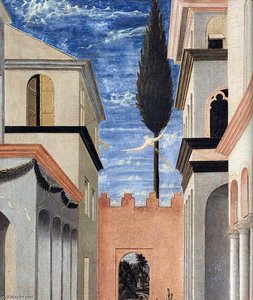
Fra Carnevale's "A Woman and a Kneeling Monk," painted around 1440, is not merely a depiction of two figures; it’s a carefully constructed tableau brimming with symbolic weight and reflecting the burgeoning intellectual currents of Quattrocento Italy. This intimate scene, now housed in a meticulously reproduced version available through ArtsDot.com, offers a rare glimpse into the spiritual life and artistic sensibilities of Urbino during a period of profound transformation. The painting immediately draws the eye to its central subjects: a woman, likely representing piety and contemplation, and a monk engaged in deep prayer. Their proximity suggests a shared devotion, yet their averted gazes hint at a private, deeply personal exchange – perhaps a moment of guidance or solace.
The composition is remarkably restrained, prioritizing clarity and geometric precision over dramatic gesture. Carnevale’s mastery lies in his ability to render the figures with an almost photographic realism, achieved through painstaking observation and a deep understanding of human anatomy. The woman's veil, a symbol of modesty and reverence within the context of her time, subtly frames her face, drawing attention to her serene expression. The monk’s posture – knees bent, hands clasped in prayer – is rendered with exquisite detail, conveying both physical exhaustion and profound spiritual intensity. Notice the subtle folds of his robe, meticulously depicted to suggest texture and movement, a testament to Carnevale's technical skill.
Architectural Backgrounds: A Renaissance Innovation
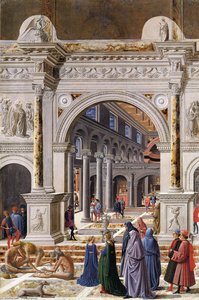
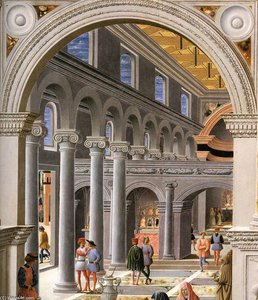
What truly distinguishes “A Woman and a Kneeling Monk” is its groundbreaking architectural background. Unlike many contemporary paintings that relied on simple, undefined landscapes, Carnevale employs a meticulously rendered, almost illusory space—a miniature cityscape reminiscent of the Italian Renaissance’s fascination with classical architecture. This isn't simply decorative; it serves as a powerful metaphor for faith and the divine realm. The buildings, though small in scale, are depicted with astonishing accuracy, reflecting Carnevale’s training under Jacopo Veneto, who himself had been influenced by Filippo Lippi. This architectural element wasn’t just about creating an aesthetically pleasing backdrop; it was a deliberate attempt to integrate architecture and painting—a key characteristic of Renaissance art that sought to elevate the visual experience.
The use of perspective is particularly noteworthy. Carnevale demonstrates a sophisticated understanding of linear perspective, creating a sense of depth and realism within this miniature world. This technique, combined with his careful attention to detail, elevates the painting beyond a simple portrait; it becomes a carefully constructed illusion—a visual representation of spiritual truth. The buildings themselves seem to participate in the scene, acting as silent witnesses to the woman’s contemplation and the monk's prayer.
Symbolism and Context: Urbino at the Dawn of the Renaissance
“A Woman and a Kneeling Monk” was created during a pivotal moment in Italian history – the early Renaissance in Urbino, a city that served as a vibrant center for art and culture. Fra Carnevale’s work reflects this intellectual ferment, incorporating elements of classical antiquity alongside Christian symbolism. The scene itself speaks to the prevalent themes of piety, contemplation, and the pursuit of spiritual knowledge within the Dominican Order. The woman's posture suggests a life dedicated to prayer and service, while the monk embodies the monastic ideal of devotion and self-discipline.
Furthermore, the painting’s creation coincided with a period of intense artistic experimentation in Florence, where artists like Filippo Lippi and Piero della Francesca were pushing the boundaries of perspective and realism. Carnevale's work demonstrates a clear debt to these Florentine masters, yet he ultimately developed his own distinctive style—characterized by its meticulous detail, architectural backgrounds, and profound sense of stillness. The inclusion of the partially visible figure on the right adds another layer of intrigue, perhaps representing an observer or a silent participant in this sacred moment.
Bringing “A Woman and a Kneeling Monk” to Your Space
ArtsDot.com offers exceptional hand-painted reproductions of Fra Carnevale’s masterpiece, allowing you to experience the painting's beauty and depth in your own home or office. Our skilled artisans meticulously recreate every detail—from the subtle nuances of color to the intricate folds of fabric—ensuring that your reproduction captures the essence of this remarkable work. More than just a decorative piece, “A Woman and a Kneeling Monk” is an invitation to contemplate faith, beauty, and the enduring legacy of Renaissance art. Explore our high-quality reproductions today and bring this captivating scene into your world.
Related Artworks
Artist Biography
The Enigmatic Architect of Urbino’s Renaissance
In the shadowed corridors of the Quattrocento, few figures possess the haunting allure of Fra Carnevale. A name whispered with both reverence and mystery, Bartolomeo di Giovanni Corradino—known to history by his monastic title—remains one of the most elusive masters of the Italian Renaissance. Born in Urbino around 1420, his life was a delicate tapestry woven from the threads of spiritual devotion and profound artistic innovation. As a member of the Dominican Order, Carnevale occupied a unique space where the contemplative silence of the cloister met the burgeoning intellectual rigor of humanism. Though only nine works can be definitively attributed to his hand today, each surviving piece serves as a window into a mind that sought to harmonize the divine with the mathematical precision of the physical world.
The trajectory of Carnevale’s artistry was shaped by the great artistic crucibles of his era. His formative years in Urbino under the guidance of Jacopo Veneto instilled in him an early fascination with perspective, a skill that would become the hallmark of his mature style. However, it was his journey to Florence around 1445 that truly ignited his creative spirit. Immersed in the vibrant Florentine atmosphere, he studied under the influential Antonio Alberti and entered the prestigious workshop of Filippo Lippi. This apprenticeship was transformative; from Lippi, Carnevale inherited a masterful command of color and a delicate approach to composition, learning to breathe life into figures through subtle tonal shifts and emotional depth.
A Mastery of Space and Sacred Narrative
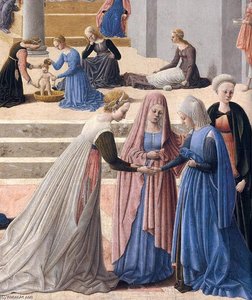
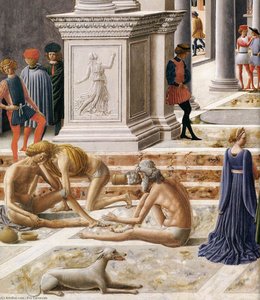
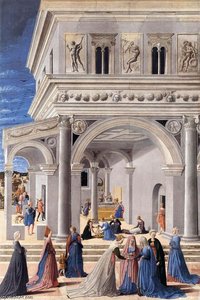
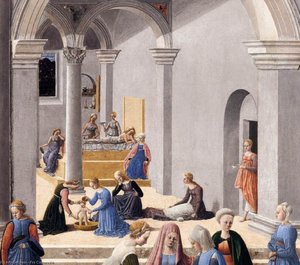
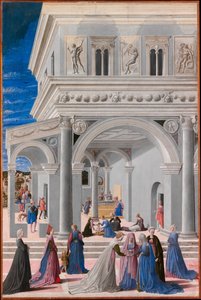
What distinguishes the work of Fra Carnevale from his contemporaries is his unparalleled ability to integrate complex architectural settings with sacred narratives. He did not merely paint backgrounds; he constructed worlds. His canvases often feature imposing, classically inspired structures that reflect the humanist ideals of the age, echoing the grandeur of the Ducal Palace at Urbino and the theoretical treatises of Leon Battista Alberti. In works such as The Birth of the Virgin, one observes a breathtaking marriage of medieval detail and Renaissance spatial logic. The architectural depth achieved in these panels suggests a profound understanding of geometry, creating a stage where the miraculous feels grounded in a tangible, measurable reality.
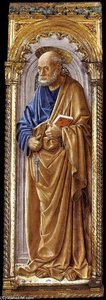
His technical repertoire was as diverse as his influences, ranging from the luminous clarity of tempera to the rich textures of oil painting. In pieces like St Peter, he utilized light and shadow to evoke a sense of solemnity and divine presence, while his Allegorical Scene showcases a daring use of nude figures within classical settings, reflecting the era's fascination with rediscovered Greco-Roman ideals. This ability to navigate between the pious requirements of his Dominican vocation and the sophisticated aesthetic demands of patrons like Federico Montefeltro allowed him to create art that was simultaneously devotional and intellectually stimulating.
Legacy and Historical Resonance
Though the scarcity of his surviving oeuvre has often led scholars to debate the authenticity of certain works, the historical significance of Fra Carnevale cannot be overstated. He acted as a vital bridge between the early experiments of the 15th century and the High Renaissance perfection achieved by masters like Bramante and Raphael. His preoccupation with architectural perspective and the integration of classical motifs provided a foundational blueprint for the next generation of Italian artists. To study Carnevale is to witness the very moment when the spiritual intensity of the Middle Ages began to merge with the structured, human-centric vision of the Renaissance.
Today, the legacy of this enigmatic monk lives on through the rare, precious fragments of his vision that remain. He stands as a testament to the power of the "architectural painter," an artist who saw the divine not just in the faces of saints, but in the very proportions of the space they inhabited. His life, though shrouded in much historical uncertainty, continues to inspire awe, reminding us that even the most elusive figures can leave an indelible mark on the soul of art history.
Fra Carnevale
1420 - 1484 , Italy
Quick Facts
- Artistic Movement Or Style: Quattrocento
- Artists Or Movements Influenced By This Artist:
- Filippo Lippi
- Piero della Francesca
- Artists Who Influenced This Artist:
- Antonio Alberti
- Dominico Veneziano
- Date Of Birth: c. 1420
- Date Of Death: 1484
- Full Name: Bartolomeo di Giovanni Corradini
- Nationality: Italian
- Notable Artworks:
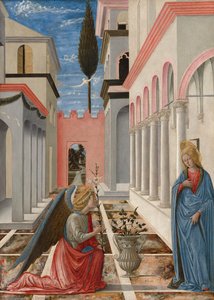
- The Annunciation
- Portrait of a Man
- Place Of Birth: Urbino, Italy
Related Articles

Fra Angelico's Masterpieces: 25 Renaissance Paintings for Your Home | ArtsDot
Explore 25 breathtaking masterpieces by Fra Angelico, a Renaissance master. Discover the stories behind his iconic frescoes, Annunciations & religious art. Find museum-quality reproductions and elevate your home decor with ArtsDot.com.
Mario Sironi: A Poetic of Modern Italian Identity Through Symbolism & Social Commentary
Explore the profound works of Mario Sironi, a key figure in Italian Modernism. Discover his evolution from Futurism to Metaphysical painting and his powerful social commentary. Learn about his legacy at ArtsDot.
Giovanni Fattori: Realism, Identity & the Tuscan Landscape – A Macchiaioli Master
Explore the life & art of Giovanni Fattori, a leading figure of the Macchiaioli movement. Discover his revolutionary realism, captivating Tuscan landscapes, and lasting impact on Italian painting. Learn more at ArtsDot.
Carlo Carrà: Futurist Visions & Metaphysical Transformations in Early 20th-Century Italian Painting
Explore the artistic journey of Carlo Carrà, a pivotal figure in Italian Futurism & Metaphysical painting. Discover his dynamic compositions, collaborations with de Chirico, and lasting influence on modern art history.
Civic Virtue and Artistic Rivalry: Patronage and Innovation in the Italian Renaissance Republics, 1400–1600
Explore the Italian Renaissance! Discover how competitive patronage & humanist ideals fueled artistic innovation in republics like Florence & Venice. Expert insights for art lovers and collectors.