 Preview
 Send
Send Share
Share
 Details

 Download
 Similars
 X-Ray
X-Ray Diaporama
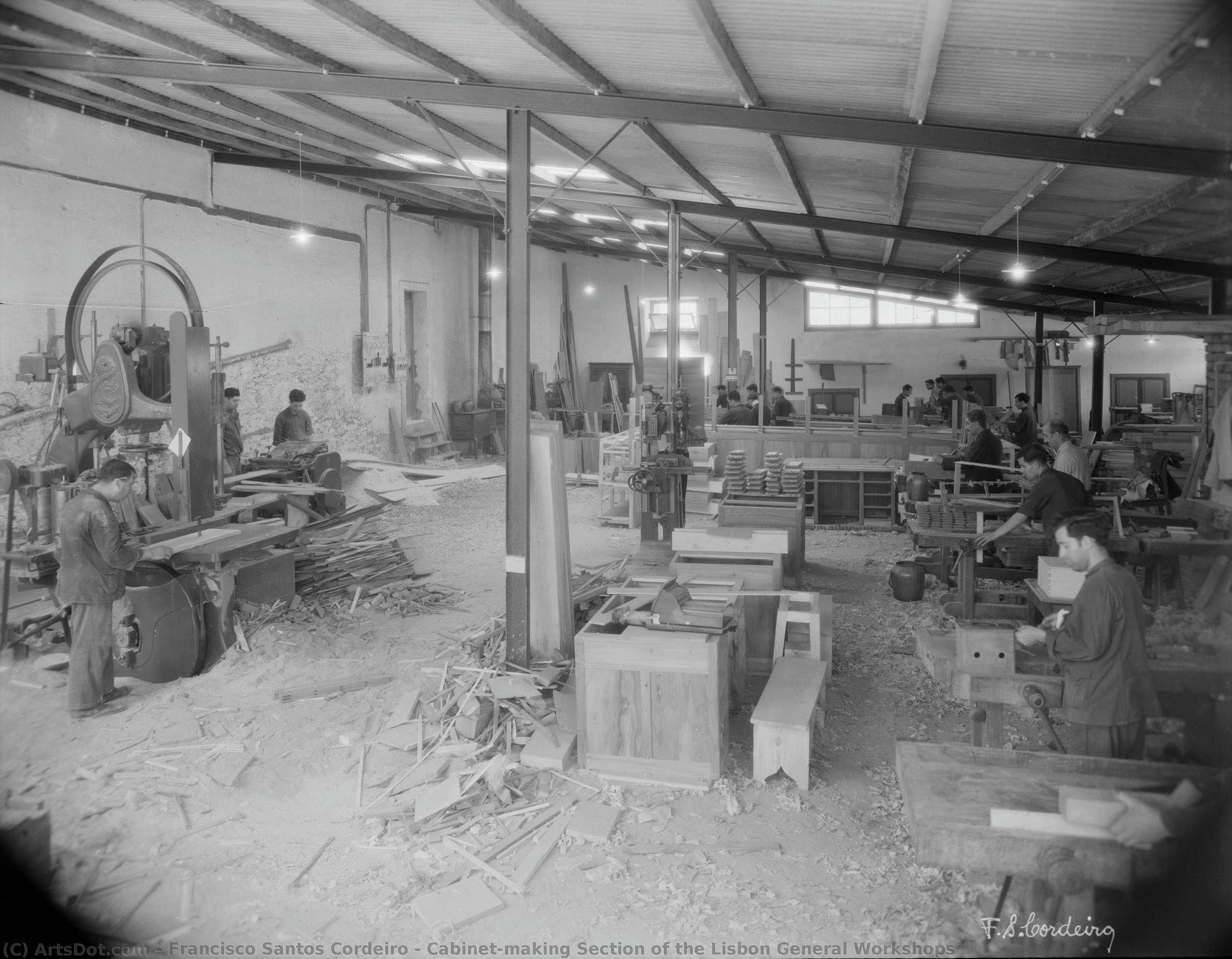
Cabinet-making Section of the Lisbon General Workshops


 Read More
Hand Made Oil Reproduction
Hand-painted oil on canvas in your size and frame, made to order by our artists. ( Buy Print Buy Image)




P118B $10

P118H $10

P118W $10

P438Z $10

P508JH $12

P508YH $12

P805H $10

P805Z $10

P919BZ $10

P919G $10

P919XJ $10

P959ZH $10

P968JZ $12

W106C $8

W218G $10

W218JH $8

W218Y $10

W307PJ $10

W316G $10

W316PJ $8

W316Y $10

W398PJ $8

W4111J $10

W500HY $15

W500JH $15

W692G $12

W849H $8

W940BG $15

W953PJ $8




Pick from our preset sizes that match the artwork's original proportions.

You may enter your own dimensions to fit a specific frame or space. If your selected size does not match the original image's proportions, we will either crop the artwork or extend the painting with additional hand-painted elements. A digital mockup will be sent for your approval before production begins.
Please note that the on-screen preview does not reflect the actual cropping or extension. Only the mockup will accurately show the final composition.
While custom sizes are available, we recommend selecting a dimension from the predefined list to preserve the original proportions.
After order, ArtsDot.com team will email client for instructions and provide a mockup preview
Worldwide Delivery () in 3/4 weeks instead of standard 5 weeks. (26 August). No compromise on quality.

Free Worldwide Express Shipping

High-Quality Linen Canvas

Full Shipping Insurance

Customs Tax Refund Guarantee

True Color Matching Guarantee

60-Day Return Policy (Defects Only)

100% Money-Back Guarantee

Bulk Discount Offer
 Glass option is only available in size under 110 CM

Cabinet-making Section of the Lisbon General Workshops
Reproduction Medium
Reproduction Size
-


Total Price
$ 413
Artwork Description
Related Artworks
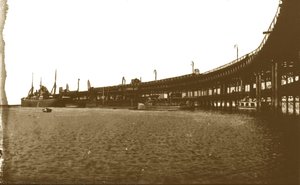
Artist Biography
A Chronicle of Light: The Photography of Francisco Santos Cordeiro
Francisco Santos Cordeiro, born in the picturesque town of Lagoa, Portugal, in 1897, stands as a compelling figure in the documentation of early 20th-century Portuguese life. While not widely celebrated outside specialized circles until recently, his extensive photographic archive—created during his tenure with the Administração Geral dos Correios e Telégrafos (General Administration of Posts and Telegraphs)—offers an invaluable window into a rapidly changing nation and the vital infrastructure that connected it. Cordeiro wasn’t merely recording images; he was building a visual narrative of progress, community, and the human element within the burgeoning world of telecommunications. His work transcends simple documentation, becoming a poignant testament to a specific era in Portuguese history.The Lens as Witness: Early Career & The Telecommunications Landscape
Cordeiro’s career unfolded against a backdrop of significant technological advancement. The early 20th century witnessed an explosion in communication technologies—the telegraph, telephone, and postal services were expanding their reach, fundamentally altering the fabric of Portuguese society. As a photographer for the national postal and telegraph administration from 1924 to 1939, Cordeiro was uniquely positioned to capture this transformation. He meticulously photographed everything from grand architectural installations – post offices, telegraph stations, communication towers – to the everyday operations that kept these systems functioning. His images reveal not just the mechanics of communication but also the dedicated individuals who operated and maintained them. His photographs are characterized by a remarkable clarity and precision, reflecting both his technical skill and a commitment to accurate representation. He wasn’t interested in artistic embellishment; rather, he sought to present an honest portrayal of the infrastructure and its impact on daily life. This dedication resulted in a collection that is now recognized as a crucial historical resource.Beyond Infrastructure: The Human Stories Within
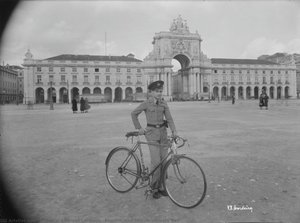
What truly distinguishes Cordeiro's work from purely technical documentation is his inclusion of people. He frequently featured postal workers, telegraph operators, bicycle delivery boys – the faces behind the services he was tasked with recording. These portraits are not merely incidental; they imbue the images with a sense of humanity and scale. We see the pride in their work, the dedication to their roles, and the vital connection they provided to communities across Portugal. One striking example is his photograph of an express mail bicycle delivery boy, capturing a moment of youthful energy and responsibility. Another showcases the interior of the Cabinet-making Section of the Lisbon General Workshops, revealing the skilled artisans who built and maintained the equipment essential for communication. These images offer a glimpse into the social fabric of the time, highlighting the importance of these often-overlooked professions.Influences & Artistic Development
While Cordeiro’s style is largely defined by its documentary realism, it's possible to discern subtle influences from contemporary photographic movements. The clarity and composition of his work echo elements of New Objectivity, a German artistic movement that emphasized precise representation and objectivity. However, Cordeiro’s focus remained firmly rooted in the specific context of Portuguese society. He wasn’t attempting to create abstract or avant-garde images; he was dedicated to capturing the reality of his surroundings. His development as an artist can be seen in the increasing sophistication of his compositions and his ability to convey a sense of narrative within each photograph. Over the course of his career, he moved beyond simply recording infrastructure to telling stories about the people who made it function.Legacy & Historical Significance
Francisco Santos Cordeiro’s photographs represent more than just a historical record; they are a cultural treasure. His work provides invaluable insights into the evolution of telecommunications in Portugal and the social impact of these technologies.- His archive serves as a vital resource for historians, researchers, and anyone interested in understanding Portuguese society during the early 20th century.
- The photographs offer a unique glimpse into the daily lives of postal workers and telegraph operators, providing a human face to these often-overlooked professions.
- Cordeiro’s dedication to accurate representation and his ability to capture a sense of narrative within each image make his work stand out as a significant contribution to documentary photography.
francisco santos cordeiro
1897 - , Portugal
Quick Facts
- Artistic Movement Or Style: Documentary Photography
- Date Of Birth: 1897
- Full Name: Francisco Santos Cordeiro
- Nationality: Portuguese
- Notable Artworks:
- Cabinet-making Section
- Express mail bicycle delivery boy
- Place Of Birth: Lagoa, Portugal
Related Articles

Beyond the Lens: Photography's Enduring Influence on Modern & Contemporary Art
Explore photography's pivotal role in shaping modern & contemporary art. Discover key movements, influential artists like Stieglitz, and expert collecting advice from ArtsDot.

Monochrome Visions: Exploring the Aesthetic & Historical Significance of Black & White Photography
Explore the rich history & artistic power of black and white photography. From early techniques to iconic masters like Ansel Adams, discover why monochrome continues to captivate art lovers today. Expert insights for collectors.
Pictorialism: A Search for Artistic Photography's Soul – Aesthetics, Techniques & Legacy
Explore the captivating world of Pictorialism – a pivotal movement that transformed photography into fine art. Discover key artists like Stieglitz & Käsebier, techniques, and collecting tips from experts.
Industrial Revolution on Canvas: 10 Artworks That Define a Modern Aesthetic
Explore 10 iconic artworks capturing the Industrial Revolution’s grit & beauty. From Monet to Manet, discover realism, impressionism & powerful scenes of urban life. Find museum-quality reproductions for your home at ArtsDot.com.
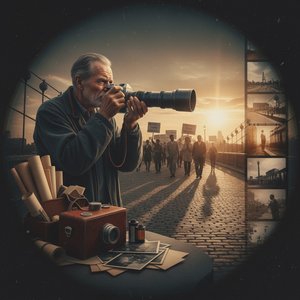
Witnessing History Through Lens & Light: Documentary Photography's Enduring Legacy
Explore the powerful history of documentary photography – from its origins to contemporary masters like Gordon Parks & W. Eugene Smith. Discover how this art form shapes our understanding of society and witness pivotal moments in time.