 Preview
 Send
Send Share
Share
 Details

 Download
 Similars
 X-Ray
X-Ray Diaporama
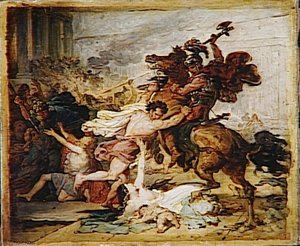
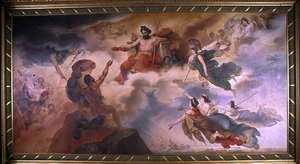
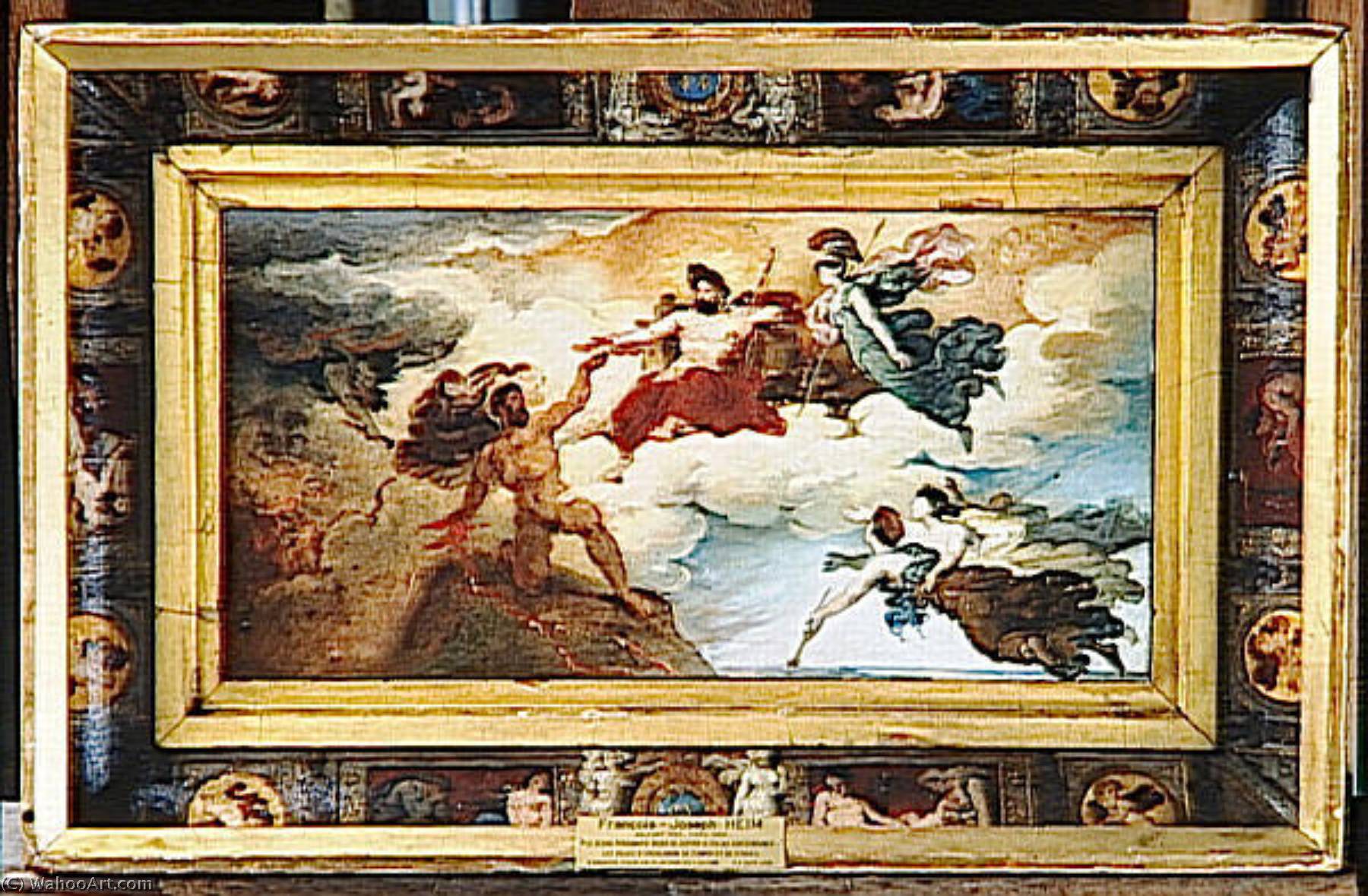
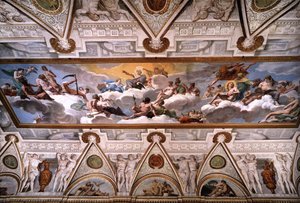
LE VESUVE PERSONNIFIE RECOIT DE JUPITER LE FEU QUI DOIT CONSUMER HERCULANUM, POMPEI ET STABIES


 Read More
Hand Made Oil Reproduction
Hand-painted oil on canvas in your size and frame, made to order by our artists. ( Buy Print Buy Image)




P118B $10

P118H $10

P118W $10

P438Z $10

P508JH $12

P508YH $12

P805H $10

P805Z $10

P919BZ $10

P919G $10

P919XJ $10

P959ZH $10

P968JZ $12

W106C $8

W218G $10

W218JH $8

W218Y $10

W307PJ $10

W316G $10

W316PJ $8

W316Y $10

W398PJ $8

W4111J $10

W500HY $15

W500JH $15

W692G $12

W849H $8

W940BG $15

W953PJ $8




Pick from our preset sizes that match the artwork's original proportions.

You may enter your own dimensions to fit a specific frame or space. If your selected size does not match the original image's proportions, we will either crop the artwork or extend the painting with additional hand-painted elements. A digital mockup will be sent for your approval before production begins.
Please note that the on-screen preview does not reflect the actual cropping or extension. Only the mockup will accurately show the final composition.
While custom sizes are available, we recommend selecting a dimension from the predefined list to preserve the original proportions.
After order, ArtsDot.com team will email client for instructions and provide a mockup preview
Worldwide Delivery () in 3/4 weeks instead of standard 5 weeks. (2 September). No compromise on quality.

Free Worldwide Express Shipping

High-Quality Linen Canvas

Full Shipping Insurance

Customs Tax Refund Guarantee

True Color Matching Guarantee

60-Day Return Policy (Defects Only)

100% Money-Back Guarantee

Bulk Discount Offer
 Glass option is only available in size under 110 CM

LE VESUVE PERSONNIFIE RECOIT DE JUPITER LE FEU QUI DOIT CONSUMER HERCULANUM, POMPEI ET STABIES
Reproduction Medium
Reproduction Size
-


Total Price
$ 263
The Drama of Divine Wrath: An Encounter with Vesuvius
To stand before this magnificent depiction of Le Vésuve personnifié reçoit de Jupiter le feu qui doit consumer Herculanum, Pompéi et Stabies is to be swept away by the very tempest of history and myth. This painting is not merely a scene; it is a monumental confrontation between divine power and mortal civilization. François Joseph Heim masterfully captures the terrifying beauty inherent in natural catastrophe, elevating the geological event into high drama worthy of the grandest mythological stage. The composition immediately draws the eye to the central nexus of action—the moment Jupiter bestows the fiery doom upon Vesuvius, whose personification bears witness to the impending fate of Pompeii and Herculaneum.
Romanticism Meets Classical Grandeur
Heim’s style places this work firmly within the zenith of Romantic History Painting. While the emotional intensity—the agony, the awe, the sheer force of nature—speaks directly to the passionate spirit of Romanticism, the underlying structure and the idealized forms of the figures are deeply indebted to classical academic tradition. One can observe Heim’s technical prowess in rendering both the ethereal clouds and the solid, doomed architecture of the background landscape. The artist employs a rich, varied palette that shifts from deep, ominous blues in the sky to the warm, terrifying oranges and reds emanating from the divine fire. This careful orchestration of color is key to the painting's overwhelming emotional resonance.
Symbolism of Destruction and Renewal
The symbolism woven throughout this canvas is profound. Vesuvius itself acts as a potent symbol—a reminder that even the most enduring human achievements are subject to uncontrollable forces, whether they be natural or divine. Jupiter’s role is one of overwhelming, necessary power; the fire represents purification, the violent cleansing required before any new beginning can take root. For the viewer today, this narrative invites contemplation: what structures in our own lives—be they personal habits or societal norms—require a dramatic conflagration to be cleared away? The contrast between the doomed, recognizable cities and the sublime, overwhelming power above creates a timeless meditation on impermanence.
A Masterpiece for the Inspired Interior
For collectors and designers seeking art that commands attention and sparks deep conversation, this reproduction offers unparalleled dramatic weight. Imagine this piece gracing a grand hall or an opulent study; it does not merely decorate—it narrates. The ornate framing elements, echoing the period's taste for elaborate craftsmanship, complement the painting’s inherent grandeur. Owning a high-quality rendition of Heim’s vision allows one to bring the epic scale of classical mythology and the visceral energy of Romanticism into a contemporary space, serving as both a breathtaking focal point and a profound intellectual anchor.
Related Artworks





Artist Biography
The Grandeur of a Romantic Visionary
François Joseph Heim stands as a monumental figure in the tapestry of French art history, embodying the dramatic fervor of the Romantic era while remaining firmly anchored in the rigorous discipline of academic tradition. Born in 1787 in Belfort, within the Alsace-Lorraine region, Heim’s early life was shaped by the shifting borders and Napoleonic influences of his homeland. His artistic journey began with a profound fascination for disegno, a passion nurtured during his formative studies at the École Centrale de Strassburg. It was here that he first demonstrated an exceptional talent that would eventually lead him to the heart of the Parisian art world, establishing a foundation of technical precision that would define his entire oeuvre.
The trajectory of Heim’s career was irrevocably altered by his encounter with the legendary Horace Vernet. This relationship was far more than a mere acquaintance; it was a pivotal artistic apprenticeship that forged deep bonds and shared stylistic ambitions. Together, they navigated the competitive landscape of French neoclassicism and burgeoning Romanticism. Under the subtle guidance of Vernet, Heim learned to master the art of narrative painting, discovering how to infuse large-scale compositions with palpable emotion, atmospheric depth, and meticulous detail. This period of mentorship was essential in preparing him for the intense scrutiny of the Paris Salons, where his ability to blend classical structure with dramatic storytelling would soon earn him international renown.
Triumph at the Salon and the Mastery of History
Heim’s ascent within the prestigious French artistic hierarchy was nothing short of meteoric. The Second Salon of 1807 served as his grand introduction to the public, where he secured first prize for his breathtaking work, The Arrival of Jacob in Mesopotamia. This monumental canvas, commissioned by the influential Vivant Denon, showcased Heim’s ability to handle complex biblical narratives with a sense of epic scale and spiritual gravity. By depicting Moses leading the Israelites through the desert, Heim tapped into the era's fascination with grand historical and religious themes, establishing himself as a premier chronicler of the past.
His success was not a singular event but a sustained period of excellence. The gold medal awarded to him at the Salon of 1812 further solidified his reputation, recognizing his unique ability to convey profound spiritual truths through masterful technique. His works often featured:
- Dramatic Narrative: A focus on pivotal moments in biblical and historical chronicles that captured the imagination of the 19th-century public.
- Technical Precision: An unwavering commitment to the academic standards of anatomy, light, and texture.
- Emotional Resonance: The use of atmosphere and composition to evoke feelings of awe, tragedy, or triumph.
Legacy and Historical Significance
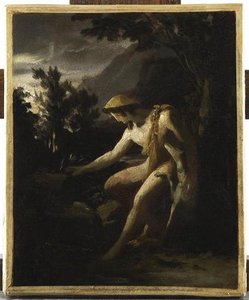
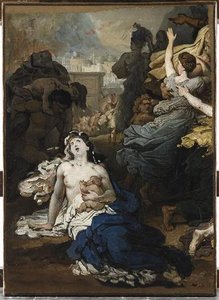
As his career progressed, Heim became a fixture of the French art establishment, known for his ability to satisfy both the intellectual demands of critics and the aesthetic desires of collectors. His depictions of religious figures, such as his celebrated work Saint John, demonstrated a capacity for intimacy that contrasted beautifully with his larger, more turbulent historical compositions like The Massacre of the Jews. This versatility allowed him to navigate the shifting tastes of a century caught between the fading echoes of Neoclassicism and the rising tide of Romanticism.
Ultimately, the significance of François Joseph Heim lies in his role as a bridge between eras. He did not merely follow trends; he synthesized the structural integrity of the old masters with the emotional intensity of his contemporaries. Through his grand Salon paintings and evocative portraits, he helped define the visual language of 19th-century France, leaving behind a legacy of works that continue to command respect for their technical brilliance and their profound ability to transport the viewer into the heart of history.

françois joseph heim
1787 - 1865 , France
Quick Facts
- Artistic Movement Or Style: Academic Art
- Artists Who Influenced This Artist: ['Vincent']
- Date Of Birth: 1787 Belfort France
- Date Of Death: 1865
- Full Name: François Joseph Heim
- Nationality: French
- Notable Artworks:
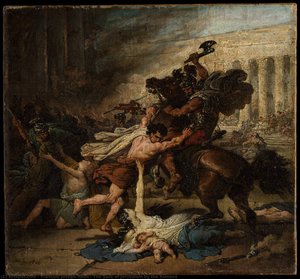
- The Sack of Jerusalem by the Romans
- LA ROBE ENSANGLANTE DE JOSEPH APPORTEE A JACOB
- La Prise de Troie
- Place Of Birth: Belfort France
Related Articles

Giclée Prints: Archival Quality & Aesthetic Nuances for the Discerning Collector
Explore the world of giclée prints with ArtsDot. Learn about archival quality, aesthetic nuances & investment potential. Expert guidance for discerning art collectors seeking museum-quality reproductions and lasting value.

The Enduring Legacy of Fine Art Prints: Technique, History & Aesthetic Impact
Explore the rich history & techniques of fine art prints. Discover investment potential, assess authenticity, and learn how to preserve your collection with expert guidance. Trusted insights for discerning collectors.

Echoes of Time: Exploring the Enduring Appeal & Historical Context of Vintage Art Prints
Explore the captivating world of vintage art prints! Discover their history, collecting tips & enduring appeal. Expert insights on chromolithography and building a legacy collection with ArtsDot.
Romantic Realism's Finest: 10 Masterpieces for Your Home | ArtsDot
Explore 10 defining masterpieces of Romantic Realism! Discover Courbet, Millet & Daumier's powerful paintings—capturing emotion and social realities. Find museum-quality reproductions for your home at ArtsDot.com.
Echoes of Olympus: Mythological Narratives in Western Art Through the Ages
Explore the captivating history of mythological narratives in Western art! From ancient Greece to modern masterpieces, discover iconic artworks & symbolism. Expert analysis and high-quality reproductions at ArtsDot.