 Preview
 Send
Send Share
Share
 Details

 Download
 Similars
 X-Ray
X-Ray Diaporama
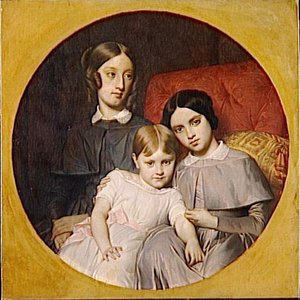
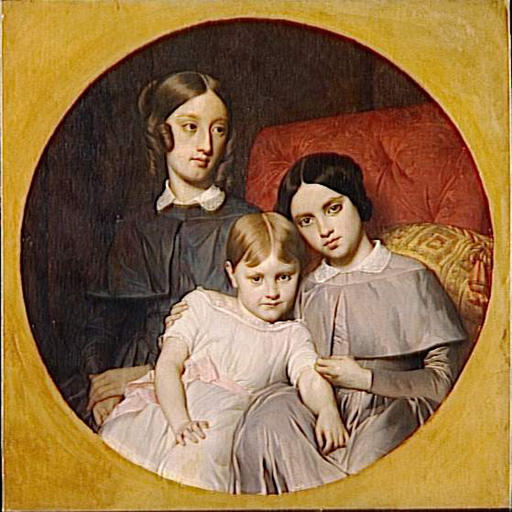
PORTRAIT DES TROIS FILLES D'ALPHONSE JACOB DESMALTER (plus tard Mesdames Guillaume, Lecast et Bonart)


 Read More
Hand Made Oil Reproduction
Hand-painted oil on canvas in your size and frame, made to order by our artists. ( Buy Print Buy Image)




P118B $10

P118H $10

P118W $10

P438Z $10

P508JH $12

P508YH $12

P805H $10

P805Z $10

P919BZ $10

P919G $10

P919XJ $10

P959ZH $10

P968JZ $12

W106C $8

W218G $10

W218JH $8

W218Y $10

W307PJ $10

W316G $10

W316PJ $8

W316Y $10

W398PJ $8

W4111J $10

W500HY $15

W500JH $15

W692G $12

W849H $8

W940BG $15

W953PJ $8




Pick from our preset sizes that match the artwork's original proportions.

You may enter your own dimensions to fit a specific frame or space. If your selected size does not match the original image's proportions, we will either crop the artwork or extend the painting with additional hand-painted elements. A digital mockup will be sent for your approval before production begins.
Please note that the on-screen preview does not reflect the actual cropping or extension. Only the mockup will accurately show the final composition.
While custom sizes are available, we recommend selecting a dimension from the predefined list to preserve the original proportions.
After order, ArtsDot.com team will email client for instructions and provide a mockup preview
Worldwide Delivery () in 3/4 weeks instead of standard 5 weeks. (26 August). No compromise on quality.

Free Worldwide Express Shipping

High-Quality Linen Canvas

Full Shipping Insurance

Customs Tax Refund Guarantee

True Color Matching Guarantee

60-Day Return Policy (Defects Only)

100% Money-Back Guarantee

Bulk Discount Offer
 Glass option is only available in size under 110 CM

PORTRAIT DES TROIS FILLES D'ALPHONSE JACOB DESMALTER (plus tard Mesdames Guillaume, Lecast et Bonart)
Reproduction Medium
Reproduction Size
-


Total Price
$ 263
Artwork Description
A Portrait of Quiet Grace: Alphonse Jacob’s “The Three Girls”
François Léon Benouville's "Portrait des Trois Filles d'Alphonse Jacob Desmalter (plus tard Mesdames Guillaume, Lecast et Bonart)" is more than a simple depiction of three women seated together; it’s a carefully constructed tableau brimming with subtle emotion and the quiet dignity characteristic of mid-19th century French portraiture. Painted in 1847, this work offers a rare glimpse into a private moment, capturing not just likenesses but also an unspoken connection between its subjects – Guillaume, Lecast, and Bonart, later wives of prominent Parisian figures.
Benouville’s style firmly anchors the painting within the Neoclassical Romanticism movement. He skillfully blends the rigorous discipline of classical composition with a heightened sensitivity to light and shadow, creating an atmosphere both formal and intimate. The arrangement of the women – seated in a gentle circle, their hands resting lightly on the arms of their chairs – immediately establishes a sense of harmony and shared experience. The use of muted earth tones—ochres, browns, and greys—dominates the palette, lending the scene a timeless quality while simultaneously emphasizing the softness of the fabrics and skin tones.
A Study in Light and Gesture
Technically, Benouville demonstrates remarkable control over his medium. The brushwork is smooth and refined, particularly evident in the rendering of the women’s clothing – the delicate folds of their dresses, the subtle sheen of their shawls. He masterfully employs chiaroscuro—the dramatic contrast between light and dark—to sculpt the figures and draw attention to key details, such as the gentle curve of a hand or the thoughtful expression on one woman's face. Notice how the light catches the folds of fabric, creating an illusion of depth and texture that invites the viewer to reach out and touch.
The composition itself is meticulously balanced. The central figure, likely Lecast, holds a prominent position, her gaze directed slightly off-camera, suggesting a quiet contemplation. Her posture exudes confidence and grace, while the other two women offer more subdued expressions of serenity. Benouville’s ability to convey such nuanced emotion through simple gestures—a tilt of the head, a slight turn of the wrist—is truly remarkable.
Symbolism and Context
The painting's historical context is crucial to understanding its deeper meaning. Created during a period of significant social change in France – the rise of industrialization, urbanization, and evolving gender roles – it reflects a desire for stability and tradition amidst rapid transformation. The women’s attire—elegant dresses with high collars—indicates their status and adherence to societal expectations. The act of sitting together in a circle suggests a shared domestic sphere, a space of comfort and companionship within the confines of Victorian society.
Furthermore, the inclusion of these three women – wives of prominent figures – hints at the importance of social connections and alliances within Parisian high society. The painting can be interpreted as a celebration of female bonds and the quiet strength found in shared experiences. The fact that they are depicted in a private setting—away from public scrutiny—underscores the intimacy and significance of their relationship.
A Timeless Portrait
"Portrait des Trois Filles d'Alphonse Jacob Desmalter" is more than just a beautiful painting; it’s a poignant meditation on human connection, social dynamics, and the enduring power of portraiture to capture not only appearance but also essence. Benouville’s masterful technique and subtle emotional depth ensure that this work continues to resonate with viewers today, offering a glimpse into a bygone era while simultaneously reminding us of the timeless qualities of grace, dignity, and quiet contemplation.
Related Artworks
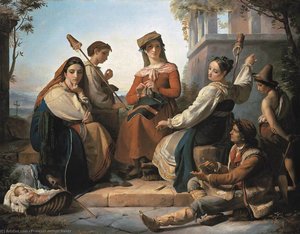
Artist Biography
François Léon Benouville: A Pioneer of Neoclassical Romanticism
François Léon Benouville (1821 – 1859) stands as a significant figure in French art history, bridging the gap between neoclassical idealism and the burgeoning romantic spirit. Born in Paris to Jean-Achille Benouville, a sculptor himself, he inherited an artistic lineage steeped in tradition yet possessed a remarkable talent for capturing both grandeur and intimacy—a duality that characterizes his oeuvre. His early training under François-Edouard Picot instilled in him a foundational understanding of classical principles, while simultaneous studies with his brother cemented their collaborative spirit and broadened their artistic horizons.- Early Life & Education: Benouville’s formative years were marked by exposure to influential sculptors like Jean-Achille Benouville and François-Edouard Picot, shaping his aesthetic sensibilities from a young age. The Prix de Rome scholarship awarded in 1845 proved pivotal, propelling him to Rome where he immersed himself in the artistic fervor of the era and drew inspiration from antiquity.
- Roman Influences: His time in Rome profoundly impacted Benouville’s artistic vision. Like his brother Jean-Achille, he embraced Christian iconography and explored themes rooted in classical mythology—a stylistic blend that would define much of his subsequent work. The villa medici served as a crucible for experimentation and intellectual engagement, fostering connections with fellow artists like Alexandre Cabanel.
Style & Technique: Bridging Neoclassical Grandeur and Romantic Emotion
Benouville’s artistic style is characterized by meticulous attention to detail combined with expressive brushwork—a hallmark of the neoclassical tradition tempered by romantic sensibilities. Primarily working in oils, ink, and chalk, he excelled at portraying biblical narratives and mythological scenes with remarkable accuracy and emotional depth. His compositions often featured monumental figures rendered with idealized forms, reflecting the influence of David and Ingres, yet infused with palpable feeling conveyed through nuanced shading and dramatic lighting—techniques that distinguished him from his contemporaries.- Neoclassical Roots: Benouville’s adherence to neoclassical ideals is evident in works such as ‘Jesus at the Pretorium,’ where he meticulously recreated biblical scenes with classical proportions and idealized musculature.
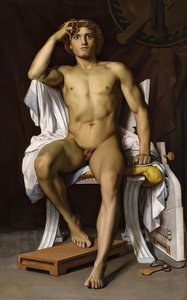
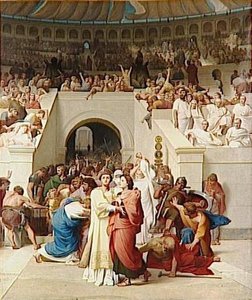
- Romantic Expression: Simultaneously, he demonstrated an ability to capture the emotional essence of his subjects—as seen in ‘The Wrath of Achilles’ and ‘Christian Martyrs Enter the Amphitheatre,’ where dynamic brushstrokes convey urgency and pathos.
Notable Works & Achievements
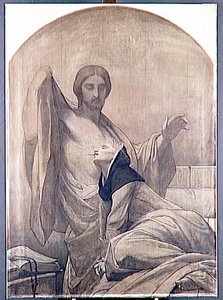
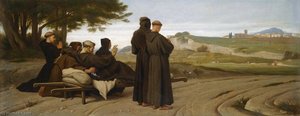
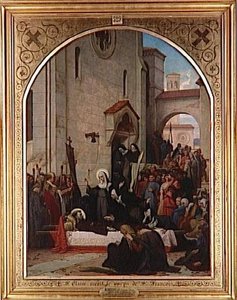
Benouville's artistic output encompassed a diverse range of subjects, demonstrating versatility and ambition. Among his most celebrated paintings are 'Jesus at the Pretorium,' ‘SAINTE CLAIRE RECEVANT LE CORPS DE SAINT FRANCOIS D’ASSISE,’ and ‘LES DEUX PIGEONS.’ These pieces exemplify his mastery of technique and his capacity to evoke profound emotional responses in viewers. His portrait of Paul Baudry, a fellow painter, showcases his skill in capturing psychological nuance—a testament to his artistic sensitivity.- Prix de Beaux Arts Recognition: He shared the Prix de Beaux Arts prize with Alexandre Cabanel in 1845 for ‘Jesus at the Pretorium,’ marking a significant accomplishment and establishing him as one of France’s leading artists of his time.
Legacy & Historical Significance
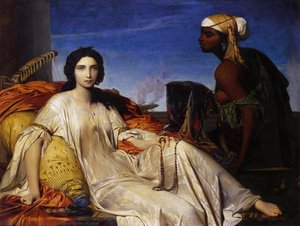
François Léon Benouville's contribution to French art extends beyond individual masterpieces; he represents a crucial link between two artistic movements—neoclassicism and romanticism. His work embodies the ideals of order, reason, and beauty championed by neoclassicism while simultaneously embracing the expressive power and emotional intensity characteristic of romanticism. He remains an artist whose evocative imagery continues to resonate with audiences today, securing his place as a pivotal figure in the artistic landscape of the mid-19th century. His exploration of orientalist themes further broadened the scope of French art internationally.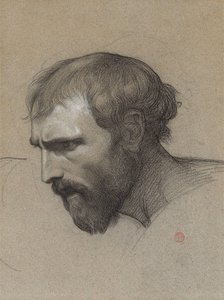
françois léon benouville
1821 - 1859 , France
Quick Facts
- Artistic Movement Or Style: Neoclassical & Orientalist
- Artists Who Influenced This Artist:
- Jean-Achille Benouville
- François Édouard Picot
- Date Of Birth: March 30, 1821
- Date Of Death: February 16, 1859
- Full Name: François Léon Benouville
- Nationality: French
- Notable Artworks:
- Jesus at the Pretorium
- The Wrath of Achilles
- Saint Claire Receiving the Corpse of Saint François
- Place Of Birth: Paris, France
Related Articles
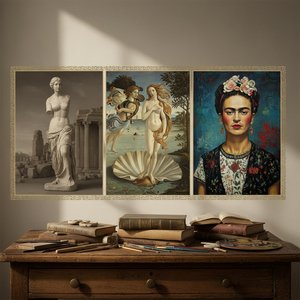
The Enduring Muse: Women as Subject & Symbol in Art History
Explore the rich history of women in art – from iconic muses to groundbreaking artists. Discover feminist movements, global perspectives & reclaim female narratives with ArtsDot.
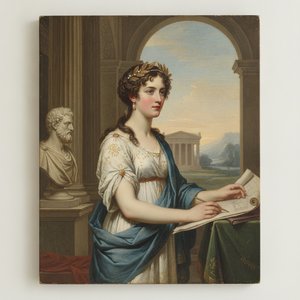
The Revival of Antiquity: Exploring Ideals of Beauty & Power in Neoclassical Portraiture
Explore the captivating world of Neoclassical portraiture! Discover the power & ideals behind masterpieces by David, Girodet & more. Expert analysis, custom reproductions & art appraisal at ArtsDot.
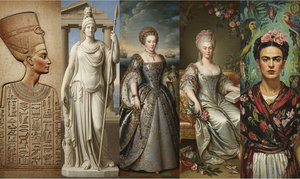
Portrayals of Power & Perception: A Historical Survey of Women in Art
Explore the rich history of women in art – from iconic muses to groundbreaking artists. Discover feminist movements & reclaim female narratives with ArtsDot. Expert insights for discerning collectors.
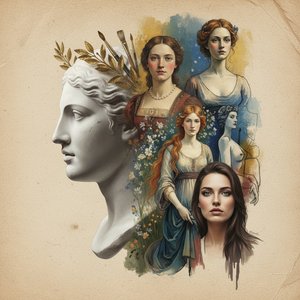
The Enduring Muse: Women as Subject & Symbol in Art History
Explore the rich history of women in art – from archetypal representations to contemporary voices challenging norms. Discover iconic artists & movements, and learn about reclaiming female narratives through painting and beyond.
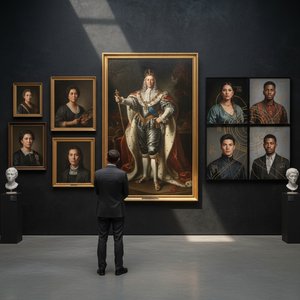
The Enduring Legacy of Formal Portraiture: Power, Identity & Artistic Exploration
Explore the rich history of formal portraiture & its enduring power to capture identity and shape perception. Discover investment-worthy artworks, expert appraisals, and custom reproduction services at ArtsDot.