 Preview
 Send
Send Share
Share
 Details

 Download
 Similars
 X-Ray
X-Ray Diaporama
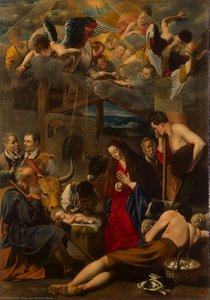
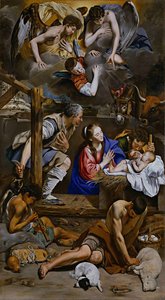
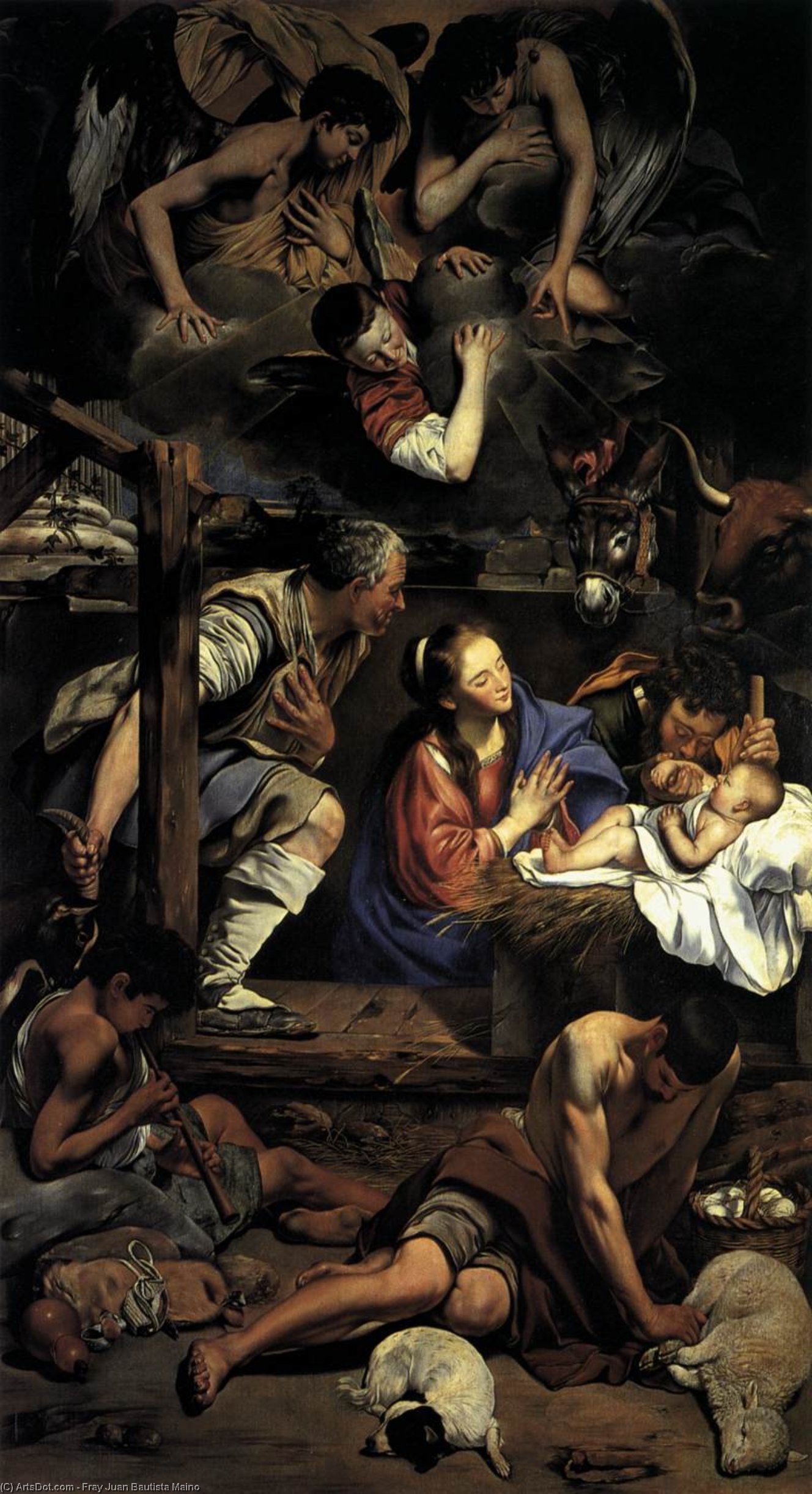
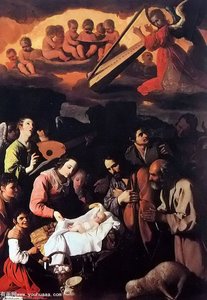
Adoration of the Shepherds
 Oil On Canvas
- WallArt
- Baroque
 1612
1612 315.0 x 174.0 cm
 Museo del Prado
 Read More
Hand Made Oil Reproduction
Hand-painted oil on canvas in your size and frame, made to order by our artists. ( Buy Print Buy Image)




P118B $10

P118H $10

P118W $10

P438Z $10

P508JH $12

P508YH $12

P805H $10

P805Z $10

P919BZ $10

P919G $10

P919XJ $10

P959ZH $10

P968JZ $12

W106C $8

W218G $10

W218JH $8

W218Y $10

W307PJ $10

W316G $10

W316PJ $8

W316Y $10

W398PJ $8

W4111J $10

W500HY $15

W500JH $15

W692G $12

W849H $8

W940BG $15

W953PJ $8




Pick from our preset sizes that match the artwork's original proportions.

You may enter your own dimensions to fit a specific frame or space. If your selected size does not match the original image's proportions, we will either crop the artwork or extend the painting with additional hand-painted elements. A digital mockup will be sent for your approval before production begins.
Please note that the on-screen preview does not reflect the actual cropping or extension. Only the mockup will accurately show the final composition.
While custom sizes are available, we recommend selecting a dimension from the predefined list to preserve the original proportions.
After order, ArtsDot.com team will email client for instructions and provide a mockup preview
Worldwide Delivery () in 3/4 weeks instead of standard 5 weeks. (24 August). No compromise on quality.

Free Worldwide Express Shipping

High-Quality Linen Canvas

Full Shipping Insurance

Customs Tax Refund Guarantee

True Color Matching Guarantee

60-Day Return Policy (Defects Only)

100% Money-Back Guarantee

Bulk Discount Offer
 Glass option is only available in size under 110 CM

Adoration of the Shepherds
Reproduction Medium
Reproduction Size
-


Total Price
$ 413
Artwork Description
The Genesis of a Vision: Fray Juan Bautista Maino’s “Adoration of the Shepherds”
Within the hallowed halls of the Museo del Prado resides a painting that transcends mere representation, becoming instead a profound meditation on faith, humility, and the divine. Fray Juan Bautista Maino's "Adoration of the Shepherds," completed in 1612, is not simply a depiction of the biblical narrative; it’s an immersive experience, a window into the turbulent yet intensely spiritual world of Spanish Baroque art. Born in Guadalajara and steeped in the artistic currents of Italy – particularly the dramatic innovations of El Greco – Maino masterfully blended these influences with his own distinctive vision, forging a style that is both deeply rooted in tradition and remarkably innovative.
The painting immediately commands attention through its dynamic composition and masterful use of chiaroscuro. A stark contrast between light and shadow dominates the scene, drawing the viewer’s eye to the central figures – Mary, Joseph, and the infant Jesus nestled within a humble manger. The stable itself is rendered with an almost palpable sense of intimacy, illuminated by a single, directional light source that casts dramatic shadows and imbues the entire scene with a profound emotional weight. This isn't a sanitized depiction of the Nativity; it’s raw, immediate, and brimming with the awe and wonder inherent in witnessing the birth of Christ.
A Symphony of Color and Texture: Technique and Materials
Maino’s technique is characterized by a loose, expressive brushwork – a hallmark of Baroque painting. He eschews the smooth, polished surfaces favored by earlier Renaissance artists, opting instead for a layered approach that creates rich textures and a sense of movement within the composition. The drapery of the figures flows with an almost sculptural quality, while the animals—sheep, oxen, and donkeys—are rendered with remarkable detail and life-like presence. The palette is dominated by deep browns, reds, blues, and golds – colors that evoke both the earthly simplicity of the stable and the celestial splendor of the heavens above.
Close examination reveals a meticulous attention to detail in the rendering of human anatomy, particularly evident in the musculature of the shepherds. However, this realism is tempered by an expressive use of gesture and emotion – the shepherds’ faces are alight with astonishment and reverence, conveying a sense of profound spiritual experience. The artist skillfully employs impasto—thickly applied paint—to build up areas of light and shadow, further enhancing the dramatic effect.
Symbolism and Spiritual Depth: Unpacking the Narrative
Beyond its visual splendor, “Adoration of the Shepherds” is laden with symbolic meaning. The shepherds themselves represent the humble and overlooked – those who are open to divine revelation. Their arrival at the stable underscores the central theme of the Nativity: that salvation comes not through power or prestige, but through humility and faith. The angels, depicted as radiant figures ascending towards the heavens, symbolize divine guidance and the promise of redemption. The animals—sheep, oxen, and donkeys—are imbued with symbolic significance, representing innocence, simplicity, and the connection between humanity and nature.
Notably, the painting’s composition adheres to a classic triangular structure, drawing the viewer's eye upwards towards the celestial scene – a deliberate technique employed by Baroque artists to emphasize the divine. The inclusion of everyday objects—a loaf of bread, tools—further reinforces the narrative’s grounding in earthly reality while simultaneously hinting at the miraculous nature of the event.
A Legacy of Faith and Art: Historical Context
Created during a period of intense religious fervor in Spain – following the Reconquista and amidst the Counter-Reformation – “Adoration of the Shepherds” reflects the profound impact of faith on artistic expression. Maino’s work stands as a testament to the enduring power of biblical narratives, reimagined through the lens of Baroque aesthetics. His synthesis of Italian influences with his own unique style resulted in a masterpiece that continues to resonate with viewers today, offering a glimpse into the spiritual and emotional landscape of 17th-century Spain.
Related Artworks

Artist Biography
A Confluence of Light and Devotion: The Life of Fray Juan Bautista Maino
In the grand, dramatic tapestry of the Spanish Baroque, few threads are as intricately woven as those left by Fray Juan Bautista Maino. Born in Guadalajara, Mexico, in 1581, Maino’s life and artistry represent a profound cultural bridge, spanning the distance between the vibrant artistic currents of Italy and the solemn, spiritual intensity of Spain. His journey was one of constant movement and stylistic evolution, as he navigated the shifting landscapes of European aesthetics to create a body of work that remains a testament to the transformative power of the Baroque era.
The early years of Maino’s life were marked by an extraordinary immersion in the most influential artistic movements of his time. During the first decade of the 17th century, his travels through Italy brought him into contact with the pulsating heart of the Baroque revolution. In the studios of Bologna and Rome, he absorbed the dramatic chiaroscuro—the masterful play of light and shadow—that would become a hallmark of his compositions. While historical accounts offer varying perspectives on his direct mentorship, the echoes of El Greco’s ethereal, spiritualized forms and the naturalistic, grounded realism of the Carracci family are deeply embedded in his early brushwork. Whether he was truly a pupil of El Greco or a student of the Bolognese tradition under Guido Reni, Maino successfully synthesized these diverse influences into a singular, emotive language.
Mastery of the Altarpiece and the Miniature
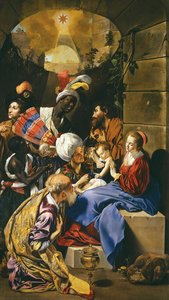
As Maino established himself within the Spanish artistic landscape, his reputation grew through monumental commissions that demanded both technical precision and profound theological depth. His arrival in Toledo marked a significant chapter in his career, where he undertook the daunting task of decorating the San Pedro Mártir church. It was here that his ability to command large-scale compositions became evident, most notably in works such as the Adoration of the Magi. These large-scale altarpieces were not merely decorations but theatrical windows into the divine, designed to evoke awe and piety in the faithful through sweeping movements and intense emotionality.
Yet, the versatility of Maino’s talent extended far beyond the grand scale of church altars. He possessed a rare ability to pivot from the monumental to the intimate, finding equal success in the delicate realm of miniature portraits. In these smaller works, his mastery of detail and subtle color palettes allowed for a more personal, psychological exploration of his subjects. This duality—the ability to command a cathedral wall and a small, private frame—demonstrates a technical range that few of his contemporaries could match.
Legacy and Historical Significance
The historical significance of Fray Juan Bautista Maino lies in his role as an artistic mediator. He did not merely copy the styles of Italy or Spain; he breathed new life into them by blending the atmospheric tension of the Italian Baroque with the profound, often somber, religious fervor characteristic of the Spanish Golden Age. His work serves as a vital link in understanding how European artistic trends were adapted and reinterpreted within the Iberian Peninsula.
Today, Maino is remembered as a painter of deep spiritual resonance. His contributions to the development of the Baroque style helped define an era of art that sought to make the invisible visible through the medium of light and shadow. Through his paintings, we continue to witness:
- The synthesis of international styles: The seamless integration of Italian naturalism with Spanish spiritual intensity.
- Technical versatility: A mastery over both large-scale religious narratives and intimate portraiture.
- Emotional depth: An enduring ability to use dramatic composition to communicate the profound mysteries of faith.
As we look upon his works, such as the celebrated Adoration of the Shepherds, we see more than just paint on canvas; we see the legacy of a man who traveled across borders and through styles to capture the very essence of the human and the divine.
fray juan bautista maino
1581 - 1649 , Mexico
Quick Facts
- Artistic Movement Or Style: Baroque
- Artists Or Movements Influenced By This Artist: ['Diego Velázquez']
- Artists Who Influenced This Artist:
- El Greco
- Caracci
- Guidi Reno
- Date Of Birth: 1581 Guadalajara Mexico
- Date Of Death: 1649
- Full Name: Juan Bautista Maino
- Nationality: Spanish
- Notable Artworks:
- Adoration of the Magi
- The Adoration of the Shepherds
- Place Of Birth: Guadalajara Mexico
Related Articles

The Golden Age Reforged: Dramatic Realism & Religious Zeal in Spanish Baroque Art
Explore the dramatic world of Spanish Baroque art! Discover masters like Zurbarán & the powerful influence of religious zeal on painting techniques – a guide for collectors and enthusiasts.

Decoding Baroque Grandeur: A Guide to the Drama and Emotion of 17th-Century Art
Explore the breathtaking drama of 17th-century Baroque art. Our expert guide decodes the use of chiaroscuro, emotional intensity, and historical grandeur to help you appreciate and curate timeless masterpieces for your collection.

The Dramatic Flourish: Exploring the Baroque Movement's Enduring Legacy in Art History
Explore the dramatic world of Baroque art! Discover iconic artists like Caravaggio & Rubens, defining techniques, and its lasting impact on art history. Expert insights for collectors & enthusiasts at ArtsDot.
Baroque Classicism: Reconciling Drama & Order in 17th-Century Art
Explore the captivating world of Baroque Classicism! Discover its history, key artists like Caravaggio & Rubens, and defining characteristics. Expert insights & high-quality reproductions at ArtsDot.
Theatricality & Triumph: Baroque Drama in Painting & Sculpture
Explore the dramatic world of Baroque art! Discover its history, defining characteristics, & lasting influence on painting & sculpture. Expert insights into Caravaggio, Zurbarán, and Bernini – plus high-quality reproductions at ArtsDot.