 Preview
 Send
Send Share
Share
 Details

 Download
 Similars
 X-Ray
X-Ray Diaporama
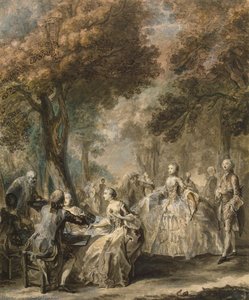
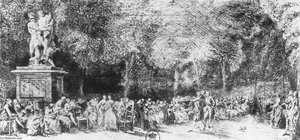
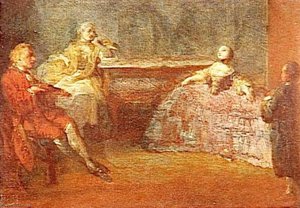
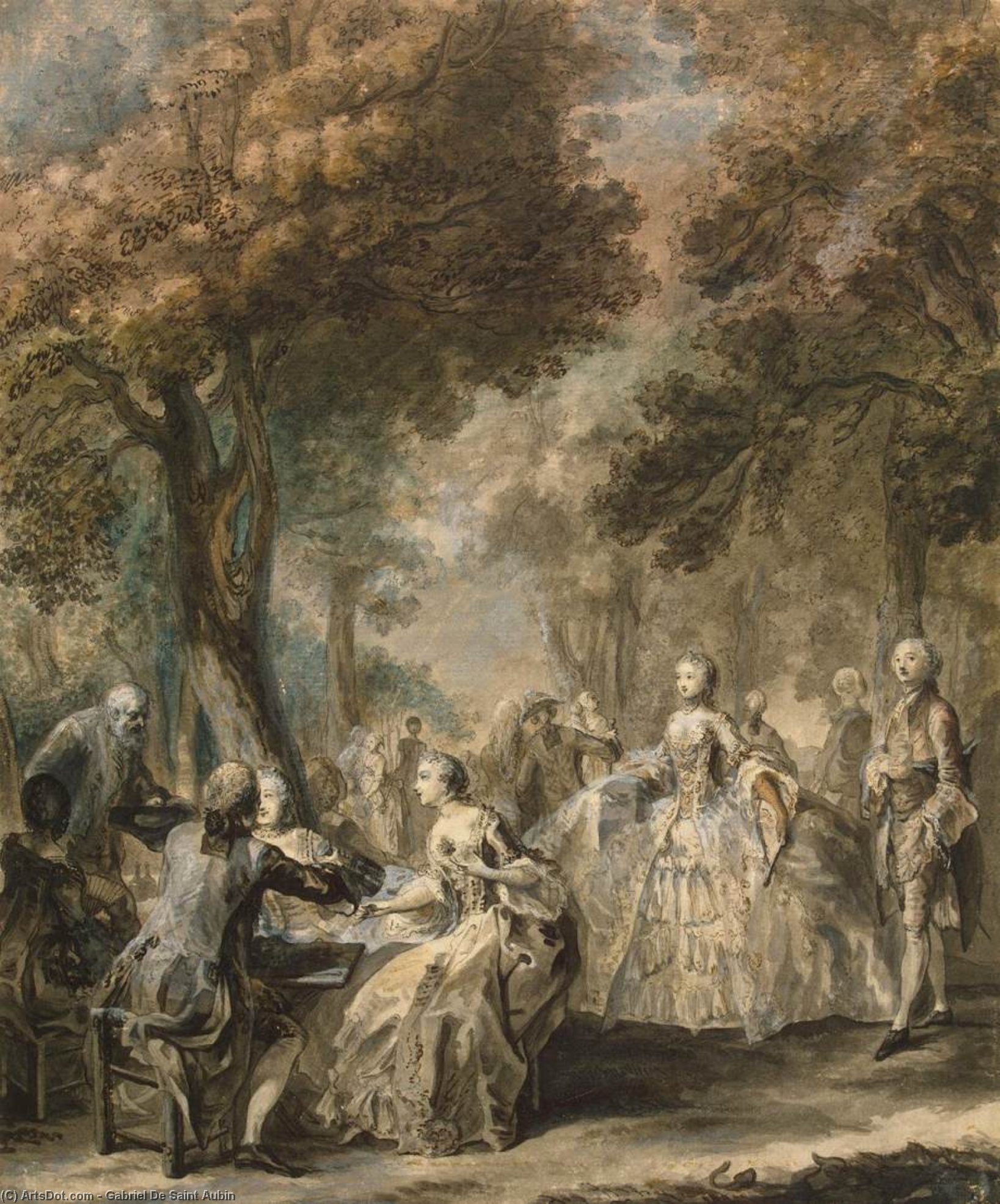
Company Taking a Promenade
 Engraving
- Rococo
 1760
1760 314.0 x 258.0 cm
 Hermitage Museum
 Read More
Hand Made Oil Reproduction
Hand-painted oil on canvas in your size and frame, made to order by our artists. ( Buy Print Buy Image)




P118B $10

P118H $10

P118W $10

P438Z $10

P508JH $12

P508YH $12

P805H $10

P805Z $10

P919BZ $10

P919G $10

P919XJ $10

P959ZH $10

P968JZ $12

W106C $8

W218G $10

W218JH $8

W218Y $10

W307PJ $10

W316G $10

W316PJ $8

W316Y $10

W398PJ $8

W4111J $10

W500HY $15

W500JH $15

W692G $12

W849H $8

W940BG $15

W953PJ $8




Pick from our preset sizes that match the artwork's original proportions.

You may enter your own dimensions to fit a specific frame or space. If your selected size does not match the original image's proportions, we will either crop the artwork or extend the painting with additional hand-painted elements. A digital mockup will be sent for your approval before production begins.
Please note that the on-screen preview does not reflect the actual cropping or extension. Only the mockup will accurately show the final composition.
While custom sizes are available, we recommend selecting a dimension from the predefined list to preserve the original proportions.
After order, ArtsDot.com team will email client for instructions and provide a mockup preview
Worldwide Delivery () in 3/4 weeks instead of standard 5 weeks. (25 August). No compromise on quality.

Free Worldwide Express Shipping

High-Quality Linen Canvas

Full Shipping Insurance

Customs Tax Refund Guarantee

True Color Matching Guarantee

60-Day Return Policy (Defects Only)

100% Money-Back Guarantee

Bulk Discount Offer
 Glass option is only available in size under 110 CM

Company Taking a Promenade
Reproduction Medium
Reproduction Size
-


Total Price
$ 263
Artwork Description
A Glimpse into Parisian Leisure: The Promenade of Society
To stand before this depiction of "Company Taking a Promenade" is to step unceremoniously into the sun-dappled, convivial heart of ancien Paris in the year 1760. This scene, rendered with the masterful eye of Gabriel Jacques de Saint-Aubin, transcends a mere snapshot; it is a carefully composed tableau vivant of Enlightenment-era social grace. The black and white quality, while suggesting an engraving or early print medium, allows the viewer to focus intensely on the human drama unfolding within the park setting. Here, life unfolds at its most leisurely pace—a perfect antidote to the rigid formality often associated with high society.
The Art of Observation: Saint-Aubin's Gaze
Gabriel de Saint-Aubin was not a painter of grand myths or heroic epics; his genius lay in his profound ability to observe. He was the quintessential Parisian chronicler, capturing the ephemeral moments that defined daily existence for the burgeoning middle and upper classes. In this work, we see him at his most natural: documenting the rhythms of social interaction. The arrangement of figures—some engaged in animated conversation near a central dining table, others settled into repose on elegant chairs—speaks volumes about the culture of leisure. Notice the subtle details: the placement of the bird perched high in the corner, an almost accidental inclusion that grounds the scene in tangible reality, while the gathering itself suggests both refreshment and deep camaraderie.
Technique and Atmosphere: Capturing the Moment
The composition is rich with implied narrative. The interplay between the seated figures and those standing creates a dynamic flow across the canvas. While the original medium might have been an engraving, the reproduction captures the tonal depth that allows us to feel the texture of the park setting—the imagined softness of the grass beneath the feet and the crisp folds of fashionable attire. This piece speaks to the Rococo fascination with refined pleasure; it is art designed not just to be looked at, but to be experienced. It evokes the gentle murmur of conversation, the clinking of unseen crystal, and the sweet scent of afternoon blooms.
Symbolism of Gathering and Connection
More than just a depiction of people enjoying an outing, this artwork is a meditation on community. The central table acts as a subtle anchor point, symbolizing shared experience and sustenance—whether literal food or intellectual discourse. In the context of 18th-century Parisian life, such gatherings were crucial social rituals. Owning a reproduction of this piece allows one to infuse an interior space with a sense of cultivated history and enduring human connection. It whispers tales of bygone elegance without ever shouting them.
A Touch for the Modern Collector
For the discerning collector or designer, "Company Taking a Promenade" offers unparalleled versatility. Its sophisticated narrative quality allows it to anchor rooms aiming for an atmosphere of cultured ease—be it a drawing-room library or a sunlit salon. It is a piece that invites contemplation, suggesting that amidst the hustle of modern life, moments of shared beauty and quiet conversation remain our most treasured commodities.
Related Artworks
Artist Biography
The Parisian Observer: The Life and Vision of Gabriel de Saint-Aubin
Gabriel de Saint-Aubin (1724–1780) remains one of the most vital, yet often understated, chroniclers of the French Enlightenment. While many of his contemporaries sought immortality through grand, idealized allegories or the stiff formality of royal portraiture, Saint-Aubin found his muse in the pulse of the streets. He was a master of the ephemeral, an artist who turned his gaze toward the bustling marketplaces, the theatrical spectacles, and the intimate social gatherings that defined the golden age of Paris. His work serves as a profound visual diary, capturing the transition from the late Baroque to the delicate elegance of the Rococo period with an unparalleled sense of realism and psychological depth. Born into a family where art was woven into the very fabric of daily life, Saint-Aubin’s upbringing was steeped in craftsmanship. His brothers, Charles Germain de Saint Aubin and Augustin de Saint-Aubin, were equally accomplished figures in the Parisian art scene, creating a familial legacy of design and engraving. Under the tutelage of masters such as Étienne Jeaurat and Hyacinthe Collin de Vermont, Gabriel honed a technical precision that would become his hallmark. However, his path was not one of easy academic triumph; after several unsuccessful attempts to secure the prestigious Prix de Rome between 1752 and 1754, he made a choice that would ultimately define his unique artistic identity. By departing from the rigid constraints of the Académie des Beaux-Arts to join the Guild of Saint Luke, he liberated himself from academic dogma, allowing him to pursue an independent, observational style that favored truth over artifice.A Master of Detail and Social Documentation
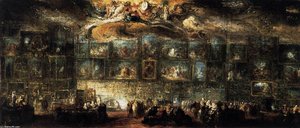
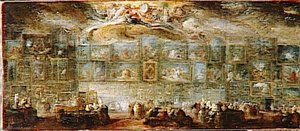
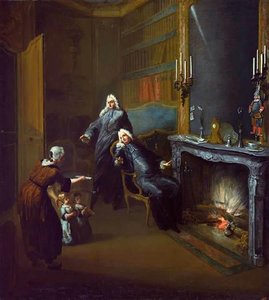
The true brilliance of Saint-Aubin lies in his ability to transform a simple sketch or engraving into a window through which we view the 18th century. His technique—a sophisticated blend of pen drawing, etching, and watercolor—allowed him to capture both the broad atmosphere of a crowd and the minute details of a single garment or architectural flourish. One need only look at his remarkable View of the Salon of 1765, currently housed in the Musée du Louvre, to witness this mastery. In this expansive work, he meticulously documents the cultural richness of the era, arranging paintings, sculptures, and spectators with a balanced harmony that evokes the very air of the period. His oeuvre is characterized by an extraordinary versatility and a fascination with the "act" of creation and observation. Whether he was depicting the intellectual intensity of a workspace in Le rêve ou Voltaire composant la pucelle or the lively energy of Parisian street life in his various engravings, Saint-Aubin possessed a rare gift for capturing movement and emotion. His work does not merely represent a scene; it immerses the viewer in the atmosphere of an era. Through his fine lines and nuanced shading, he brought to life:- The theatrical grandeur of Parisian salons and public exhibitions.
- The intimate, unscripted moments of social interaction among the city's inhabitants.
- The intricate textures of 18th-century fashion and decorative arts.
- The vibrant, often chaotic energy of urban marketplaces and street life.
Legacy and Historical Significance
The historical significance of Gabriel de Saint-Aubin extends far beyond his technical skill as a draftsman and printmaker. He acted as a vital bridge between the high art of the academies and the lived reality of the French people. By eschewing grand narratives in favor of social documentation, he provided future generations with an invaluable record of a world that was on the precipice of monumental change. His ability to find beauty in the mundane and dignity in the everyday helped pave the way for a more modern, observational approach to art. Today, Saint-Aubin is remembered not just as a member of a distinguished dynasty of artists, but as a singular talent who possessed the foresight to see the importance of the present moment. His legacy lives on through the countless prints and drawings that continue to fascinate historians and art lovers alike, offering a luminous, detailed, and deeply human perspective on the heart of France during its most transformative century.
gabriel jacques de saint aubin
1724 - 1780
Quick Facts
- Artistic Movement Or Style: Rococo
- Artists Or Movements Influenced By This Artist: ['Charles Germain de Saint Aubin']
- Artists Who Influenced This Artist:
- Étienne Jeaurat
- Hyacinthe Collin de Vermont
- Date Of Birth: April 14, 1724
- Date Of Death: February 14, 1780
- Full Name: Gabriel de Saint-Aubin
- Nationality: French
- Notable Artworks:
- Le rêve ou Voltaire composant la pucelle
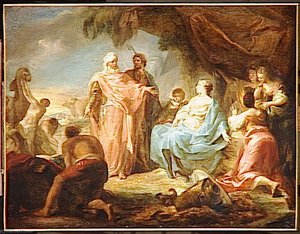
- Laban Cherchant Ses Idoles
- Place Of Birth: Paris, France
Related Articles

Rococo's Radiant Legacy: 10 Masterpieces for Your Home |
Indulge in the elegance of Rococo! Explore 10 masterpieces by Fragonard, Boucher & Watteau. Discover the stories behind these iconic paintings and bring timeless art to your home with museum-quality reproductions from .

The Rococo Aesthetic: Opulence, Rebellion & the Pursuit of Pleasure in 18th-Century Art
Explore the opulent world of Rococo art! Discover its origins, key artists like Watteau & Boucher, and lasting influence on design. Expert insights for collectors & enthusiasts.

Dark Masterpieces: 10 Iconic Paintings Dominated by Black Tones |
Explore 10 iconic paintings dominated by black tones, from Rembrandt’s chiaroscuro to Goya's dark expressions. Discover the stories behind these masterpieces & find museum-quality art reproductions for your home at .
The Rococo Style: Aristocratic Leisure & the Pursuit of Delight in 18th-Century Art
Explore the opulent world of Rococo art! Discover Watteau, Boucher & Nattier's masterpieces. Expert insights for collectors seeking museum-quality reproductions and custom portraits at ArtsDot.
Illuminating the Enlightenment: A Comprehensive Exploration of 18th-Century Painting
Explore the captivating world of 18th-century painting! Discover Rococo's playful elegance & Neoclassicism’s Enlightenment ideals with expert insights into Fragonard, David, and more. A comprehensive guide for art enthusiasts.