 Preview
 Send
Send Share
Share
 Details

 Download
 Similars
 X-Ray
X-Ray Diaporama
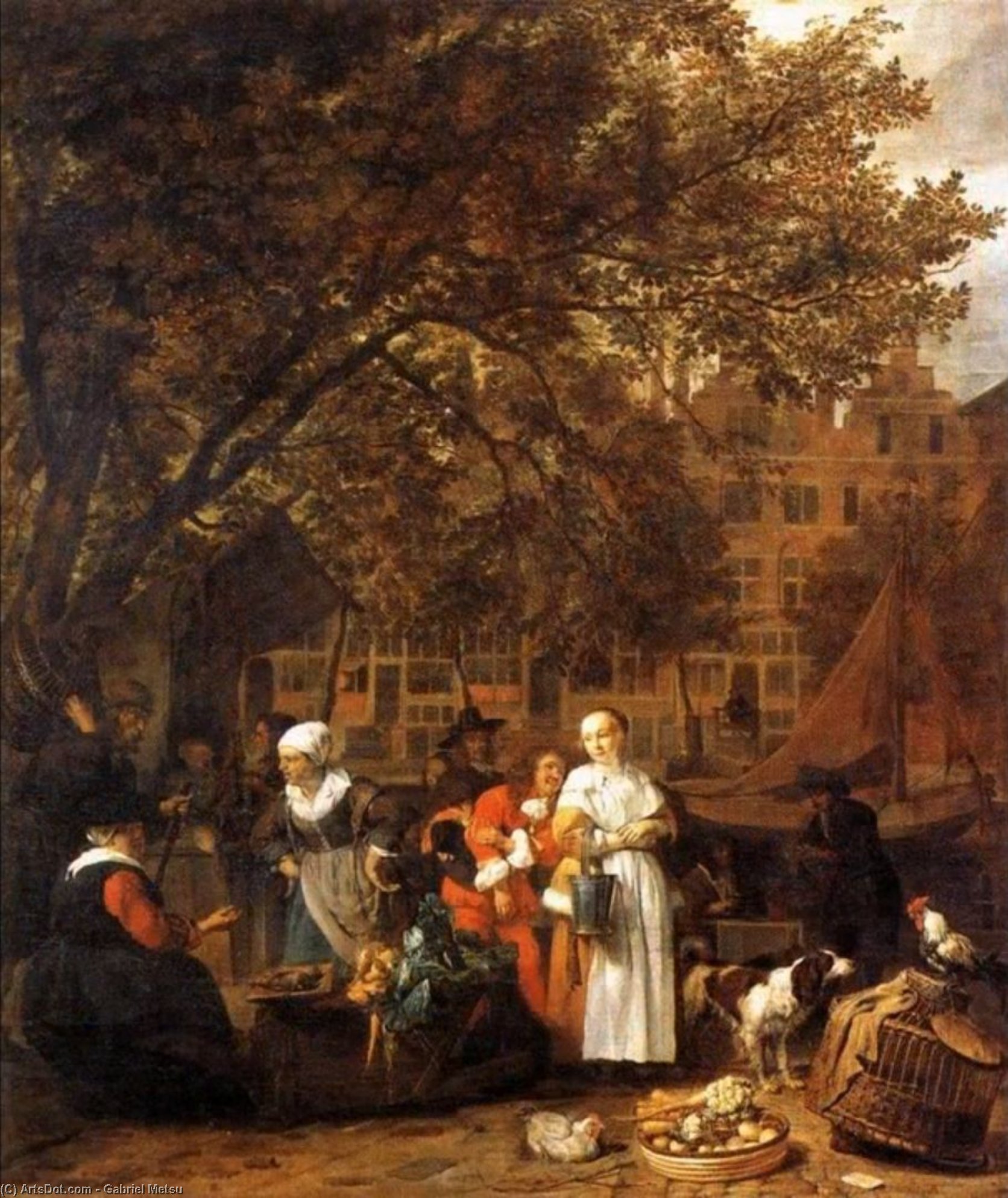
Vegetable Market in Amsterdam
 Oil On Canvas
- WallArt
- Dutch Golden Age
 1661
1661- Early Modern
 97.0 x 81.0 cm
 The Louvre
 Read More
Giclée / Art Print
Museum-quality giclée or canvas print with fast production and flexible finish options. ( Buy Hand Made Painting Buy Image)




P118B $10

P118H $10

P118W $10

P438Z $10

P508JH $12

P508YH $12

P805H $10

P805Z $10

P919BZ $10

P919G $10

P919XJ $10

P959ZH $10

P968JZ $12

W106C $8

W218G $10

W218JH $8

W218Y $10

W307PJ $10

W316G $10

W316PJ $8

W316Y $10

W398PJ $8

W4111J $10

W500HY $15

W500JH $15

W692G $12

W849H $8

W940BG $15

W953PJ $8




Pick from our preset sizes that match the artwork's original proportions.

You may enter your own dimensions to fit a specific frame or space. If your selected size does not match the original image's proportions, we will either crop the artwork or extend the image with a mirrored or solid-fill edge. A digital mockup will be sent for your approval before production begins.
Please note that the on-screen preview does not reflect the actual cropping or extension. Only the mockup will accurately show the final composition.
While custom sizes are available, we recommend selecting a dimension from the predefined list to preserve the original proportions.
Worldwide Delivery () in 2 weeks instead of standard 4/5 weeks. (25 August)

Free Worldwide Express Shipping

High-Quality Linen Canvas

Full Shipping Insurance

Customs Tax Refund Guarantee

True Color Matching Guarantee

60-Day Return Policy (Defects Only)

100% Money-Back Guarantee

Bulk Discount Offer
 Glass option is only available in size under 110 CM

Vegetable Market in Amsterdam
Giclée / Art Print
Reproduction Size
-


Total Price
$ 63
Collectible Description
A Window into the Golden Age: The Soul of Amsterdam
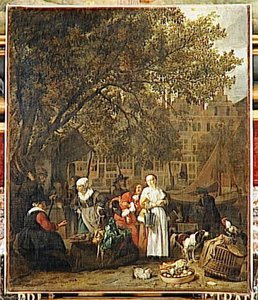
In the heart of the seventeenth century, amidst the burgeoning prosperity of the Dutch Golden Age, Gabriel Metsu captured a moment that transcends mere commerce to become a profound meditation on human connection. Vegetable Market in Amsterdam, executed around 1661, is far more than a simple depiction of a marketplace; it is a vibrant, breathing snapshot of a society in motion. As the viewer enters this scene, they are immediately enveloped by the rhythmic energy of a bustling morning. The air seems thick with the quiet murmurs of negotiation and the earthy scent of fresh produce. Metsu does not merely paint a subject; he constructs an atmosphere where every figure—from the focused merchant to the casual passerby—contributes to a larger tapestry of urban life, offering a window into the social fabric of a city at its zenith.
The composition is a masterclass in balanced vitality. At the center of this domestic theater sits a table laden with the bountiful offerings of the earth, acting as an anchor for the surrounding figures. Metsu utilizes subtle geometric arrangements to guide our gaze through the crowd, ensuring that while the scene is filled with activity, it never descends into chaos. A watchful dog, resting quietly near the edge of the frame, provides a touch of domestic realism and a moment of stillness amidst the human flurry. This careful orchestration of movement and rest creates a sense of naturalism that invites the collector to step directly into the canvas, making it an ideal centerpiece for any space seeking to evoke warmth and historical depth.
The Mastery of Light and Illusion
What truly distinguishes this work is Metsu’s extraordinary command over trompe-l'œil and the delicate manipulation of light. A hallmark of the Dutch Baroque, his technique relies on an almost scientific precision to simulate reality. He employs a subtle palette, eschewing garish colors in favor of nuanced tones that reflect the soft, ambient illumination characteristic of a Northern European interior. Through the masterful use of chiaroscuro, Metsu allows light to dance across surfaces—glinting off the skin of a ripe fruit, catching the fold of a linen sleeve, or reflecting softly upon the polished floor. This interplay of shadow and brilliance creates an astonishing sense of three-dimensional depth, tricking the eye into perceiving a tangible space.
For the discerning interior designer, the technical brilliance of this piece offers unparalleled versatility. The painting’s ability to simulate texture—the roughness of a vegetable skin versus the smoothness of a ceramic bowl—adds a layer of sensory richness to a room. Metsu’s restraint is his greatest strength; by avoiding excessive ornamentation, he allows the true beauty of light and form to take center stage. This makes the artwork not just a historical relic, but a sophisticated element of modern decor that brings a sense of quiet luxury and intellectual curiosity to a curated collection.
A Legacy of Human Connection
Beyond its technical merits, Vegetable Market in Amsterdam resonates on an emotional level through its celebration of the everyday. There is a profound dignity in Metsu’s portrayal of common life. By elevating a mundane market scene to the status of high art, he reminds us of the beauty found in routine interactions and the shared experiences of community. The painting captures the essence of genre painting—the art of the genre or the everyday—where the extraordinary is found within the ordinary.
To possess a reproduction of this masterpiece is to invite a piece of history into one's home. It serves as a constant reminder of the enduring human spirit and the timeless allure of the Dutch masters. Whether placed in a sunlit gallery or a cozy study, Metsu’s work provides a focal point of storytelling, sparking conversations about history, art, and the vibrant, interconnected world that continues to fascinate us centuries later.
Related Artworks


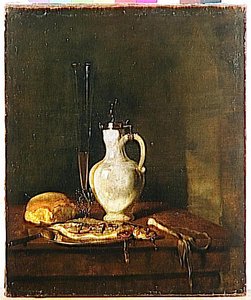
Artist Biography
**a life of artistic exploration**
gabriël metsu, a dutch painter from the netherlands, lived a life marked by artistic exploration and innovation. born in 1629, metsu's work embodied the spirit of the dutch golden age, a period renowned for its prolific artistic output. this biography delves into the life and works of this enigmatic figure, whose contributions to the art world continue to fascinate.**early life and influences**
metsu was born in 1629, the son of jacques metsu, a tapestry worker and painter originally from hainault. this eclectic background likely influenced gabriel's early interest in diverse artistic techniques. the family's move to leiden, where metsu grew up, exposed him to various cultural influences.**artistic career**
metsu's career was marked by an adherence to no single style or technique, earning him the title of "a highly eclectic artist." his work spanned history paintings, still lifes, portraits, and genre works. notably, only 14 of his 133 works are dated, leaving much to be discovered about his creative process.- rembrandt van rijn's influence on metsu's early work is evident, particularly in his use of light and color.
- metsu's move to amsterdam in 1655 marked a significant shift in his style, with more emphasis on domestic interiors and genre scenes.
- his training of michiel van musscher and joost van geel reflects his commitment to the artistic community.
**notable works and legacy**
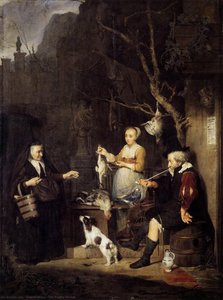
metsu's paintings often featured young women, market scenes, and old people, drawing from popular emblems. a notable example is the poultry seller, which showcases his use of symbolism. key works:- the sick child (c. 1664), reflecting metsu's admiration for vermeer's work.
- portrait of the family hinlopen, a masterpiece that blends genre and portrait painting.
**museums and collections**
metsu's works can be found in various museums, including the rijksmuseum in amsterdam. for more information on his art and to explore other dutch golden age painters, visit /en/art/show/art-d3c627-en/ for a comprehensive overview. **conclusion:** gabriel metsu's life and art are a testament to the innovative spirit of the dutch golden age. his eclectic style, though sometimes enigmatic, has left an indelible mark on the world of art. as we continue to uncover more about his life and works, we are reminded of the profound impact he had on the development of western art.- for a deeper understanding of the dutch golden age, refer to [https://en.wikipedia.org/wiki/dutch_golden_age_painting](https://en.wikipedia.org/wiki/dutch_golden_age_painting).
- explore more of metsu's works and those of his contemporaries at [https://ArtsDot.com/@/gabriel-metsu](https://ArtsDot.com/@/gabriel-metsu).
**references:**
- the house of orange-nassau historic collection trust (the hague, netherlands), [https://ArtsDot.com/@@/a@d3ccx5](https://ArtsDot.com/@@/a@d3ccx5).
- van gogh museum (netherlands) - a haven for art lovers, [https://ArtsDot.com/@@/a@d3c8x3](https://ArtsDot.com/@@/a@d3c8x3).
- dutch golden age painting, [https://en.wikipedia.org/wiki/dutch_golden_age_painting](https://en.wikipedia.org/wiki/dutch_golden_age_painting).
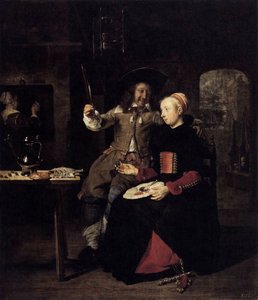
Gabriel Metsu
1629 - 1667 , Netherlands
Quick Facts
- Artistic Movement Or Style: Dutch Golden Age painting
- Artists Or Movements Influenced By This Artist:
- Michiel van Musscher
- Joost van Geel
- Artists Who Influenced This Artist:
- Rembrandt van Rijn
- Johannes Vermeer
- Date Of Birth: 1629
- Date Of Death: 1667
- Full Name: Gabriel Metsu
- Nationality: Dutch
- Notable Artworks:
- The Sick Child
- Poultry Seller
- Portrait of the Hinlopen Family
- Place Of Birth: Leiden, Netherlands
Related Articles

Dutch Masters: 10 Golden Age Paintings That Still Inspire |
Journey into the Dutch Golden Age! Explore 10 iconic paintings by Rembrandt, Vermeer & Hals. Discover the stories behind these Baroque masterpieces and find museum-quality art reproductions to elevate your home decor on .

Golden Age Reflections: Dutch Baroque Painting & Cultural Innovation
Explore the Dutch Golden Age of painting! Discover key artists like Vermeer & ter Borch, their innovative techniques, and the rich cultural context behind these Baroque masterpieces. Learn about collecting & appreciating this iconic art period.

Illuminating Innovation: Exploring the Dutch Golden Age of Painting
Explore the Dutch Golden Age of painting with ArtsDot. Discover Rembrandt, Vermeer & other Masters. Learn about key characteristics, iconic artworks, and lasting influence. Expert insights for collectors & enthusiasts.
Illuminating Realism: Exploring the Dutch Golden Age of Painting (1600-1700)
Explore the Dutch Golden Age of painting (1600-1700) with ArtsDot. Discover Rembrandt, Vermeer & other masters. Learn about techniques, history & find museum-quality reproductions.
Charles Leickert: Capturing the Dutch Golden Age Light – A Comprehensive Study of Technique, Context, and Legacy
Explore the captivating winter landscapes of Charles Leickert, a master of Dutch Golden Age light & atmosphere. Discover his techniques, symbolism, and lasting legacy – a comprehensive study for art enthusiasts and collectors.