 Preview
 Send
Send Share
Share
 Details

 Download
 Similars
 X-Ray
X-Ray Diaporama
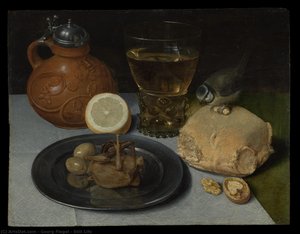
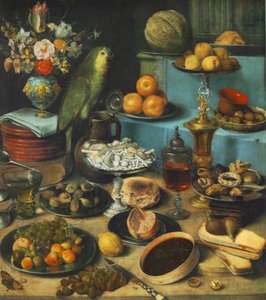
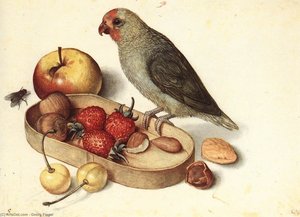
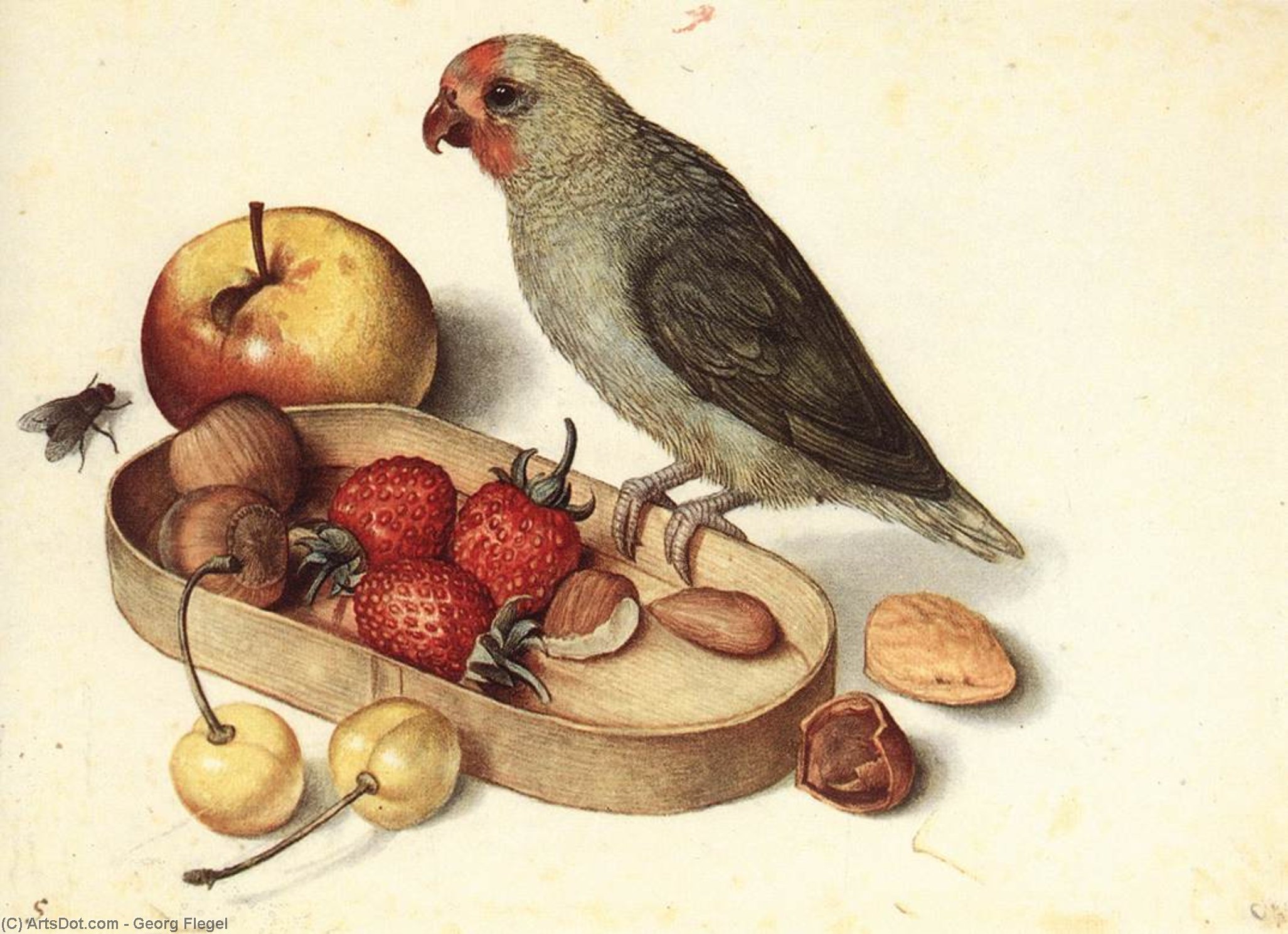
Still-Life with Pygmy Parrot
 Acrylic On Canvas
- WallArt
- Cubist
 234.0 x 172.0 cm
 Staatliche Museen
 Read More
Hand Made Oil Reproduction
Hand-painted oil on canvas in your size and frame, made to order by our artists. ( Buy Print Buy Image)




P118B $10

P118H $10

P118W $10

P438Z $10

P508JH $12

P508YH $12

P805H $10

P805Z $10

P919BZ $10

P919G $10

P919XJ $10

P959ZH $10

P968JZ $12

W106C $8

W218G $10

W218JH $8

W218Y $10

W307PJ $10

W316G $10

W316PJ $8

W316Y $10

W398PJ $8

W4111J $10

W500HY $15

W500JH $15

W692G $12

W849H $8

W940BG $15

W953PJ $8




Pick from our preset sizes that match the artwork's original proportions.

You may enter your own dimensions to fit a specific frame or space. If your selected size does not match the original image's proportions, we will either crop the artwork or extend the painting with additional hand-painted elements. A digital mockup will be sent for your approval before production begins.
Please note that the on-screen preview does not reflect the actual cropping or extension. Only the mockup will accurately show the final composition.
While custom sizes are available, we recommend selecting a dimension from the predefined list to preserve the original proportions.
After order, ArtsDot.com team will email client for instructions and provide a mockup preview
Worldwide Delivery () in 3/4 weeks instead of standard 5 weeks. (23 August). No compromise on quality.

Free Worldwide Express Shipping

High-Quality Linen Canvas

Full Shipping Insurance

Customs Tax Refund Guarantee

True Color Matching Guarantee

60-Day Return Policy (Defects Only)

100% Money-Back Guarantee

Bulk Discount Offer
 Glass option is only available in size under 110 CM

Still-Life with Pygmy Parrot
Reproduction Medium
Reproduction Size
-


Total Price
$ 263
Artwork Description
Still Life With Pygmy Parrot - A Celebration of Form and Symbol
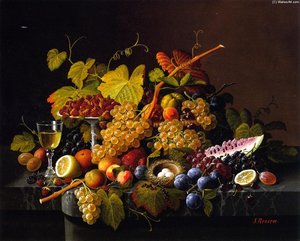
The painting “Still Life with Pygmy Parrot” by Georg Flegel stands as an exquisite testament to the Mannerist aesthetic, capturing not merely a visual representation but also a profound meditation on beauty and artistic innovation. Executed in watercolor on paper – a medium known for its luminosity and delicate blending capabilities – this piece measures 234 x 172 cm, commanding attention with its substantial scale and inviting viewers into an immersive experience of color and texture. Flegel’s masterful technique is immediately apparent. Watercolor allows for subtle gradations of tone and hue, creating a velvety surface that mimics the natural sheen of fruit and feathers alike. The artist meticulously renders each element – from the vibrant scarlet of the apple to the iridescent plumage of the parrot – with painstaking detail, demonstrating an unwavering commitment to realism tempered by stylistic flourishes characteristic of the Mannerist movement. Unlike the idealized forms favored by earlier Renaissance artists, Flegel embraces asymmetry and distortion, subtly challenging conventional notions of perspective and proportion. This deliberate departure from established norms reflects a broader artistic trend toward experimentation and intellectual exploration during the period. The painting’s historical context is crucial to understanding its significance. Emerging in the wake of Michelangelo's monumental Sistine Chapel frescoes and Raphael's harmonious compositions, Mannerism represented a reaction against the prevailing stylistic conventions of its time. Artists sought to elevate art beyond mere imitation of nature, prioritizing expressive gesture and psychological complexity over anatomical accuracy. Flegel’s work aligns perfectly with this ethos, conveying not just what is seen but also what is felt – an appreciation for the exquisite beauty of the natural world combined with a deliberate provocation of the viewer's intellect. Beyond its formal qualities, “Still Life With Pygmy Parrot” resonates with rich symbolic layers. The apple, traditionally associated with knowledge and temptation, serves as a counterpoint to the parrot’s vibrant plumage, representing vitality and exoticism. These contrasting elements are juxtaposed within a carefully balanced composition that emphasizes visual harmony despite its inherent distortions. Such deliberate choices underscore Flegel's intention to engage viewers in contemplation – prompting them to consider themes of duality, beauty, and artistic ambition. Ultimately, “Still Life With Pygmy Parrot” transcends the boundaries of mere decoration; it is an invitation to immerse oneself in a world of refined artistry and intellectual curiosity. Its luminous watercolor technique, combined with its masterful depiction of form and symbolism, ensures that it remains a captivating subject for collectors, interior designers, and anyone seeking inspiration from the enduring legacy of Mannerist painting.Related Artworks
Artist Biography
Giuseppe Arcimboldo: The Master of Impossibility
Giuseppe Arcimboldo (1527-1638), a name synonymous with audacious imagination and unparalleled skill, was an Italian Mannerist painter who redefined the boundaries of portraiture. Born Domenikos Theotokopoulos on April 5th, 1527, in Milan, he ultimately became known as Giuseppe Arcimboldo – a moniker adopted during his time serving the Habsburg court. His life’s work wasn't simply about depicting likenesses; it was an elaborate performance of visual storytelling, transforming ordinary objects—fruits, vegetables, flowers, books, and even instruments—into strikingly realistic and deeply symbolic human heads. This unique approach cemented his place as a pivotal figure in art history, bridging the gap between Renaissance idealism and the burgeoning Baroque era. Arcimboldo’s early career was firmly rooted in the traditional practices of Milanese painting. He began as a designer for stained glass and frescoes at local cathedrals, mastering the techniques of these demanding mediums. However, it was his appointment as court painter to Ferdinand I in Vienna in 1562 that marked a dramatic shift in his artistic trajectory. This position within the Habsburg court provided him with unprecedented access to power and influence, allowing him to experiment freely and develop his signature style. He subsequently served Maximilian II and Rudolf II at the Prague court, becoming a valued decorator, costume designer, and even a producer of elaborate drawings of exotic animals for the imperial menagerie – a testament to his versatility and artistic range.- Early Influences: Arcimboldo’s early work demonstrates a strong influence from the late Mannerism prevalent in Italy at the time. He absorbed the stylistic elements of artists like Giuseppe Cesari, known as the “Cavaliere d'Arpino,” and incorporated them into his own distinctive style.
- Venetian Techniques: His relocation to Venice in 1567 proved crucial, exposing him to the vibrant colors and dynamic compositions of Venetian masters like Titian, Tintoretto, and Jacopo Bassano. This experience significantly broadened his artistic palette and technique.
- The Farnese Circle: Arcimboldo’s time at the court of Cardinal Alessandro Farnese in Rome was a period of intense experimentation and innovation. He honed his skills in portraiture, creating striking images for the cardinal's circle of learned men – a group known for its intellectual curiosity and appreciation for visual spectacle.
Symbolism and Renaissance Neo-Platonism
The precise motivations behind Arcimboldo’s unconventional portraits remain a subject of scholarly debate. While some critics initially dismissed them as mere curiosities designed to amuse the court, more recent interpretations suggest a deeper engagement with Renaissance Neo-Platonism – a philosophical movement that sought to reconcile classical philosophy with Christian theology. The use of natural elements, representing earthly beauty and abundance, could be seen as an allegory for the divine realm, while the careful arrangement of these objects within the human form reflects the concept of “anamorphic unity” – the idea that all things are ultimately interconnected and part of a single, underlying reality.Major Works and Legacy
Several works stand out as particularly significant examples of Arcimboldo’s genius. *Flora* (c. 1591), depicting a woman's head composed entirely of flowers and plants, is arguably his most iconic creation. Similarly, *Vertumnus* (1587-1588) – a portrait of Rudolf II as the Roman god of fertility – showcases his mastery of composition and his ability to transform inanimate objects into remarkably lifelike figures. His later works, such as *Winter*, created for Rudolf II in 1590, demonstrate an increasing sophistication in his technique and a greater emphasis on atmospheric perspective.- *Flora* (c. 1591): A quintessential example of Arcimboldo’s signature style, celebrating the beauty and abundance of nature.
- *Vertumnus* (1587-1588): A portrait of Rudolf II as the Roman god of fertility, showcasing his skill in creating complex and layered compositions.
- *Winter* (1590): Demonstrates a growing mastery of atmospheric perspective and a more refined artistic style.
georg flegel
1566 - 1638 , Czech Republic
Quick Facts
- Artistic Movement Or Style: Mannerism/Early Baroque
- Artists Or Movements Influenced By This Artist: ['Caravaggio']
- Artists Who Influenced This Artist:
- Titian
- Tintoretto
- Date Of Birth: 1541
- Date Of Death: 1614
- Full Name: Domenikos Theotokopoulos
- Nationality: Greek/Spanish
- Notable Artworks:
- The Burial of the Count of Orgaz
- View of Toledo
- Assumption of Mary
- Place Of Birth: Crete, Greece
Related Articles

Georges Braque's Masterpieces: 25 Paintings That Defined Cubism & Modern Art | ArtsDot
Explore 25 iconic Georges Braque paintings that revolutionized Cubism & modern art. Discover the stories behind his masterpieces, from Fauvism to Analytical Cubism. Find museum-quality reproductions & elevate your home decor with ArtsDot.com.

Watercolor Wonders: 10 Masterpieces That Redefined Art History | ArtsDot
Journey through 10 legendary watercolor masterpieces by Sargent, Turner & Homer! Explore iconic landscapes, portraits & floral art that redefined history. Find museum-quality reproductions and curated decor ideas at ArtsDot.com.

Georges Seurat's Masterpieces: 25 Paintings That Defined Pointillism | ArtsDot
Explore 25 iconic Georges Seurat paintings & discover the brilliance of Pointillism. From 'La Grande Jatte' to his harbor scenes, delve into art history with ArtsDot.com. Find museum-quality reproductions for your home decor. Explore the full collection online!

Ephemeral Visions: Exploring the Artistic Legacy & Contemporary Practice of Watercolor Painting
Explore the captivating world of watercolor painting! Discover its rich history, essential techniques, influential artists & collecting tips. A comprehensive guide for art enthusiasts from ArtsDot.

Ephemeral Visions: Exploring the History & Emotional Resonance of Watercolor Painting
Explore the captivating history of watercolor painting, from ancient techniques to modern masters like Kandinsky & Blake. Discover essential artists, collecting tips & the emotional power of this luminous medium. Expert insights for art enthusiasts.