 Preview
 Send
Send Share
Share
 Details

 Download
 Similars
 X-Ray
X-Ray Diaporama
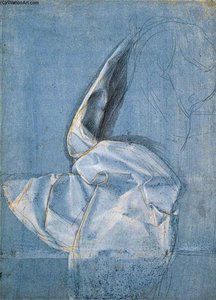
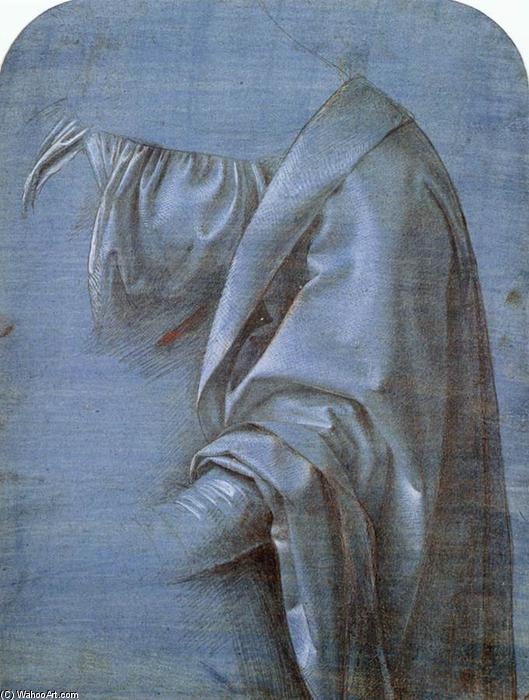
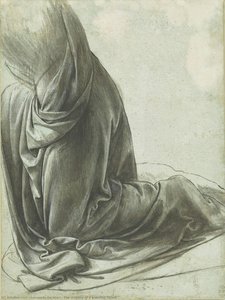
Study of Drapery
 Acrylic On Canvas
- WallArt
- High Renaissance
 1490
1490 285.0 x 213.0 cm
 Staatliche Museen
 Read More
Hand Made Oil Reproduction
Hand-painted oil on canvas in your size and frame, made to order by our artists. ( Buy Print Buy Image)




P118B $10

P118H $10

P118W $10

P438Z $10

P508JH $12

P508YH $12

P805H $10

P805Z $10

P919BZ $10

P919G $10

P919XJ $10

P959ZH $10

P968JZ $12

W106C $8

W218G $10

W218JH $8

W218Y $10

W307PJ $10

W316G $10

W316PJ $8

W316Y $10

W398PJ $8

W4111J $10

W500HY $15

W500JH $15

W692G $12

W849H $8

W940BG $15

W953PJ $8




Pick from our preset sizes that match the artwork's original proportions.

You may enter your own dimensions to fit a specific frame or space. If your selected size does not match the original image's proportions, we will either crop the artwork or extend the painting with additional hand-painted elements. A digital mockup will be sent for your approval before production begins.
Please note that the on-screen preview does not reflect the actual cropping or extension. Only the mockup will accurately show the final composition.
While custom sizes are available, we recommend selecting a dimension from the predefined list to preserve the original proportions.
After order, ArtsDot.com team will email client for instructions and provide a mockup preview
Worldwide Delivery () in 3/4 weeks instead of standard 5 weeks. (17 August). No compromise on quality.

Free Worldwide Express Shipping

High-Quality Linen Canvas

Full Shipping Insurance

Customs Tax Refund Guarantee

True Color Matching Guarantee

60-Day Return Policy (Defects Only)

100% Money-Back Guarantee

Bulk Discount Offer
 Glass option is only available in size under 110 CM

Study of Drapery
Reproduction Medium
Reproduction Size
-


Total Price
$ 263
Artwork Description
A Study in Light and Shadow: Giovanni Antonio Boltraffio’s Exploration of Drapery
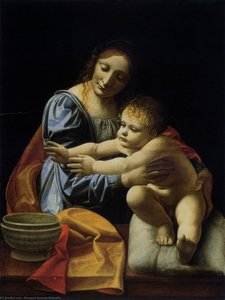
Giovanni Antonio Boltraffio's “Study of Drapery,” created around 1490, stands as a testament to the burgeoning artistic fervor of the High Renaissance – specifically within the Lombard School. Often overshadowed by his illustrious mentor, Leonardo da Vinci, Boltraffio’s contribution is crucial; he absorbed Leonardo’s revolutionary vision and skillfully translated it into a profoundly expressive painting that continues to captivate viewers centuries later.
- The Artist's Influence: Boltraffio’s formative years were spent assisting Leonardo, immersing himself in the master’s groundbreaking experimentation with sfumato – the subtle blending of tones—a technique that would become synonymous with Leonardo’s unparalleled ability to render atmospheric perspective and create illusions of depth. This influence is palpable throughout Boltraffio's oeuvre, particularly evident in his meticulous attention to detail.
- Style and Technique: The painting exemplifies the Lombard School’s stylistic hallmark: a restrained elegance tempered by an unwavering commitment to realism. Boltraffio eschewed flamboyant ornamentation, prioritizing clarity of form and precise execution. His masterful use of chiaroscuro—the dramatic interplay between light and dark—transforms the fabric into a dynamic surface, conveying both its physical texture and psychological resonance.
- Material & Medium: Executed on blue prepared paper using metalpoint and brown wash, “Study of Drapery” showcases Boltraffio’s technical prowess. Metalpoint – a technique involving scratching powdered metal onto the surface—allowed for unparalleled accuracy in capturing tonal gradations and contours, while the subsequent application of brown wash provided subtle shading and depth.
- Historical Context: Produced during Leonardo's time, this artwork reflects the intellectual currents of the Renaissance. Boltraffio’s focus on observation and representation aligns perfectly with humanist ideals that championed human reason and artistic excellence as pathways to understanding the universe.
A Masterpiece of Detail: Capturing Fabric’s Essence
Boltraffio's skill lies in his ability to render drapery not merely as a decorative element but as an embodiment of form and texture. The folds are meticulously delineated, each shadow subtly modulated to create a convincing illusion of volume—a feat that speaks volumes about Boltraffio’s understanding of optics and anatomy. Consider the way light catches on the fabric's surface, highlighting its contours and conveying a sense of movement.
Beyond Technique: Symbolism and Emotional Resonance
While seemingly simple in composition, “Study of Drapery” possesses an understated emotional depth. The muted palette—dominated by shades of blue—evokes tranquility and contemplation, mirroring the contemplative spirit of Renaissance art. Boltraffio’s work invites viewers to engage with questions of beauty, perception, and the relationship between artist and subject.
Legacy & Recognition: A Continuing Influence
"Study of Drapery" resides at the Staatliche Museen in Berlin, Germany—a testament to its enduring artistic merit. Boltraffio’s influence extends beyond this single masterpiece; his portraits and Madonnas are admired for their Leonardesque conception, demonstrating a profound respect for Leonardo's stylistic innovations. Explore similar artworks by Antonello da Messina and Giovanni Giacometti – artists who similarly pushed the boundaries of artistic expression.
- Further Exploration: For more information about Boltraffio’s life and work, visit ArtsDot.com or Wikipedia.
- Reproductions Available: Discover exquisite reproductions of “Study of Drapery” on ArtsDot.com – bringing the beauty of Renaissance art into your home.
Related Artworks
Artist Biography
Giovanni Antonio Boltraffio: A Shadow in the Studio of Leonardo
Giovanni Antonio Boltraffio, born around 1467 in the fertile artistic landscape of Lombardy, remains one of the most captivating figures of the High Renaissance. While history often casts him as a secondary figure, he was far more than a mere follower; he was a vital conduit through which the revolutionary innovations of Leonardo da Vinci were transmitted and refined. Growing up in a region steeped in tradition, Boltraftio’s early life likely benefited from an aristocratic Milanese upbringing, providing him with the foundational training necessary to enter the most prestigious workshop of his era. Around 1490, he began his profound association with Leonardo, a partnership that would span nearly four decades and define the trajectory of his creative soul.
To study Boltraffio is to witness a masterclass in artistic absorption. Within the walls of Leonardo’s studio, Boltraffio did not simply mimic; he interpreted. He breathed in the sfumato technique—that smoky, seamless transition between light and shadow—and applied it with a unique sense of clarity and structural precision. While Leonardo often pursued the ethereal and the scientifically enigmatic, Boltraffio brought a certain austerity and refined elegance to his subjects. His work possesses a crystalline quality that, while deeply indebted to his master’s atmospheric genius, maintains a distinctively Lombard character characterized by sharp detail and a serene, almost sculptural presence.
The Mastery of Portraiture and Devotional Grace
The true brilliance of Boltraffio lies in his ability to capture the quiet dignity of the human spirit. His portraits are renowned for their enigmatic beauty, often featuring subjects that seem caught in a moment of profound introspection. In works such as Portrait of a Young Woman, one can sense the lingering influence of Leonardo’s psychological depth, yet there is an unmistakable Boltraffio touch—a meticulous rendering of textures and a focused, luminous gaze that commands the viewer's attention. He had a remarkable gift for translating the nobility of his sitters into paint, creating images that feel both timeless and intimately human.
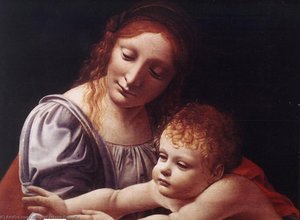
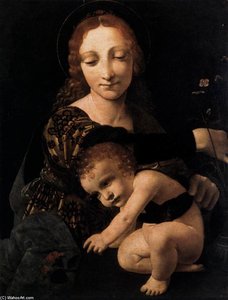
Beyond the secular realm, Boltraffio’s devotion to religious iconography allowed him to explore the heights of Renaissance symbolism. His depictions of the Madonna and Child serve as quintessential examples of his technical prowess and spiritual sensitivity. In these sacred compositions, he utilized color not merely for aesthetic beauty but as a profound theological language:
- Blue was employed to represent the purity and celestial nature of the Virgin Mary.
- Red served as a poignant symbol of the sacrifice and passion inherent in the Christ child's destiny.
Through these deliberate choices, Boltraffio transformed panels of wood into windows of divine contemplation, blending the physical reality of the Renaissance world with the spiritual aspirations of the era.
Legacy and Historical Significance
Though Boltraffio eventually moved away from the direct shadow of Leonardo to establish his own presence, his historical significance cannot be overstated. He acted as a crucial bridge between the experimental fervor of the early High Renaissance and the more structured, classical developments that followed in Northern Italy. His ability to synthesize Leonardo’s complex innovations with a more accessible, clear-eyed realism helped shape the aesthetic preferences of the Milanese school for generations.
Today, his surviving works, housed in prestigious institutions such as The Hermitage Museum and various collections in Berlin and Milan, continue to enchant art historians and enthusiasts alike. He remains a testament to the power of the collaborative studio environment—a reminder that greatness is often nurtured in the quiet, dedicated work of those who stand beside masters, refining a vision until it becomes something entirely their own.
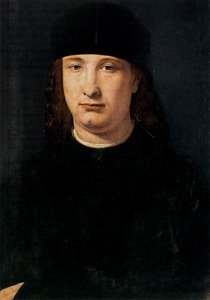
Giovanni Antonio Boltraffio
1467 - 1516 , Italy
Quick Facts
- Artistic Movement Or Style: Northern Renaissance
- Artists Or Movements Influenced By This Artist: ['Italian Renaissance']
- Artists Who Influenced This Artist: ['Leonardo da Vinci']
- Date Of Birth: May 21, 1471
- Date Of Death: April 6, 1528
- Full Name: Albrecht Dürer
- Nationality: German
- Notable Artworks:
- Melancholia I
- Praying Hands
- Knight, Death and the Devil
- Place Of Birth: Nuremberg, Germany
Related Articles
Leonardo da Vinci's Masterpieces: Explore 25 Iconic Artworks for Your Home | ArtsDot
Journey through Leonardo da Vinci's genius with our curated selection of 25 iconic artworks. Explore the stories behind Mona Lisa, The Last Supper & more Renaissance masterpieces. Find museum-quality art reproductions for your home at ArtsDot.com.
High Renaissance Masterpieces: Iconic Art for Your Home |
Journey through the High Renaissance! Explore 10 iconic masterpieces by Leonardo da Vinci, Michelangelo & Raphael. Discover art history, techniques & find museum-quality reproductions to elevate your home decor on .
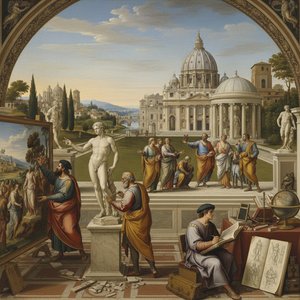
The High Renaissance: A Flourishing of Artistic Innovation & Humanist Ideals
Explore the High Renaissance's artistic brilliance! Discover Da Vinci, Michelangelo & Raphael’s masterpieces, humanist ideals, and groundbreaking techniques. Learn about patronage & its lasting impact on art history.
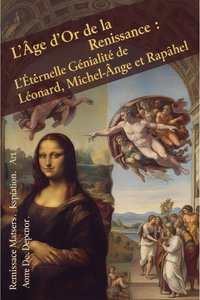
The Renaissance Titans: A Comparative Study of Leonardo, Michelangelo, and Raphael
Explore the genius of the High Renaissance. Compare the legendary works of Leonardo, Michelangelo, and Raphael through an expert art-historical lens. Discover how these titans shaped human creativity and learn to bring their timeless beauty into your modern home.
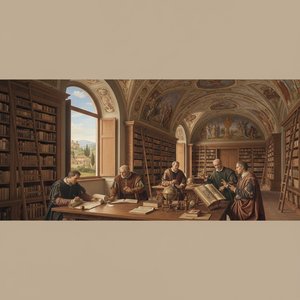
The Flourishing of Humanism: A Comprehensive Exploration of the Italian Renaissance Art Movement
Explore the Italian Renaissance! Discover humanist ideals, iconic masterpieces by Leonardo, Michelangelo & Raphael, and lasting artistic innovations. A comprehensive guide for art enthusiasts.