 Preview
 Send
Send Share
Share
 Details

 Download
 Similars
 X-Ray
X-Ray Diaporama
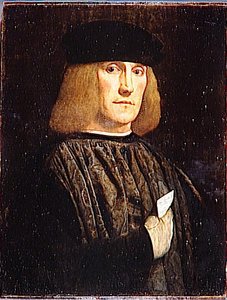
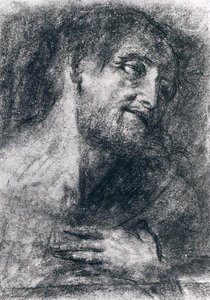
Head of a Man
 Acrylic On Canvas
- WallArt
- High Renaissance
 152.0 x 102.0 cm
 Metropolitan Museum of Art
 Read More
Giclée / Art Print
Museum-quality giclée or canvas print with fast production and flexible finish options. ( Buy Hand Made Painting Buy Image)




P118B $10

P118H $10

P118W $10

P438Z $10

P508JH $12

P508YH $12

P805H $10

P805Z $10

P919BZ $10

P919G $10

P919XJ $10

P959ZH $10

P968JZ $12

W106C $8

W218G $10

W218JH $8

W218Y $10

W307PJ $10

W316G $10

W316PJ $8

W316Y $10

W398PJ $8

W4111J $10

W500HY $15

W500JH $15

W692G $12

W849H $8

W940BG $15

W953PJ $8




Pick from our preset sizes that match the artwork's original proportions.

You may enter your own dimensions to fit a specific frame or space. If your selected size does not match the original image's proportions, we will either crop the artwork or extend the image with a mirrored or solid-fill edge. A digital mockup will be sent for your approval before production begins.
Please note that the on-screen preview does not reflect the actual cropping or extension. Only the mockup will accurately show the final composition.
While custom sizes are available, we recommend selecting a dimension from the predefined list to preserve the original proportions.
Worldwide Delivery () in 2 weeks instead of standard 4/5 weeks. (23 August)

Free Worldwide Express Shipping

High-Quality Linen Canvas

Full Shipping Insurance

Customs Tax Refund Guarantee

True Color Matching Guarantee

60-Day Return Policy (Defects Only)

100% Money-Back Guarantee

Bulk Discount Offer
 Glass option is only available in size under 110 CM

Head of a Man
Giclée / Art Print
Reproduction Size
-


Total Price
$ 63
Collectible Description
A Portrait of Quiet Contemplation: Unveiling Savoldo's 'Head of a Man'
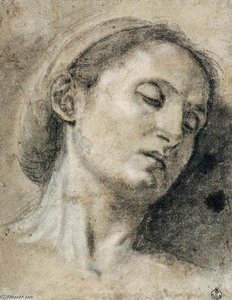
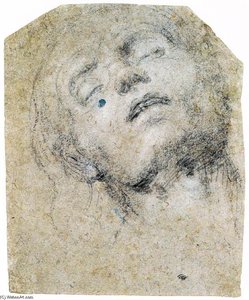
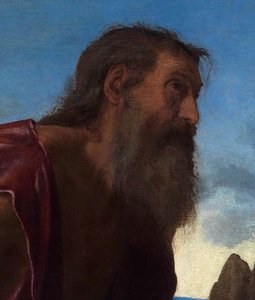
Giovanni Girolamo Savoldo’s “Head of a Man,” a remarkably intimate study executed around 1530-1535, isn’t merely a portrait; it’s a window into the soul. Lost for centuries amidst the bustling activity of Venetian art history, Savoldo’s work has recently experienced a profound resurgence in appreciation, and rightly so. This piece exemplifies his signature style – a masterful blend of Northern European realism with the evocative, almost melancholic, qualities of Lombard painting. The image immediately draws you in, not with dramatic gesture or opulent display, but with an arresting stillness, a sense of profound introspection captured within the confines of a relatively small canvas.
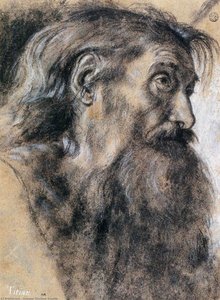
The composition is deceptively simple: a close-up view of a man’s head and shoulders, rendered primarily in chalk – a medium that lends itself beautifully to capturing subtle textures and delicate gradations of light. Savoldo eschews overt theatricality; the subject sits in repose, his gaze directed downwards, suggesting a private moment of reflection. The skin tones are exquisitely observed, demonstrating an understanding of how light interacts with different surfaces—the smooth planes of the forehead, the shadowed recesses around the eyes and mouth. Notice the careful rendering of wrinkles and lines, not as signs of age but as markers of experience, hinting at a life lived fully and thoughtfully.
The Language of Light: Savoldo’s Mastery of Chiaroscuro
Savoldo's genius lies in his manipulation of light and shadow – a technique known as *chiaroscuro*. He doesn’t employ stark contrasts, but rather subtle shifts in tone that create an atmosphere of quiet intensity. The background is deliberately muted, almost dissolving into darkness, which serves to heighten the focus on the subject’s face. The play of light across his features – particularly around the eyes and mouth – subtly shapes his expression, conveying a sense of both vulnerability and resilience. This masterful use of light isn't merely decorative; it’s integral to the painting’s psychological depth, inviting us to contemplate the man’s inner world.
- Medium: Chalk on paper (likely aged canvas)
- Size: 152 x 102 cm
- Date: Unknown – dating remains a subject of scholarly debate.
A Glimpse into the Renaissance Mind
“Head of a Man” is more than just a portrait; it’s a product of its time, reflecting the intellectual and artistic currents of the High Renaissance. Savoldo's work aligns with the broader trend towards psychological realism that characterized this period – an interest in capturing not only outward appearance but also inner character and emotional state. The painting echoes the influence of Flemish masters like Jan van Eyck, particularly in his meticulous attention to detail and his use of light to create a sense of three-dimensionality. Furthermore, Savoldo’s work aligns with the broader artistic trends of the time, reflecting an interest in capturing not only outward appearance but also inner character and emotional state.
The subtle wear and tear on the canvas – the yellowing of the paper, the dusting of age – speak to the painting's history, hinting at its long journey through time. It was likely stored away for extended periods, perhaps within a private collection or studio, before being rediscovered by art historians in the 19th century. This sense of antiquity adds another layer of intrigue to the work, reminding us that it is not merely an object of beauty but also a tangible link to the past.
Symbolism and Emotional Resonance
While seemingly straightforward, “Head of a Man” invites multiple interpretations. The man’s downcast gaze suggests introspection, perhaps even melancholy. The lack of overt expression – no smile, no frown – encourages us to project our own emotions onto the subject. Is he contemplating his life's journey? Reflecting on past sorrows? Or simply lost in thought? Savoldo deliberately leaves these questions unanswered, allowing each viewer to engage with the painting on a personal level. The work’s quiet intensity and psychological depth make it a powerful reminder of the enduring mystery of human consciousness.
Related Artworks
Artist Biography
The Luminous Legacy of Giovanni Girolamo Savoldo
In the golden age of the Italian Renaissance, few painters possessed the ability to capture the ephemeral dance of light as masterfully as Giovanni Girolamo Savoldo. A figure of profound technical skill and quiet emotional depth, Savoldo emerged from the Lombard traditions to become a vital voice within the Venetian school. While much of his early life remains shrouded in the mists of history, his artistic presence is undeniably felt through a body of work that breathes with a unique, atmospheric vitality. Born in Brescia around 1480, he carried with him the meticulous modeling and restrained palettes characteristic of his Lombard roots, yet his spirit was irrevocably transformed by the vibrant, coloristic innovations of Venice.
The evolution of Savoldo’s style is a journey through the shifting landscapes of 16th-century Italy. His early training, likely influenced by the monumental precision of Andrea Mantegna and the grace of Francesco Mazzola, provided him with a foundation of structural integrity. As he moved through Parma and eventually settled in Venice around 1515, his work began to exhibit a breathtaking synthesis of styles. He possessed a rare talent for blending the Northern European preoccupation with realistic detail and texture with the sweeping, lyrical light of the Venetian masters. This fusion allowed him to create scenes that were not merely depictions of religious or secular subjects, but immersive environments where shadow and illumination tell a story of their own.
Mastery of Light and Lombard Modeling
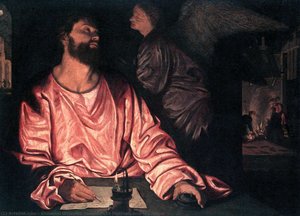
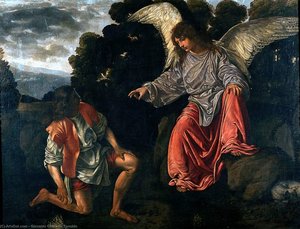
To gaze upon a Savoldo masterpiece is to witness the profound use of chiaroscuro. He did not merely use light to illuminate his subjects; he used it to sculpt them. His technique, often referred to as Lombard modeling, allowed him to imbue figures with a tangible, three-dimensional presence through subtle gradations of tone. In works such as "St Matthew and the Angel", one can sense the spiritual weight of the moment, conveyed through a luminous glow that seems to emanate from within the divine revelation itself. This ability to manipulate light created a sense of quiet lyricism, a hallmark of his mature period.
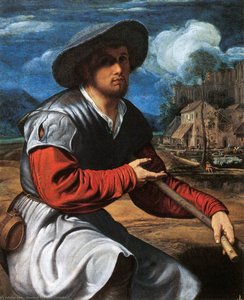
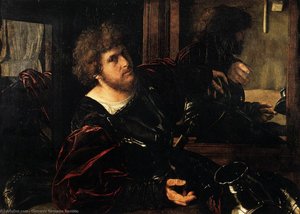
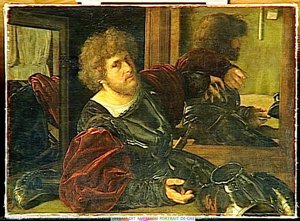
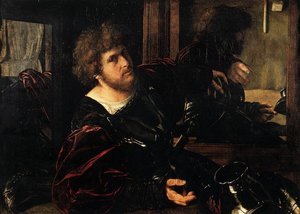
His versatility extended far beyond the sacred realm, reaching into the intimate world of portraiture and the pastoral charm of genre scenes. His portraits, such as the "Portrait of Bernardo di Salla" or the enigmatic "Portrait of a Man in Armour (known as Gaston de Foix)," demonstrate an uncanny ability to capture the psychological essence and dignity of his sitters. In these works, the play of light on metal, fabric, and skin showcases his technical virtuosity, while the soft, atmospheric backgrounds invite the viewer into a contemplative space. Even in more rustic subjects like "Shepherd with a Flute," Savoldo infuses the scene with a serene realism that elevates the humble subject to a level of poetic beauty.
Historical Significance and Artistic Enduring Spirit
Though his known output is relatively small—comprising approximately forty paintings—the impact of Giovanni Girolamo Savoldo on the trajectory of Renaissance art is significant. He acted as a bridge between the rigorous, sculptural traditions of the Lombardy region and the emotive, color-driven brilliance of Venice. His work serves as a testament to the era's capacity for profound innovation through the blending of diverse regional influences.
The rediscovery of his genius in the 19th century brought a renewed appreciation for his unique contribution to the High Renaissance. Today, art historians and enthusiasts alike continue to find solace and wonder in his ability to capture the fleeting moments of human experience. His legacy remains etched in the soft shadows and radiant highlights of his canvases, reminding us that true mastery lies in the ability to make the intangible—light, spirit, and emotion—visible to the eye.
giovanni gerolamo savoldo
1480 - 1548 , Italy
Quick Facts
- Artistic Movement Or Style: High Renaissance
- Artists Or Movements Influenced By This Artist: ['Hieronymus Bosch']
- Artists Who Influenced This Artist: ['Giorgione']
- Date Of Birth: c. 1480
- Date Of Death: after 1548
- Full Name: Giovanni Girolamo Savoldo
- Nationality: Italian
- Notable Artworks:
- Saint Matthew and the Angel
- The Madonna and Saints
- Mary Magdalene
- Place Of Birth: Brescia, Italy
Related Articles
Romantic Realism's Finest: 10 Masterpieces for Your Home | ArtsDot
Explore 10 defining masterpieces of Romantic Realism! Discover Courbet, Millet & Daumier's powerful paintings—capturing emotion and social realities. Find museum-quality reproductions for your home at ArtsDot.com.
Echoes of Society: Exploring Social Realism's Enduring Legacy in Art
Explore the powerful world of Social Realism art! Discover key artists, masterpieces & its profound social commentary. Expert insights into this influential movement's history and enduring legacy.
Giovanni Fattori: Realism, Identity & the Tuscan Landscape – A Macchiaioli Master
Explore the life & art of Giovanni Fattori, a leading figure of the Macchiaioli movement. Discover his revolutionary realism, captivating Tuscan landscapes, and lasting impact on Italian painting. Learn more at ArtsDot.
The Enduring Legacy of Formal Portraiture: Power, Identity & Artistic Exploration
Explore the rich history of formal portraiture & its enduring power to capture identity and shape perception. Discover investment-worthy artworks, expert appraisals, and custom reproduction services at ArtsDot.
The Enduring Gaze: Portraiture's Historical & Psychological Evolution
Explore the rich history of portraiture with expert analysis from ArtsDot. Discover iconic Renaissance masterpieces, symbolism & techniques that shaped identity. Find museum-quality art for your collection.