 Preview
 Send
Send Share
Share
 Details

 Download
 Similars
 X-Ray
X-Ray Diaporama
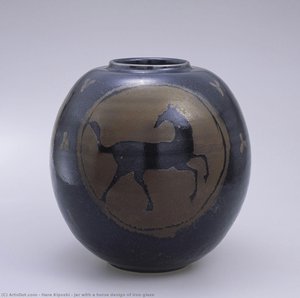
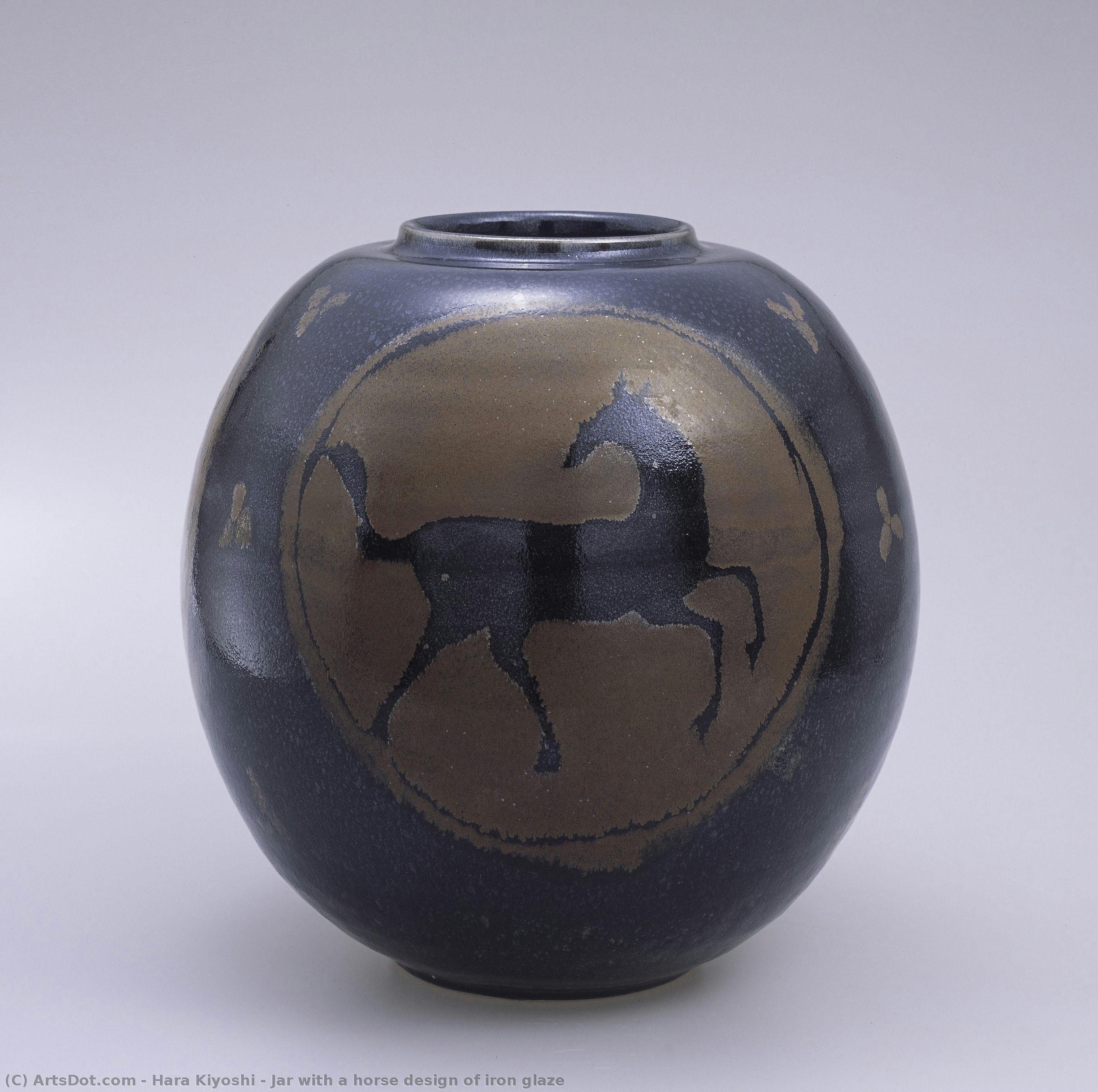
Jar with a horse design of iron glaze


 Read More
Giclée / Art Print
Museum-quality giclée or canvas print with fast production and flexible finish options. ( Buy Hand Made Painting Buy Image)




































Pick from our preset sizes that match the artwork's original proportions.

You may enter your own dimensions to fit a specific frame or space. If your selected size does not match the original image's proportions, we will either crop the artwork or extend the image with a mirrored or solid-fill edge. A digital mockup will be sent for your approval before production begins.
Please note that the on-screen preview does not reflect the actual cropping or extension. Only the mockup will accurately show the final composition.
While custom sizes are available, we recommend selecting a dimension from the predefined list to preserve the original proportions.
Worldwide Delivery () in 2 weeks instead of standard 4/5 weeks. (26 August)

Free Worldwide Express Shipping

High-Quality Linen Canvas

Full Shipping Insurance

Customs Tax Refund Guarantee

True Color Matching Guarantee

60-Day Return Policy (Defects Only)

100% Money-Back Guarantee

Bulk Discount Offer
 Glass option is only available in size under 110 CM

Jar with a horse design of iron glaze
Giclée / Art Print
Reproduction Size
-


Total Price
$ 63
Collectible Description
Related Artworks
Artist Biography
Hara Kiyoshi: Architect of Japanese Psychological Horror
Kiyoshi Hara, more commonly known as Hara Kiyoshi, is a singular figure in contemporary Japanese cinema – a director who has relentlessly carved out his own distinct and deeply unsettling space within the horror genre. Born in Tokyo in 1955, he’s not merely a filmmaker; he's a meticulous architect of dread, constructing narratives that linger long after the credits roll, prompting introspection and a chilling awareness of the darkness lurking beneath the surface of everyday life. His work defies easy categorization, blending elements of psychological thriller, crime drama, and gothic horror with an almost obsessive attention to detail and a profound understanding of human vulnerability. While often associated with the legacy of Akira Kurosawa – a connection acknowledged through his own academic pursuits at Tokyo University of the Arts – Hara Kiyoshi has forged a path uniquely his own, establishing himself as a master of Japanese suspense and a vital voice in exploring the anxieties of modern society.Early Influences and Artistic Beginnings
Hara Kiyoshi’s early artistic journey began not with film but with short films made on 8mm cameras during his high school years. This nascent experimentation laid the groundwork for his later directorial ambitions, fostering a meticulous approach to visual storytelling and a fascination with capturing fleeting moments of unease. He formally studied at Rikkyo University in Tokyo under the guidance of Shigehiko Hasumi, a prominent film critic whose teachings emphasized the importance of ambiguity and psychological depth in cinematic narratives – principles that would profoundly shape Hara’s own directorial style. His early work, including *Shigarami Gakuen* (1981), a short film nominated for the Oshima Prize at the Pusan International Film Festival, demonstrated an early willingness to push boundaries and explore unconventional storytelling techniques. This period also saw him working in the burgeoning V-Cinema industry, producing low-budget thrillers that honed his skills in crafting suspenseful narratives within limited budgets – experiences that would later inform his approach to independent filmmaking. Notably, he deliberately distanced himself from any direct familial connection to Akira Kurosawa, establishing a distinct artistic identity rooted in his own unique vision.The Rise of *Cure* and International Recognition
Hara Kiyoshi’s breakthrough moment arrived with the 1997 film *Cure*. This unsettling psychological thriller, starring Show Aikawa, quickly gained international acclaim for its innovative use of visual techniques – particularly slow-motion sequences and jarring editing – to create a pervasive sense of disorientation and paranoia. *Cure* is often cited as a pivotal work in the development of modern Japanese horror, demonstrating a willingness to challenge audience expectations and delve into the darkest recesses of the human psyche. Following *Cure*, he continued his exploration of psychological themes with a series of tightly constructed thrillers, including *Serpent’s Path* (1998) and *Eyes of the Spider* (1998), both featuring the recurring actor Show Aikawa and sharing a similar premise – a man driven to revenge after the murder of his child. These films solidified his reputation as a master of suspense and a filmmaker capable of generating profound emotional responses in viewers. The New York Times famously described him as “to psychological fright what David Cronenberg is to body horror,” highlighting the precision and unsettling nature of his work.A Shift Towards Genre Diversification and Mature Themes
While firmly rooted in horror, Hara Kiyoshi’s oeuvre has gradually expanded beyond the genre's traditional confines. Films like *Charisma* (1999), a detective thriller starring Kōji Yakusho, demonstrated a willingness to experiment with different narrative structures and explore themes of identity and obsession. Later works such as *Pulse* (2001) and *Bright Future* (2003) continued this trend, incorporating elements of crime drama, social commentary, and even family dynamics. His 2008 film, *Tokyo Sonata*, marked a significant departure from his established horror style, venturing into the realm of family drama – a bold move that showcased his versatility as a filmmaker and his ability to tackle complex human relationships. This willingness to explore diverse genres while maintaining his signature stylistic elements has contributed to the richness and complexity of his body of work.Legacy and Continuing Influence
Hara Kiyoshi’s influence on contemporary Japanese cinema is undeniable. His meticulous approach to filmmaking, his exploration of psychological themes, and his innovative use of visual techniques have inspired a generation of filmmakers. His films continue to be studied and analyzed for their unsettling atmosphere, ambiguous narratives, and profound insights into the human condition. He remains an active figure in the film industry, continuing to direct and write, solidifying his position as one of Japan’s most important and distinctive cinematic voices. His work serves as a potent reminder that horror can be more than mere spectacle; it can be a powerful tool for exploring the darkest corners of the human experience and challenging our perceptions of reality.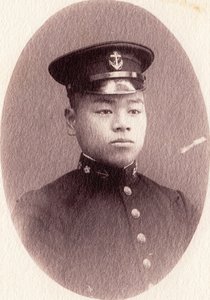
hara kiyoshi
1955 - , Japan
Quick Facts
- Artistic Movement Or Style: Japanese Horror
- Artists Or Movements Influenced By This Artist: ['David Cronenberg']
- Artists Who Influenced This Artist: ['Kurosawa']
- Date Of Birth: July 19, 1955
- Full Name: Kiyoshi Hara
- Nationality: Japanese
- Notable Artworks:
- Cure
- Serpent's Path
- Pulse
- Place Of Birth: Tokyo, Japan
Related Articles
The Alchemy of Clay: A Collector's Guide to the Mastery, Texture, and Timeless Form of Ceramic Art
Discover the profound beauty of ceramic art. Our expert guide explores the alchemy of clay, texture, and glaze, offering collectors deep insights into mastering earth and fire to create timeless, sculptural masterpieces for any curated collection.
Serenity on Canvas: A Guide to the Timeless Beauty of Japanese Landscape Painting
Discover the serene beauty of Japanese landscape painting. From Hokusai's iconic woodblock prints to meditative sumi-e ink washes, explore a visual journey through the 'floating world' and learn how to bring this timeless Zen aesthetic into your modern home decor.
Japonisme: How Japanese Woodblock Prints Revolutionized Western Art
Explore the profound impact of Japonisme on Western art. Discover how Japanese ukiyo-e woodblock prints revolutionized perspective, color, and composition for masters like Monet and Van Gogh, forever changing the course of modern art history.

Hokusai's Masterpieces: 25 Iconic Prints & Paintings for Art Lovers | ArtsDot
Journey through Katsushika Hokusai’s 25 most iconic artworks, including *The Great Wave*. Explore the ukiyo-e master's history, style & timeless Japanese woodblock prints. Find museum-quality reproductions for your home at ArtsDot.com.
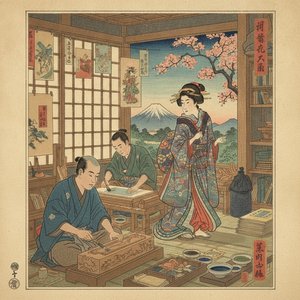
Floating World: The Captivating Art and Legacy of Japanese Ukiyo-e
Explore the profound beauty of Japanese Ukiyo-e. Discover the history, masters like Hokusai, and the enduring legacy of the 'Floating World' through an expert art-historical lens.