 Preview
 Send
Send Share
Share
 Details

 Download
 Similars
 X-Ray
X-Ray Diaporama
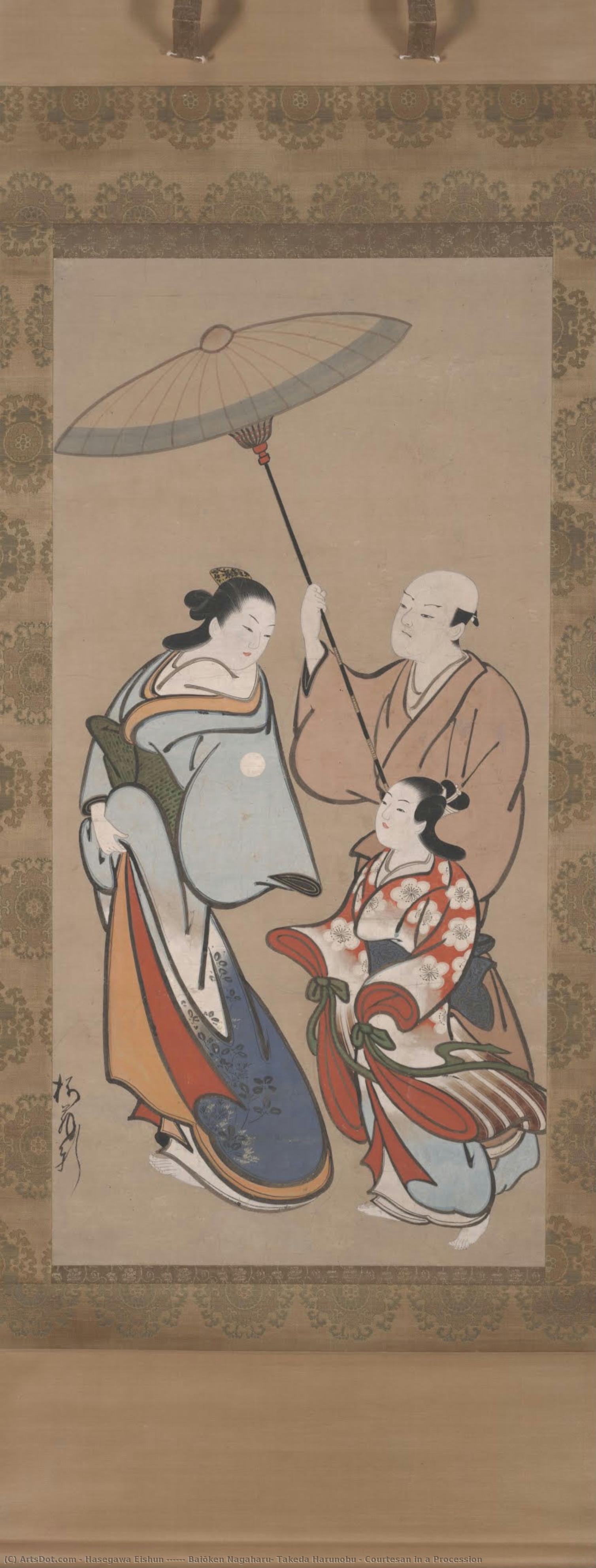
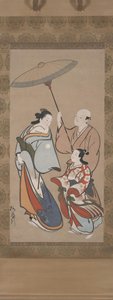
Courtesan in a Procession
 Ink
Ink- WallArt
- Ukiyo-e
 1720
1720- Early Modern
 89.0 x 44.0 cm
 Kimbell Art Museum
 Read More
Giclée / Art Print
Museum-quality giclée or canvas print with fast production and flexible finish options. ( Buy Hand Made Painting Buy Image)




P118B $10

P118H $10

P118W $10

P438Z $10

P508JH $12

P508YH $12

P805H $10

P805Z $10

P919BZ $10

P919G $10

P919XJ $10

P959ZH $10

P968JZ $12

W106C $8

W218G $10

W218JH $8

W218Y $10

W307PJ $10

W316G $10

W316PJ $8

W316Y $10

W398PJ $8

W4111J $10

W500HY $15

W500JH $15

W692G $12

W849H $8

W940BG $15

W953PJ $8




Pick from our preset sizes that match the artwork's original proportions.

You may enter your own dimensions to fit a specific frame or space. If your selected size does not match the original image's proportions, we will either crop the artwork or extend the image with a mirrored or solid-fill edge. A digital mockup will be sent for your approval before production begins.
Please note that the on-screen preview does not reflect the actual cropping or extension. Only the mockup will accurately show the final composition.
While custom sizes are available, we recommend selecting a dimension from the predefined list to preserve the original proportions.
Worldwide Delivery () in 2 weeks instead of standard 4/5 weeks. (3 September)

Free Worldwide Express Shipping

High-Quality Linen Canvas

Full Shipping Insurance

Customs Tax Refund Guarantee

True Color Matching Guarantee

60-Day Return Policy (Defects Only)

100% Money-Back Guarantee

Bulk Discount Offer
 Glass option is only available in size under 110 CM

Courtesan in a Procession
Giclée / Art Print
Reproduction Size
-


Total Price
$ 63
Related Artworks
Artist Biography
The Resurgence of Elegance: The Life and Legacy of Hasegawa Eishun
In the vibrant, ephemeral world of Edo-period Japan, few artists captured the delicate pulse of the "floating world" with as much refined grace as Hasegawa Eishun. Known variously by names such as Baiōken Nagaharu and Takeda Harunobu, Eishun emerged during a transformative era for ukiyo-e art. While the mid-18th century was often characterized by a shift toward bolder, more experimental styles, Eishun acted as a vital bridge to the past, spearheading a sophisticated revival of the Kaigetsudō school. His work did not merely document the fashions of his time; it breathed new life into a lineage of beauty that had faced decline following the exile of its founder, Ando Kaigetsudō.
The origins of Eishun’s mastery are deeply rooted in the artistic traditions of Tokyo. Though much of his early life remains shrouded in the mists of history, it is widely understood that he was born into a world where art and commerce were becoming inextricably linked. Emerging as a student under the respected master Masanobu, Eishun inherited a foundational command of line and composition. This apprenticeship provided him with the technical vocabulary necessary to execute bijinga—paintings of beautiful women—with a level of precision that would become his hallmark. As he matured, he transitioned from the simple signature of "Eishun" to more elaborate artistic names, a testament to his growing prestige and the expanding reach of his creative vision.
A Master of Form and Subtle Emotion
What distinguishes Eishun’s oeuvre from his contemporaries is a unique departure from the standard tropes of the era. While many artists sought to capture the flamboyant energy of the pleasure districts, Eishun pursued a more contemplative aesthetic. His figures, particularly the women in his bijinga, possess a striking physical presence; scholars such as Richard Lane have noted that his subjects often appear taller, slimmer, and imbued with a more serious, dignified expression than those of his peer Matsuno Chikanobu. This subtle shift toward a more statuesque and somber beauty allowed his work to resonate with a sense of quiet grandeur.
His technical repertoire was remarkably diverse, spanning both the delicate medium of woodblock prints and the more opulent format of full-color hanging scroll paintings. In these works, Eishun demonstrated an unparalleled ability to manipulate color and light. He was particularly celebrated for his use of luminous palettes, often incorporating soft, evocative shades reminiscent of plum blossoms. His compositions frequently moved beyond mere portraiture, capturing women engaged in the quiet rhythms of daily life—reading poetry, playing musical instruments, or lost in moments of solitary reflection. Through these scenes, he transformed the ephemeral subjects of the floating world into timeless icons of grace.
Historical Significance and Artistic Heritage
The historical importance of Hasegawa Eishun lies in his role as a guardian of tradition during a period of rapid stylistic evolution. By adhering to the core principles of the Kaigetsudō school—meticulous naturalism and subtle tonal gradations—he ensured that the refined elegance of the early ukiyo-e movement was not lost to the more aggressive styles of the later Edo period. His ability to balance the classical demands of his lineage with a fresh, modern sensibility allowed him to thrive amidst a rising merchant class that hungered for art reflecting both status and sophistication.
Today, Eishun’s legacy is preserved through the enduring beauty of his prints and scrolls, which continue to offer a window into the soul of 18th-century Japan. His contributions can be summarized by several key artistic achievements:
- Revival of the Kaigetsudō Aesthetic: He played a central role in restoring the prestige of a school that had faltered after 1714.
- Refinement of Bijinga: He introduced a more dignified, slender, and serious anatomical style to the depiction of beautiful women.
- Mastery of Color: His use of subtle, luminous palettes created an atmosphere of understated luxury and emotional depth.
- Versatility of Medium: His prolific output across both woodblock illustrations and fine hanging scrolls expanded the reach of ukiyo-e art.
In the grand tapestry of Japanese art history, Hasegawa Eishun remains a pivotal figure—an artist who looked backward to honor his masters while looking forward to define a new standard of elegance for generations to come.
Quick Facts
- Artistic Movement Or Style: Kaigetsudō school
- Artists Or Movements Influenced By This Artist: ['Kaigetsudō Ando']
- Artists Who Influenced This Artist: ['Matsuno Chikanobu']
- Date Of Birth: (Tokyo)
- Date Of Death: (Living)
- Full Name: Hasegawa Eishun 長谷川永春
- Nationality: Japanese
- Notable Artworks: ['Courtesan in a Procession']
- Place Of Birth: Tokyo, Japan
Related Articles

Hokusai's Masterpieces: 25 Iconic Prints & Paintings for Art Lovers | ArtsDot
Journey through Katsushika Hokusai’s 25 most iconic artworks, including *The Great Wave*. Explore the ukiyo-e master's history, style & timeless Japanese woodblock prints. Find museum-quality reproductions for your home at ArtsDot.com.
Ukiyo-e: Exploring Japan's Floating World & Enduring Artistic Legacy
Explore the captivating world of Ukiyo-e – Japan's iconic woodblock prints! Discover masters like Hokusai & Hiroshige, learn about Edo period culture, and find expert art collecting guidance at ArtsDot.
Suzuki Harunobu: Pioneering Ukiyo-e & the Refinement of Edo Period Printmaking
Discover the revolutionary world of Suzuki Harunobu, a pioneer of ukiyo-e printmaking. Explore his exquisite nishiki-e techniques, diverse subjects & lasting impact on Japanese art history. Learn more at ArtsDot.
Floating World: The Captivating Art and Legacy of Japanese Ukiyo-e
Explore the profound beauty of Japanese Ukiyo-e. Discover the history, masters like Hokusai, and the enduring legacy of the 'Floating World' through an expert art-historical lens.
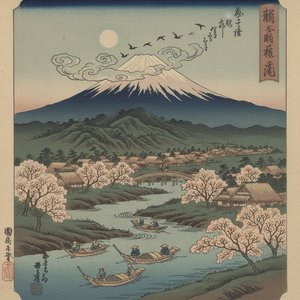
Ukiyo-e's Poetic Visionary: Hiroshige Ando & the Transformation of Landscape in 19th-Century Japan
Explore the life & art of Ando Hiroshige, Japan's last great ukiyo-e master. Discover his iconic landscapes, poetic style, and profound influence on Western Impressionism. Learn about The Fifty-Three Stations & more!