 Preview
 Send
Send Share
Share
 Details

 Download
 Similars
 X-Ray
X-Ray Diaporama
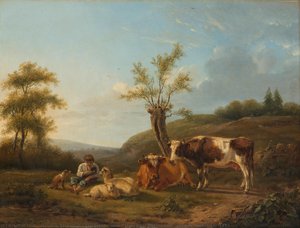
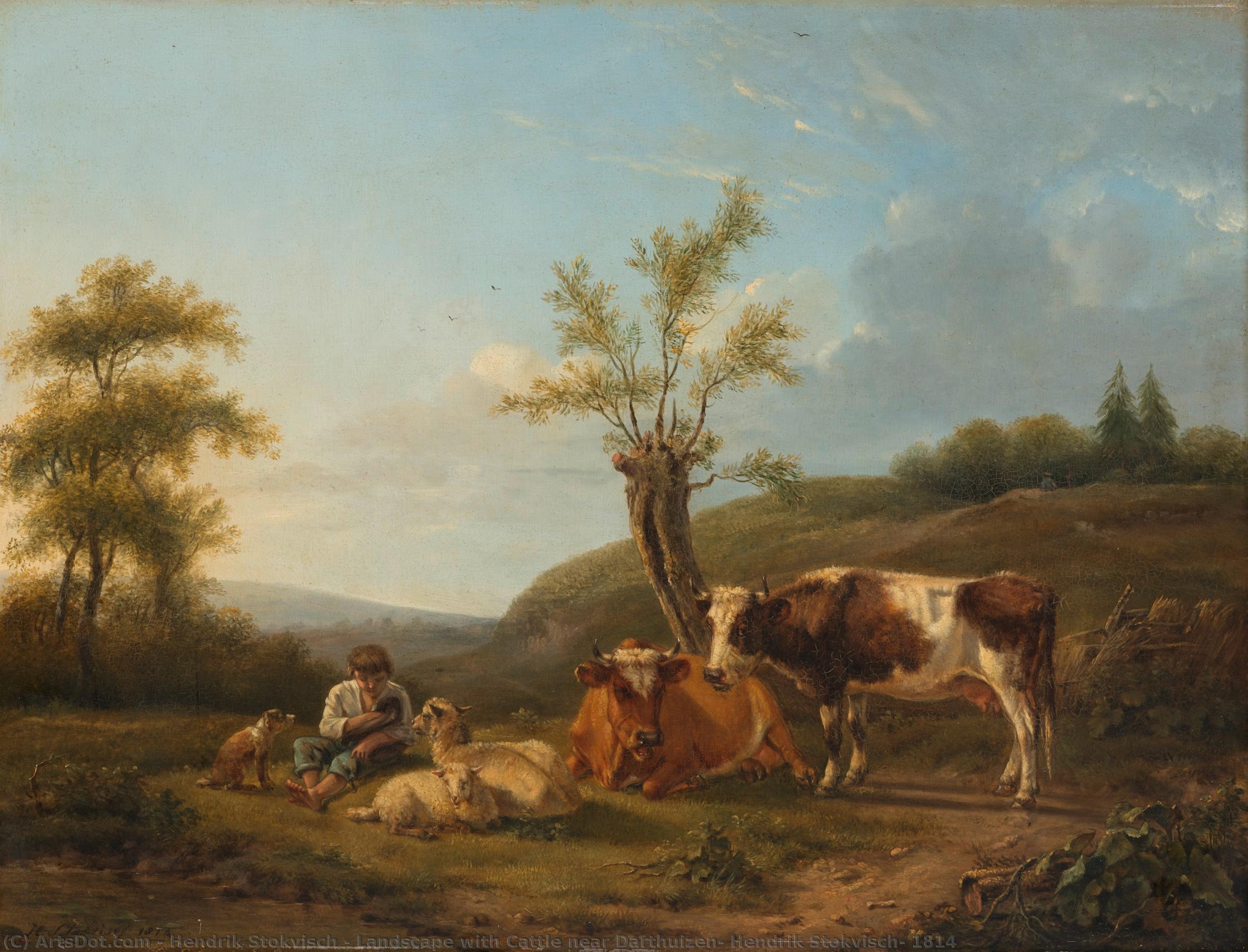
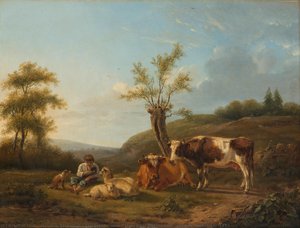
Landscape with Cattle near Darthuizen, Hendrik Stokvisch, 1814
 Dutch Golden Age
 1814
1814 44.0 x 57.0 cm
 Read More
Giclée / Art Print
Museum-quality giclée or canvas print with fast production and flexible finish options. ( Buy Hand Made Painting Buy Image)




































Pick from our preset sizes that match the artwork's original proportions.

You may enter your own dimensions to fit a specific frame or space. If your selected size does not match the original image's proportions, we will either crop the artwork or extend the image with a mirrored or solid-fill edge. A digital mockup will be sent for your approval before production begins.
Please note that the on-screen preview does not reflect the actual cropping or extension. Only the mockup will accurately show the final composition.
While custom sizes are available, we recommend selecting a dimension from the predefined list to preserve the original proportions.
Worldwide Delivery () in 2 weeks instead of standard 4/5 weeks. (25 August)

Free Worldwide Express Shipping

High-Quality Linen Canvas

Full Shipping Insurance

Customs Tax Refund Guarantee

True Color Matching Guarantee

60-Day Return Policy (Defects Only)

100% Money-Back Guarantee

Bulk Discount Offer
 Glass option is only available in size under 110 CM

Landscape with Cattle near Darthuizen, Hendrik Stokvisch, 1814
Giclée / Art Print
Reproduction Size
-


Total Price
$ 63
Collectible Description
Related Artworks
Artist Biography
Hendrik Stokvisch: A Dutch Master of Rural Life
Born in Baambrugge, Netherlands, in 1768, Hendrik Stokvisch emerged as a significant figure within the burgeoning Dutch Golden Age of painting. His artistic journey unfolded against a backdrop of evolving social and economic landscapes, mirroring his own fascination with the rhythms of rural life and the dignity of working people. While not as widely celebrated as some of his contemporaries, Stokvisch’s meticulous depictions of Dutch farms, cattle, and everyday scenes offer a poignant glimpse into a vanishing world – a world where agriculture remained deeply intertwined with tradition and community.
Stokvisch's early life remains somewhat shrouded in mystery. He apprenticed under the painter Jan van der Meer in Amsterdam, absorbing foundational techniques and developing an appreciation for classical composition. However, it was his independent explorations of the Dutch countryside that truly defined his artistic voice. Unlike many artists who focused on grand historical or mythological subjects, Stokvisch chose to capture the humble realities of rural existence – a deliberate decision reflecting a growing interest in portraying the lives of ordinary people and celebrating the beauty of the natural world.
The Palette of the Plowman
Stokvisch’s artistic style is characterized by its remarkable realism and attention to detail. He employed a muted, earthy palette—ochres, browns, greens, and grays—to faithfully represent the textures of weathered buildings, rough-hewn fences, and the coats of livestock. His brushwork is often loose and expressive, conveying both the solidity of the landscape and the movement of its inhabitants. A key element in his work is the skillful rendering of light, particularly the soft, diffused glow of early morning or late afternoon, which imbues his scenes with a sense of tranquility and timelessness.
His paintings frequently feature cattle – a central motif reflecting the economic importance of livestock farming in the Netherlands. These aren’t idealized depictions; Stokvisch portrays them with an honest eye, capturing their strength, resilience, and the vital role they played in the rural economy. He also depicted farm buildings, often showing them in various states of repair, subtly hinting at the hardships faced by those who worked the land.
Auction Records and Critical Reception
Hendrik Stokvisch’s work has been offered at auction multiple times, with realized prices ranging from approximately $711 to as high as $10,785, depending on the size and medium of the artwork. This demonstrates a consistent, albeit modest, demand for his paintings among collectors and enthusiasts. Askart's database currently holds nine auction lots featuring his work, indicating a sustained presence in the art market over the years.
While Stokvisch didn’t achieve widespread fame during his lifetime, his paintings are now recognized as valuable examples of 18th-century Dutch landscape art. They offer a unique perspective on a pivotal period in Dutch history—a time of economic prosperity, social change, and the enduring connection between people and the land.
Notable Works & Legacy
One particularly striking example of Stokvisch’s oeuvre is “Landscape with Cattle near Darthuizen” (1814), a captivating depiction of rural life that showcases his mastery of atmospheric perspective and his ability to capture the essence of the Dutch countryside. Another significant piece, "A farm building with a cart in the foreground" (Christie's), demonstrates his meticulous attention to detail and his interest in portraying the practical aspects of farming.
Although he didn’t belong to any specific artistic movement like the Hague School, Stokvisch shared some affinities with artists who explored similar themes – particularly their focus on realism and the depiction of everyday life. His work continues to be studied by art historians and appreciated for its quiet beauty and its evocative portrayal of a bygone era. His legacy lies in his ability to transform simple scenes of rural life into works of enduring artistic merit, offering viewers a poignant reminder of the values and traditions that shaped Dutch society.
hendrik stokvisch
1768 - 1823 , Netherlands
Quick Facts
- Artistic Movement Or Style: Dutch Landscape Art
- Date Of Birth: 1768
- Date Of Death: 1823
- Full Name: Hendrik Stokvisch
- Nationality: Dutch
- Notable Artworks: ['Landscape with Cattle near Darthuizen']
- Place Of Birth: Netherlands (Baambrugge)
Related Articles

John Constable's Masterpieces: Explore 25 Iconic Landscapes for Your Home
Journey through John Constable's 25 most celebrated landscapes. Explore Romanticism, Dedham Vale & his masterful use of light in iconic paintings like 'Hay Wain'. Find museum-quality art reproductions and elevate your home decor on ArtsDot.com.
Cultivating Visions: A Historical Journey Through Rural Landscapes in Art
Explore the rich history of rural landscape painting with ArtsDot. Discover Impressionist masterpieces, key artists & movements. Find your perfect serene artwork and bring nature's beauty home.
Johan Hendrik Weissenbruch: Capturing Dutch Light & Atmosphere – A Master of Realism
Discover Johan Hendrik Weissenbruch (1824-1903), a leading Dutch Hague School painter renowned for his atmospheric watercolours & oil landscapes. Explore his beautiful depictions of the Dutch countryside and skies – a master of light & detail.
Golden Light & Dutch Skies: Bringing the Magic of Dutch Golden Age Landscapes into Your Home
Transform your home with the breathtaking light of Dutch Golden Age landscapes. Discover how hand-painted oil reproductions of masterworks like Ruisdael and Vermeer bring timeless elegance, atmosphere, and soulful texture to modern interiors. Elevate your space with museum-quality art.
Charles Leickert: Capturing the Dutch Golden Age Light – A Comprehensive Study of Technique, Context, and Legacy
Explore the captivating winter landscapes of Charles Leickert, a master of Dutch Golden Age light & atmosphere. Discover his techniques, symbolism, and lasting legacy – a comprehensive study for art enthusiasts and collectors.