 Preview
 Send
Send Share
Share
 Details

 Download
 Similars
 X-Ray
X-Ray Diaporama
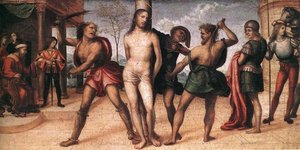
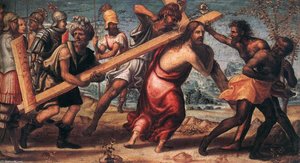
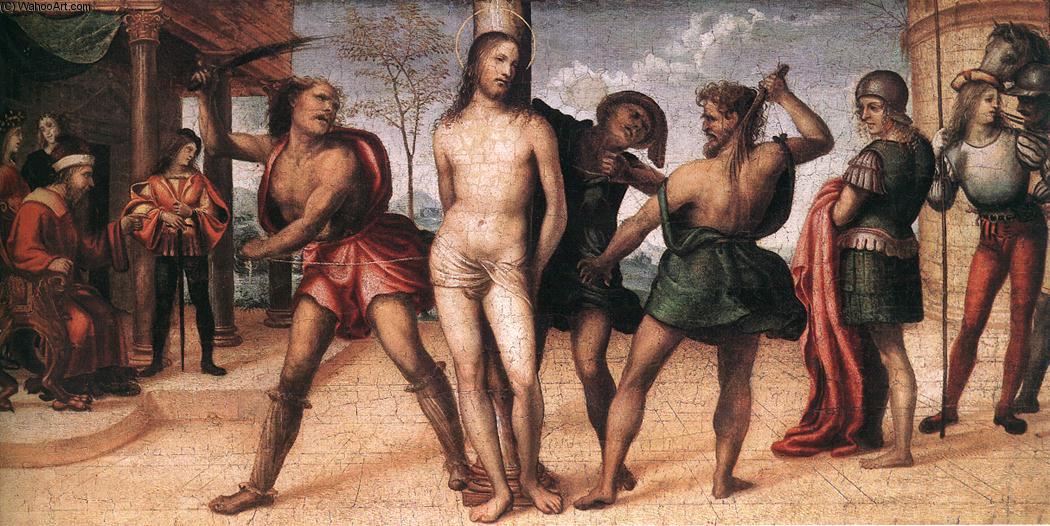
Flagellation of Christ
 Oil On Canvas
- WallArt
 1510
1510 36.0 x 70.0 cm
 Szépmûvészeti Múzeum
 Read More
Hand Made Oil Reproduction
Hand-painted oil on canvas in your size and frame, made to order by our artists. ( Buy Print Buy Image)




P118B $10

P118H $10

P118W $10

P438Z $10

P508JH $12

P508YH $12

P805H $10

P805Z $10

P919BZ $10

P919G $10

P919XJ $10

P959ZH $10

P968JZ $12

W106C $8

W218G $10

W218JH $8

W218Y $10

W307PJ $10

W316G $10

W316PJ $8

W316Y $10

W398PJ $8

W4111J $10

W500HY $15

W500JH $15

W692G $12

W849H $8

W940BG $15

W953PJ $8




Pick from our preset sizes that match the artwork's original proportions.

You may enter your own dimensions to fit a specific frame or space. If your selected size does not match the original image's proportions, we will either crop the artwork or extend the painting with additional hand-painted elements. A digital mockup will be sent for your approval before production begins.
Please note that the on-screen preview does not reflect the actual cropping or extension. Only the mockup will accurately show the final composition.
While custom sizes are available, we recommend selecting a dimension from the predefined list to preserve the original proportions.
After order, ArtsDot.com team will email client for instructions and provide a mockup preview
Worldwide Delivery () in 3/4 weeks instead of standard 5 weeks. (16 August). No compromise on quality.

Free Worldwide Express Shipping

High-Quality Linen Canvas

Full Shipping Insurance

Customs Tax Refund Guarantee

True Color Matching Guarantee

60-Day Return Policy (Defects Only)

100% Money-Back Guarantee

Bulk Discount Offer
 Glass option is only available in size under 110 CM

Flagellation of Christ
Reproduction Medium
Reproduction Size
-


Total Price
$ 263
Artwork Description
The Flagellation of Christ: A Renaissance Masterpiece
Giovanni Antonio Bazzi, universally known as Il Sodoma, stands as a pivotal figure in Italian Renaissance art—a conduit between the luminous idealism of High Renaissance Florence and the unsettling psychological explorations characteristic of Mannerism. Born in Vercelli around 1447, his artistic journey unfolded against the backdrop of Siena’s vibrant cultural landscape, profoundly shaping his distinctive style and cementing his legacy as one of the most influential painters of his era.
Early Life & Training: Little is known definitively about Bazzi's formative years beyond documented records indicating he apprenticed under Giovanni Battista Sant’Anna in Siena. This association instilled within him a foundational understanding of Sienese artistic traditions—particularly the meticulous depiction of drapery and the masterful use of color—influences that would permeate his subsequent oeuvre.
A Dramatic Representation of Suffering
“Flagellation of Christ” is Il Sodoma’s most celebrated work, completed in 1510 and currently housed in the Szépmûvészeti Múzeum (Budapest, Hungary). This oil on wood painting transcends mere visual representation; it embodies a profound theological statement about Christian faith and human compassion. The scene depicts Jesus Christ being scourged by Roman soldiers—a recurring motif in Renaissance iconography reflecting the Gospels’ account of his torment before crucifixion.
The artist's masterful technique is evident in every brushstroke. Il Sodoma employs rich, vibrant colors – predominantly reds, yellows and blues – to heighten the dramatic intensity of the composition. Detailed facial expressions convey palpable emotion, capturing the agony of Christ and the solemn determination of the soldiers involved. The use of chiaroscuro—the interplay between light and shadow—creates a theatrical effect, emphasizing the central figure’s vulnerability against the backdrop of imposing architectural elements.
Technical Brilliance & Artistic Style
Il Sodoma's artistic style is characterized by his meticulous attention to detail and his embrace of Mannerist principles. Unlike the harmonious balance favored by earlier Renaissance artists, Sodoma deliberately disrupts compositional conventions, creating a sense of unease and psychological complexity. The artist’s mastery of drapery—a hallmark of Sienese painting—is particularly noteworthy; folds cascade with astonishing realism, conveying movement and texture.
Beyond the Canvas: Context & Significance
“Flagellation of Christ” was commissioned by the di Franco family for a chapel in the church of San Domenico Maggiore in Naples. This commission underscores the painting’s importance within its cultural context—a period marked by fervent religious devotion and artistic innovation. The work stands as testament to Il Sodoma's ability to synthesize humanist ideals with spiritual contemplation, securing his place among the titans of Renaissance art.
For more information on Il Sodoma’s works, visit /art/list/?Filter=8XZVL9-Il-Sodoma-(Giovanni-Antonio-Bazzi)-The-Road-to Calvary and https://en.wikipedia.org/wiki/Il_Sodoma.
As a handmade oil painting reproduction, it can be purchased from https://ArtsDot.com, allowing you to own a piece of history and admire its beauty in your own home.
Related Artworks
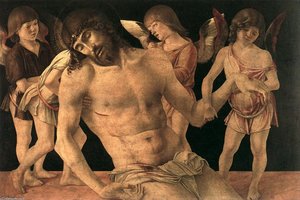
Artist Biography
The Enigmatic Soul of the Sienese Renaissance
In the vibrant tapestry of the Italian Renaissance, few figures possess a name as provocative or a legacy as multifaceted as Giovanni Antonio Bazzi, known to history by the evocative moniker Il Sodoma. Born in Vercelli around 1477, Bazzi emerged not merely as a painter, but as a transformative force who bridged the gap between the luminous, balanced idealism of the High Renaissance and the emotive, often unsettling drama of Mannerism. His artistic journey was one of profound synthesis, where the disciplined traditions of the Sienese school met the sweeping, atmospheric innovations of the Lombard style and the subtle psychological depth inspired by Leonardo da Vinci.
The early years of Bazzi’s life were marked by a rigorous apprenticeship that laid the groundwork for his technical mastery. Under the guidance of masters such as the "archaic" Martino Spanzotti and Giovenone, he absorbed a foundational understanding of form and color. As he moved into the cultural epicenter of Siena, his work began to reflect a unique stylistic evolution. He possessed a rare ability to superimpose the sophisticated, classical grace of early 16th-century Rome onto the more provincial, decorative traditions of Tuscany. This fusion allowed him to create works that felt both grounded in local heritage and part of a much larger, pan-Italian artistic revolution.
A Mastery of Light, Emotion, and Form
To observe a work by Il Sodoma is to witness a delicate dance between serenity and tension. His technique was characterized by an exquisite command over sfumato and a rich, emotive use of color that could shift from the tender warmth of a Madonna’s cheek to the dramatic shadows of a mythological struggle. This versatility is perhaps most evident in his diverse range of subjects, which spanned the sacred and the profane with equal fervor.
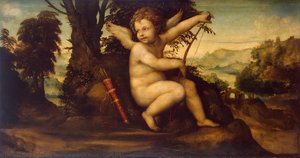
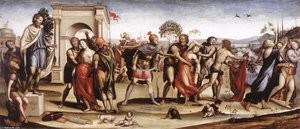
His contributions to the fresco tradition are nothing short of monumental. In the Oratory of San Bernardino in Siena, Bazzi demonstrated his ability to command vast architectural spaces, weaving complex narratives through balanced compositions that nonetheless pulsed with human emotion. His religious works, such as The Presentation of the Virgin in the Temple, showcase a profound spiritual grace, while his secular and mythological pieces, like the enchanting Cupid in a Landscape, reveal a fascination with the sensual and the idyllic. In these landscapes, one finds a serene Italian vista that serves as a stage for the divine or the mythological, rendered with a clarity that invites the viewer into a dreamlike state.
Legacy of a Transitional Master
The historical significance of Il Sodoma lies in his role as a stylistic conduit. He did not merely follow the trends of his era; he helped shape the transition from the harmonious stability of the High Renaissance to the more experimental, distorted, and expressive language of Mannerism. By introducing exaggerated gestures and heightened emotionality into the established Sienese framework, he prepared the way for the next generation of artists to explore the complexities of the human psyche.
Even as his name carried a certain notoriety, his artistic output remained a testament to technical brilliance and intellectual depth. His ability to navigate the prestigious commissions of popes and powerful patrons alike—including connections to the influential Agostino Chigi—ensured that his influence would resonate far beyond the walls of Siena. Today, Bazzi stands as a pivotal figure whose work continues to captivate, reminding us of a period when art was a profound exploration of both the earthly beauty and the spiritual mysteries of the human condition.
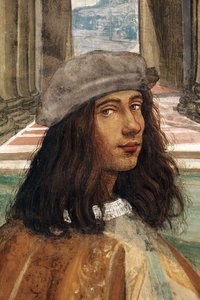
il sodoma (giovanni antonio bazzi)
1447 - 1549 , Italy
Quick Facts
- Artistic Movement Or Style: High Renaissance & Mannerism
- Artists Or Movements Influenced By This Artist: ['Tintoretto']
- Artists Who Influenced This Artist:
- Michelangelo Buonarroti
- Raphael Sanzio
- Date Of Birth: 1447
- Full Name: Giovanni Antonio Bazzi
- Nationality: Italian
- Notable Artworks:
- Wedding of Alexander
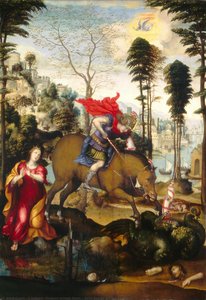
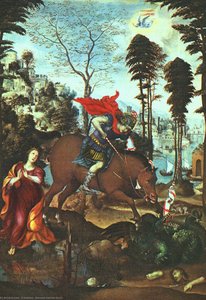
- Saint George and the Dragon
- Holy Family with the Infant Saint John the Baptist
- Place Of Birth: Vercelli, Italy
Related Articles

Giovanni Giacometti: Sculpting Existentialism – A Study of Form, Space, and the Human Condition
Explore the profound artistic journey of Giovanni Giacometti, father to Alberto. Discover his unique transition from Surrealism to Existentialist sculpture and painting – a compelling study for elite collectors and art enthusiasts.
Giovanni Antonio Canal (Canaletto): A Venetian Master of Light, Space & Societal Observation
Explore the life & art of Giovanni Antonio Canal (Canaletto), a Venetian master renowned for his breathtaking cityscapes. Discover his techniques, legacy, and captivating depictions of 18th-century Venice & London.
National Gallery London's Masterpieces: 25 Iconic Paintings for Your Home Decor
Journey through the National Gallery London's 25 most iconic paintings! Explore Van Gogh, Monet, Rembrandt & more. Discover art history, techniques & find museum-quality reproductions for your home decor on ArtsDot.com.
Antonio da Correggio: Innovation, Illusionism & the Poetics of Grace in Renaissance Painting
Explore the revolutionary art of Antonio da Correggio, a master of Renaissance illusionism and chiaroscuro. Discover his frescoes, mythological paintings & lasting influence on Baroque art. Expert analysis & key works featured.
Embodied Divinity: Exploring Grace & Spiritual Representation in Western Art History
Explore the captivating history of divine grace in Western art! Discover masterpieces by Holbein, Raphael & Fra Angelico. Expert analysis for collectors and enthusiasts at ArtsDot.