 Preview
 Send
Send Share
Share
 Details

 Download
 Similars
 X-Ray
X-Ray Diaporama
Six Poetic Immortals
 Acrylic On Canvas
- WallArt
 1791
1791 64.0 x 137.0 cm
 Aichi Prefectural Museum of Art
 Read More
Hand Made Oil Reproduction
Hand-painted oil on canvas in your size and frame, made to order by our artists. ( Buy Print Buy Image)




P118B $10

P118H $10

P118W $10

P438Z $10

P508JH $12

P508YH $12

P805H $10

P805Z $10

P919BZ $10

P919G $10

P919XJ $10

P959ZH $10

P968JZ $12

W106C $8

W218G $10

W218JH $8

W218Y $10

W307PJ $10

W316G $10

W316PJ $8

W316Y $10

W398PJ $8

W4111J $10

W500HY $15

W500JH $15

W692G $12

W849H $8

W940BG $15

W953PJ $8




Pick from our preset sizes that match the artwork's original proportions.

You may enter your own dimensions to fit a specific frame or space. If your selected size does not match the original image's proportions, we will either crop the artwork or extend the painting with additional hand-painted elements. A digital mockup will be sent for your approval before production begins.
Please note that the on-screen preview does not reflect the actual cropping or extension. Only the mockup will accurately show the final composition.
While custom sizes are available, we recommend selecting a dimension from the predefined list to preserve the original proportions.
After order, ArtsDot.com team will email client for instructions and provide a mockup preview
Worldwide Delivery () in 3/4 weeks instead of standard 5 weeks. (19 August). No compromise on quality.

Free Worldwide Express Shipping

High-Quality Linen Canvas

Full Shipping Insurance

Customs Tax Refund Guarantee

True Color Matching Guarantee

60-Day Return Policy (Defects Only)

100% Money-Back Guarantee

Bulk Discount Offer
 Glass option is only available in size under 110 CM

Six Poetic Immortals
Reproduction Medium
Reproduction Size
-


Total Price
$ 263
Artwork Description
A Kyoto Merchant’s Vision: The World of Ito Jakuchū
Ito Jakuchū (1716–1800) stands apart from his contemporaries as a singular voice in Edo period Japanese art—a figure whose artistic trajectory defied convention and cemented his legacy as one of Japan's most original masters. Unlike many artists of his time who adhered to established lineages, Jakuchu’s creative journey was profoundly shaped by his family’s prosperous mercantile background and an unwavering devotion to Zen Buddhist philosophy. His father, Ito Genzaemon, a successful grocer, afforded young Jakuchu the freedom to pursue his burgeoning talent for painting from a formative age—a circumstance that fostered not only artistic skill but also a nuanced understanding of societal shifts and the growing influence of Kyoto’s merchant class—a perspective subtly woven into Jakuchū's distinctive visual language. While familial obligations might have steered others toward business pursuits, Jakuchu’s heart resided in the realm of art, driven by an irresistible impulse to distill life’s essence onto silk and ink.Six Poetic Immortals: Symbolism and Composition
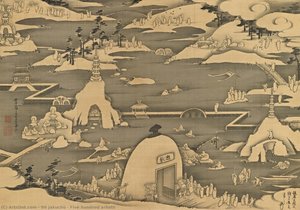
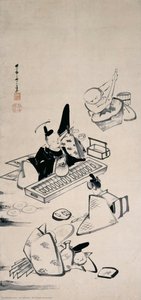
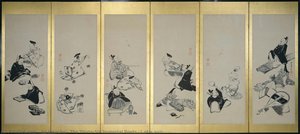
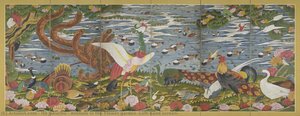
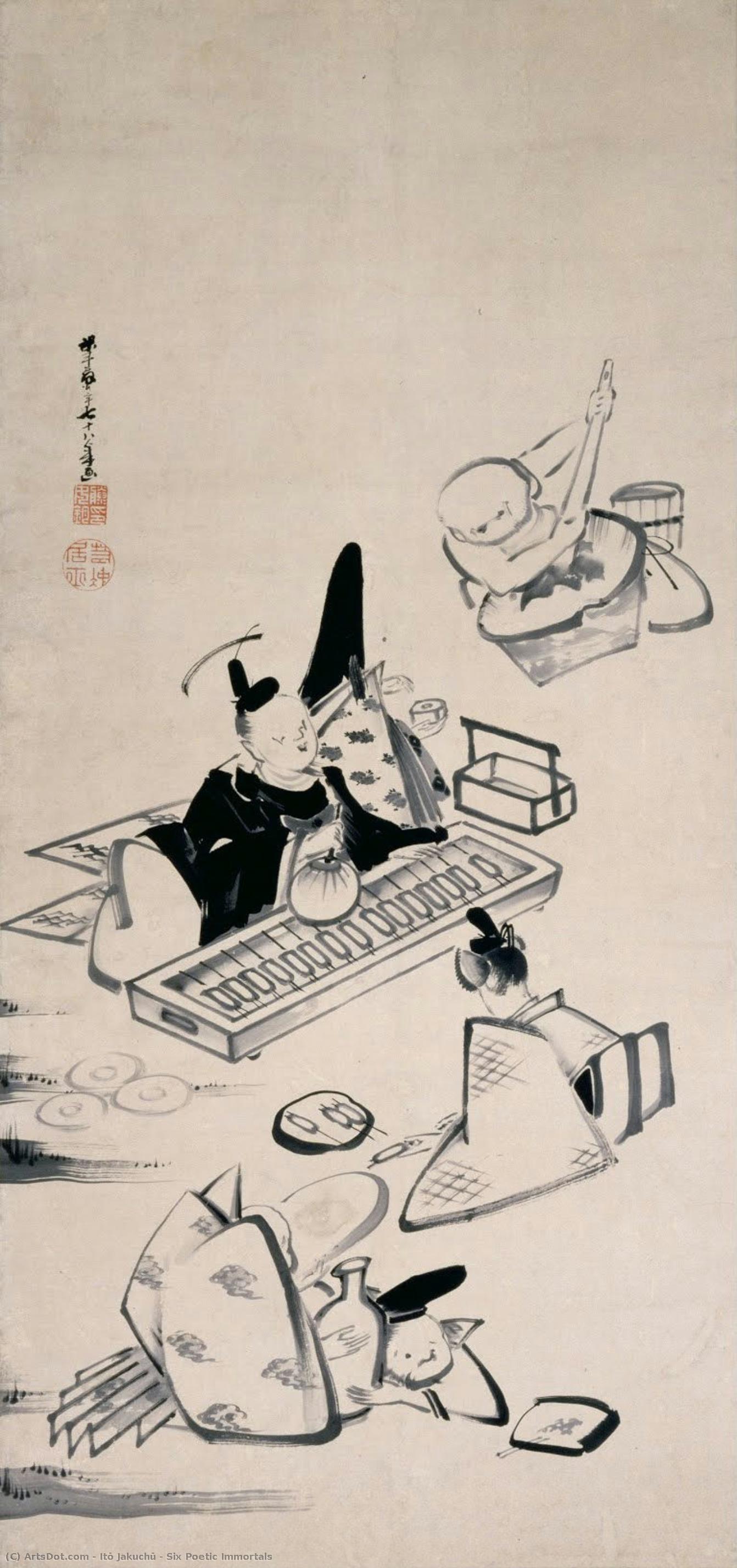
“Six Poetic Immortals” embodies Jakuchū's revolutionary approach to landscape painting—a genre traditionally dominated by meticulous detail and idealized vistas. Instead of striving for photographic accuracy, Jakuchū sought to capture a fleeting moment of sublime beauty, prioritizing atmosphere and suggestion over precise representation. The six figures seated on chairs are not merely subjects; they serve as conduits for Zen contemplation, embodying the ideals of harmony, balance, and detachment. Each posture conveys a specific meditative state—seated upright with eyes lowered, hands resting in repose—reflecting the core tenets of Zen Buddhism’s emphasis on mindfulness and inner stillness. The placement of the figures within the composition is equally deliberate: they are positioned to create a dynamic interplay between solidity and emptiness, mirroring the Buddhist concept of ‘mu,’ or no-thingness.Technique and Materiality: Jakuchū's Unique Approach
Jakuchū’s mastery lay not in technical virtuosity but in an uncanny ability to coax extraordinary effects from humble materials—primarily inkstone pigment and paper. He employed a technique known as “yakinaoshi,” or “late-night illumination,” which involved applying ink thinly over moistened paper, allowing it to dry slowly and revealing subtle gradations of color and texture as it oxidized. This process yielded an ethereal luminosity that defied conventional methods, capturing the elusive beauty of twilight landscapes with unparalleled grace. The artist’s meticulous attention to detail—evident in the rendering of folds in drapery and the expressive gestures of the figures—was tempered by a profound awareness of spontaneity and improvisation. Jakuchū famously declared, “I do not strive for perfection; I aim for something like it,” encapsulating his artistic philosophy—a commitment to capturing the spirit of nature rather than replicating its surface appearance.Historical Context: Edo Period Aesthetics
“Six Poetic Immortals” emerged during Japan’s Edo period (1689–1868)—an era characterized by relative peace and economic prosperity, fostering a flourishing artistic culture. However, unlike earlier periods marked by elaborate court patronage, Edo aesthetics prioritized simplicity and understated elegance—a reaction against the opulent grandeur of feudal Japan. Jakuchū's work aligns perfectly with this trend, reflecting Zen Buddhism’s influence on intellectual and artistic sensibilities—a movement that championed introspection and sought to transcend sensory experience in pursuit of enlightenment. The painting’s serene atmosphere and evocative imagery resonated deeply with audiences attuned to the spiritual values of the time, establishing “Six Poetic Immortals” as a cornerstone of Edo landscape art.Emotional Impact: Capturing Sublime Beauty
Ultimately, “Six Poetic Immortals” transcends mere visual representation—it aspires to evoke profound emotional responses in the viewer. The painting’s luminous colors and delicate textures convey a sense of tranquility and wonder, transporting the observer to a realm beyond everyday concerns. Jakuchū's masterful manipulation of light and shadow creates an illusion of depth and dimensionality, inviting contemplation on the mysteries of existence. As viewers immerse themselves in this captivating artwork, they are encouraged to embrace the beauty of impermanence—to appreciate the fleeting moments of sublime splendor that punctuate life’s journey—a timeless message conveyed with exquisite artistry by Ito Jakuchū.Related Artworks
Artist Biography
A Kyoto Merchant’s Vision: The World of Ito Jakuchu
Born in 1716 amidst the bustling Nishiki market district of Kyoto, Ito Jakuchu emerged as one of Japan's most original and captivating artists. Unlike many of his contemporaries who followed established artistic lineages, Jakuchu’s path was uniquely shaped by his family’s prosperous mercantile background and a deeply personal engagement with Zen Buddhist philosophy. His father, Ito Genzaemon, was a successful grocer, providing young Jakuchu with a comfortable upbringing that allowed him to pursue his burgeoning talent for painting from an early age. This commercial environment, however, also instilled in him an awareness of societal shifts and the growing influence of Kyoto’s merchant class—a perspective that would subtly inform his artistic vision. Though expected to eventually take over the family business, Jakuchu's passion lay elsewhere, a pull towards capturing the essence of life through brush and ink. After his father’s passing when he was 23, Jakuchu briefly managed the shop before entrusting it to his brother, finally dedicating himself fully to the pursuit of art.Breaking with Tradition: Style and Subject Matter
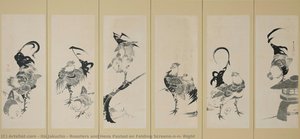
Ito Jakuchu's artistic style stands as a fascinating blend of meticulous realism and playful experimentation. While deeply rooted in traditional Japanese subjects—particularly birds, flowers, and landscapes—he infused his work with an innovative spirit that set him apart from many of his contemporaries. He gained prominence alongside Maruyama Okyo for his realistic depictions, yet Jakuchu ventured beyond mere imitation of nature. His paintings are characterized by vibrant colors, dynamic compositions, and a willingness to challenge conventional perspectives. Chickens, in particular, became a recurring motif in his oeuvre, elevated from humble farm animals to subjects worthy of profound artistic exploration. He wasn’t simply painting *what* he saw, but rather exploring the inherent vitality and character within each creature. Beyond birds, Jakuchu's work often reflects Zen Buddhist themes—a contemplative stillness, an appreciation for impermanence, and a reverence for the natural world. His famous Bean Vine, for example, is not merely a botanical study but a meditation on growth, decay, and the interconnectedness of all things. His masterful polychrome renderings – *doshoku sai-e* – are particularly celebrated, showcasing an extraordinary attention to detail and a vibrant palette rarely seen in Japanese painting of the period.Zen Influence and Artistic Development
The influence of Zen Buddhism on Jakuchu’s art is undeniable. He became a lay brother (*koji*) at Kyoto's Shokoku-ji temple, immersing himself in Zen principles that emphasized direct experience, intuition, and the search for enlightenment through contemplation. This spiritual grounding profoundly shaped his artistic approach, fostering a sense of detachment from worldly concerns and an unwavering focus on capturing the essence of his subjects. It is said he even received special permission to study classic Chinese paintings within the temple’s collection, absorbing centuries of artistic tradition while simultaneously forging his own unique path. While Jakuchu may have initially studied under Ōoka Shunboku, a Kano school artist specializing in bird and flower painting, he quickly surpassed conventional training, developing an idiosyncratic style that defied easy categorization. His willingness to break with established norms aligned him with the “Lineage of Eccentrics” – a movement highlighted by Nobuo Tsuji’s influential book *Kisō no Keifu* (Lineage of Eccentrics). This work championed artists who challenged artistic conventions, solidifying Jakuchu's place as a pivotal figure in Japanese art history.Legacy and Rediscovery
Despite his talent and dedication, Ito Jakuchu remained relatively unknown during his lifetime. It wasn’t until the 20th century that his work began to receive widespread recognition, largely thanks to Tsuji's scholarship which revolutionized perceptions of Edo period painting. Tsuji’s championing of Jakuchu as a key figure within the “Lineage of Eccentrics” sparked renewed interest in his art and established him as one of Japan’s most important and innovative painters. His influence can also be seen in the development of Ukiyo-e, the popular genre of woodblock prints, demonstrating a broader impact on Japanese artistic culture. Jakuchu's willingness to experiment with perspective, color, and subject matter paved the way for future generations of artists to challenge conventions and explore new creative possibilities. A biography penned by Zen monk Daiten Kenjo in 1766 offers valuable insight into Jakuchu’s artistic philosophy, revealing his deliberate avoidance of human figures—a choice that underscores his focus on the natural world and its inherent beauty. Today, Ito Jakuchu is celebrated not only for his technical skill but also for his unique vision, a testament to the enduring power of an artist who dared to forge his own path and capture the spirit of his time with unparalleled originality.Notable Works
- Five Hundred Arhats: A monumental work showcasing Jakuchu’s extraordinary skill and dedication.
- Hanshan and Shide (Kanzan and Jittoku): Demonstrates his ability to capture the essence of Japanese culture and folklore.
- Crabs and Peonies: A quintessential example of his characteristic style, blending meticulous detail with vibrant color.
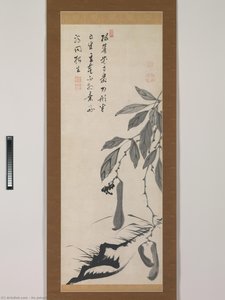
- Bean Vine: A sumi-e masterpiece embodying Zen philosophy and showcasing intricate details.
- Two Cranes: Exemplifies his artistic prowess in depicting avian subjects with grace and precision.
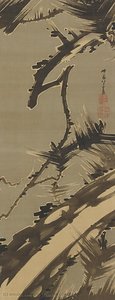
- Old Pine: A striking work demonstrating his masterful brushwork (101 x 40 cm, silk).
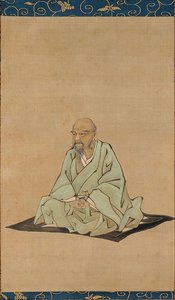
Itō Jakuchū
1716 - 1800 , Japan
Quick Facts
- Artistic Movement Or Style: Edo period painting
- Artists Or Movements Influenced By This Artist: ['Ukiyo-e']
- Artists Who Influenced This Artist: ['Ōoka Shunboku']
- Date Of Birth: March 2, 1716
- Date Of Death: October 27, 1800
- Full Name: Ito Jakuchu
- Nationality: Japanese
- Notable Artworks:
- Five Hundred Arhats
- Hanshan and Shide
- Crabs and Peonies
- Bean Vine
- Two Cranes
- Old Pine
- Place Of Birth: Kyoto, Japan
Related Articles

Hokusai's Masterpieces: 25 Iconic Prints & Paintings for Art Lovers | ArtsDot
Journey through Katsushika Hokusai’s 25 most iconic artworks, including *The Great Wave*. Explore the ukiyo-e master's history, style & timeless Japanese woodblock prints. Find museum-quality reproductions for your home at ArtsDot.com.
Feathered Visions: A Historical & Artistic Exploration of Birds in Painting
Explore the rich history of birds in painting! Discover symbolism, artistic movements & master artists like Audubon. High-quality reproductions available at ArtsDot.

Serenity on Canvas: A Guide to the Timeless Beauty of Japanese Landscape Painting
Discover the serene beauty of Japanese landscape painting. From Hokusai's iconic woodblock prints to meditative sumi-e ink washes, explore a visual journey through the 'floating world' and learn how to bring this timeless Zen aesthetic into your modern home decor.
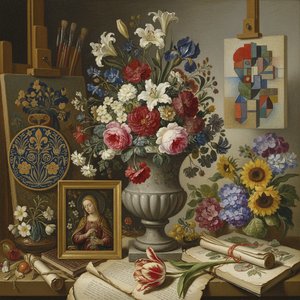
Blossoming Symbolism: A Historical Journey Through Flowers in Western Painting
Explore the rich history of flower symbolism in Western painting! Discover how artists from the Renaissance to Modernism used blossoms to convey meaning, emotion & beauty. Learn about iconic artworks and movements.

Floating World: The Captivating Art and Legacy of Japanese Ukiyo-e
Explore the profound beauty of Japanese Ukiyo-e. Discover the history, masters like Hokusai, and the enduring legacy of the 'Floating World' through an expert art-historical lens.