 Preview
 Send
Send Share
Share
 Details

 Download
 Similars
 X-Ray
X-Ray Diaporama
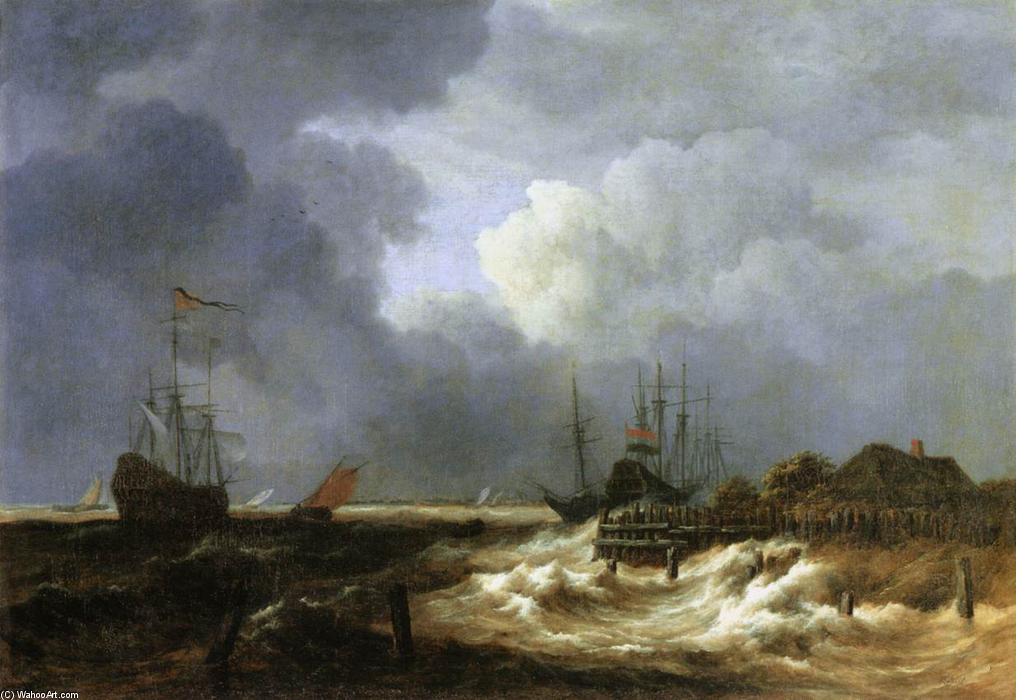
The Breakwater
 Oil On Canvas
- WallArt
- Dutch Golden Age Landscape
 1670
1670 110.0 x 160.0 cm
 The Louvre
 Read More
Hand Made Oil Reproduction
Hand-painted oil on canvas in your size and frame, made to order by our artists. ( Buy Print Buy Image)




P118B $10

P118H $10

P118W $10

P438Z $10

P508JH $12

P508YH $12

P805H $10

P805Z $10

P919BZ $10

P919G $10

P919XJ $10

P959ZH $10

P968JZ $12

W106C $8

W218G $10

W218JH $8

W218Y $10

W307PJ $10

W316G $10

W316PJ $8

W316Y $10

W398PJ $8

W4111J $10

W500HY $15

W500JH $15

W692G $12

W849H $8

W940BG $15

W953PJ $8




Pick from our preset sizes that match the artwork's original proportions.

You may enter your own dimensions to fit a specific frame or space. If your selected size does not match the original image's proportions, we will either crop the artwork or extend the painting with additional hand-painted elements. A digital mockup will be sent for your approval before production begins.
Please note that the on-screen preview does not reflect the actual cropping or extension. Only the mockup will accurately show the final composition.
While custom sizes are available, we recommend selecting a dimension from the predefined list to preserve the original proportions.
After order, ArtsDot.com team will email client for instructions and provide a mockup preview
Worldwide Delivery () in 3/4 weeks instead of standard 5 weeks. (17 August). No compromise on quality.

Free Worldwide Express Shipping

High-Quality Linen Canvas

Full Shipping Insurance

Customs Tax Refund Guarantee

True Color Matching Guarantee

60-Day Return Policy (Defects Only)

100% Money-Back Guarantee

Bulk Discount Offer
 Glass option is only available in size under 110 CM

The Breakwater
Reproduction Medium
Reproduction Size
-


Total Price
$ 263
Artwork Description
A Tempestuous Vision of Dutch Landscape
The painting “The Breakwater,” executed by Jacob Isaackszoon van Ruisdael in 1670, stands as an iconic exemplar of Dutch landscape art during the Golden Age—a period defined by unprecedented artistic flourishing and economic prosperity. More than just a depiction of a coastal scene, it embodies the anxieties and aspirations of its time, reflecting both the grandeur of nature and humanity’s precarious position within it. Currently residing in the Musée du Louvre in Paris, France, this monumental canvas (110 x 160 cm) commands attention with its dramatic composition and masterful use of atmospheric perspective.The Scene: A Landscape Under Siege
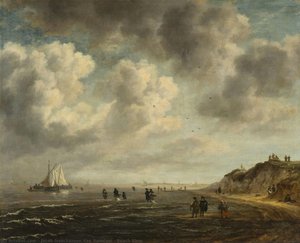
Van Ruisdael's vision captures a turbulent seascape dominated by dark, brooding clouds—a palpable foreshadowing of an impending storm. The foreground is occupied by a rugged shoreline strewn with boulders and punctuated by several moored boats, their sails furled tight against the gale force winds. These vessels aren’t merely incidental elements; they represent the industrious spirit of Haarlem, Ruisdael's hometown, grappling with the challenges posed by maritime trade and weather conditions. Dominating the center is a substantial breakwater—a fortified barrier constructed to protect the harbor from crashing waves—its weathered stones providing a stark contrast to the swirling dynamism of the sea. The artist’s keen observation extends beyond mere visual representation; he conveys the very essence of vulnerability against the overwhelming power of nature.Technique and Style: Mastering Atmospheric Perspective
Ruisdael's technique is characterized by his unwavering commitment to *atmosfearische perspectief*, a revolutionary approach pioneered during this era that sought to accurately portray the effects of light and air on distant objects. Layers upon layers of thinly applied oil paint create an illusion of depth, subtly blending colors into hazy blues and greys as they recede into the horizon. This masterful manipulation of color and texture imbues the painting with a remarkable sense of realism—almost as if one could feel the spray of the sea and smell the damp air. The artist’s brushstrokes are loose and expressive, conveying movement and energy without resorting to overly detailed rendering. Instead, he prioritizes capturing the mood and feeling of the scene above all else.Symbolism: Confronting Uncertainty
Beyond its aesthetic brilliance, “The Breakwater” carries profound symbolic weight. The storm itself represents not merely meteorological disturbance but also broader anxieties about societal stability—a reflection of the political tensions simmering beneath the surface of Dutch society during Ruisdael’s lifetime. The breakwater symbolizes human ingenuity attempting to control and defend against forces beyond our grasp, highlighting the inherent limitations of human endeavor. Yet, despite this sense of unease, there's also an underlying beauty—the enduring majesty of the natural world persisting even amidst chaos. This duality speaks to a core humanist concern: acknowledging both the perils and pleasures of existence.Emotional Impact: A Moment Frozen in Time
“The Breakwater” transcends mere visual representation; it evokes a powerful emotional response in the viewer. The painting’s unsettling grandeur compels contemplation—forcing us to confront our own insignificance against the immensity of nature. Simultaneously, it inspires awe at Ruisdael's artistic prowess and his ability to distill complex emotions into a single image. It remains a testament to the enduring power of landscape art to capture not only what we see but also what we feel—a timeless masterpiece that continues to resonate with audiences centuries after its creation.Related Artworks
Artist Biography
early life and career
jacob isaackszoon van ruisdael, a prominent dutch painter, draughtsman, and etcher, was born in 1628 in the netherlands. he is widely regarded as the pre-eminent landscape painter of the dutch golden age, a period marked by great wealth and cultural achievement.
artistic style and contributions
van ruisdael's work is characterized by its versatility and prolific nature, depicting a wide variety of landscape subjects. from 1646, he painted remarkable dutch countryside scenes, which later took on a more heroic character after his trip to germany in 1650. his late work, produced while living and working in amsterdam, featured city panoramas and seascapes, often with the sky occupying two-thirds of the canvas.
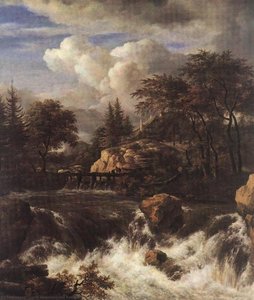
- waterfall in a rocky and mountainous landscape, showcasing his mastery of light and composition.
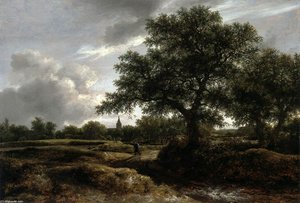
- view of haarlem with bleaching grounds, exemplifying his ability to capture the essence of the dutch landscape.
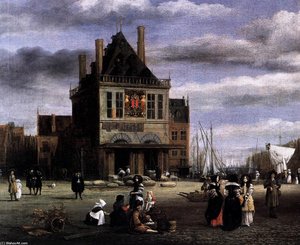
- view of the dam and the damrak in amsterdam, highlighting his skill in cityscape painting.
museums and collections
van ruisdael's work is spread across private and institutional collections worldwide, with notable holdings at:
- the national gallery in london
- the rijksmuseum in amsterdam
- the hermitage museum in st. petersburg
influence and legacy
van ruisdael's influence on landscape painting traditions is profound, shaping the english romantics, the barbizon school in france, and the hudson river school in the us. he also inspired generations of dutch landscape artists. notable works:
- view of haarlem with bleaching grounds
- waterfall in a rocky and mountainous landscape
- view of the dam and the damrak in amsterdam
artist's profile on ArtsDot: jacob isaackszoon van ruisdael
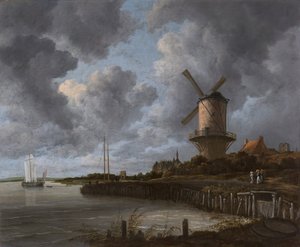
jacob isaackszoon van ruisdael
1628 - 1682 , Netherlands
Quick Facts
- Artistic Movement Or Style: Dutch Golden Age, Baroque
- Artists Or Movements Influenced By This Artist:
- English Romantics
- Barbizon School
- Artists Who Influenced This Artist: ['Hendrick Vroom']
- Date Of Birth: 1628/1629, Haarlem
- Date Of Death: 1682, Amsterdam
- Full Name: Jacob Isaackszoon van Ruisdael
- Nationality: Dutch
- Notable Artworks:
- View of Haarlem
- Waterfall landscape
- Amsterdam cityscape
- Place Of Birth: Haarlem, Netherlands
Related Articles
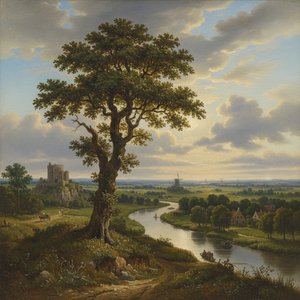
Jacob van Ruisdael: Master of Dutch Landscape & the Evocation of National Identity
Explore the life & work of Jacob van Ruisdael, the preeminent Dutch landscape painter. Discover his technical brilliance, symbolic depth, and lasting influence on art history. Learn about collecting Ruisdael's masterpieces.

Van Gogh's Masterpieces: Explore 25 Iconic Paintings & Art for Your Home
Journey through Vincent van Gogh's 25 most iconic paintings! Explore 'Starry Night', 'Sunflowers,' and more—discover the stories, techniques & emotions behind these Post-Impressionist masterpieces. Find museum-quality art reproductions for your home at ArtsDot.com.

Dutch Masters: 10 Golden Age Paintings That Still Inspire |
Journey into the Dutch Golden Age! Explore 10 iconic paintings by Rembrandt, Vermeer & Hals. Discover the stories behind these Baroque masterpieces and find museum-quality art reproductions to elevate your home decor on .
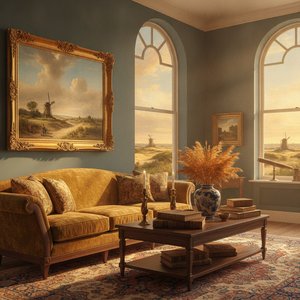
Golden Light & Dutch Skies: Bringing the Magic of Dutch Golden Age Landscapes into Your Home
Transform your home with the breathtaking light of Dutch Golden Age landscapes. Discover how hand-painted oil reproductions of masterworks like Ruisdael and Vermeer bring timeless elegance, atmosphere, and soulful texture to modern interiors. Elevate your space with museum-quality art.

Rembrandt's Masterpieces: Explore 25 Iconic Paintings & Prints | ArtsDot
Journey through Rembrandt van Rijn's 25 most iconic paintings & etchings. Explore Dutch Golden Age masterpieces, dramatic chiaroscuro, and timeless portraits. Find museum-quality art reproductions to elevate your home decor on ArtsDot.com.