 Preview
 Send
Send Share
Share
 Details

 Download
 Similars
 X-Ray
X-Ray Diaporama
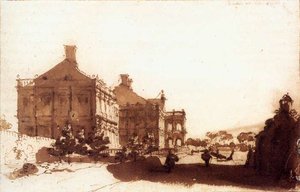
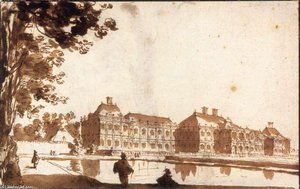
The Huis ter Nieuburch at Rijswijck, Seen from the Southwest
 Acrylic On Canvas
- WallArt
- Dutch Golden Age
 1665
1665 98.0 x 152.0 cm
 Rijksmuseum
 Read More
Hand Made Oil Reproduction
Hand-painted oil on canvas in your size and frame, made to order by our artists. ( Buy Print Buy Image)




P118B $10

P118H $10

P118W $10

P438Z $10

P508JH $12

P508YH $12

P805H $10

P805Z $10

P919BZ $10

P919G $10

P919XJ $10

P959ZH $10

P968JZ $12

W106C $8

W218G $10

W218JH $8

W218Y $10

W307PJ $10

W316G $10

W316PJ $8

W316Y $10

W398PJ $8

W4111J $10

W500HY $15

W500JH $15

W692G $12

W849H $8

W940BG $15

W953PJ $8




Pick from our preset sizes that match the artwork's original proportions.

You may enter your own dimensions to fit a specific frame or space. If your selected size does not match the original image's proportions, we will either crop the artwork or extend the painting with additional hand-painted elements. A digital mockup will be sent for your approval before production begins.
Please note that the on-screen preview does not reflect the actual cropping or extension. Only the mockup will accurately show the final composition.
While custom sizes are available, we recommend selecting a dimension from the predefined list to preserve the original proportions.
After order, ArtsDot.com team will email client for instructions and provide a mockup preview
Worldwide Delivery () in 3/4 weeks instead of standard 5 weeks. (2 September). No compromise on quality.

Free Worldwide Express Shipping

High-Quality Linen Canvas

Full Shipping Insurance

Customs Tax Refund Guarantee

True Color Matching Guarantee

60-Day Return Policy (Defects Only)

100% Money-Back Guarantee

Bulk Discount Offer
 Glass option is only available in size under 110 CM

The Huis ter Nieuburch at Rijswijck, Seen from the Southwest
Reproduction Medium
Reproduction Size
-


Total Price
$ 263
A Window on Delft: Jan de Bisschop’s “The Huis ter Nieuburch at Rijswijck, Seen from the Southwest”
Jan de Bisschop's "The Huis ter Nieuburch at Rijswijck, Seen from the Southwest" is more than just a meticulously rendered drawing; it’s a captivating glimpse into 17th-century Dutch life and artistic practice. Completed around 1665-70, this work transcends mere topographical depiction, offering a poignant meditation on domesticity, architectural grandeur, and the fleeting beauty of a specific moment in time. De Bisschop, a fascinating figure himself – a lawyer who simultaneously pursued painting with an almost obsessive dedication – imbues his art with a quiet intensity, reflecting both his legal mind’s precision and his artist's eye for detail.
The subject itself is immediately striking: the Huis ter Nieuburch, a magnificent country estate nestled between Delft and The Hague. Commissioned by Frederick Hendrick, Stadtholder of Holland, Zeeland, and Utrecht, this residence represented not only wealth and power but also a connection to the land – a deliberate statement of civic pride and aristocratic lineage. De Bisschop’s drawing captures the house in its nascent state, shortly after construction was completed, presenting it as a symbol of burgeoning prosperity and refined taste. The composition is carefully balanced, leading the viewer's eye through the symmetrical facade, past the numerous windows that promise warmth and light within, and towards the intricate roofline punctuated by chimneys – each suggesting a hearth brimming with domestic activity.
A Masterclass in Pen and Ink Technique
What truly elevates this drawing is de Bisschop’s masterful command of pen and ink. He employs a sophisticated technique known as “cross-hatching,” layering intersecting lines to create subtle gradations of tone and texture. This isn't simply about replicating the appearance of stone or wood; it’s about conveying *volume* and depth with remarkable subtlety. Notice how he uses denser hatching to define the darker areas of the building, while lighter, looser strokes suggest the brighter surfaces. The artist’s hand is visible in every line, lending a sense of immediacy and intimacy to the work – as if we are witnessing the drawing process itself.
Furthermore, de Bisschop demonstrates an exceptional understanding of perspective and light. He skillfully uses aerial perspective—the technique of making distant objects appear paler and less detailed—to create a convincing illusion of depth. The clear sky in the background recedes into the distance, while the foreground elements are rendered with greater clarity and detail. This careful attention to realism is balanced by an underlying sense of artistic license; de Bisschop doesn’t simply document the house; he transforms it into a beautiful, idealized representation.
Figures Amidst Grandeur: A Study in Human Scale
Adding another layer of interest to the composition are the figures scattered throughout the garden. These aren't mere decorative elements; they serve as a crucial element for understanding the scale and context of the Huis ter Nieuburch. They represent the people who would inhabit this grand estate, engaging in everyday activities – tending to the grounds, perhaps enjoying a leisurely stroll, or simply observing the impressive architecture. Their presence reminds us that even within the realm of aristocratic splendor, life continued with its familiar rhythms.
The figures are dressed in attire consistent with the 17th century, further anchoring the scene in historical reality. The artist’s choice to include them is deliberate, suggesting a connection between the house and its inhabitants—a visual narrative that speaks to the social dynamics of the time. They provide a vital human element, preventing the drawing from becoming an abstract study of architecture alone.
Symbolism and Legacy
"The Huis ter Nieuburch at Rijswijck, Seen from the Southwest" is more than just a beautiful drawing; it’s a window into a specific moment in Dutch history. It reflects the wealth, power, and artistic sensibilities of the 17th century, while also offering a poignant reminder of the human scale within grand architectural settings. De Bisschop's meticulous technique and keen eye for detail have ensured that this work continues to captivate viewers today – a testament to his skill as an artist and a valuable document of a bygone era.
Reproductions of this captivating artwork offer a unique opportunity to bring the elegance and charm of Delft’s architectural heritage into your own home. Consider commissioning a custom-sized print or exploring high-quality reproductions that faithfully capture the nuances of de Bisschop's original drawing, allowing you to appreciate its beauty for generations to come.
Related Artworks
Artist Biography
A Dual Pursuit: The Life and Art of Jan de Bisschop
Jan de Bisschop, born in Amsterdam in 1628, occupies a fascinating, somewhat unique position within the Dutch Golden Age. He wasn’t solely devoted to the painter's life, but rather navigated a dual existence as a practicing lawyer and a dedicated artist – a combination that profoundly shaped his artistic vision and contributions. This unusual path allowed him a degree of freedom often unavailable to artists reliant on commissions for their livelihood, fostering an intellectual curiosity that permeated his work. His initial training came under the tutelage of Bartholomeus Breenbergh, a painter renowned for his Italianate landscapes and historical scenes; this early influence is readily apparent in de Bisschop’s later depictions of scenery and classical motifs. However, he didn't abandon his legal career, serving as an advocate to the Dutch court – a testament to a disciplined mind that likely informed the meticulous detail found within his artistic endeavors.Engravings, Landscapes, and Classical Reverence
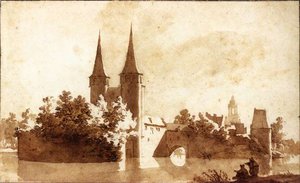
De Bisschop’s artistic output was remarkably diverse, encompassing engraving, painting, and drawing. While he produced original works, a significant portion of his oeuvre consisted of highly detailed engravings – often copies of masterpieces by Italian masters such as Tintoretto, Veronese, and Rubens. These weren't merely reproductions; they were considered studies, carefully crafted for instructional purposes, demonstrating de Bisschop’s commitment to artistic education. His landscapes, rendered in the evocative Italianate style, transport viewers to idyllic scenes populated with classical architecture bathed in warm, atmospheric light. Works like “The Oostpoort (East Gate) at Delft” exemplify this influence, showcasing a mastery of perspective and an appreciation for harmonious composition. Beyond landscape, de Bisschop demonstrated a deep reverence for classical art, meticulously copying ancient sculptures and paintings – a practice reflecting the growing intellectual climate of the Dutch Golden Age, where there was increasing interest in elevating painting to the status of a liberal art.A Legacy Etched in Instruction
Jan de Bisschop’s lasting legacy extends beyond his individual artworks; it resides significantly within his contributions to artistic education. He firmly believed in the importance of studying classical models for aspiring artists, and this conviction materialized in two pivotal publications. The first, “Signorum Veterum Icones” (1668-1669), comprised 112 prints featuring engravings of antique sculptures, providing an invaluable resource for students seeking to understand classical form and composition. Shortly before his death in 1671, he published “Paradigmata Graphices variorum Artificum,” a collection presenting drawings by various masters – including Bassano, Carracci, and Van Dyck – offering a comparative study of artistic techniques and styles. Furthermore, de Bisschop was a founding member of the Confrerie Pictura, a society dedicated to promoting artistic excellence and fostering exchange among painters, solidifying his role as an active participant in the vibrant Dutch art world.Influence and Historical Significance
De Bisschop’s work resonated within the intellectual currents of his time, influencing artists such as Jacob van der Ulft, who demonstrably adopted de Bisschop's meticulous approach to copying classical masters. His dedication to disseminating artistic knowledge through instructional books played a crucial role in shaping the development of Dutch art during the 17th century. He bridged the gap between legal practice and artistic pursuit, embodying the diverse intellectual landscape of his era. His work stands as a testament to the power of combining rigorous intellect with creative passion. While perhaps not as widely celebrated as some of his contemporaries, Jan de Bisschop’s contributions ensure his enduring place within the history of Dutch Golden Age painting – a legacy etched not only in brushstrokes and engravings but also in the minds of generations of artists he inspired.Selected Works
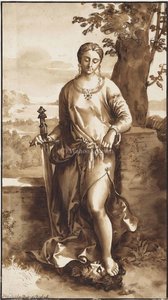
- Judith with the Head of Holophernes: A striking monochrome study showcasing masterful detail and a poignant narrative.
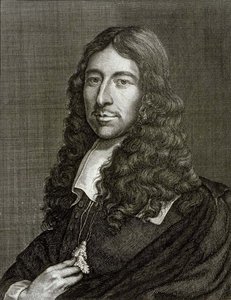
- Portrait of Jan de Bisschop: An intimate self-portrait offering insight into the artist’s persona.
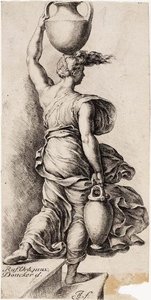
- Woman with a water jug, seen from the back: A delicate depiction demonstrating his skill in capturing form and light.
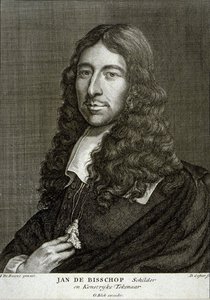
Jan de Bisschop
1628 - 1671 , Netherlands
Quick Facts
- Artistic Movement Or Style: Dutch Golden Age, Baroque
- Artists Or Movements Influenced By This Artist: ['Jacob van der Ulft']
- Artists Who Influenced This Artist: ['Bartholomeus Breenbergh']
- Date Of Birth: 1628
- Date Of Death: 1671
- Full Name: Jan de Bisschop
- Nationality: Dutch
- Notable Artworks:
- Judith with the Head...
- Portrait of Jan de Bisschop
- Woman with a water jug...
- Place Of Birth: Amsterdam, Netherlands
Related Articles

Dutch Masters: 10 Golden Age Paintings That Still Inspire |
Journey into the Dutch Golden Age! Explore 10 iconic paintings by Rembrandt, Vermeer & Hals. Discover the stories behind these Baroque masterpieces and find museum-quality art reproductions to elevate your home decor on .
Pieter de Hooch: Illuminating Dutch Domestic Life & Golden Age Charm
Explore the captivating world of Pieter de Hooch, a master of Dutch Golden Age painting. Discover his innovative use of light, intimate domestic scenes, and lasting influence on art history. Learn more at ArtsDot.
Jan Steen: A Master of Dutch Genre Painting & the Golden Age
Explore the life & art of Jan Steen, a leading Dutch Golden Age painter renowned for his humorous genre scenes & insightful social commentary. Discover his techniques, legacy, and collecting tips.
Willem van de Velde the Elder: Master of Maritime Painting & Chronicler of the Dutch Golden Age
Discover the captivating maritime paintings of Willem van de Velde the Elder, a master chronicler of the Dutch Golden Age. Explore his unparalleled realism and lasting influence on naval art history.

Golden Age Reflections: Dutch Baroque Painting & Cultural Innovation
Explore the Dutch Golden Age of painting! Discover key artists like Vermeer & ter Borch, their innovative techniques, and the rich cultural context behind these Baroque masterpieces. Learn about collecting & appreciating this iconic art period.