 Preview
 Send
Send Share
Share
 Details

 Download
 Similars
 X-Ray
X-Ray Diaporama
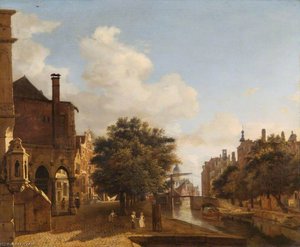
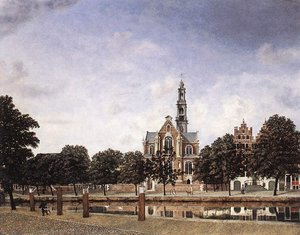
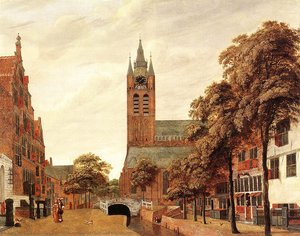
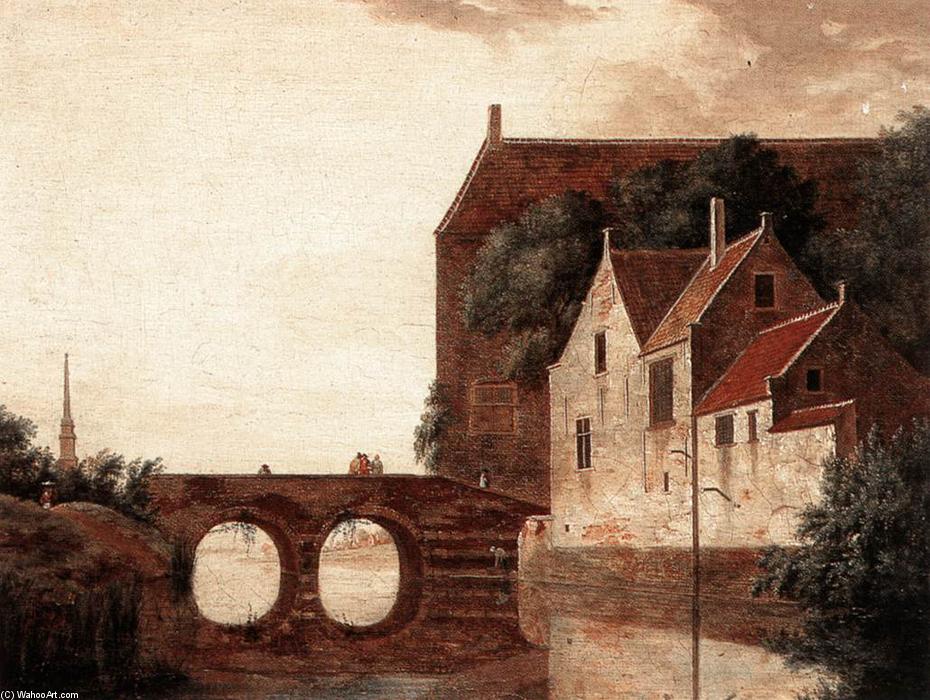
View of a Bridge


 Read More
Hand Made Oil Reproduction
Hand-painted oil on canvas in your size and frame, made to order by our artists. ( Buy Print Buy Image)




P118B $10

P118H $10

P118W $10

P438Z $10

P508JH $12

P508YH $12

P805H $10

P805Z $10

P919BZ $10

P919G $10

P919XJ $10

P959ZH $10

P968JZ $12

W106C $8

W218G $10

W218JH $8

W218Y $10

W307PJ $10

W316G $10

W316PJ $8

W316Y $10

W398PJ $8

W4111J $10

W500HY $15

W500JH $15

W692G $12

W849H $8

W940BG $15

W953PJ $8




Pick from our preset sizes that match the artwork's original proportions.

You may enter your own dimensions to fit a specific frame or space. If your selected size does not match the original image's proportions, we will either crop the artwork or extend the painting with additional hand-painted elements. A digital mockup will be sent for your approval before production begins.
Please note that the on-screen preview does not reflect the actual cropping or extension. Only the mockup will accurately show the final composition.
While custom sizes are available, we recommend selecting a dimension from the predefined list to preserve the original proportions.
After order, ArtsDot.com team will email client for instructions and provide a mockup preview
Worldwide Delivery () in 3/4 weeks instead of standard 5 weeks. (17 August). No compromise on quality.

Free Worldwide Express Shipping

High-Quality Linen Canvas

Full Shipping Insurance

Customs Tax Refund Guarantee

True Color Matching Guarantee

60-Day Return Policy (Defects Only)

100% Money-Back Guarantee

Bulk Discount Offer
 Glass option is only available in size under 110 CM

View of a Bridge
Reproduction Medium
Reproduction Size
-


Total Price
$ 263
Artwork Description
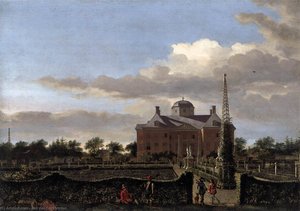
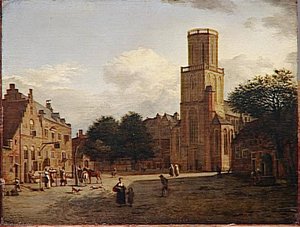
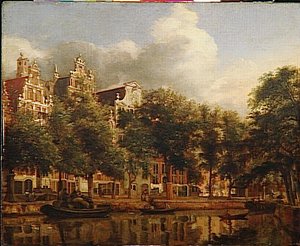
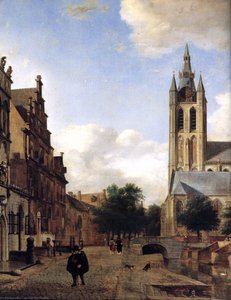
A Window into Amsterdam’s Soul: Jan van der Heyden's “View of a Bridge”
Jan van der Heyden, born in Gorinchem in 1637, stands as an extraordinary testament to the dynamism and innovation characterizing the Dutch Golden Age. More than simply a painter adept at capturing picturesque landscapes and bustling city vistas—a skill he honed with considerable precision—he was also a visionary engineer whose groundbreaking contributions revolutionized firefighting practices and fundamentally reshaped urban planning strategies. His familial roots in Gorinchem, where his father adhered to Mennonite beliefs, instilled within him an appreciation for meticulous craftsmanship and detail, arguably influencing the remarkable clarity evident in his artistic output. Some scholars posit that Van der Heyden’s formative years were further enriched by an apprenticeship with Jacob van der Ulft, a respected glass painter from Gorinchem, solidifying his mastery of reflective surfaces—a technique subtly mirrored in the luminous quality of his paintings.The Painter's Technique: Oil on Panel – A Legacy of Brilliance
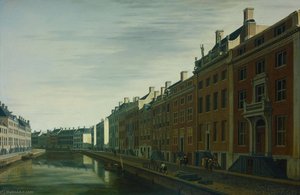
“View of a Bridge,” housed within the Koninklijk Museum voor Schone Kunsten (Antwerp), exemplifies Van der Heyden’s unparalleled skill as an oil painter on panel. Unlike tempera, which relies on pigment bound in egg yolk—resulting in paler hues and less textural richness—oil paint allows for layering colors with remarkable subtlety and depth. This method enabled Van der Heyden to achieve a breathtakingly realistic depiction of the bridge itself, capturing its architectural grandeur against the backdrop of a serene canal scene. The artist’s meticulous attention to detail is palpable; observe how he renders the reflections shimmering on the water's surface—a hallmark of his style and indicative of his profound understanding of optics. Furthermore, the textured surface of the panel contributes significantly to the artwork’s visual impact, conveying a sense of materiality that transcends mere representation.Amsterdam Through Van der Heyden’s Eye: Urban Landscape Painting at Its Finest
Van der Heyden's oeuvre is overwhelmingly devoted to urban landscapes—particularly those portraying Amsterdam during its zenith as a commercial and cultural powerhouse. This painting isn’t merely a scenic depiction; it’s an immersive experience of the city, capturing not only its physical infrastructure but also the atmosphere of daily life. The inclusion of figures strolling along the bridge and boats gliding beneath adds to this sense of immediacy, transporting viewers back to seventeenth-century Amsterdam. Considering the broader artistic context—influenced by artists like Pieter Bout and Adriaen Frans Boudewijns—Van der Heyden’s work aligns with a burgeoning trend toward portraying urban environments with unprecedented realism and psychological insight.Symbolism & Emotional Resonance: Beyond Mere Observation
While seemingly straightforward in its composition, “View of a Bridge” possesses subtle symbolic undertones reflecting the anxieties and aspirations of its time. The bridge itself represents connection—linking disparate parts of the city and symbolizing progress—a theme prevalent throughout Van der Heyden’s artistic explorations. Moreover, the tranquil canal setting evokes notions of harmony and contemplation amidst the frenetic pace of urban life. The painting's luminous palette – achieved through masterful blending techniques – contributes to its emotional impact, conveying a feeling of serenity and grandeur that speaks to the viewer across centuries. It serves as an enduring reminder of Van der Heyden’s ability to transform observation into profound artistic expression.Connecting to Artistic Tradition: Influenced by Masters Like Hugo van der Goes
Jan van der Heyden's artistic vision was undeniably shaped by the pioneering efforts of artists such as Hugo van der Goes and Rogier van der Weyden—masters who championed emotional realism and innovative compositional strategies. These influences are discernible in Van der Heyden’s meticulous rendering of human figures and his masterful manipulation of light and shadow, mirroring techniques employed by his predecessors to convey psychological depth and dramatic intensity. Exploring these connections illuminates the broader artistic landscape of the Dutch Golden Age and underscores Van der Heyden's place as a pivotal innovator within it.Related Artworks
Artist Biography
A Pioneer of Urban Landscapes: The Life and Art of Jan van der Heyden
Jan van der Heyden, born in the Dutch town of Gorinchem in 1637, emerged as a pivotal figure during the Dutch Golden Age. His story is one of remarkable versatility – not merely a painter celebrated for his meticulously rendered cityscapes, but also an innovative engineer whose contributions extended to firefighting technology and urban planning. The son of a Mennonite father, Van der Heyden’s family relocated to Amsterdam in 1646, a move that would profoundly shape his artistic trajectory. Early training likely occurred within the familial sphere, potentially guided by his brother Goris, a craftsman specializing in mirrors. This early exposure to precision and reflective surfaces may have subtly influenced the clarity and detail that would come to define Van der Heyden’s paintings. Some scholars suggest an apprenticeship with Jacob van der Ulft, a respected glass painter from Gorinchem, further honing his skills in draftsmanship and color application – skills initially employed in creating *verre eglomisé*, decorative paintings on glass.From Decorative Arts to Architectural Precision
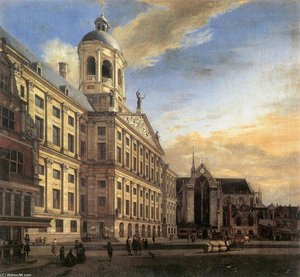
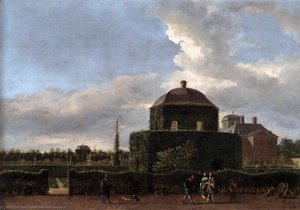
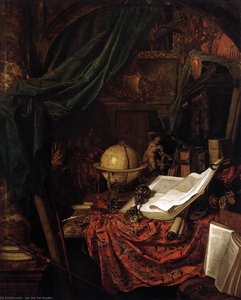
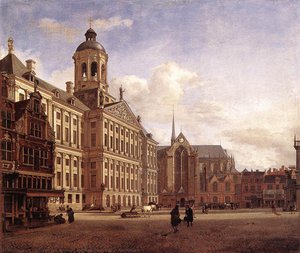
Van der Heyden’s artistic path gradually shifted towards a specialization that would secure his place in art history: the depiction of townscapes. He was among the first Dutch artists to dedicate himself almost entirely to this genre, becoming a leading architectural painter of his time. While many of his contemporaries focused on portraits or historical scenes, Van der Heyden turned his gaze to the bustling streets and stately canals of Amsterdam and beyond. His canvases offer meticulously detailed views not only of his adopted city but also of other Dutch, Flemish, and German urban centers. Works like *View of Oudezijds Voorburgwal with the Oude Kerk in Amsterdam* exemplify this dedication to realism, capturing the play of light on brickwork, the textures of cobblestone streets, and the lively atmosphere of 17th-century life. He didn’t limit himself to existing locales; Van der Heyden also created “architectural fantasies,” imaginative compositions blending elements from different structures, anticipating artistic trends that would emerge in later centuries. These works demonstrate a playful creativity alongside his technical mastery. Beyond city views, he occasionally ventured into still life painting, as seen in *Still-Life with Globe, Books and Chinese Silk*, showcasing his versatility and attention to detail across various subjects.An Engineer’s Vision: Innovation Beyond the Canvas
Van der Heyden's ingenuity extended far beyond the realm of art. He was a practical inventor and engineer who actively sought solutions to real-world problems, most notably in the area of firefighting. In 1672, collaborating with his brother Nicolaes – a hydraulic engineer – he devised improvements to the fire hose, addressing a critical need in densely populated urban areas. This wasn’t merely a minor adjustment; it was a significant advancement in firefighting technology. He didn't stop there. Van der Heyden reorganized Amsterdam’s volunteer fire brigade in 1685, implementing more efficient strategies and protocols. His dedication culminated in the publication of *Brandspuiten-boek*, widely considered the first comprehensive firefighting manual, complete with his own detailed illustrations. This work wasn’t just a technical guide; it was a testament to his commitment to public safety. Furthermore, he designed and implemented an innovative street lighting scheme for Amsterdam, which illuminated the city's streets for over a century, dramatically improving nighttime visibility and security.Legacy and Lasting Influence
Jan van der Heyden died in 1712 as a wealthy man, leaving behind a substantial estate that included over seventy of his own paintings – a testament to both his productivity and the value placed on his work during his lifetime. His only known pupil was his son, Jan, who continued some aspects of his father’s artistic legacy. Van der Heyden's influence resonated through subsequent generations of artists, particularly those specializing in architectural painting. He provided valuable insights into 17th-century urban life and architecture, offering a visual record of cities as they existed during that period. His detailed depictions serve as invaluable historical documents for modern scholars. His innovative approach to townscapes, combined with his practical engineering contributions, cemented his position as a unique and multifaceted figure in Dutch history. He wasn’t simply an artist capturing the world around him; he was actively shaping it, improving the lives of those who inhabited it. Van der Heyden's legacy endures not only through his captivating paintings but also through the enduring impact of his inventions on urban safety and infrastructure.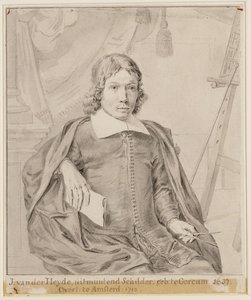
Jan van der Heyden
1637 - 1712 , Netherlands
Quick Facts
- Artistic Movement Or Style: Dutch Golden Age, Baroque
- Artists Or Movements Influenced By This Artist: ['18th-century Venetian painters']
- Artists Who Influenced This Artist: ['Jacob van der Ulft']
- Date Of Birth: 1637
- Date Of Death: 1712
- Full Name: Jan van der Heyden
- Nationality: Dutch
- Notable Artworks:
- Oudezijds Voorburgwal view
- Still-Life with Globe
- Architectural Fantasy
- View of Delft
- Westerkerk, Amsterdam
- Huis ten Bosch at The Hague
- Place Of Birth: Gorinchem, Netherlands
Related Articles

Dutch Masters: 10 Golden Age Paintings That Still Inspire |
Journey into the Dutch Golden Age! Explore 10 iconic paintings by Rembrandt, Vermeer & Hals. Discover the stories behind these Baroque masterpieces and find museum-quality art reproductions to elevate your home decor on .

Golden Age Reflections: Dutch Baroque Painting & Cultural Innovation
Explore the Dutch Golden Age of painting! Discover key artists like Vermeer & ter Borch, their innovative techniques, and the rich cultural context behind these Baroque masterpieces. Learn about collecting & appreciating this iconic art period.

Illuminating Innovation: Exploring the Dutch Golden Age of Painting
Explore the Dutch Golden Age of painting with ArtsDot. Discover Rembrandt, Vermeer & other Masters. Learn about key characteristics, iconic artworks, and lasting influence. Expert insights for collectors & enthusiasts.

Illuminating Realism: Exploring the Dutch Golden Age of Painting (1600-1700)
Explore the Dutch Golden Age of painting (1600-1700) with ArtsDot. Discover Rembrandt, Vermeer & other masters. Learn about techniques, history & find museum-quality reproductions.
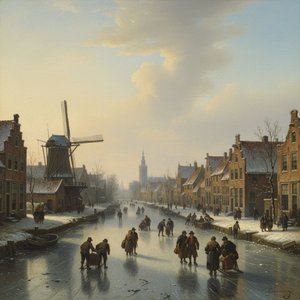
Charles Leickert: Capturing the Dutch Golden Age Light – A Comprehensive Study of Technique, Context, and Legacy
Explore the captivating winter landscapes of Charles Leickert, a master of Dutch Golden Age light & atmosphere. Discover his techniques, symbolism, and lasting legacy – a comprehensive study for art enthusiasts and collectors.