 Preview
 Send
Send Share
Share
 Details

 Download
 Similars
 X-Ray
X-Ray Diaporama
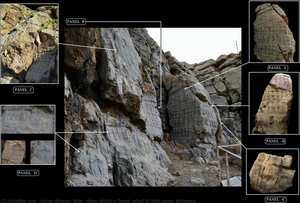
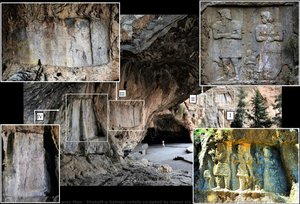
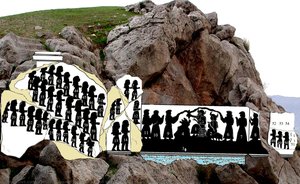
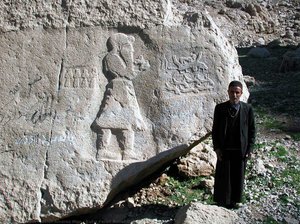
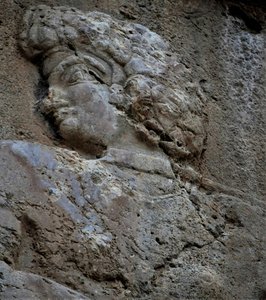
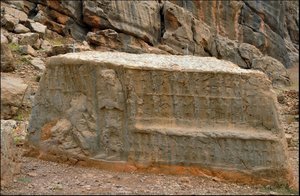
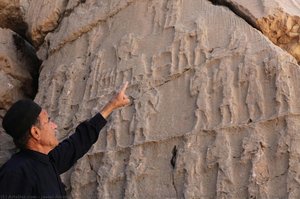
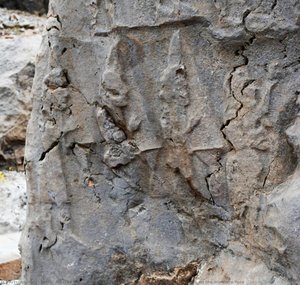
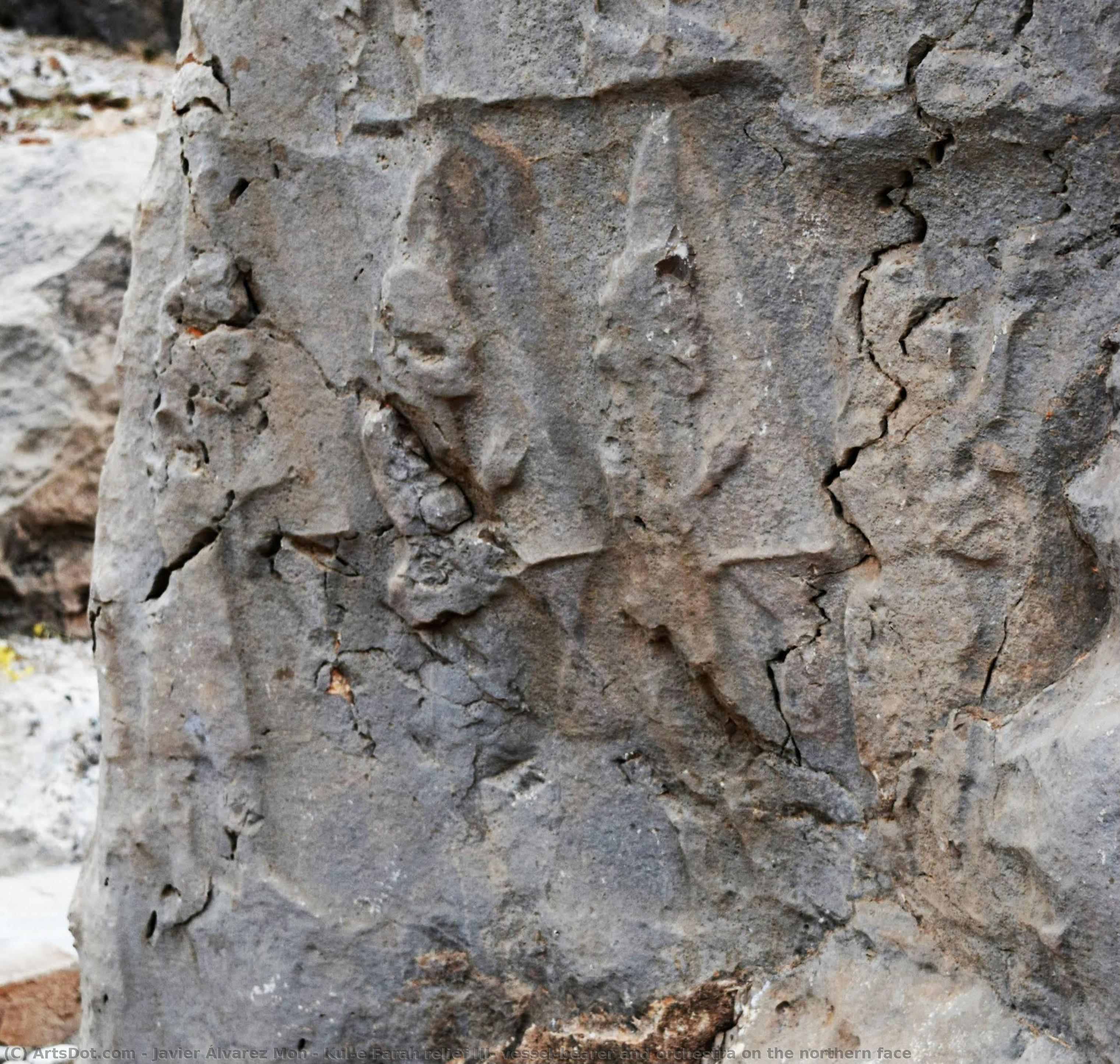
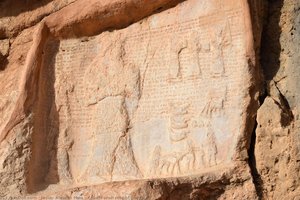
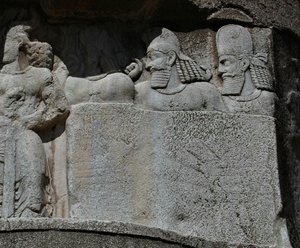
Kul-e Farah relief III, vessel-bearer and orchestra on the northern face


 Read More
Hand Made Oil Reproduction
Hand-painted oil on canvas in your size and frame, made to order by our artists. ( Buy Print Buy Image)




P118B $10

P118H $10

P118W $10

P438Z $10

P508JH $12

P508YH $12

P805H $10

P805Z $10

P919BZ $10

P919G $10

P919XJ $10

P959ZH $10

P968JZ $12

W106C $8

W218G $10

W218JH $8

W218Y $10

W307PJ $10

W316G $10

W316PJ $8

W316Y $10

W398PJ $8

W4111J $10

W500HY $15

W500JH $15

W692G $12

W849H $8

W940BG $15

W953PJ $8




Pick from our preset sizes that match the artwork's original proportions.

You may enter your own dimensions to fit a specific frame or space. If your selected size does not match the original image's proportions, we will either crop the artwork or extend the painting with additional hand-painted elements. A digital mockup will be sent for your approval before production begins.
Please note that the on-screen preview does not reflect the actual cropping or extension. Only the mockup will accurately show the final composition.
While custom sizes are available, we recommend selecting a dimension from the predefined list to preserve the original proportions.
After order, ArtsDot.com team will email client for instructions and provide a mockup preview
Worldwide Delivery () in 3/4 weeks instead of standard 5 weeks. (23 August). No compromise on quality.

Free Worldwide Express Shipping

High-Quality Linen Canvas

Full Shipping Insurance

Customs Tax Refund Guarantee

True Color Matching Guarantee

60-Day Return Policy (Defects Only)

100% Money-Back Guarantee

Bulk Discount Offer
 Glass option is only available in size under 110 CM

Kul-e Farah relief III, vessel-bearer and orchestra on the northern face
Reproduction Medium
Reproduction Size
-


Total Price
$ 313
Artwork Description
Kul-e Farah Relief III: A Symphony of Stone – Vessel Bearer and Orchestra
The Kul-e Farah reliefs, particularly the “Vessel Bearer and Orchestra” fragment, offer an extraordinary glimpse into the artistic and ritualistic heart of the Elamite civilization. Dating back to 600 BCE, this remarkable rock relief, meticulously crafted by Javier Álvarez Mon, transports us directly to a scene of vibrant ceremony – a moment frozen in time on the northern face of a monumental vessel.
- Subject Matter: The central focus is a group of four individuals engaged in what appears to be a complex musical and ceremonial performance. A vessel bearer, holding globular vessels aloft with practiced grace, commands attention while three musicians, each playing an angular harp, create a rhythmic backdrop.
- Style & Technique: The work exemplifies the characteristic Elamite style – characterized by simplified forms, linear detailing, and a deliberate emphasis on geometric abstraction. Álvarez Mon’s skill lies in his faithful recreation of this ancient technique, utilizing the subtractive carving method to liberate figures from the raw stone.
- Historical Context: Created during the reign of an Elamite ruler, this relief speaks volumes about the importance of music and ritual within their society. The vessels themselves likely held symbolic significance, perhaps containing offerings or representing a connection to the divine.
A Study in Texture and Light
The photograph itself is a testament to the artwork’s inherent qualities. The rough texture of the limestone or sandstone dominates, providing an immediate sense of antiquity and grounding the figures within their natural environment. Subtle variations in tone – achieved through careful lighting – accentuate the relief's depth, casting shadows that heighten the drama and emphasize the intricate craftsmanship embedded within the stone.
- Composition: The composition is tightly focused, drawing the viewer’s eye to the central figures while acknowledging the surrounding rock face. The layering of figures creates a compelling sense of spatial recession, enhancing the illusion of depth.
- Color Palette: Predominantly monochromatic – shades of grey, beige, and brown – the color palette reflects the natural material itself, evoking a feeling of timelessness and connection to the earth.
Symbolism and Emotional Resonance
Beyond its technical brilliance, the Kul-e Farah Relief III resonates with profound symbolic meaning. The vessel bearer’s gesture suggests authority and control, while the musicians embody creativity and spiritual expression. The stylized forms and solemn poses evoke a sense of reverence and ritual – inviting us to contemplate the beliefs and practices of this ancient civilization.
- Symbolic Elements: The instruments themselves—harps—were often associated with divine communication in ancient Near Eastern cultures, suggesting a direct link between earthly music and the celestial realm.
- Emotional Impact: The artwork’s enduring power lies in its ability to transport us across millennia, fostering a sense of wonder and connection to the past. It is a reminder of humanity's persistent desire for beauty, expression, and spiritual understanding.
A Masterpiece Reimagined – A Reproduction for Your Collection
ArtsDot offers meticulously crafted hand-painted reproductions of this extraordinary Elamite relief, allowing you to bring its timeless beauty into your home or office. Each reproduction is created by skilled artisans who have painstakingly studied Álvarez Mon’s original work, ensuring an unparalleled level of detail and authenticity. Whether as a statement piece in a contemporary setting or a treasured addition to a collection of ancient art, the Kul-e Farah Relief III – Vessel Bearer and Orchestra – promises to be a source of enduring fascination and inspiration.
Related Artworks
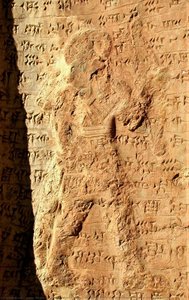
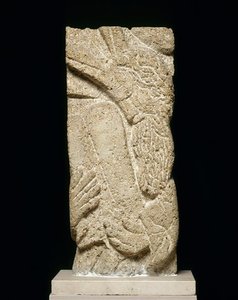
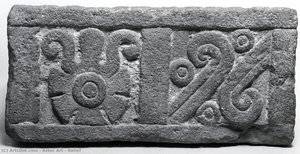
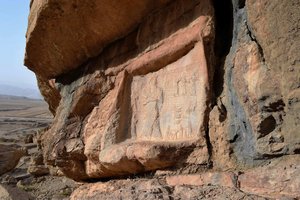

Artist Biography
The Chronicler of Ancient Sands
In the vast, dusty corridors of human history, few figures possess the ability to breathe life into the silent relics of the past quite like Javier Álvarez-Mon. Born in Madrid in 1969, his journey has not been one of a traditional painter wielding a brush, but rather that of an archaeologist and historian meticulously reconstructing the lost grandeur of the ancient Near East. Through his scholarly lens, the fragmented pottery, weathered reliefs, and forgotten inscriptions of the Elamite civilization are transformed from mere artifacts into vibrant narratives of human existence. His life’s work serves as a bridge between the modern world and the enigmatic shadows of the Bronze and Iron Ages.
The foundation of his intellectual prowess was laid at the Universidad Complutense de Madrid, where he earned his doctorate in archaeology in 2001. This rigorous academic training instilled in him a profound respect for the material evidence of antiquity. As his career progressed, Álvarez-Mon became a vital voice within the Spanish National Research Council (CSIC) and took on the mantle of director for the Elamite Studies Group at the University of Barcelona. His approach is characterized by a deep, almost poetic immersion into the culture of Elam, seeking to understand not just the dates of conquests, but the very soul of a civilization that flourished between 4200 and 525 BC.
Unearthing the Elamite Legacy
The essence of Álvarez-Mon’s contribution lies in his ability to synthesize archaeological data with historical storytelling. His research focuses heavily on the Elamite culture, a pivotal yet often overlooked precursor to the Persian Empire. Through his extensive excavations and meticulous analysis, he has illuminated the complex social structures, artistic expressions, and political intricacies of this ancient Near Eastern power. His work does not merely document; it interprets the aesthetic and symbolic language used by ancient peoples to communicate their identity and their relationship with the divine.
His literary contributions serve as essential pillars for anyone seeking to understand the origins of Persian history. Some of his most profound scholarly achievements include:
- The Elamite World (2018): A sweeping exploration that brings the breadth of Elamite influence to light.
- Elam: History, Art, and Archaeology (2021): A comprehensive study that blends the physical remains of the earth with the artistic legacy of its people.
- The Elamite Culture (2015): An intimate look at the societal nuances of this ancient civilization.
- Elam: A History of the Region (2012): A foundational text tracing the geographical and political evolution of the territory.
A Legacy of Discovery and Collaboration
Beyond his individual publications, the significance of Javier Álvarez-Mon is found in his collaborative spirit and his dedication to international research projects. He has been a driving force behind initiatives such as the Elamite Project, funded by the CSIC, which seeks to push the boundaries of what we know about the ancient Near East. His archaeological endeavors in Iran have allowed him to connect directly with the soil where these civilizations once thrived, bringing a sense of tactile reality to his academic findings.
His work is characterized by an unwavering commitment to uncovering the truth behind the legends of the ancient world. By studying artifacts like the Kul-e Farah reliefs and other precious remnants of early Persian history, he ensures that the voices of the Elamites are not lost to the sands of time. Through his tireless research, Álvarez-Mon has secured his place as a vital custodian of human heritage, ensuring that the art, culture, and history of the ancient Near East continue to inspire and educate generations to come.
javier álvarez mon
1969 - , Spain
Quick Facts
- Date Of Birth: 1969
- Full Name: Javier Álvarez Mon
- Nationality: Spanish
- Notable Artworks:
- The Elamite World (2018)
- Elam: History, Art and Archaeology (2021)
- Place Of Birth: Madrid, Spain
Related Articles
Sculpting with Soul: An Expert Guide to the Tactile Elegance of Plaster Relief Art
Discover the captivating world of plaster relief art. Our expert guide explores the history, techniques, and curation of textured bas-relief, helping collectors bring depth, light, and soulful dimension to their modern interiors through sophisticated sculptural masterpieces.
Ben Nicholson OM: Modernism's Abstract Pioneer & the Poetics of Relief
Explore the revolutionary abstract art of Ben Nicholson OM. Discover his geometric masterpieces, collaborations with Barbara Hepworth & investment potential. Expert insights for collectors.
Golden Hour on the Nile: Symbolism & Artistic Legacy of Egyptian Sunsets
Explore the rich symbolism of Egyptian sunset paintings & their artistic legacy. Discover how color, ritual, and landscape shaped ancient beliefs – a guide for discerning collectors.

The Enduring Legacy of Classical Style: Form, Narrative & Influence in Art
Explore the enduring legacy of classical art – from ancient Greece & Rome to Neoclassicism. Discover key artists, philosophical roots & build a timeless collection with ArtsDot's expert guidance.

The Enduring Legacy of Woodblock Printmaking: Technique, History & Artistic Expression
Explore the rich history of woodblock printmaking – from ancient techniques to Ukiyo-e masterpieces. Discover expert insights on collecting, preserving & appreciating this enduring art form.