 Preview
 Send
Send Share
Share
 Details

 Download
 Similars
 X-Ray
X-Ray Diaporama
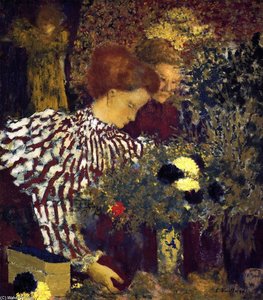
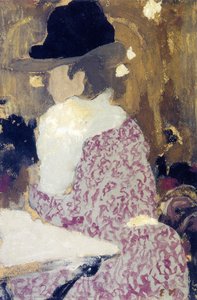
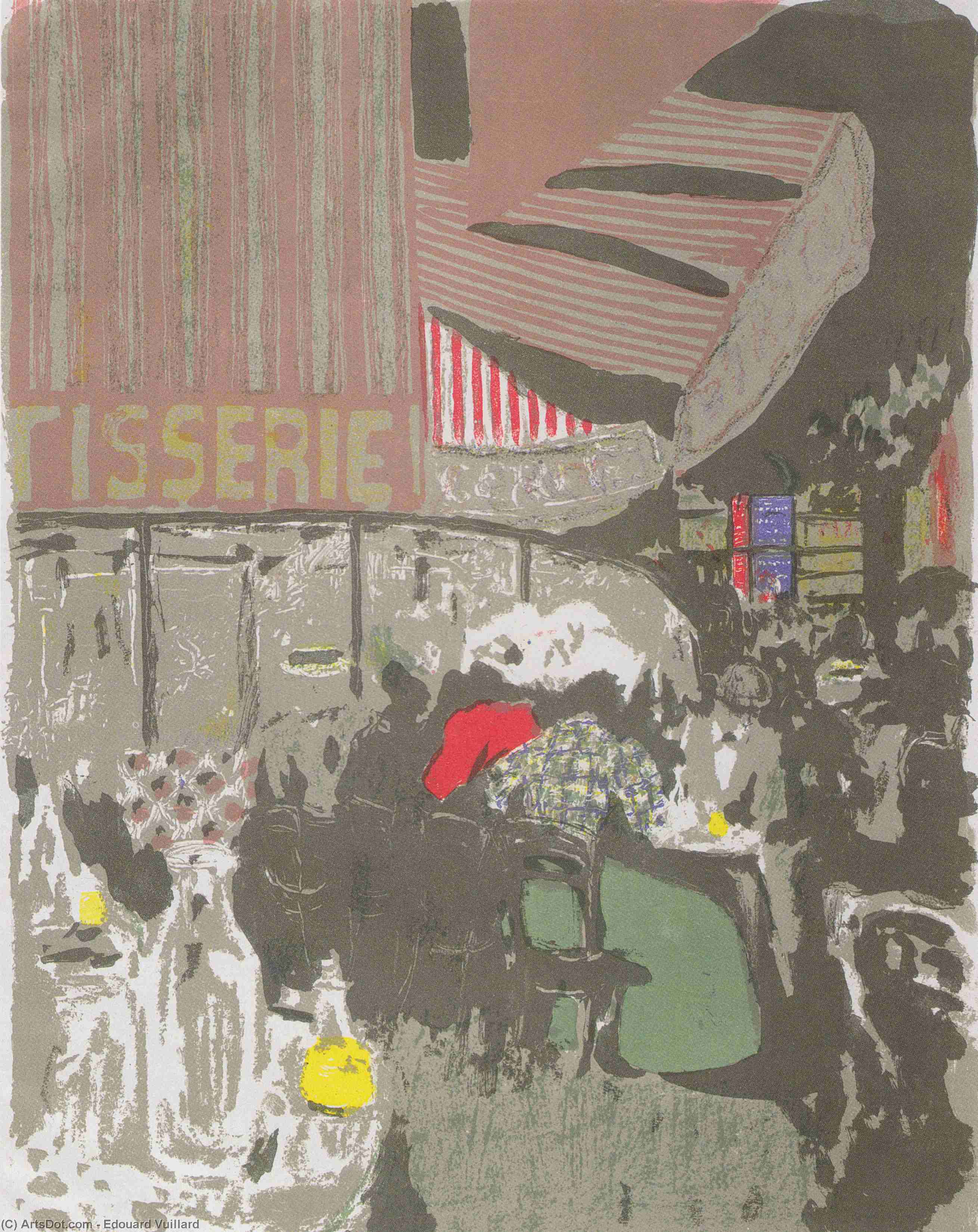
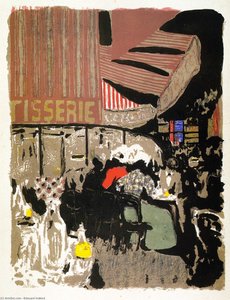
The Cake Shop
 Oil
Oil- WallArt
- Les Nabis
 1899
1899- 19th Century
 38.0 x 29.0 cm
 Read More
Giclée / Art Print
Museum-quality giclée or canvas print with fast production and flexible finish options. ( Buy Hand Made Painting Buy Image)




P118B $10

P118H $10

P118W $10

P438Z $10

P508JH $12

P508YH $12

P805H $10

P805Z $10

P919BZ $10

P919G $10

P919XJ $10

P959ZH $10

P968JZ $12

W106C $8

W218G $10

W218JH $8

W218Y $10

W307PJ $10

W316G $10

W316PJ $8

W316Y $10

W398PJ $8

W4111J $10

W500HY $15

W500JH $15

W692G $12

W849H $8

W940BG $15

W953PJ $8




Pick from our preset sizes that match the artwork's original proportions.

You may enter your own dimensions to fit a specific frame or space. If your selected size does not match the original image's proportions, we will either crop the artwork or extend the image with a mirrored or solid-fill edge. A digital mockup will be sent for your approval before production begins.
Please note that the on-screen preview does not reflect the actual cropping or extension. Only the mockup will accurately show the final composition.
While custom sizes are available, we recommend selecting a dimension from the predefined list to preserve the original proportions.
Worldwide Delivery () in 2 weeks instead of standard 4/5 weeks. (22 August)

Free Worldwide Express Shipping

High-Quality Linen Canvas

Full Shipping Insurance

Customs Tax Refund Guarantee

True Color Matching Guarantee

60-Day Return Policy (Defects Only)

100% Money-Back Guarantee

Bulk Discount Offer
 Glass option is only available in size under 110 CM

The Cake Shop
Giclée / Art Print
Reproduction Size
-


Total Price
$ 63
Collectible Description
A Window into Belle Époque Intimacy
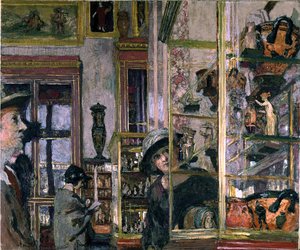
In the soft, dappled light of late nineteenth-century Paris, Jean-Édouard Vuillard captures a fleeting moment of urban repose in his evocative masterpiece, The Cake Shop. Painted in 1899, this work serves as a profound window into the soul of the Belle Époque, inviting the viewer to step inside a bustling café where time seems to slow amidst the sweetness of confectionary delights. The scene is far more than a mere depiction of a commercial space; it is an intimate study of human presence and the quiet rhythms of social life. As we gaze upon the man seated at the counter, framed by the tempting displays of treats, we are drawn into a narrative of solitude within a crowd, a theme that resonates deeply with anyone who has ever found themselves lost in thought while surrounded by the hum of a busy city.
The composition is a masterclass in the decorative approach characteristic of Les Nabis, the influential group of avant-garde artists to which Vuillard belonged. Rather than relying on rigid perspective or stark outlines, the artist employs flattened planes of color and intricate patterns to weave the figures into their environment. The cake shop itself becomes a tapestry of textures—the smooth surface of the countertop, the delicate shapes of the pastries, and the subtle interplay of light reflecting off glassware. This technique creates a sense of rhythmic harmony, where the boundaries between the people and the objects surrounding them begin to blur, suggesting a deep, almost spiritual connection between humanity and the domestic spaces they inhabit.
The Art of Pattern and Atmosphere
For the discerning collector or interior designer, The Cake Shop offers an unparalleled sense of warmth and sophisticated nostalgia. Vuillard’s technique, heavily influenced by the aesthetic of Japanese woodblock prints, utilizes a muted yet rich palette that evokes a sense of cozy enclosure. The way light filters through the scene—not as a harsh spotlight, but as a gentle, pervasive glow—imbues the painting with an emotional depth that is both comforting and melancholic. This atmospheric quality makes the piece an extraordinary choice for creating a focal point in a room designed for reflection or intimate conversation, such as a library, a study, or a refined dining area.
Beyond its visual beauty, the painting carries a symbolic weight regarding the transition of modern art. As a precursor to movements like Cubism and Fauvism, Vuillard’s ability to manipulate form and color without sacrificing emotional truth provides a bridge between the Impressionist era and the abstraction of the twentieth century. To possess a reproduction of this work is to hold a piece of art history that celebrates the beauty found in the mundane. It is an invitation to appreciate the "small" moments—the clink of a spoon, the shared glance across a table, and the quiet joy of a shared afternoon—transforming any living space into a sanctuary of culture and contemplative grace.
Related Artworks
Artist Biography
**early life and artistic beginnings**
jean-édouard vuillard, a french painter, decorative artist, and printmaker, was born on november 11, 1868, in cuiseaux, france. his life's work would later become a cornerstone of the avant-garde artistic group les nabis, alongside fellow visionaries like maurice denis and édouard vuillard. this collective would revolutionize the art world with their innovative approach to color and form.**the nabis movement and its influence**
as a prominent member of les nabis, vuillard's paintings assembled areas of pure color, influenced by japanese prints. his interior scenes explored the spatial effects of flattened planes of color, pattern, and form. this approach would later influence the development of cubism, fauvism, and abstract art.- les nabis, a group of young french artists active in paris from 1888 until 1900, played a large part in the transition from impressionism and academic art to abstract art, symbolism, and the other early movements of modernism.
- their philosophy was based upon the philosophy of positivism, and the writings of auguste comte and hippolyte taine.
**vuillard's later work and legacy**
after 1900, when les nabis disbanded, vuillard adopted a more realistic style, approaching landscapes and interiors with greater detail and vivid colors. in the 1920s and 1930s, he painted portraits of prominent figures in french industry and the arts in their familiar settings. **key works and exhibitions:**- jean-édouard vuillard's paintings can be found in various museums, including the musée de la révolution française (france), which boasts a rich collection of artworks, documents, and objects related to the revolutionary period.
- some of his notable works include "la patrie en danger" by guillaume lethière and "jean de la barre" by jean clouet, which depict a young man condemned to death for blasphemy during the ancien régime.
- vuillard's later work, such as his portraits of french industry and arts figures, can be seen in various galleries, including those at intimism art movement and jean-édouard vuillard's page on ArtsDot.
**conclusion**
jean-édouard vuillard's enigmatic world, characterized by its innovative use of color and form, has left an indelible mark on the art world. as a pioneer of modernism, his work continues to inspire artists and influence various artistic movements. discover more about intimism art movement and explore jean-édouard vuillard's works on ArtsDot.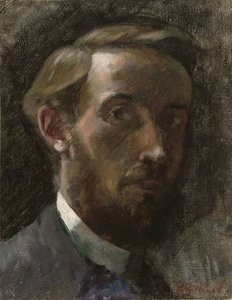
jean-édouard vuillard
1868 - 1940 , France
Quick Facts
- Artistic Movement Or Style: Nabis
- Artists Or Movements Influenced By This Artist:
- Cubism
- Fauvism
- Artists Who Influenced This Artist: ['Paul Gauguin']
- Date Of Birth: November 11, 1868
- Date Of Death: June 21, 1940
- Full Name: Jean-Édouard Vuillard
- Nationality: French
- Notable Artworks:
- Woman Sweeping
- Sunlit Interior
- Place Of Birth: Cuiseaux, France
Related Articles
Intimate Interiors & Poetic Ambiguity: Exploring the Vision of Jean-Édouard Vuillard
Discover the captivating world of Jean-Édouard Vuillard, a key figure of the Nabis movement. Explore his intimate interiors, unique style & lasting influence on modern art. Learn more at ArtsDot.
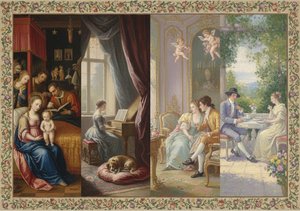
Intimate Interiors: Domestic Life & Artistic Representation from Renaissance to Impressionism
Explore the evolution of domestic life in Western art from the Renaissance to Impressionism. Discover symbolism, realism & artistic techniques shaping intimate interior scenes. Learn more with ArtsDot.
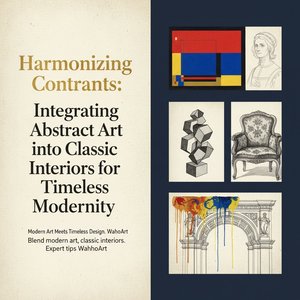
Harmonizing Contrasts: Integrating Abstract Art into Classic Interiors for Timeless Modernity
Elevate your classic home with abstract art! Discover expert tips for seamlessly blending modern pieces into timeless interiors. Find the perfect artwork & design advice at ArtsDot.
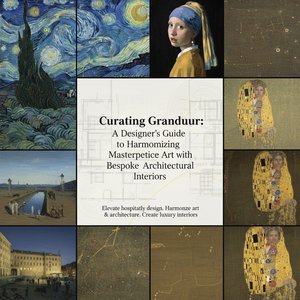
Harmonizing History & Hue: A Guide to Matching Art Styles with Interior Architecture for Balanced Décor
Elevate your interior design with our expert guide to harmonizing art styles & architecture. Discover timeless pieces, color palettes, & custom artwork solutions for balanced, luxury spaces. Expert advice included!
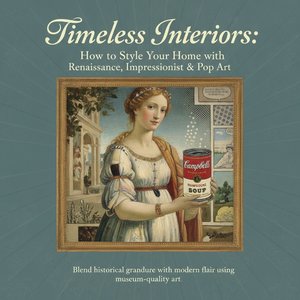
Beyond Ephemeral Trends: Cultivating Enduring Interior Aesthetics Through Renaissance Reverie, Impressionist Light, and Pop Art Vibrancy
Discover enduring interior aesthetics inspired by Renaissance artistry, Impressionist light & Pop Art vibrancy. Expert guidance for creating timeless, luxury homes. Explore art curation & design principles.