 Preview
 Send
Send Share
Share
 Details

 Download
 Similars
 X-Ray
X-Ray Diaporama
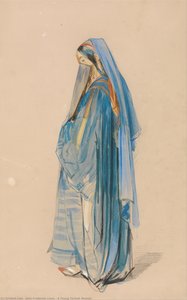
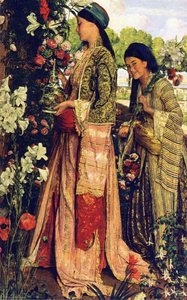
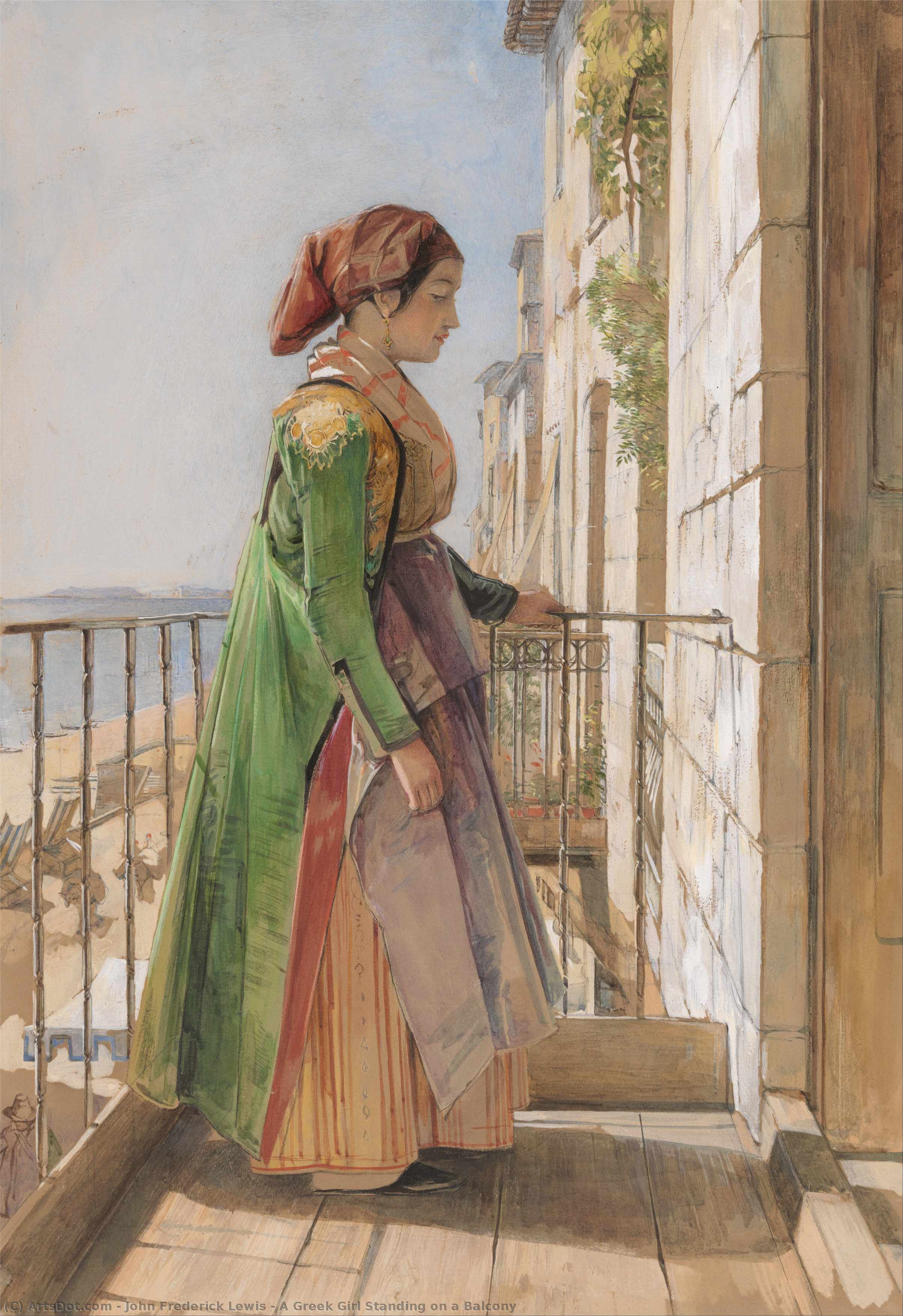
A Greek Girl Standing on a Balcony


 Read More
Giclée / Art Print
Museum-quality giclée or canvas print with fast production and flexible finish options. ( Buy Hand Made Painting Buy Image)




P118B $10

P118H $10

P118W $10

P438Z $10

P508JH $12

P508YH $12

P805H $10

P805Z $10

P919BZ $10

P919G $10

P919XJ $10

P959ZH $10

P968JZ $12

W106C $8

W218G $10

W218JH $8

W218Y $10

W307PJ $10

W316G $10

W316PJ $8

W316Y $10

W398PJ $8

W4111J $10

W500HY $15

W500JH $15

W692G $12

W849H $8

W940BG $15

W953PJ $8




Pick from our preset sizes that match the artwork's original proportions.

You may enter your own dimensions to fit a specific frame or space. If your selected size does not match the original image's proportions, we will either crop the artwork or extend the image with a mirrored or solid-fill edge. A digital mockup will be sent for your approval before production begins.
Please note that the on-screen preview does not reflect the actual cropping or extension. Only the mockup will accurately show the final composition.
While custom sizes are available, we recommend selecting a dimension from the predefined list to preserve the original proportions.
Worldwide Delivery () in 2 weeks instead of standard 4/5 weeks. (16 August)

Free Worldwide Express Shipping

High-Quality Linen Canvas

Full Shipping Insurance

Customs Tax Refund Guarantee

True Color Matching Guarantee

60-Day Return Policy (Defects Only)

100% Money-Back Guarantee

Bulk Discount Offer
 Glass option is only available in size under 110 CM

A Greek Girl Standing on a Balcony
Giclée / Art Print
Reproduction Size
-


Total Price
$ 63
Collectible Description
A Greek Girl Standing on a Balcony – An Ode to Delicate Beauty and Orientalist Vision
The watercolor painting “A Greek Girl Standing on a Balcony,” created in 1840 by John Frederick Lewis, transcends mere depiction; it embodies the spirit of Orientalism—a movement that sought to capture exotic landscapes and cultures through European artistic sensibilities. More than just a visual record, this artwork speaks volumes about Victorian aesthetics and the fascination with idealized femininity within the broader context of the era.The Artist’s Vision: John Frederick Lewis – Pioneer of Watercolor Technique
John Frederick Lewis (1804-1876), born in London, stands as one of Britain's foremost watercolorists. His formative years under Sir Thomas Lawrence instilled a profound understanding of composition and meticulous detail—skills he would expertly apply throughout his prolific career. Unlike the dramatic chiaroscuro favored by artists like Eugène Delacroix, Lewis championed a luminous palette achieved through layering gouache over watercolor, resulting in an ethereal glow that distinguishes his work from its contemporaries. This technique wasn't merely stylistic; it reflected a desire to convey subtlety and nuance—qualities paramount in capturing the essence of distant lands and subjects.A Scene Steeped in Atmosphere: Athens and Beyond
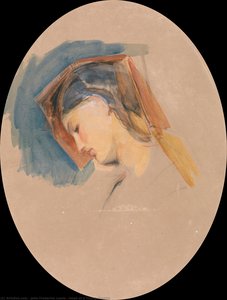
The painting transports us to Athens, circa 1840, albeit viewed from afar. The balcony itself serves as a focal point, framing a woman dressed in elegant Grecian attire—a deliberate nod to classical ideals of beauty. Her posture exudes composure and grace, mirroring the Victorian fascination with idealized femininity. Behind her stretches an expanse of azure ocean, punctuated by distant buildings rendered in muted tones – creating a harmonious blend of color and texture that evokes tranquility and contemplation. The artist’s careful attention to light—particularly the dappled sunlight filtering through foliage—further enhances the scene's atmospheric quality.Symbolism Within Detail: Costume Design and Artistic Expression
Lewis’s masterful costume design is noteworthy. The woman’s gown, adorned with intricate floral patterns, embodies Victorian fashion trends while simultaneously referencing Grecian drapery – a symbolic gesture reflecting the movement’s preoccupation with reviving classical forms. Furthermore, observe the meticulous stippling technique employed to depict her face—a hallmark of Lewis's style that conveys an astonishing level of realism and sensitivity. This painstaking detail underscores his commitment to capturing not just appearances but also emotional nuance. The painting isn't simply a representation; it’s an exploration of beauty, grace, and the artist’s ability to distill complex ideas into visual form.Legacy and Influence: Watercolor’s Golden Age
“A Greek Girl Standing on a Balcony” exemplifies Lewis’s contribution to watercolor’s golden age—a period characterized by unprecedented artistic innovation and stylistic refinement. Critics lauded his work for its “mixed ease and severity of drawings, marvels of minute execution, extraordinary delicacy as well as beauty of color,” cementing his reputation as the undisputed champion of watercolor technique. This painting continues to inspire artists today, demonstrating the enduring power of observation, meticulous craftsmanship, and a profound appreciation for artistic expression. Its serene composition and luminous palette serve as a testament to Lewis’s visionary approach—a legacy that resonates powerfully within the annals of British art history.Related Artworks
Artist Biography
John Frederick Lewis: A Life in Orientalist Painting
Early Life and Training
John Frederick Lewis, a prominent English Orientalist painter, was born on July 14, 1804, in London. He was the son of Frederick Christian Lewis, an engraver and landscape painter. This familial artistic background undoubtedly influenced his early development. His formal training began under the tutelage of Sir Thomas Lawrence, where he honed his skills alongside fellow artists like Edwin Landseer. This foundational period instilled in him a strong understanding of technique and composition.
Artistic Career & Development
Lewis’s artistic career unfolded through several distinct phases, each marked by evolving styles and thematic focuses:
- Orientalist Period: Lewis embarked on extensive travels throughout the Mediterranean region, meticulously capturing its essence in detailed watercolor and oil paintings. He frequently revisited compositions, rendering them across multiple mediums.
- Spanish & Moroccan Influences (1832-1834): A tour of Spain and Morocco proved pivotal. He produced numerous lithographs later published as “Sketches and Drawings of the Alhambra” (1835) and “Lewis’s Sketches of Spain and Spanish Character” (1836).
- Egyptian Period (1841-1851): His sojourn in Cairo was arguably his most productive. Here, he perfected his Orientalist style, creating highly detailed works showcasing both realistic genre scenes and idealized depictions of upper-class Egyptian interiors.
Notable Works
Lewis created a substantial body of work celebrated for its meticulous detail and evocative atmosphere. Some of his most recognized pieces include:
- A Bedouin (Yale Center for British Art, New Haven) – A watercolor exemplifying his Orientalist style.
- The Ramesseum at Thebes (Yale Center for British Art, New Haven) – Showcasing his remarkable attention to architectural detail.
- A Young Turkish Woman (Yale Center for British Art, New Haven) – Another striking example of his Orientalist work.
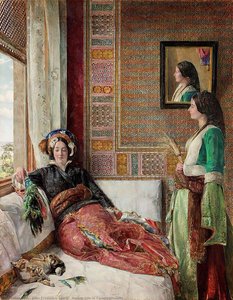
- Harem Life in Constantinople - A detailed oil painting depicting Ottoman domestic life.
Influences and Artistic Style
Lewis’s style was shaped by several influences, most notably Sir Thomas Lawrence's emphasis on portraiture and composition. However, his direct observation of Middle Eastern cultures allowed him to develop a unique aesthetic characterized by:
- Meticulous Detail: A commitment to accurately representing textures, patterns, and architectural elements.
- Rich Color Palette: Employing vibrant hues inspired by the landscapes and costumes he encountered.
- Genre Scenes & Interior Views: Focusing on everyday life and intimate domestic settings.
Legacy and Historical Significance
Lewis’s contribution to the art world lies in his significant role in developing Orientalist painting. His meticulous representations of Islamic architecture, furnishings, and costumes set new standards for realism within the genre. He helped popularize a romanticized yet detailed vision of the Middle East among Western audiences. After returning to England in 1851, he continued to paint until his death on August 15, 1876, in Walton-on-Thames.
His work continues to be studied and admired for its artistic merit and historical insight into 19th-century perceptions of the Orient.
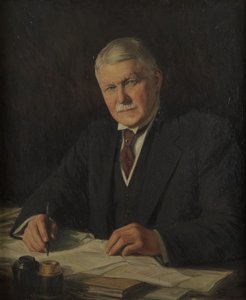
John Frederick Lewis
1804 - 1876 , United Kingdom
Quick Facts
- Birth Date: July 14, 1804
- Birth Place: London, United Kingdom
- Death Date: August 15, 1876
- Influenced By: Sir Thomas Lawrence
- Movement: Orientalism
- Name: John Frederick Lewis
- Nationality: British
- Notable Works:
- A Bedouin
- The Ramesseum at Thebes
- A Young Turkish Woman
- Harem Life in Constantinople
Related Articles

Watercolor Wonders: 10 Masterpieces That Redefined Art History | ArtsDot
Journey through 10 legendary watercolor masterpieces by Sargent, Turner & Homer! Explore iconic landscapes, portraits & floral art that redefined history. Find museum-quality reproductions and curated decor ideas at ArtsDot.com.

Ephemeral Visions: Exploring the Artistic Legacy & Contemporary Practice of Watercolor Painting
Explore the captivating world of watercolor painting! Discover its rich history, essential techniques, influential artists & collecting tips. A comprehensive guide for art enthusiasts from ArtsDot.

Ephemeral Visions: Exploring the History & Emotional Resonance of Watercolor Painting
Explore the captivating history of watercolor painting, from ancient techniques to modern masters like Kandinsky & Blake. Discover essential artists, collecting tips & the emotional power of this luminous medium. Expert insights for art enthusiasts.

Ephemeral Visions: Exploring the Artistic Legacy & Nuances of Watercolor Painting
Explore the captivating world of watercolor painting! Discover its rich history, essential techniques, influential artists & collecting tips from art experts. A comprehensive guide for enthusiasts.

The Enduring Appeal of Watercolor: History, Techniques & Contemporary Practice
Explore the captivating world of watercolor painting! Discover its rich history, essential techniques, influential artists, and collecting tips. A comprehensive guide for art enthusiasts.