 Preview
 Send
Send Share
Share
 Details

 Download
 Similars
 X-Ray
X-Ray Diaporama
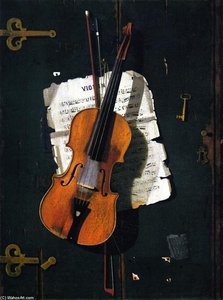
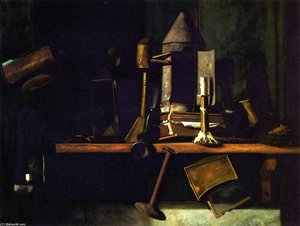
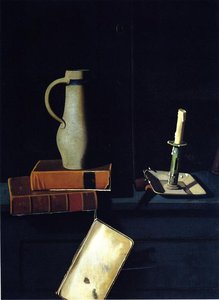
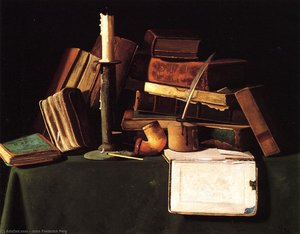
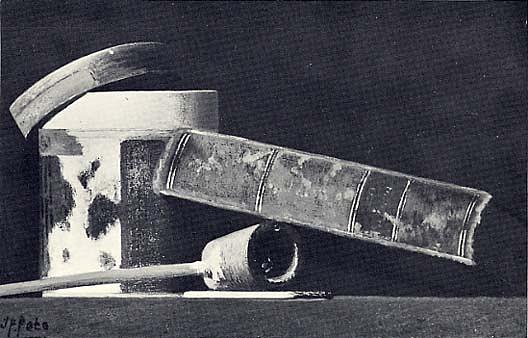
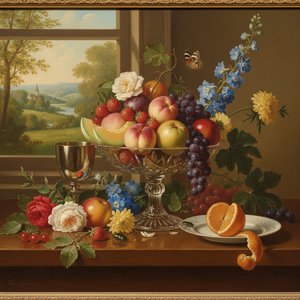
Still Life, Evening at Home, (painting)


 Read More
Hand Made Oil Reproduction
Hand-painted oil on canvas in your size and frame, made to order by our artists. ( Buy Print Buy Image)




































Pick from our preset sizes that match the artwork's original proportions.

You may enter your own dimensions to fit a specific frame or space. If your selected size does not match the original image's proportions, we will either crop the artwork or extend the painting with additional hand-painted elements. A digital mockup will be sent for your approval before production begins.
Please note that the on-screen preview does not reflect the actual cropping or extension. Only the mockup will accurately show the final composition.
While custom sizes are available, we recommend selecting a dimension from the predefined list to preserve the original proportions.
After order, ArtsDot.com team will email client for instructions and provide a mockup preview
Worldwide Delivery () in 3/4 weeks instead of standard 5 weeks. (26 August). No compromise on quality.

Free Worldwide Express Shipping

High-Quality Linen Canvas

Full Shipping Insurance

Customs Tax Refund Guarantee

True Color Matching Guarantee

60-Day Return Policy (Defects Only)

100% Money-Back Guarantee

Bulk Discount Offer
 Glass option is only available in size under 110 CM

Still Life, Evening at Home, (painting)
Reproduction Medium
Reproduction Size
-


Total Price
$ 263
Artwork Description
A Moment of Quiet Reflection: John Frederick Peto's "Still Life, Evening at Home"
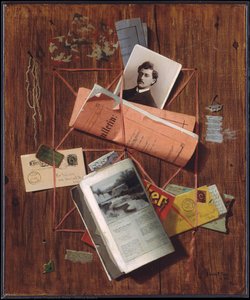
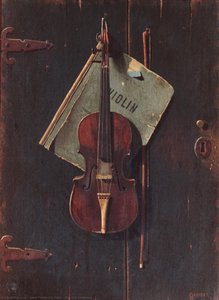
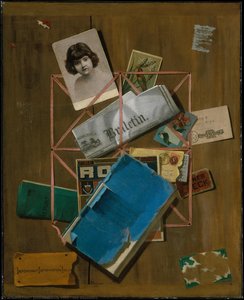
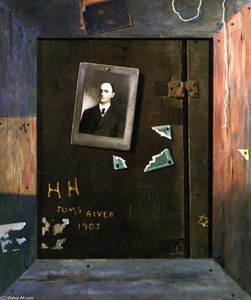
This evocative black and white painting, “Still Life, Evening at Home,” by American artist John Frederick Peto, transports viewers to a world steeped in quiet contemplation. Created in 1882, the work exemplifies Peto’s mastery of *trompe l'oeil*—a technique meaning "fool the eye"—where he aimed to create incredibly realistic depictions that blur the line between painting and reality. The scene presents a carefully arranged collection of everyday objects: a wooden box with an open lid, a rolled-up book or scroll, and a cylindrical object wrapped in fabric, all resting on a table bathed in dramatic shadows. The composition’s strength lies not just in its technical skill but also in the mood it evokes—a sense of stillness and introspection that invites prolonged observation.Style & Technique: Realism with Romantic Undertones
Peto's style is firmly rooted in realism, demonstrating a keen eye for detail and an impressive ability to render textures convincingly. The visible brushstrokes, particularly evident in the rough surfaces of the wooden box and fabric wrapping, contribute to a tactile quality that enhances the illusion of three-dimensionality. However, the painting transcends mere representation through its striking use of light and shadow. The directional lighting casts deep shadows, creating strong contrasts that imbue the scene with a dramatic intensity reminiscent of Romanticism or chiaroscuro techniques employed by masters like Caravaggio. The shallow depth of field further focuses attention on the central elements, drawing the viewer into the intimate space of this domestic still life. Peto likely utilized oil paint on canvas, a medium well-suited to achieving the rich textures and subtle gradations of tone that define his work.Historical Context & Trompe l'oeil Revival
“Still Life, Evening at Home” emerged during a period when *trompe l’oeil* painting was experiencing a revival in America. Following earlier periods of popularity in the 18th century, artists like Peto and William Harnett (with whom he shared a close artistic connection) sought to recapture this illusionistic style. This resurgence reflected a broader interest in realism and meticulous observation within American art. While seemingly simple, these still lifes were often complex exercises in technical skill and served as demonstrations of the artist's ability to convincingly replicate reality on canvas. Peto’s move to Island Heights, New Jersey, in 1889 marked a significant period of artistic development, allowing him to refine his unique style and focus on these captivating domestic scenes.Symbolism & Emotional Resonance
While the painting lacks overt symbolic elements, the objects themselves carry inherent associations. The wooden box suggests storage and preservation, while the rolled-up book or scroll represents knowledge, history, and perhaps even a sense of untold stories. The overall effect is one of quiet contemplation rather than narrative drama. The absence of figures further emphasizes this introspective mood, allowing viewers to project their own emotions and interpretations onto the scene. The somber palette and dramatic lighting contribute to a feeling of melancholy or nostalgia, inviting reflection on themes of time, memory, and the beauty found in everyday objects. The painting’s enduring appeal lies in its ability to evoke a sense of calm and quietude—a welcome respite from the bustle of modern life.Related Artworks
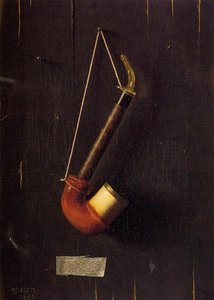
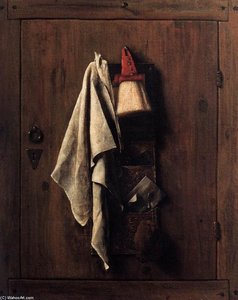
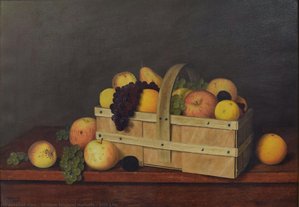
Artist Biography
John Frederick Peto: A Rediscovered Master of American Trompe l'oeil
- Born: Philadelphia, United States of America (1854)
- Died: 1907
John Frederick Peto was an American artist renowned for his mastery of *trompe l'oeil* painting – a technique that aims to deceive the viewer into believing that painted objects are real. For many years, Peto’s work remained largely forgotten until it was rediscovered in the late 20th century alongside that of fellow trompe l'oeil artist William Harnett. His paintings offer a unique glimpse into everyday life and material culture of the late 19th century.
Early Life and Artistic Training
- Peto received his early artistic training at the Pennsylvania Academy of the Fine Arts, where he studied alongside William Harnett.
- He regularly submitted works to the annual exhibitions at the Philadelphia Academy during his early career.
- In 1889, Peto relocated to Island Heights, New Jersey, a pivotal moment that significantly shaped his artistic style and subject matter.
Artistic Style and Characteristics
- Trompe l'oeil Technique: Peto’s defining characteristic was his exceptional skill in *trompe l'oeil*. He meticulously rendered ordinary objects – pistols, horseshoes, scraps of paper, keys, books – creating an illusion of three-dimensionality on a two-dimensional surface.
- Shallow Space and Composition: His paintings typically feature arrangements of these objects within a shallow space, enhancing the sense of depth and realism.
- Emphasis on Shadow and Texture: Peto paid close attention to shadow play and texture, further contributing to the deceptive quality of his work. He used subtle gradations of light and shade to create the illusion of tangible surfaces.
- Color Palette & Technique: Peto's mature works are characterized by an opaque and powdery texture, often compared to that of Jean-Baptiste-Siméon Chardin, a renowned 18th-century French painter. His color palettes were generally muted and earthy, reflecting the tones of aged objects and worn surfaces.
Rediscovery and Legacy
- Forgotten Years: After moving to Island Heights, Peto largely withdrew from the mainstream art world. He lived a quiet life, supplementing his income with painting for tourists and playing music at local events. His work was essentially forgotten for decades.
- Posthumous Recognition: The rediscovery of Peto’s paintings in the late 20th century brought renewed attention to his talent. Scholars began to recognize his unique contribution to American art.
- Comparison with Harnett: While often compared to William Harnett, Peto's style is generally considered more abstract and emotionally resonant than Harnett's technically brilliant but sometimes rigid approach. Peto’s compositions are less formal, and his objects tend to be older and more worn.
- Museums and Collections: Today, Peto’s paintings can be found in prominent museums across the United States, including the John F. Peto Studio Museum, dedicated to preserving his legacy.
Notable Works
- Take Your Choice (1885)
- Reminiscences of 1865 (1901)
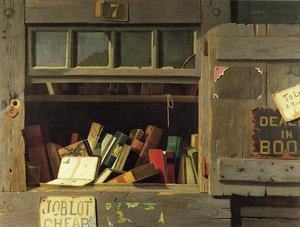
- Job Lot Cheap (1901)
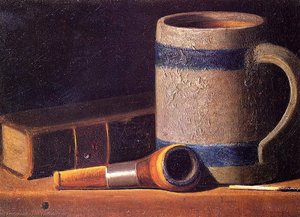
- Still Life with Mug, Pipe and Book (1870)
- Still Life with Oranges and Banana (c. 1880)
For further information on John Frederick Peto's life and work, please visit ArtsDot.com.
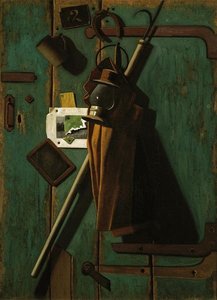
John Frederick Peto
1854 - 1907 , United States of America
Quick Facts
- Artistic Movement Or Style: Trompe-l'oeil, Realism
- Artists Who Influenced This Artist: ['Jean-Baptiste-Siméon Chardin']
- Date Of Birth: May 21, 1854
- Date Of Death: November 23, 1907
- Full Name: John Frederick Peto
- Nationality: American
- Notable Artworks:
- Take Your Choice
- Reminiscences of 1865
- Job Lot Cheap
- Still Life with Mug, Pipe and Book
- Still Life with Oranges and Banana
- Place Of Birth: Philadelphia, United States
Related Articles
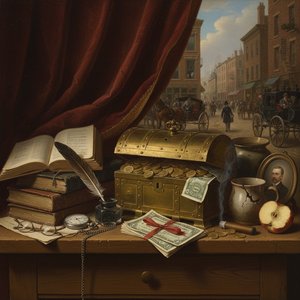
William Michael Harnett: Still Life, Realism & the American Pursuit of Materiality
Explore the captivating still lifes of William Michael Harnett, a master of American realism and trompe l'oeil painting. Discover his technique, legacy & the cultural context behind his iconic works.
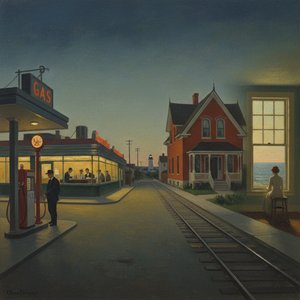
Edward Hopper's Masterpieces: 25 Iconic Paintings & Their Enduring Legacy | ArtsDot
Explore 25 iconic Edward Hopper paintings & their stories. Discover American realism, urban loneliness, and timeless beauty through his masterpieces. Find museum-quality art reproductions & curated decor ideas at ArtsDot.com.
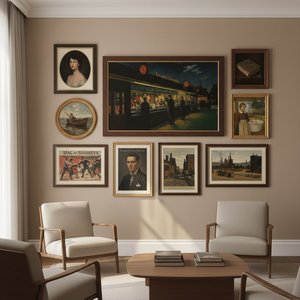
American Realism's Defining Works: 10 Masterpieces for Your Home
Explore 10 defining American Realism masterpieces – Hopper, Homer & more. Discover the stories behind these iconic paintings and bring timeless art to your home with ArtsDot's museum-quality reproductions. Explore the full collection online.
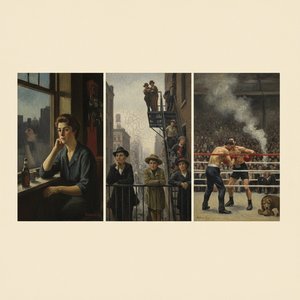
American Realism: Social Commentary & Artistic Representation in Early 20th-Century Painting
Explore the powerful social commentary & artistic representation of American Realism. Discover key artists like Bellows & Sloan, and understand the movement's lasting impact on 20th-century art history.
Severin Roesen: Evoking National Identity Through American Still Life Painting
Explore the captivating world of Severin Roesen, a major American still life painter influenced by Dutch masters. Discover his lush compositions and the symbolism within his art – a window into 19th-century America.