 Preview
 Send
Send Share
Share
 Details

 Download
 Similars
 X-Ray
X-Ray Diaporama
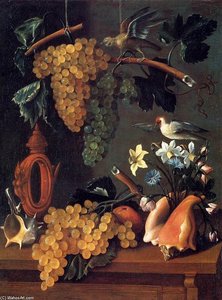
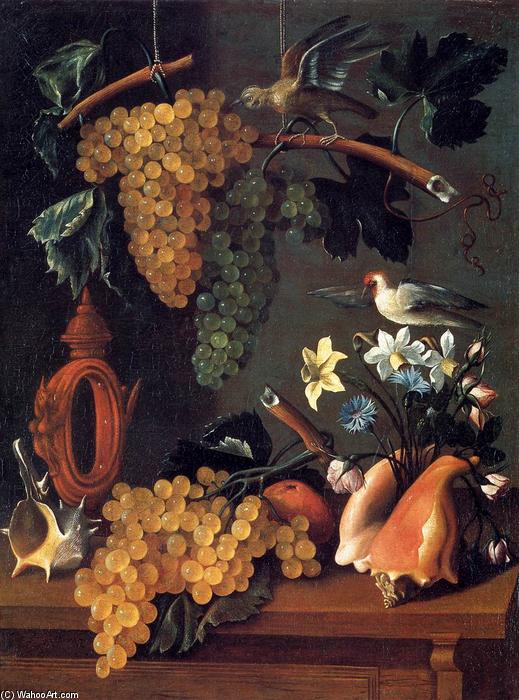
Still-Life with Grapes, Flowers and Shells
 Acrylic On Canvas
- WallArt
- Baroque
 83.0 x 62.0 cm
 The Louvre
 Read More
Hand Made Oil Reproduction
Hand-painted oil on canvas in your size and frame, made to order by our artists. ( Buy Print Buy Image)




P118B $10

P118H $10

P118W $10

P438Z $10

P508JH $12

P508YH $12

P805H $10

P805Z $10

P919BZ $10

P919G $10

P919XJ $10

P959ZH $10

P968JZ $12

W106C $8

W218G $10

W218JH $8

W218Y $10

W307PJ $10

W316G $10

W316PJ $8

W316Y $10

W398PJ $8

W4111J $10

W500HY $15

W500JH $15

W692G $12

W849H $8

W940BG $15

W953PJ $8




Pick from our preset sizes that match the artwork's original proportions.

You may enter your own dimensions to fit a specific frame or space. If your selected size does not match the original image's proportions, we will either crop the artwork or extend the painting with additional hand-painted elements. A digital mockup will be sent for your approval before production begins.
Please note that the on-screen preview does not reflect the actual cropping or extension. Only the mockup will accurately show the final composition.
While custom sizes are available, we recommend selecting a dimension from the predefined list to preserve the original proportions.
After order, ArtsDot.com team will email client for instructions and provide a mockup preview
Worldwide Delivery () in 3/4 weeks instead of standard 5 weeks. (26 August). No compromise on quality.

Free Worldwide Express Shipping

High-Quality Linen Canvas

Full Shipping Insurance

Customs Tax Refund Guarantee

True Color Matching Guarantee

60-Day Return Policy (Defects Only)

100% Money-Back Guarantee

Bulk Discount Offer
 Glass option is only available in size under 110 CM

Still-Life with Grapes, Flowers and Shells
Reproduction Medium
Reproduction Size
-


Total Price
$ 263
Artwork Description
A Symphony of Abundance: Juan Bautista de Espinosa’s Still-Life with Grapes, Flowers, and Shells
Juan Bautista de Espinosa's "Still-Life with Grapes, Flowers, and Shells," a captivating work from the mid-17th century, transcends mere representation to become a profound meditation on nature’s bounty and the fleeting beauty of earthly delights. Painted during a pivotal period of artistic transition – bridging the opulent grandeur of Flemish Baroque with the burgeoning realism of Spanish art – this piece offers a glimpse into a world where meticulous detail and evocative color converge to create an intensely sensory experience. The painting, now housed in various collections, is a testament to Espinosa’s skill as a master of light, texture, and symbolic arrangement.
Espinosa's training undoubtedly bears the influence of his Flemish contemporaries, particularly evident in the careful rendering of surfaces – the velvety skin of the grapes, the delicate folds of the flowers, and the lustrous sheen of the silver objects. However, he deftly incorporates a distinctly Spanish sensibility: a heightened sense of drama through chiaroscuro (the dramatic contrast between light and dark), a richer palette dominated by warm earth tones, and an emphasis on capturing the essence of each element rather than simply documenting its appearance. The artist’s brushwork is remarkably controlled, yet imbued with a palpable energy that breathes life into the inanimate objects.
The Language of Still Life
Still-life painting during this era was far more than a simple depiction of objects; it served as a complex visual language, laden with symbolic meaning. The arrangement within “Still-Life with Grapes, Flowers, and Shells” is meticulously orchestrated to convey themes of fertility, abundance, and the transience of life. The overflowing basket of ripe grapes, symbols of prosperity and divine favor, dominates the composition. The scattering of vibrant flowers – a riot of yellows, blues, and pinks – speaks to the beauty and fragility of nature’s ephemeral splendor. Even the inclusion of seashells, evoking memories of distant shores and the vastness of the ocean, adds another layer of symbolic richness.
Notably, two small birds perch atop the branch laden with grapes. Their presence isn't merely decorative; they represent joy, hope, and perhaps even a subtle allusion to the biblical story of Noah’s Ark – a reminder of God’s promise of renewal after a period of devastation. The dark cloth draped beneath the objects provides a grounding element, anchoring the scene in reality while simultaneously highlighting the brilliance of the surrounding colors.
A Window into the Spanish Baroque
Espinosa's work is considered a crucial link between the Flemish and Spanish Baroque traditions. While he adopted many of the Flemish techniques – particularly their mastery of light and shadow – he infused them with a distinctly Spanish flair, evident in his use of warm colors, dramatic contrasts, and an emphasis on capturing the emotional impact of the scene. The painting reflects the broader cultural context of 17th-century Spain, a period marked by religious fervor, artistic innovation, and a growing interest in classical antiquity.
The signature “Juan Bautista de Espinosa” in the lower right corner confirms the artist’s identity and provides valuable insight into his place within the complex network of artists working during this time. His work stands as a beautiful example of how art could simultaneously celebrate earthly pleasures and engage with profound spiritual themes.
Collecting a Masterpiece: Reproduction Considerations
Reproductions of Espinosa's "Still-Life with Grapes, Flowers, and Shells" offer an accessible way to bring this captivating artwork into your home or office. When selecting a reproduction, pay close attention to the quality of materials used – particularly the canvas and printing inks. A high-quality print will faithfully capture the original’s rich colors, subtle textures, and dramatic lighting effects. Look for reproductions that are hand-painted or digitally printed using archival inks to ensure long-lasting vibrancy and color accuracy.
Consider framing options carefully as well. A classic wooden frame can enhance the painting's traditional feel, while a more contemporary minimalist frame will allow the artwork’s beauty to shine through. Ultimately, a meticulously crafted reproduction of Espinosa’s still life is not merely a decorative object; it’s a window into a bygone era – a testament to the enduring power of art to inspire and uplift.
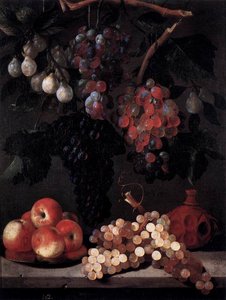
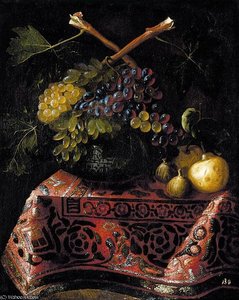
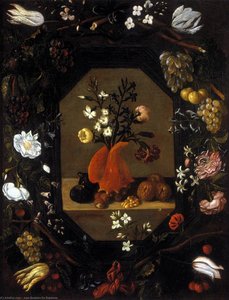
Related Artworks
Artist Biography
Juan Bautista de Espinosa (1590 – 1641): Bridging Flemish Brilliance and Spanish Baroque
Juan Bautista de Espinosa remains an enigmatic figure in the annals of Spanish Baroque art, largely obscured by confusion surrounding multiple artists sharing his name during a prolific period. Despite scarce biographical details—primarily gleaned from documentation in Madrid between 1608 and 1613—scholars recognize him as a pivotal artist who skillfully blended Flemish influences with distinctly Spanish stylistic sensibilities. His marriage to María de Aranda in 1612 solidified his domestic life, adding a son named Juan to the family lineage. This younger Juan, possibly more celebrated for his still lifes, continued artistic endeavors into 1659, demonstrating a sustained commitment to his craft.Early Life and Training
Information regarding Espinosa’s birthplace is elusive; however, he was born around 1590 in Spain. Precise details about his formative years are scant, reflecting the common practice of artists concealing personal histories during their time. He honed his skills as a gilder, undertaking significant commissions for altarpieces—a vocation that would inform much of his artistic vision and technique. His involvement with the Brotherhood of San Sebastián in Madrid further cemented his connection to religious patronage and established him within the influential artistic circles of the era.Style and Technique: A Flemish Echo
Espinosa’s oeuvre is characterized by a remarkable stylistic kinship with Juan van der Hamen, the Younger—a relationship marked by shared compositional strategies and an unwavering dedication to meticulous realism. Like van der Hamen, Espinosa prioritized order and symmetry in his paintings, meticulously arranging objects within carefully constructed spaces. His masterful use of glazing techniques—particularly translucent layers of pigment—created luminous surfaces that captured subtle tonal variations and imbued his works with a palpable sense of atmosphere. This approach distinguishes him from many contemporaries who favored looser brushstrokes and less nuanced color palettes.Notable Works and Commissions
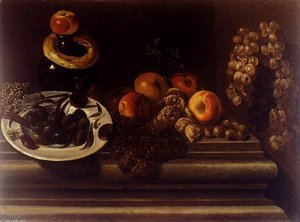
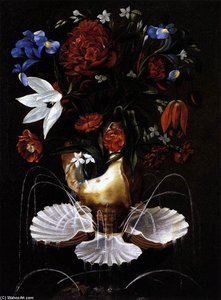
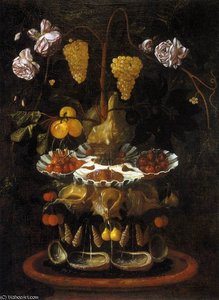
Espinosa’s artistic output encompassed a diverse range of subjects, predominantly still lifes depicting fruit, flowers, and occasionally silver vessels—a genre that flourished during the Baroque period. He undertook commissions for ecclesiastical institutions, notably valuing the altarpiece of Alcaudete de la Jara, demonstrating his reputation as a respected craftsman and artist. Furthermore, he collaborated with Francisco de Burgos Mantilla on a letter of dowry in 1645, showcasing his involvement within the broader artistic community. His paintings—including “Still Life with Grapes, Flowers and Shells,” “Still-Life of Fruit and a Plate of Olives,” and “Still-Life with Shell Fountain and Flowers”—are housed in prominent museums across Spain, notably the Museo Nacional Prado and Museo de Córdoba, offering invaluable insights into his artistic legacy.Legacy and Historical Significance
Despite the challenges posed by biographical uncertainties, Espinosa’s contribution to Spanish Baroque painting is undeniable. He stands as a crucial link between Flemish realism—particularly van der Hamen's influence—and the evolving aesthetic conventions of Spain during the 17th century. His meticulous attention to detail and his masterful manipulation of light and color elevated still life painting to new heights, establishing him as one of the foremost practitioners of this genre. Today, reproductions of Espinosa’s works continue to captivate audiences worldwide, preserving a testament to his artistic brilliance and enduring fascination with capturing the beauty and fragility of the natural world.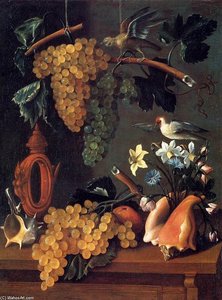
Juan Bautista de Espinosa
1590 - 1641 , Spain
Quick Facts
- Artistic Movement Or Style: Baroque
- Artists Or Movements Influenced By This Artist: ['Flemish Baroque']
- Artists Who Influenced This Artist: ['Juan van der Hamen']
- Date Of Death: 1641
- Full Name: Juan Bautista de Espinosa
- Nationality: Spanish
- Notable Artworks:
- Still-Life with Grapes, Flowers and Shells
- Still-Life of Fruit and a Plate of Olives
- Still-Life with Shell Fountain and Flowers
- Place Of Birth: Spain
Related Articles
The Golden Age Reforged: Dramatic Realism & Religious Zeal in Spanish Baroque Art
Explore the dramatic world of Spanish Baroque art! Discover masters like Zurbarán & the powerful influence of religious zeal on painting techniques – a guide for collectors and enthusiasts.
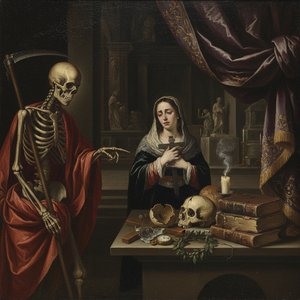
Juan de Valdés Leal: Baroque Realism, Memento Mori & Theatricality of Spanish Grief
Explore the powerful Baroque realism of Juan de Valdés Leal (1622-1690). Discover his somber masterpieces, iconic 'In Ictu Oculi', and profound explorations of mortality. Museum-quality reproductions available at ArtsDot.

The Dramatic Flourish: Exploring the Baroque Movement's Enduring Legacy in Art History
Explore the dramatic world of Baroque art! Discover iconic artists like Caravaggio & Rubens, defining techniques, and its lasting impact on art history. Expert insights for collectors & enthusiasts at ArtsDot.

Baroque Masterpieces: 10 Paintings That Defined an Era |
Journey through the drama & grandeur of Baroque art! Explore 10 masterpieces by Caravaggio, Rembrandt, Rubens & more. Discover stunning oil paintings, rich colors & timeless stories. Find museum-quality reproductions at .
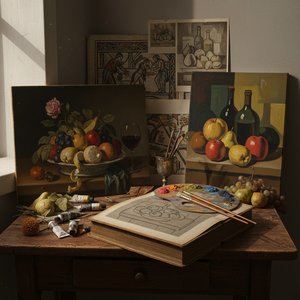
Silent Narratives: Exploring the Enduring Appeal of Still Life Painting Across Centuries
Explore the rich history of still life painting with ArtsDot. Discover Dutch Masters, decode vanitas symbolism & learn about collecting timeless art. Expert insights and museum-quality reproductions.