 Preview
 Send
Send Share
Share
 Details

 Download
 Similars
 X-Ray
X-Ray Diaporama
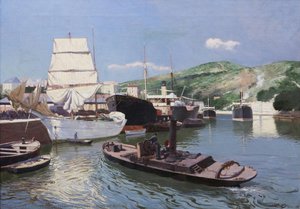
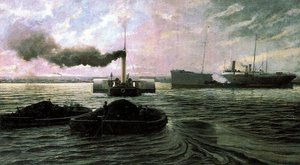
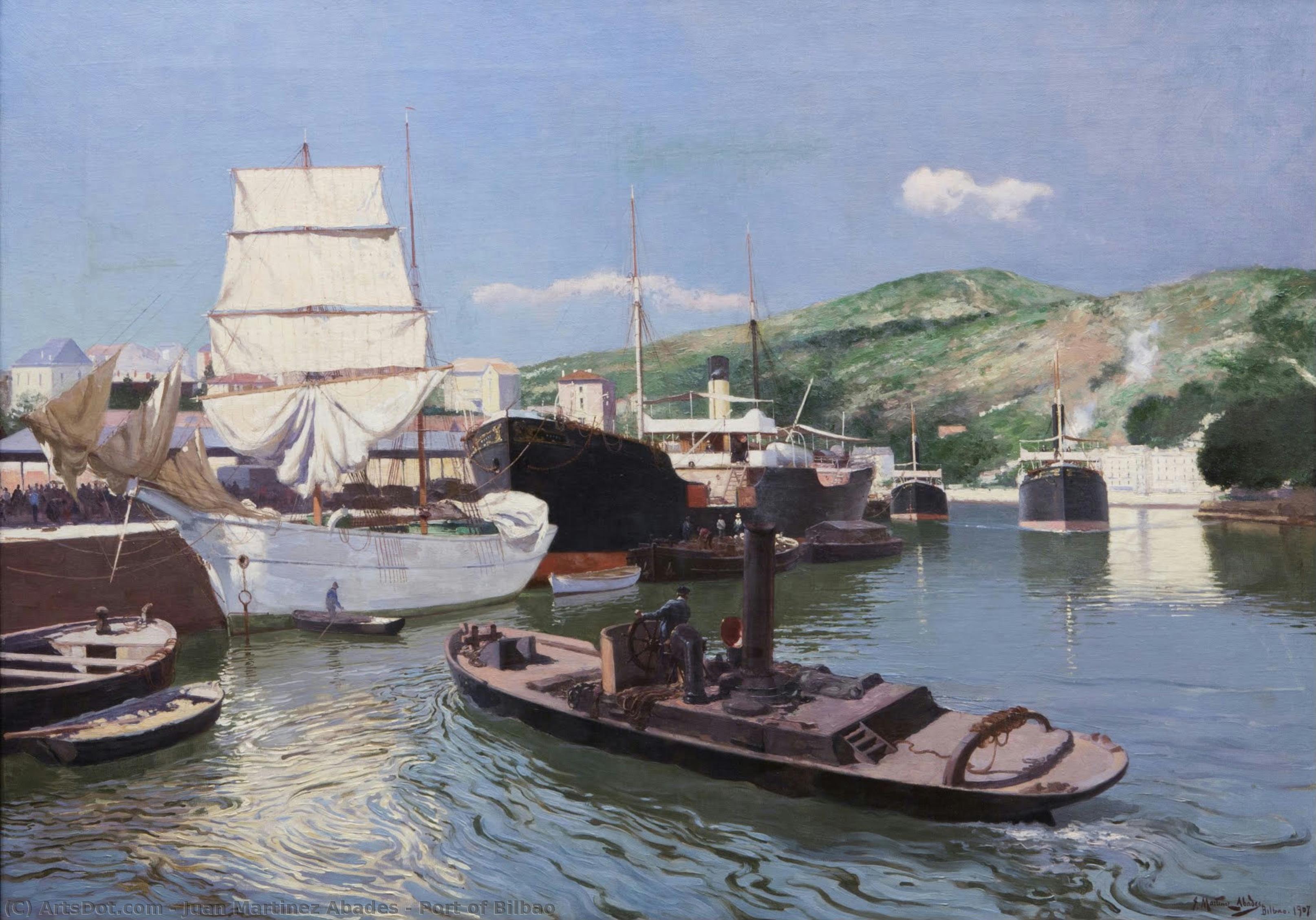
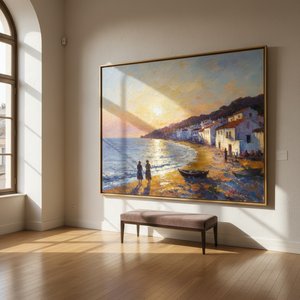
Port of Bilbao
 Realism
 135.0 x 103.0 cm
 Maritime Museum of Barcelona
 Read More
Giclée / Art Print
Museum-quality giclée or canvas print with fast production and flexible finish options. ( Buy Hand Made Painting Buy Image)




































Pick from our preset sizes that match the artwork's original proportions.

You may enter your own dimensions to fit a specific frame or space. If your selected size does not match the original image's proportions, we will either crop the artwork or extend the image with a mirrored or solid-fill edge. A digital mockup will be sent for your approval before production begins.
Please note that the on-screen preview does not reflect the actual cropping or extension. Only the mockup will accurately show the final composition.
While custom sizes are available, we recommend selecting a dimension from the predefined list to preserve the original proportions.
Worldwide Delivery () in 2 weeks instead of standard 4/5 weeks. (25 August)

Free Worldwide Express Shipping

High-Quality Linen Canvas

Full Shipping Insurance

Customs Tax Refund Guarantee

True Color Matching Guarantee

60-Day Return Policy (Defects Only)

100% Money-Back Guarantee

Bulk Discount Offer
 Glass option is only available in size under 110 CM

Port of Bilbao
Giclée / Art Print
Reproduction Size
-


Total Price
$ 63
Collectible Description
Related Artworks
Artist Biography
The Coastal Visionary: The Life and Legacy of Juan Martínez Abades
Born amidst the salt-sprayed air of Gijón in 1862, Juan Martínez Abades emerged as a profound voice in Spanish Naturalism, a painter whose soul seemed inextricably linked to the rhythmic pulse of the Cantabrian Sea. His early years were shaped by an environment where industry and maritime tradition converged; as the son of an industrialist, his formative education took place at the Real Instituto Jovellanos. This institution, dedicated to the pursuits of mining and seafaring, provided more than just academic instruction—it offered a direct connection to the heritage of Asturias. It was within these halls that Abades first began to hone his extraordinary talent, finding inspiration in the act of copying exquisite works from the collection of the enlightened minister Gaspar Melchor de Jovellanos, a practice that instilled in him a deep reverence for artistic tradition.
The trajectory of his career took a decisive turn toward the vibrant artistic heart of Madrid. Between 1880 and 1887, Abades immersed himself in the rigorous atmosphere of the Escuela Especial de Pintura, Escultura y Grabado. Under the watchful eyes of masters such as the sculptor José Gragera and the painter Ignacio Suárez Llanos, he developed a technical discipline that would become the foundation of his mastery. While his early academic endeavors included historical subjects—notably his striking work La muerte de Mesalina, which echoed the dramatic intensity of Rosales—it was the call of the coast that truly defined his artistic identity. His talent was quickly recognized by provincial authorities, earning him a prestigious travel grant from the Diputación of Oviedo, an opportunity that would forever alter his aesthetic perception.
A Journey Through Light and Impressionism
The pilgrimage to Italy served as a transformative epoch in Abades’ development. Studying at the Accademia di San Luca, he moved beyond the rigid confines of academic realism to embrace the luminous, ephemeral qualities of Impressionism. This exposure to new light and atmosphere allowed him to transition from purely descriptive painting toward a more expressive and evocative style. He began to capture not just the physical presence of the sea, but its very essence—the way sunlight dances upon a cresting wave, the shifting mists of a morning harbor, and the melancholic beauty of a receding tide. This period of experimentation solidified his reputation as a premier painter of seascapes, capable of translating the maritime atmosphere of the Cornisa Cantábrica into a language of light and color.
His achievements during this era were marked by significant accolades at the National Exhibition of Fine Arts, where he secured both second and first place in 1890 and 1892, respectively. These triumphs established him as a leading figure within the Spanish art scene, a painter whose work resonated with both technical precision and emotional depth. His ability to render the complex textures of water, wood, and stone made his maritime scenes iconic, turning the rugged coastline of northern Spain into a stage for profound naturalistic beauty.
A Multidimensional Legacy
Beyond the canvas, Juan Martínez Abades was a man of diverse creative passions, embodying the intellectual vitality of the Spanish Restoration period. He was not merely a painter but also a gifted illustrator and a successful composer and lyricist of cuplés. This rare intersection of visual and auditory artistry suggests a creator who perceived the world through a symphony of sensory experiences—where the movement of the sea found its parallel in the cadence of song. His life, though spanning only until 1920, left an indelible mark on the Spanish landscape, bridging the gap between traditional academicism and the modern, impressionistic spirit.
Today, the works of Martínez Abades serve as a window into a vanished era of maritime splendor. His legacy is preserved through:
- Masterful Seascapes: Capturing the rugged beauty and atmospheric nuances of the Spanish coast.
- Technical Innovation: The seamless integration of Naturalist detail with Impressionistic light.
- Cultural Versatility: A unique contribution to both the fine arts and the popular musical traditions of his time.
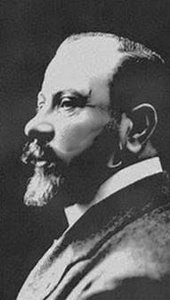
Juan Martínez Abades
1862 - 1920 , Spain
Quick Facts
- Artistic Movement Or Style: Naturalist painting
- Artists Or Movements Influenced By This Artist: ['Impressionism']
- Artists Who Influenced This Artist:
- José Gragera
- Ignacio Suárez Llanos
- Date Of Birth: 1862
- Date Of Death: 1920
- Full Name: Juan Martínez Abades
- Nationality: Spanish
- Notable Artworks:
- Port of Bilbao
- Marina
- Naufragio
- Place Of Birth: Gijón, Spain
Related Articles
The Allure of the Horizon: A Comprehensive Exploration of Seascape Art Through History & Emotion
Explore the captivating world of seascape art! Discover its history, key artists & movements – from Dutch Masters to Impressionism. Expert insights for collectors and enthusiasts at ArtsDot.
Rafael de Penagos: A Study in Spanish Portraiture & Artistic Identity
Explore the life & art of Rafael de Penagos, a leading Spanish Art Deco illustrator. Discover his iconic 'Penagos Woman', commercial work, and lasting legacy. Learn about this pivotal figure in 20th-century Spanish art history.

The Golden Age Reforged: Dramatic Realism & Religious Zeal in Spanish Baroque Art
Explore the dramatic world of Spanish Baroque art! Discover masters like Zurbarán & the powerful influence of religious zeal on painting techniques – a guide for collectors and enthusiasts.
José Gutiérrez Solana: A Chronicle of Spanish Society Through Expressionist Vision
Explore the captivating world of José Gutiérrez Solana, a pivotal Spanish Expressionist painter. Discover his haunting depictions of early 20th-century Spain, influenced by Goya & El Greco. Learn about his key works and lasting legacy.
Manuel Benedito Vives: A Study of Light, Color & Emotional Resonance in Contemporary Spanish Painting
Explore the captivating world of Manuel Benedito Vives, a celebrated Spanish painter influenced by Sorolla. Discover his masterful portraits, luminous landscapes & enduring legacy – a favorite of the Spanish Royal Family. Art collectors will appreciate this in-depth study.