 Preview
 Send
Send Share
Share
 Details

 Download
 Similars
 X-Ray
X-Ray Diaporama
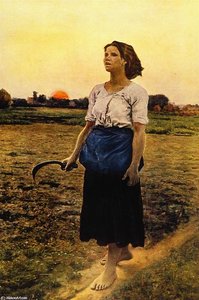
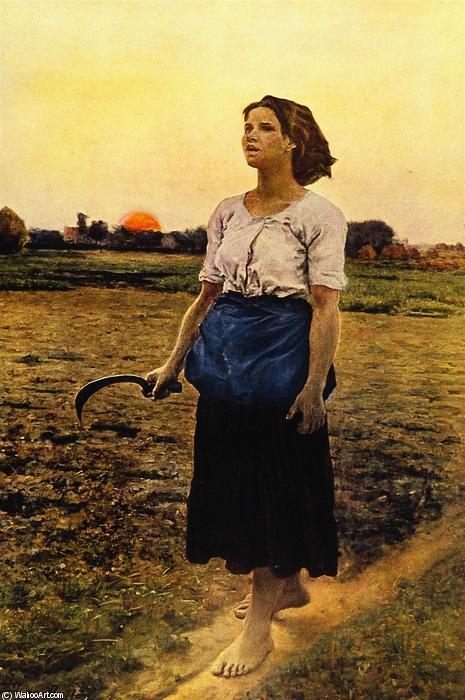
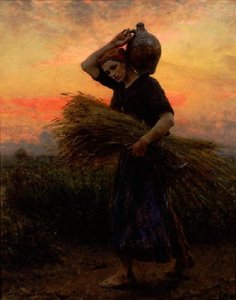
The Song of the Lark


 Read More
Giclée / Art Print
Museum-quality giclée or canvas print with fast production and flexible finish options. ( Buy Hand Made Painting Buy Image)




P118B $10

P118H $10

P118W $10

P438Z $10

P508JH $12

P508YH $12

P805H $10

P805Z $10

P919BZ $10

P919G $10

P919XJ $10

P959ZH $10

P968JZ $12

W106C $8

W218G $10

W218JH $8

W218Y $10

W307PJ $10

W316G $10

W316PJ $8

W316Y $10

W398PJ $8

W4111J $10

W500HY $15

W500JH $15

W692G $12

W849H $8

W940BG $15

W953PJ $8




Pick from our preset sizes that match the artwork's original proportions.

You may enter your own dimensions to fit a specific frame or space. If your selected size does not match the original image's proportions, we will either crop the artwork or extend the image with a mirrored or solid-fill edge. A digital mockup will be sent for your approval before production begins.
Please note that the on-screen preview does not reflect the actual cropping or extension. Only the mockup will accurately show the final composition.
While custom sizes are available, we recommend selecting a dimension from the predefined list to preserve the original proportions.
Worldwide Delivery () in 2 weeks instead of standard 4/5 weeks. (2 September)

Free Worldwide Express Shipping

High-Quality Linen Canvas

Full Shipping Insurance

Customs Tax Refund Guarantee

True Color Matching Guarantee

60-Day Return Policy (Defects Only)

100% Money-Back Guarantee

Bulk Discount Offer
 Glass option is only available in size under 110 CM

The Song of the Lark
Giclée / Art Print
Reproduction Size
-


Total Price
$ 63
A Moment Captured: Exploring Jules Breton’s “The Song of the Lark”
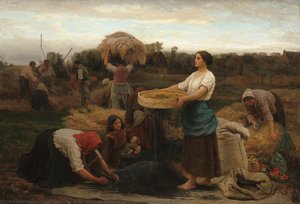
Jules Breton's "The Song of the Lark," painted in 1884, stands as an emblem of French Realism—a movement dedicated to portraying life with uncompromising honesty and detail. More than just a depiction of rural France, it embodies a profound philosophical contemplation on beauty, simplicity, and humanity’s connection to nature. Breton, deeply influenced by Gustave Courbet's radical approach to art, sought not merely to represent what he saw but to convey the emotional resonance of those observations.Subject Matter & Setting
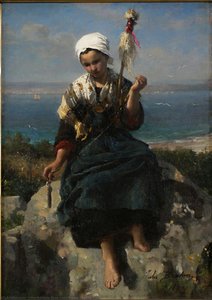
The painting centers around a young peasant girl seated amidst a field bathed in the golden light of dawn. Her posture—slightly bent, arms outstretched—suggests an attentive gaze directed upwards towards the lark’s song. The landscape itself is rendered with meticulous precision: rolling hills dotted with wildflowers and trees, creating a tranquil backdrop for this intimate tableau. Breton deliberately eschewed grand narratives or dramatic compositions, prioritizing instead the quiet dignity of everyday life. This focus on rural existence was characteristic of Breton's artistic vision and reflected the broader societal concerns of his time—a period grappling with industrialization and urbanization while simultaneously yearning for an idealized past.Style & Technique: Embracing Impressionistic Influences
While firmly rooted in Realism, “The Song of the Lark” subtly incorporates elements of Impressionism. Breton skillfully utilizes broken brushstrokes to capture the fleeting effects of light and atmosphere—particularly evident in the radiant glow illuminating the field. Unlike Courbet’s often gritty realism, Breton softens the contours of his subjects, prioritizing tonal harmony and conveying a sense of serenity. The artist's masterful handling of color contributes significantly to the painting's emotional impact, capturing not just visual accuracy but also the intangible beauty of the natural world.Historical Context & Symbolism
Painted during the Belle Époque—a period marked by optimism and cultural flourishing—the artwork speaks to a broader artistic preoccupation with Romantic ideals of pastoral innocence and spiritual contemplation. The lark itself serves as a potent symbol—representing joy, freedom, and the sublime beauty of nature. Breton’s choice of subject matter aligns perfectly with the prevailing intellectual currents of his era, which championed the virtues of rural life and celebrated the human spirit's capacity for experiencing profound emotion in response to natural wonders.Emotional Impact & Legacy
“The Song of the Lark” transcends mere visual representation; it evokes a palpable feeling of tranquility and wonder. Breton’s ability to capture this emotional essence—the girl’s absorbed attention, the luminous dawn—solidifies his place as one of France's foremost Romantic Realists. The painting continues to inspire artists and viewers alike, reminding us of the enduring power of art to communicate beauty, truth, and the profound connection between humanity and its environment. Its serene composition and evocative color palette resonate with collectors and interior designers seeking pieces that embody timeless elegance and spiritual contemplation.Related Artworks
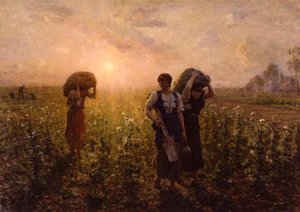
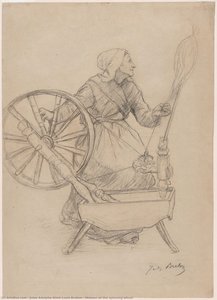
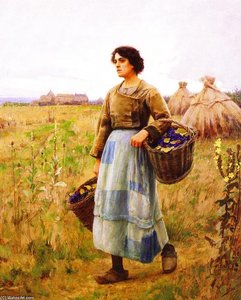
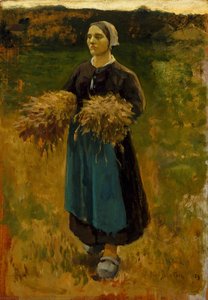
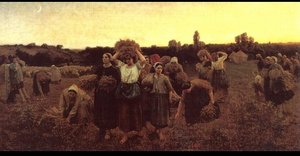
Artist Biography
The Poet of the French Countryside
Jules Breton (1827–1906) stands as a cornerstone of French Realism, an artistic movement dedicated to portraying life accurately and truthfully without embellishment—a mission he embraced wholeheartedly in his canvases. Born in the small village of Courrières in the Pas-de-Calais region of northern France, Breton’s early life was marked by modest circumstances but fueled by an unwavering passion for observation and representation. His upbringing, deeply rooted in the agriculturally rich Artois landscape, instilled in him a profound respect for tradition and a love for the land that would remain central to his art throughout his long career. The loss of his mother at a young age and his upbringing by his father, who supervised land for a wealthy landowner, provided him with an intimate connection to the rhythms of rural existence.
While many of his contemporaries sought the grandeur of mythological or historical subjects, Breton turned his gaze toward the dignity of the common laborer. He possessed a rare ability to elevate the everyday—the gleaners, the harvesters, and the shepherds—treating them with an academic grace traditionally reserved for classical figures. This unique synthesis allowed him to become one of the primary transmitters of an idyllic vision of rural life, capturing the beauty of the French countryside through a lens that was both deeply naturalist and profoundly poetic.
Artistic Evolution and the Realist Spirit
Breton’s artistic journey was shaped by a rigorous commitment to the principles of Realism and Naturalism. His early training, which included studies at the College St. Bertin, eventually led him toward a more profound engagement with the masters of his era. He absorbed the uncompromising techniques of the movement, seeking to create art that served as a mirror reflecting society in all its complexities. This period of development was marked by a desire to achieve what he called the grand style—a way to infuse the rustic genre with a sense of monumental importance and timelessness.
His technique was characterized by meticulous detail and a luminous color palette, which he skillfully employed to convey the textures of the natural world. Whether capturing the soft light of dawn over a meadow or the heavy, sun-drenched atmosphere of a summer field, Breton used oil on canvas to achieve remarkable depth. His compositions often evoke a sense of pastoral tranquility, featuring scenes such as:
- Women washing clothes by the riverbank, where the play of light on water reflects the serenity of the landscape.
- Children playing in meadows, capturing the innocence and vitality of youth within the natural setting.
- The rhythmic toil of harvesters, portraying the strength and nobility found in manual labor.
Through these subjects, Breton did not merely decorate a canvas; he created meditations on the enduring relationship between humanity and the earth.
Legacy and Historical Significance
The historical significance of Jules Breton lies in his ability to bridge the gap between the academic traditions of the past and the modern realism of the 19th century. By applying sophisticated, classical methods to the depiction of peasant life, he bestowed a sense of permanence and dignity upon a class of people often overlooked by high art. His work resonated deeply with the public of his time, earning him significant acclaim at the Paris Salon and establishing him as a leading figure in French art.
Beyond his individual canvases, Breton’s influence extended through his family and his role in the broader artistic community. His daughter, Virginie Demont-Breton, would also become a celebrated painter, continuing the legacy of profound observation and technical mastery. Today, the works of Jules Breton remain cherished for their nostalgic power and their ability to transport the viewer to a vanished era of French pastoral life. His paintings serve as a timeless window into the 19th-century soul, reminding us of the quiet beauty found in the simplest moments of existence.
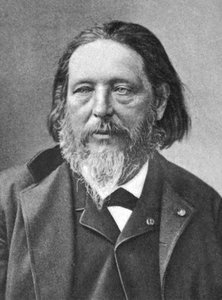
jules adolphe aimé louis breton
1827 - 1906 , France
Quick Facts
- Artistic Movement Or Style: Realism
- Artists Or Movements Influenced By This Artist: ['Romanticism']
- Artists Who Influenced This Artist: ['Honoré Victorin Da']
- Date Of Birth: May 1, 1827
- Date Of Death: July 5, 1906
- Full Name: Jules Adolphe Aimé Louis Breton
- Nationality: French
- Notable Artworks:
- Don Quixote in the Mountains
- Young Girl Thinking
- Study for The Washerwoman
- Place Of Birth: Coutras, France
Related Articles
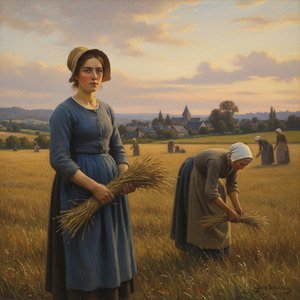
Jules Breton: Capturing the Poetic Soul of French Rural Life
Explore the captivating world of Jules Breton, master of French Realism. Discover his iconic paintings of rural life, learn about his artistic journey, and find high-quality reproductions to elevate your art collection at ArtsDot.
Jules Lefebvre: Master of Academic Realism & the Pursuit of Belle Âme
Explore the captivating figure paintings of Jules Lefebvre (1836-1911), a renowned French academic artist and educator. Discover his masterpieces, signature style, and lasting influence on art history. Shop high-quality reproductions at ArtsDot.
Ferdinand du Puigaudeau: Bridging Impressionism & Symbolism in Breton Landscapes
Discover Ferdinand du Puigaudeau's captivating Breton landscapes – a bridge between Impressionism & Symbolism. Explore his life, unique style, and enduring legacy with ArtsDot.
Charles Le Brun: Master of French Baroque Classicism & His Enduring Legacy
Explore the life & art of Charles Le Brun, master of French Baroque Classicism. Discover his royal commissions, influence on Versailles, and enduring legacy through detailed analysis & stunning artworks.
Simon Vouet: A Baroque Master's Journey from Italian Influence to French Classicism
Explore the life & art of Simon Vouet, a pivotal French Baroque painter who introduced Italian styles to France. Discover his masterpieces and lasting influence on 17th-century art.