 Preview
 Send
Send Share
Share
 Details

 Download
 Similars
 X-Ray
X-Ray Diaporama
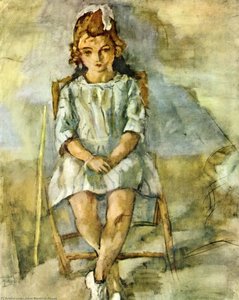
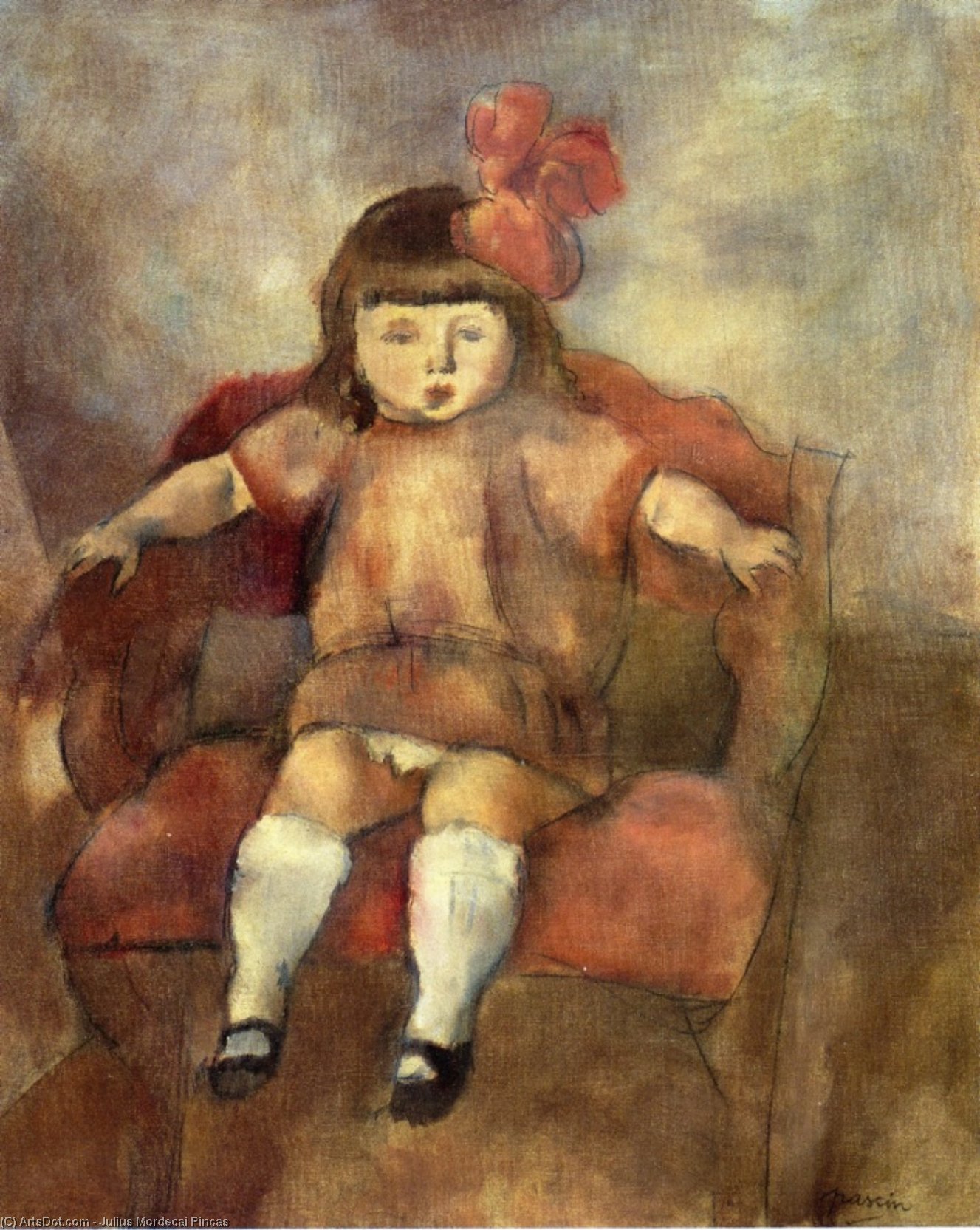
Little Gifl on an Armchair
 Watercolor
- WallArt
- Post-Impressionism
 1925
1925- Modern
 81.0 x 65.0 cm
 Read More
Hand Made Oil Reproduction
Hand-painted oil on canvas in your size and frame, made to order by our artists. ( Buy Print Buy Image)




P118B $10

P118H $10

P118W $10

P438Z $10

P508JH $12

P508YH $12

P805H $10

P805Z $10

P919BZ $10

P919G $10

P919XJ $10

P959ZH $10

P968JZ $12

W106C $8

W218G $10

W218JH $8

W218Y $10

W307PJ $10

W316G $10

W316PJ $8

W316Y $10

W398PJ $8

W4111J $10

W500HY $15

W500JH $15

W692G $12

W849H $8

W940BG $15

W953PJ $8




Pick from our preset sizes that match the artwork's original proportions.

You may enter your own dimensions to fit a specific frame or space. If your selected size does not match the original image's proportions, we will either crop the artwork or extend the painting with additional hand-painted elements. A digital mockup will be sent for your approval before production begins.
Please note that the on-screen preview does not reflect the actual cropping or extension. Only the mockup will accurately show the final composition.
While custom sizes are available, we recommend selecting a dimension from the predefined list to preserve the original proportions.
After order, ArtsDot.com team will email client for instructions and provide a mockup preview
Worldwide Delivery () in 3/4 weeks instead of standard 5 weeks. (1 September). No compromise on quality.

Free Worldwide Express Shipping

High-Quality Linen Canvas

Full Shipping Insurance

Customs Tax Refund Guarantee

True Color Matching Guarantee

60-Day Return Policy (Defects Only)

100% Money-Back Guarantee

Bulk Discount Offer
 Glass option is only available in size under 110 CM

Little Gifl on an Armchair
Reproduction Medium
Reproduction Size
-


Total Price
$ 263
A Moment of Quiet Contemplation
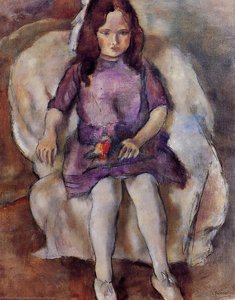
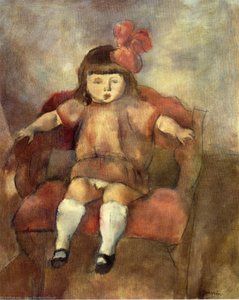
In the delicate interplay of light and shadow, Julius Mordecai Pincas captures a profound sense of stillness in his 1925 masterpiece, Little Girl on an Armchair. This evocative work serves as a window into a private, introspective moment, where a young subject sits lost in her own thoughts. The composition is centered entirely upon the child, whose presence dominates the frame, creating an intimate connection between the viewer and the subject. As she rests within the embrace of a red armchair, her crossed legs and thoughtful posture suggest a depth of emotion that transcends her youthful years. There is a certain melancholy woven into the fabric of the piece, a quiet solitude that invites the observer to pause and reflect alongside her.
The artistry behind this work is a testament to Pincas's mastery of the watercolor medium. Utilizing a sophisticated blend of wet-on-wet techniques to achieve soft, ethereal transitions and dry brushing for tactile texture, the artist breathes life into the paper. The background remains intentionally blurred and indistinct, a technique that strips away the distractions of the external world to focus solely on the emotional weight of the girl's expression. This deliberate lack of spatial context creates a dreamlike atmosphere, where the boundaries between reality and memory seem to dissolve. The organic curves of the subject’s form and the large, prominent bow in her hair provide a rhythmic flow to the composition, guiding the eye through the fluid, expressive lines that define the Post-Impressionist spirit.
The Soul of the School of Paris
To understand Little Girl on an Armchair, one must look toward the vibrant, bohemian era of the School of Paris. Pincas, often known by his pseudonym Jules Pascin, was a central figure in this movement, blending the raw energy of Expressionism with the nuanced color palettes of Post-Improllism. His ability to capture the essence of Parisian life—ranging from the bustling cafes to the most intimate domestic portraits—is on full display here. The use of bold colors, particularly the striking red of the chair, serves as a powerful anchor against the more muted, subdued tones of the girl’s surroundings. This contrast does more than just provide visual interest; it symbolizes the spark of life and vitality held within the quietude of childhood.
For the discerning collector or interior designer, this painting offers much more than mere decoration. It is a piece of art history that brings a sense of sophisticated nostalgia and emotional depth to any space. Whether placed in a contemporary gallery setting or a classic study, the artwork acts as a focal point of quiet elegance. The soft, diffused lighting within the painting lends itself beautifully to various interior aesthetics, providing a calming influence that can anchor a room. Owning a high-quality reproduction of this work allows one to preserve the delicate textures and evocative mood of Pincas's vision, ensuring that his unique ability to capture the fleeting beauty of human emotion continues to inspire generations of art lovers.
Related Artworks
Artist Biography
Julius Mordecai Pincas (Jules Pascin): A Biography
Early Life and Origins
- Birth and Family: Julius Mordecai Pincas, known as Jules Pascin, was born on March 31, 1885, in Vidin, Bulgaria. He came from a wealthy Sephardic Jewish family involved in grain trading.
- Early Influences: The family moved to Bucharest in 1892, where young Julius first showed an interest in art, even sketching at a local brothel. His early artistic inclinations were initially met with disapproval from his father.
- Education and Pseudonym: He studied art in Vienna (1902) and Munich (1903), where he connected with artists like Paul Klee and Wassily Kandinsky. To avoid family embarrassment regarding his satirical drawings, he adopted the pseudonym “Pascin” – an anagram of his surname.
Parisian Years and Artistic Development
- Arrival in Paris: In 1905, Pascin moved to Paris, becoming part of the vibrant artistic community. He quickly integrated into circles like “Les Dômiers” at Café le Dome.
- Early Style and Influences: His early Parisian works were influenced by Fauvism and Cézanne, focusing on portraits and nudes. He also studied at the Académie Matisse and drew inspiration from 18th-century masters like Greuze and Watteau.
- Developing a Unique Voice: Pascin’s style evolved to become distinctly his own – characterized by bold colors, expressive brushwork, and often depicting intimate scenes of modern life. He excelled in watercolors, drawings, and paintings.
Themes and Artistic Style
- Recurring Subjects: Women were a central theme in Pascin’s work, portrayed in casual, often nude or partially dressed poses. He captured their vulnerability and sensuality with remarkable sensitivity.
- Bold Colors & Composition: His paintings are known for their vibrant color palettes and carefully balanced compositions. He skillfully used light and shadow to create depth and atmosphere.
- Psychological Depth: Beyond mere representation, Pascin’s work often hinted at underlying psychological complexities and emotional states of his subjects.
Major Works and Achievements
- Nude with a Green Hat (1925): A striking example of his nude studies, showcasing his mastery of color and form. Currently housed at the Cincinnati Art Museum.
- Little Girl on an Armchair (1925): Demonstrates his ability to capture innocence and beauty in a domestic setting.
- Loose Women (1911): A provocative work that reflects the changing social norms of the early 20th century.
- Portrait of Hermine David (1918): A notable portrait held at the Musée National d'Art Moderne, Centre Pompidou in Paris.
Historical Significance and Legacy
- School of Paris: Pascin was a prominent figure within the School of Paris – a collective of expatriate artists who shaped modern art in the early 20th century.
- Influence on Later Artists: His work influenced subsequent generations of artists with its expressive style and focus on human emotion.
- Tragic End: Despite his artistic success, Pascin struggled with depression and alcoholism throughout his life. He tragically took his own life in 1930 at the age of 45.
- Continued Appreciation: Today, Jules Pascin’s paintings are celebrated for their beauty, sensitivity, and historical significance. His works can be found in major museums worldwide and continue to inspire art lovers through reproductions offered by platforms like ArtsDot.com.
julius mordecai pincas
1885 - 1930 , Bulgaria
Quick Facts
- Birth Date: 1885-03-31
- Birth Place: Vidin, Bulgaria
- Death Date: 1930-06-02
- Influenced By:
- Impressionism
- Cézanne
- Fauvism
- Movement: School of Paris, Expressionism
- Name: Julius Mordecai Pincas (Jules Pascin)
- Nationality: Bulgarian, American
- Notable Works:
- Nude with a Green Hat
- Little Girl on an Armchair
- Loose Women
- Portrait of Hermine David
Related Articles

Watercolor Wonders: 10 Masterpieces That Redefined Art History | ArtsDot
Journey through 10 legendary watercolor masterpieces by Sargent, Turner & Homer! Explore iconic landscapes, portraits & floral art that redefined history. Find museum-quality reproductions and curated decor ideas at ArtsDot.com.
Julius Mordecai Pincas: A Study in Early American Impressionism & Atmospheric Light
Explore the captivating world of Julius Mordecai Pincas, a key figure in early American Impressionism. Discover his unique use of light, color & atmosphere – and learn about collecting his timeless works.

Ephemeral Visions: Exploring the Artistic Legacy & Contemporary Practice of Watercolor Painting
Explore the captivating world of watercolor painting! Discover its rich history, essential techniques, influential artists & collecting tips. A comprehensive guide for art enthusiasts from ArtsDot.
Ephemeral Visions: Exploring the History & Emotional Resonance of Watercolor Painting
Explore the captivating history of watercolor painting, from ancient techniques to modern masters like Kandinsky & Blake. Discover essential artists, collecting tips & the emotional power of this luminous medium. Expert insights for art enthusiasts.
Ephemeral Visions: Exploring the Artistic Legacy & Nuances of Watercolor Painting
Explore the captivating world of watercolor painting! Discover its rich history, essential techniques, influential artists & collecting tips from art experts. A comprehensive guide for enthusiasts.