 Preview
 Send
Send Share
Share
 Details

 Download
 Similars
 X-Ray
X-Ray Diaporama
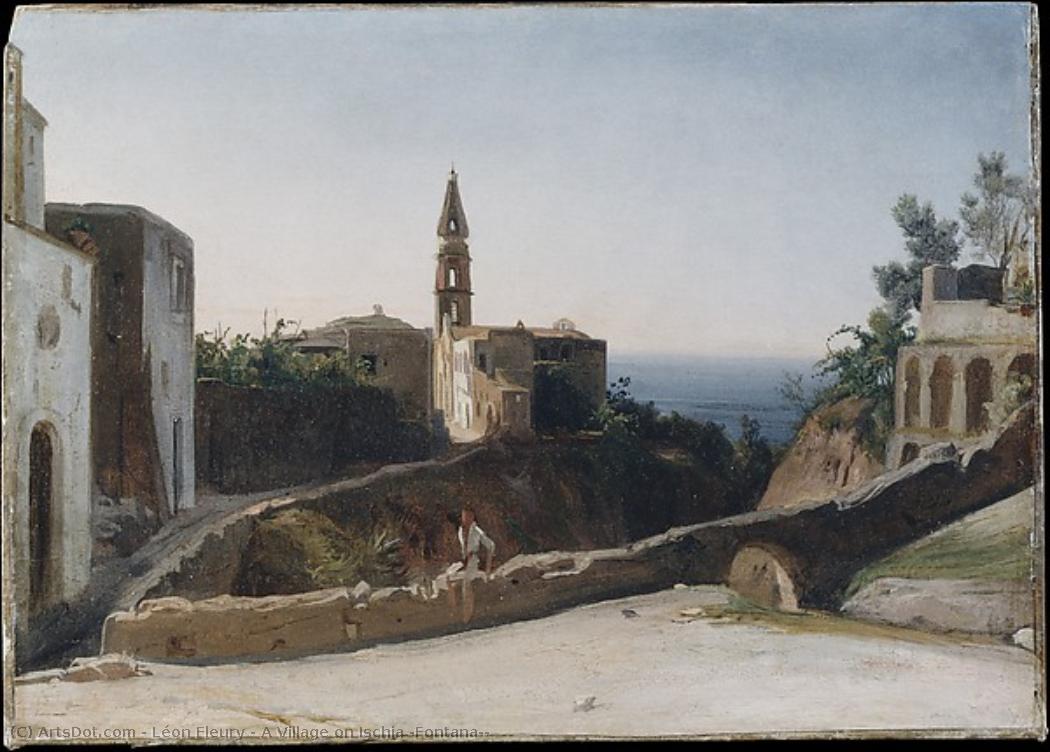
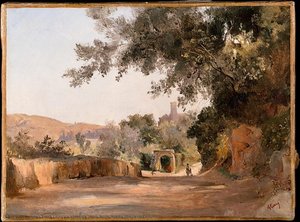
A Village on Ischia (Fontana?)
 Acrylic On Canvas
- WallArt
- Barbizon School
 1828
1828 24.0 x 34.0 cm
 Metropolitan Museum of Art
 Read More
Hand Made Oil Reproduction
Hand-painted oil on canvas in your size and frame, made to order by our artists. ( Buy Print Buy Image)




P118B $10

P118H $10

P118W $10

P438Z $10

P508JH $12

P508YH $12

P805H $10

P805Z $10

P919BZ $10

P919G $10

P919XJ $10

P959ZH $10

P968JZ $12

W106C $8

W218G $10

W218JH $8

W218Y $10

W307PJ $10

W316G $10

W316PJ $8

W316Y $10

W398PJ $8

W4111J $10

W500HY $15

W500JH $15

W692G $12

W849H $8

W940BG $15

W953PJ $8




Pick from our preset sizes that match the artwork's original proportions.

You may enter your own dimensions to fit a specific frame or space. If your selected size does not match the original image's proportions, we will either crop the artwork or extend the painting with additional hand-painted elements. A digital mockup will be sent for your approval before production begins.
Please note that the on-screen preview does not reflect the actual cropping or extension. Only the mockup will accurately show the final composition.
While custom sizes are available, we recommend selecting a dimension from the predefined list to preserve the original proportions.
After order, ArtsDot.com team will email client for instructions and provide a mockup preview
Worldwide Delivery () in 3/4 weeks instead of standard 5 weeks. (16 August). No compromise on quality.

Free Worldwide Express Shipping

High-Quality Linen Canvas

Full Shipping Insurance

Customs Tax Refund Guarantee

True Color Matching Guarantee

60-Day Return Policy (Defects Only)

100% Money-Back Guarantee

Bulk Discount Offer
 Glass option is only available in size under 110 CM

A Village on Ischia (Fontana?)
Reproduction Medium
Reproduction Size
-


Total Price
$ 288
Artwork Description
A Moment Frozen in Time: Léon Fleury’s “A Village on Ischia”
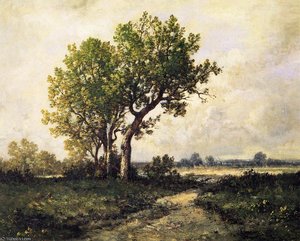
The painting "A Village on Ischia" by Léon Fleury, completed in 1828, isn't merely a depiction of a picturesque Italian landscape; it’s a carefully crafted distillation of Romantic sensibilities and an embodiment of the Barbizon school’s commitment to capturing the essence of nature. Examining this serene scene reveals layers of artistic intention that extend beyond mere visual beauty—a testament to Fleury’s skill as both observer and artist. Fleury's journey to Ischia coincided with a broader movement within European art – the burgeoning interest in plein air painting, championed by artists like Corot and Bertin. These painters rejected the studio tradition, prioritizing direct observation of the natural world and translating its immediacy onto canvas. Fleury’s decision to paint alongside Bertin speaks volumes about the intellectual climate of the time, where artistic exploration was inextricably linked with philosophical inquiry into the sublime – that feeling of awe inspired by confronting the grandeur and power of nature. The painting reflects this preoccupation, presenting a landscape imbued with an understated majesty. The artwork's technique is characterized by Fleury’s masterful use of broad brushstrokes—a hallmark of Barbizon aesthetics. Rather than striving for photographic realism, he employed a looser style to convey texture and atmosphere. Thick impasto creates visible ridges on the buildings and foliage, grounding the viewer in the physicality of the scene. This deliberate roughness isn't accidental; it’s designed to evoke a visceral response, mirroring the rugged beauty of the Italian countryside. The artist skillfully blended muted greens and browns, punctuated by splashes of cerulean blue from the distant sea horizon, creating a harmonious palette that reinforces the painting’s tranquil mood. Beyond its aesthetic qualities, “A Village on Ischia” carries symbolic resonance. The prominent church tower serves as a focal point, representing faith and community—a cornerstone of rural life in 19th-century Italy. Fleury's careful composition directs the eye across the landscape, emphasizing the interconnectedness between humanity and nature. The muted colors contribute to an emotional impact that transcends mere visual pleasure; they invite contemplation and evoke memories of simpler times. The painting’s influence can be seen in subsequent generations of landscape artists who sought to emulate Fleury's approach—a dedication to capturing fleeting moments of beauty with sensitivity and honesty. “A Village on Ischia” remains a captivating example of Romantic idealism translated into visual form, offering an enduring glimpse into the artistic spirit of its era and continuing to inspire admiration for its understated elegance and profound connection to the natural world.Related Artworks
Artist Biography
Early Life and Artistic Foundations
François Antoine Léon Fleury, born in Paris around 1804, emerged from a lineage steeped in artistic tradition. His father, Antoine Claude Fleury, served as his initial mentor, laying the groundwork for a career that would blossom into serene depictions of the French countryside and beyond. This early familial influence proved pivotal, instilling within young Léon a foundational understanding of painting techniques and an appreciation for landscape as a subject worthy of dedicated study. However, his formal training extended beyond the paternal studio; he continued honing his skills under the tutelage of Jean-Victor Bertin at the prestigious École des Beaux-Arts in Paris. This academic grounding provided structure to his natural talent, preparing him for a life devoted to capturing the nuances of light and atmosphere.
A Wanderer’s Eye: Sketching Tours and Italian Inspiration
The period between 1827 and 1830 marked a crucial phase in Fleury's development—a time dedicated to immersive sketching tours across France and its neighboring countries. These journeys were not merely geographical explorations but rather artistic pilgrimages, undertaken with the express purpose of observing and documenting the diverse beauty of the European landscape. This period culminated in a transformative sojourn to Italy, where he encountered fellow artists like Théodore Caruelle d’Aligny and Camille Corot. The shared practice of *plein air* painting—sketching directly from nature—forged strong bonds and fostered a stylistic kinship among them. Indeed, the works produced during this Italian period often exhibit such similarities that discerning individual authorship can prove challenging, a testament to their collective pursuit of capturing fleeting moments of natural light and form.
Bridging Landscape with Religious Themes
While primarily recognized as a landscape painter, Fleury demonstrated versatility by occasionally venturing into figural compositions. Notably, he undertook commissions for religious works, including the painting of ‘The Baptism of Christ’ in the church of St. Marguerite and ‘St. Genevieve’ at St. Étienne-du-Mont in Paris. These projects reveal an ability to translate his sensitivity to atmosphere and composition—honed through landscape work—to narrative scenes imbued with spiritual significance. However, it was his landscapes that truly defined his artistic identity, capturing the essence of rural France with a quiet intimacy.
The Barbizon School & Artistic Legacy
Fleury’s style aligns closely with the principles of the Barbizon school, a group of French landscape painters who rejected the idealized classicism prevalent in academic art. Instead, they championed direct observation of nature and sought to depict scenes with honesty and realism. His paintings are characterized by muted colors, atmospheric perspective, and loose brushstrokes—techniques employed to convey the feeling and mood of a place rather than precise topographical detail. He regularly exhibited at the Salon between 1831 and 1855, earning recognition for his evocative depictions of the countryside, including bronze and silver medals in 1834 and 1837 respectively, culminating in a gold medal in 1845.
A Lasting Impression: Fleury’s Place in Art History
Although not as widely celebrated as some of his Barbizon contemporaries, Léon Fleury occupies an important position within the development of French Romantic landscape painting. His serene scenes offer a glimpse into the beauty of 19th-century France and reflect a growing appreciation for the natural world. His dedication to *plein air* painting paved the way for later Impressionist movements, influencing artists who sought to capture the ephemeral qualities of light and color. Fleury’s works continue to resonate with viewers today, offering a tranquil escape into the idyllic landscapes he so skillfully portrayed. His paintings can be found in museums such as the National Gallery of Art in Washington D.C., and are treasured for their quiet beauty and atmospheric depth.
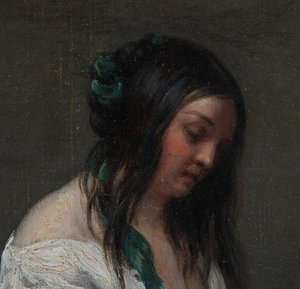
léon fleury
1804 - 1858 , France
Quick Facts
- Artistic Movement Or Style: Romantic Landscape Art
- Artists Who Influenced This Artist:
- Antoine Claude Fleury
- Jean-Victor Bertin
- Date Of Birth: 1804
- Date Of Death: 1858
- Full Name: François Antoine Léon Fleury
- Nationality: French
- Notable Artworks:
- Baptism of Christ
- A Village on Ischia
- View of Tivoli
- Place Of Birth: Paris, France
Related Articles
The Barbizon School: Pioneering Realism & the Pastoral Vision in 19th-Century French Painting
Explore the Barbizon School's pivotal role in 19th-century French painting. Discover how these artists revolutionized landscape art with their commitment to Realism and a profound connection to nature. Learn about key figures like Rousseau, Millet & Corot.
Jean-Baptiste-Camille Corot: A Poetic Realism – Bridging the Barbizon School and Early Impressionism
Explore the life & art of Camille Corot, a pivotal figure bridging the Barbizon School & Impressionism. Discover his poetic realism, signature style, and lasting influence on landscape painting. Learn more at ArtsDot.
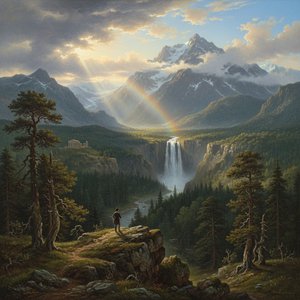
Evoking Nature's Sublime: A Comprehensive Exploration of 19th-Century Landscape Painting
Explore the captivating world of 19th-century landscape painting! Discover renowned artists like Friedrich & Monet, key movements, and find the perfect artwork to bring nature's serenity into your home. Expert insights at ArtsDot.
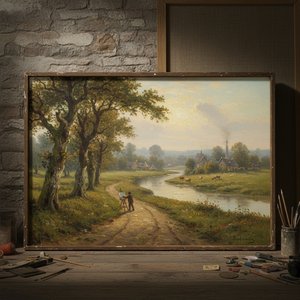
Charles-François Daubigny: Pioneering Atmospheric Light & Barbizon Realism
Explore the life & art of Charles-François Daubigny, a pivotal Barbizon School painter. Discover his innovative landscapes, mastery of light, and influence on Impressionism. High-quality reproductions available.
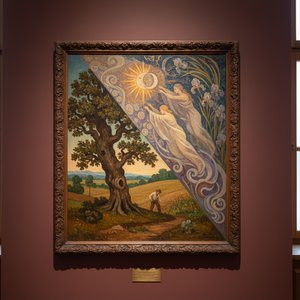
Carl Eduard Schuch: Bridging Realism & Symbolism in Late 19th-Century Austrian Painting
Explore the captivating landscapes & still lifes of Carl Eduard Schuch (1846-1903), a pivotal Austrian painter bridging realism and modernism. Discover his influences, unique style, and lasting legacy with ArtsDot.