

 Preview
 Send
Send Share
Share
 Details

 Download
 Similars
 X-Ray
X-Ray Diaporama
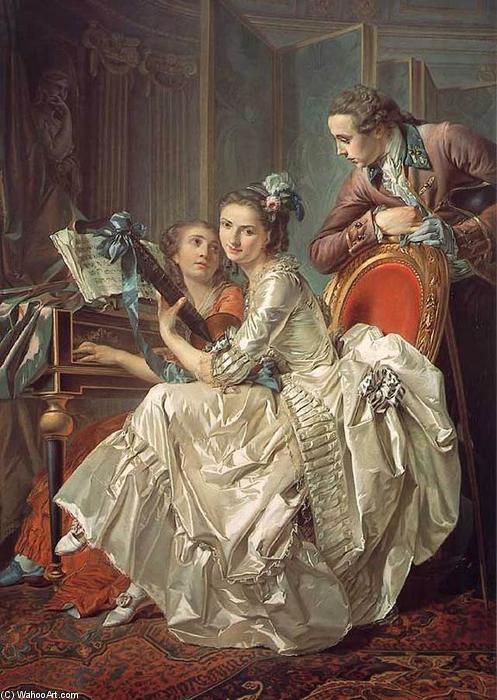
The Music Party
 194.0 x 133.0 cm
 Alte Pinakothek
 Read More
Purchase a high-resolution, enhanced digital image, far superior to the online preview.
Each file is meticulously prepared by our in-house specialists using advanced tools and expert manual retouching. We ensure every image has exceptional clarity, precise color accuracy, and fine detail.
The final file is delivered via email within 72 hours, optimized for immediate use in professional, editorial, and print environments. This is the same quality trusted by top-tier design studios, publishers, and galleries.
Digital Image
Download a high-resolution file for personal display, printing, and creative projects. ( Buy Print Buy Hand Made Painting)
Included in Every Digital Image Order
Expert Digital Delivery, Guaranteed
When you choose ArtsDot.com, you're not just getting an image - you're receiving a professionally enhanced digital artwork, crafted with precision and backed by a satisfaction guarantee. Here's everything that comes with your order, automatically:

Fast Email Delivery
Your high-resolution digital image file will be emailed to you within 72 hours of ordering - ready for immediate use.

AI-Enhanced Digital File
Your artwork is professionally optimized using advanced AI tools and manual editing, ensuring maximum detail, clarity, and color accuracy.

Free Lifetime Re-Delivery
Accidentally deleted or lost your file? No worries - we'll resend it to you anytime, free of charge.

No Import Fees - Ever
Enjoy your artwork instantly with zero customs, duties, or delivery fees - digital downloads are always tax-free.

Color Accuracy Guarantee
We ensure your digital image reflects the original colors as closely as possible using professional tools and color management.

60-Day Satisfaction Guarantee
If you're not satisfied with your digital image, we'll revise it or refund 100% within 60 days - no questions asked.

100% Money-Back Guarantee
Not satisfied? Get a full refund within 60 days of receiving your digital file - no questions asked.

Bulk Order Discounts
Buy 3 images, save 10% - Buy 5, save 15% - Buy 10+, save 20%. Great for creative projects, galleries, and agencies.
Related Artworks
Artist Biography
The Rococo Chronicler: Louis Rolland Trinquesse and the Intimate World of 18th-Century France
Louis Rolland Trinquesse, a name perhaps less familiar than those of his contemporaries Boucher or Fragonard, nevertheless represents a significant, if subtly elegant, voice within the vibrant tapestry of 18th-century French art. Born around 1746 in Paris, Trinquesse’s life and career unfolded during a period of profound social and artistic transition – the waning years of the Rococo style giving way to the burgeoning ideals of Neoclassicism. While he never achieved the widespread acclaim of some of his peers, his paintings offer a remarkably intimate glimpse into the world of Parisian high society, capturing its fashions, pleasures, and quiet dramas with a delicate precision that continues to captivate viewers today.Early Years and Artistic Foundations
Trinquesse’s artistic journey began within the rigorous framework of the Académie Royale de Peinture et de Sculpture in Paris. Enrolled between 1758 and 1770, he received a foundational education steeped in classical principles – meticulous study of anatomy, perspective, and the works of Old Masters like Poussin and Rembrandt. However, despite this rigorous training, Trinquesse faced an obstacle that would shape his career trajectory: repeated failures to gain *agrément*, the official recognition necessary for acceptance into the prestigious Salon and access to lucrative commissions. This lack of formal academic validation, rather than deterring him, seems to have fostered a more independent approach to his art, allowing him to cultivate a distinctive style largely outside the confines of established artistic circles. His early works demonstrate a clear understanding of Rococo techniques – soft brushwork, pastel palettes, and an emphasis on decorative detail—but also hint at a nascent desire for greater emotional depth and narrative complexity.A Style Defined by Grace and Intimacy
Trinquesse’s artistic style is characterized by a remarkable sensitivity to the nuances of his subjects and a masterful command of Rococo aesthetics. He primarily focused on two distinct genres: *scènes galantes* – idyllic scenes of courtship, leisure, and social gatherings—and portraits, often depicting members of the aristocracy and the burgeoning bourgeoisie. His *scènes galantes*, frequently set within elegantly appointed interiors or picturesque gardens, are imbued with a sense of playful romance and understated elegance. Figures are depicted in exquisitely rendered attire, their silks and satins shimmering with a soft luminosity, reflecting the era’s obsession with fashion and social display. Trinquesse possessed an exceptional eye for detail, meticulously capturing the textures of fabrics, the expressions on faces, and the subtle interplay of light and shadow. Notably, he favored a “porcelain-like” smoothness to his painted surfaces, enhancing the delicacy and refinement of his subjects—a technique reminiscent of Watteau’s own approach.Key Works and Recurring Themes
Several paintings stand out as exemplifying Trinquesse's distinctive style and thematic concerns. “The Music Party,” a lively scene depicting a group of elegantly dressed figures engaged in musical entertainment, showcases his ability to capture the energy and excitement of social gatherings while maintaining a sense of refined elegance. “Portrait of a Lady” offers a more intimate portrayal, revealing a subtle awareness of the sitter’s personality and social standing through carefully observed details of her attire and expression. These works, along with others such as “Seated Woman Sewing,” demonstrate Trinquesse's skill in portraying both external appearances and inner emotions. His paintings frequently explore themes of courtship, friendship, and domestic tranquility—reflecting the values and aspirations of French society during his time.Legacy and Historical Significance
While Louis Rolland Trinquesse may not be a household name, his contribution to 18th-century French art is undeniable. He represents a vital link between the exuberant excesses of the late Rococo and the more restrained ideals of Neoclassicism. His paintings offer a valuable window into the world of Parisian high society—a world of fashion, pleasure, and social intrigue—with an unparalleled level of intimacy and detail. Trinquesse’s legacy lies not in grand historical narratives or revolutionary pronouncements, but rather in his ability to capture the quiet beauty and subtle complexities of everyday life, solidifying his place as a significant, if often overlooked, chronicler of the Rococo era. His work continues to be studied by art historians for its technical mastery, its sensitive portrayal of human emotion, and its evocative depiction of a bygone world.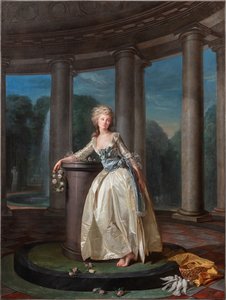
louis rolland trinquesse
1746 - 1799 , France
Quick Facts
- Artistic Movement Or Style: Rococo, Genre Painting
- Artists Or Movements Influenced By This Artist: ['Neoclassicism']
- Artists Who Influenced This Artist:
- Watteau
- Boucher
- Date Of Birth: c.1746
- Date Of Death: 1800
- Full Name: Louis Rolland Trinquesse
- Nationality: French
- Notable Artworks:
- The Music Party
- Portrait of a Lady
- Place Of Birth: Paris, France

