 Preview
 Send
Send Share
Share
 Details

 Download
 Similars
 X-Ray
X-Ray Diaporama
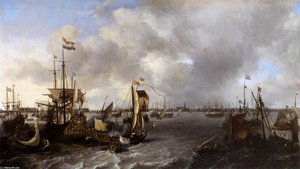
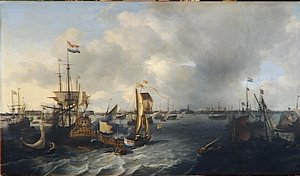
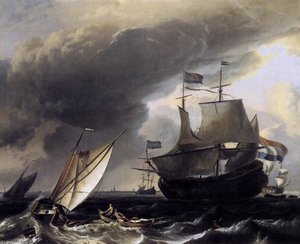
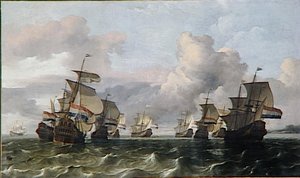
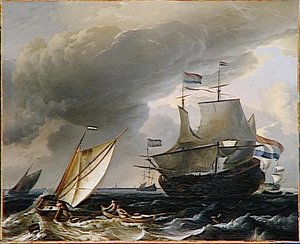
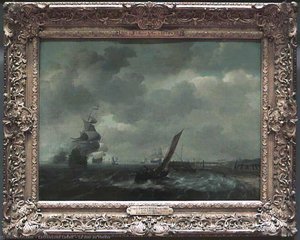
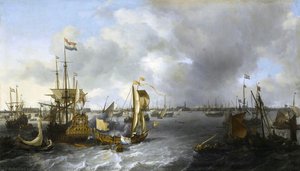
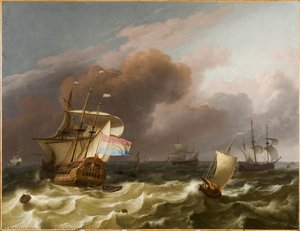
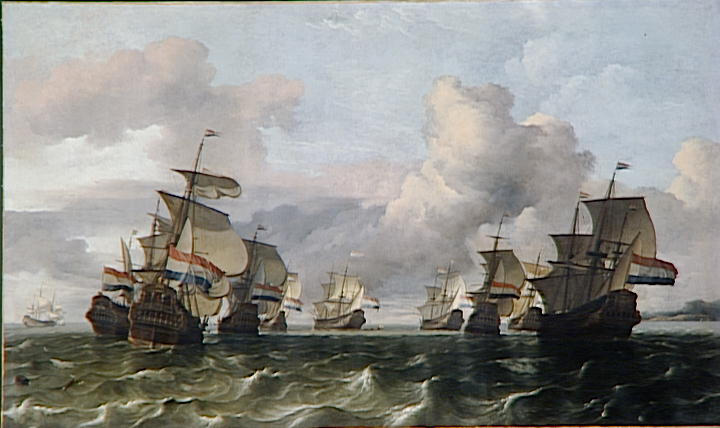
ESCADRE NEERLANDAISE DE LA COMPAGNIE DES INDES


 Read More
Hand Made Oil Reproduction
Hand-painted oil on canvas in your size and frame, made to order by our artists. ( Buy Print Buy Image)




P118B $10

P118H $10

P118W $10

P438Z $10

P508JH $12

P508YH $12

P805H $10

P805Z $10

P919BZ $10

P919G $10

P919XJ $10

P959ZH $10

P968JZ $12

W106C $8

W218G $10

W218JH $8

W218Y $10

W307PJ $10

W316G $10

W316PJ $8

W316Y $10

W398PJ $8

W4111J $10

W500HY $15

W500JH $15

W692G $12

W849H $8

W940BG $15

W953PJ $8




Pick from our preset sizes that match the artwork's original proportions.

You may enter your own dimensions to fit a specific frame or space. If your selected size does not match the original image's proportions, we will either crop the artwork or extend the painting with additional hand-painted elements. A digital mockup will be sent for your approval before production begins.
Please note that the on-screen preview does not reflect the actual cropping or extension. Only the mockup will accurately show the final composition.
While custom sizes are available, we recommend selecting a dimension from the predefined list to preserve the original proportions.
After order, ArtsDot.com team will email client for instructions and provide a mockup preview
Worldwide Delivery () in 3/4 weeks instead of standard 5 weeks. (28 August). No compromise on quality.

Free Worldwide Express Shipping

High-Quality Linen Canvas

Full Shipping Insurance

Customs Tax Refund Guarantee

True Color Matching Guarantee

60-Day Return Policy (Defects Only)

100% Money-Back Guarantee

Bulk Discount Offer
 Glass option is only available in size under 110 CM

ESCADRE NEERLANDAISE DE LA COMPAGNIE DES INDES
Reproduction Medium
Reproduction Size
-


Total Price
$ 263
Ludolf Backhuysen I: Mastering the Tempestuous Sea
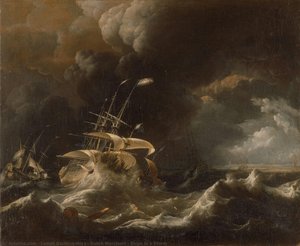
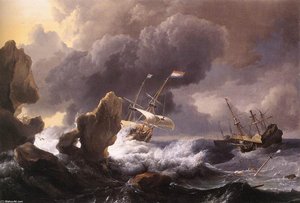
The Dutch Golden Age witnessed an unparalleled flourishing of artistic creativity, fueled by burgeoning trade and intellectual curiosity. Among its luminaries stood Ludolf Backhuysen I (1630-1708), a painter whose dedication to capturing the raw power of the ocean cemented his place as arguably the foremost maritime artist of his era. His canvases aren’t merely depictions of ships; they are visceral experiences rendered in oil paint on canvas, transporting viewers directly into the heart of violent storms and conveying an astonishing level of realism that continues to captivate audiences today.A Painter's Obsession with Nature
Backhuysen’s artistic journey began humbly – as a merchant’s clerk – but his passion for painting swiftly eclipsed all other pursuits. Influenced by masters like Allart van Everdingen and Hendrik Dubbels, he honed his skills in Amsterdam, immersing himself in the study of light, color, and texture. Unlike many artists of his time who favored idealized landscapes or mythological subjects, Backhuysen relentlessly pursued an uncompromising vision: to portray the sea as it truly existed – turbulent, unpredictable, and imbued with formidable energy. This dedication extended beyond mere observation; he famously undertook perilous voyages himself, venturing out onto the open water in a small boat to meticulously record the conditions of storms firsthand.Technique and Style: The Art of Atmospheric Impressionism
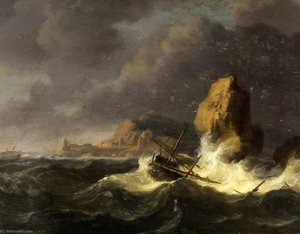
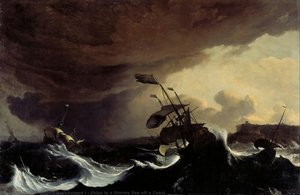
Backhuysen’s distinctive style can be characterized as atmospheric impressionism, predating Monet and Renoir by decades. He achieved this remarkable effect through masterful brushwork—loose, expressive strokes layered upon one another to convey the dynamism of crashing waves and billowing clouds. Unlike smoother styles prevalent at the time, Backhuysen deliberately avoided blending colors extensively, allowing individual pigments to retain their vibrancy and creating a palpable sense of immediacy. The artist skillfully utilized chiaroscuro – dramatic contrasts between light and dark – to heighten the visual impact of his compositions, emphasizing the turbulent sea surface and casting shadows across the ships’ hulls.Historical Context: Navigating Power and Prosperity
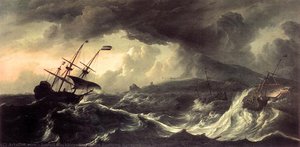
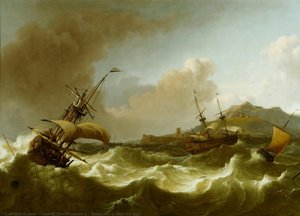
Backhuysen's work reflects the spirit of the Dutch Golden Age (roughly 1650-1702), a period marked by economic prosperity and maritime dominance. The Dutch Republic controlled vast trading routes throughout Europe and Asia, establishing itself as a global superpower thanks to its naval prowess. Paintings like “Ships in a Storm” and “Battle of Vigo Bay” served not only as artistic statements but also as propaganda—celebrating the nation’s military strength and reinforcing its image as a bastion of courage and resilience. The depiction of storms wasn't simply aesthetic; it symbolized the inherent dangers faced by Dutch sailors and underscored the importance of preparedness and fortitude.Symbolism Beyond Representation
Beyond mere visual realism, Backhuysen’s paintings resonate with deeper symbolic meanings. The turbulent sea represents chaos and uncertainty, mirroring the anxieties of a nation grappling with geopolitical challenges during its zenith. Yet, simultaneously, it embodies triumph—the ability to withstand adversity and emerge victorious. The white sails against the dark sky symbolize purity amidst darkness, highlighting the nobility of Dutch sailors and their unwavering commitment to duty. Backhuysen’s masterful portrayal captures not just what was seen but also what was felt – a profound respect for the forces of nature and an acknowledgement of humanity's vulnerability within them.Emotional Impact: A Window into Turbulent Times
Viewing Backhuysen’s seascapes evokes a powerful emotional response. The sheer scale of the ships battling against the fury of the storm inspires awe and conveys a sense of grandeur. However, there is also palpable tension—a feeling of impending danger that compels the viewer to confront the realities of seafaring life. Backhuysen's ability to convey these emotions through color, texture, and composition elevates his work beyond mere visual spectacle; it invites contemplation on themes of courage, perseverance, and the sublime beauty found in confronting overwhelming forces. His legacy continues to inspire artists and collectors alike who appreciate the enduring power of art to capture both the grandeur and terror of human experience.Related Artworks

Artist Biography
early life and training
ludolf backhuysen i, a german-born dutch painter, was born on december 28, 1630, in emden, east frisia. he moved to amsterdam around 1650, where he initially worked as a merchant's clerk and calligrapher. however, his true passion lay in art, and he soon devoted himself to painting, studying under the esteemed masters allart van everdingen and hendrik dubbels.rise to prominence
backhuysen's artistic talent quickly gained recognition, particularly in his maritime subjects. after willem van de velde the elder and younger left for england in 1672, backhuysen became the leading dutch painter of maritime art. his compositions, characterized by intense realism, often featured rough seas. to capture the effects of storms, he would frequently venture into the open sea in a small boat.notable works and legacy
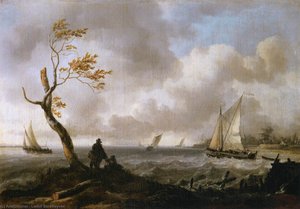
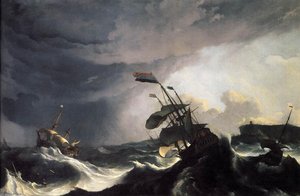
some of backhuysen's notable works include:- ships in a storm (1670s-1690s)
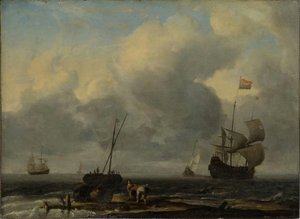
- seascape and fishing boats (1708)
- battle of vigo bay (1702)
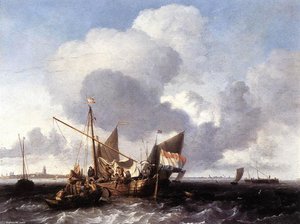
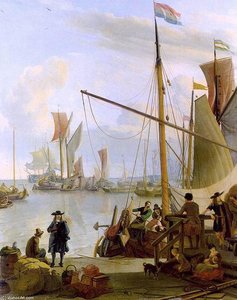
- dutchman embarking onto a yacht (1670-1679)
- johan de liefde, vice-admiral
later life and death
in 1699, backhuysen opened a gallery on the top floor of the famous amsterdam townhall. after a visit to england, he passed away in amsterdam on november 17, 1708. view more works by ludolf backhuysen i on ArtsDot.com: [https://ArtsDot.com/@/ludolf%20backhuysen%20i](https://ArtsDot.com/@/ludolf%20backhuysen%20i) explore the dutch golden age art movement on ArtsDot.com: /en/art/show/art-d3cph3-en/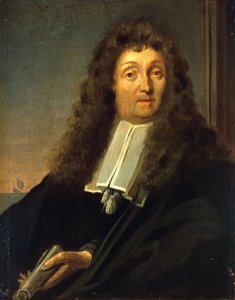
ludolf backhuysen i
1630 - 1708 , Germany
Quick Facts
- Artistic Movement Or Style: Dutch Baroque
- Artists Or Movements Influenced By This Artist: ['Maritime Art']
- Artists Who Influenced This Artist:
- Allart van Everdingen
- Hendrik Dubbels
- Date Of Birth: December 28, 1630
- Date Of Death: November 17, 1708
- Full Name: Ludolf Backhuysen I
- Nationality: Dutch
- Notable Artworks:
- Ships in a Storm
- Seascape and Fishing Boats
- Battle of Vigo Bay
- Place Of Birth: Emden, Germany
Related Articles
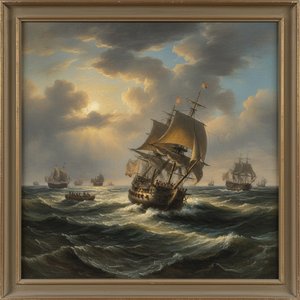
Ludolf Backhuysen I: Master of Dutch Marine Painting & Atmospheric Realism
Explore the captivating world of Ludolf Backhuysen I, a master of Dutch marine painting. Discover his signature realism, atmospheric seascapes & lasting influence on art history. Learn about collecting and appreciating this Golden Age artist.

Dutch Masters: 10 Golden Age Paintings That Still Inspire |
Journey into the Dutch Golden Age! Explore 10 iconic paintings by Rembrandt, Vermeer & Hals. Discover the stories behind these Baroque masterpieces and find museum-quality art reproductions to elevate your home decor on .
Abraham Hulk Senior: Pioneering Maritime Topography of the Dutch Golden Age
Explore the captivating seascapes of Abraham Hulk Senior, a leading Anglo-Dutch marine painter of the 19th century. Discover his signature style, family legacy & collectable artworks at ArtsDot.
Willem van de Velde the Elder: Master of Maritime Painting & Chronicler of the Dutch Golden Age
Discover the captivating maritime paintings of Willem van de Velde the Elder, a master chronicler of the Dutch Golden Age. Explore his unparalleled realism and lasting influence on naval art history.

Illuminating Innovation: Exploring the Dutch Golden Age of Painting
Explore the Dutch Golden Age of painting with ArtsDot. Discover Rembrandt, Vermeer & other Masters. Learn about key characteristics, iconic artworks, and lasting influence. Expert insights for collectors & enthusiasts.