 Preview
 Send
Send Share
Share
 Details

 Download
 Similars
 X-Ray
X-Ray Diaporama
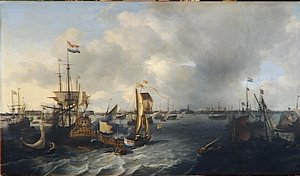
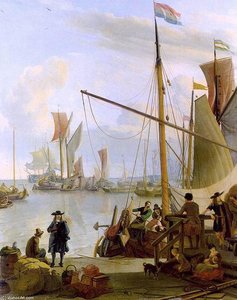
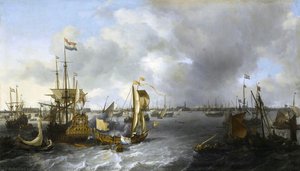
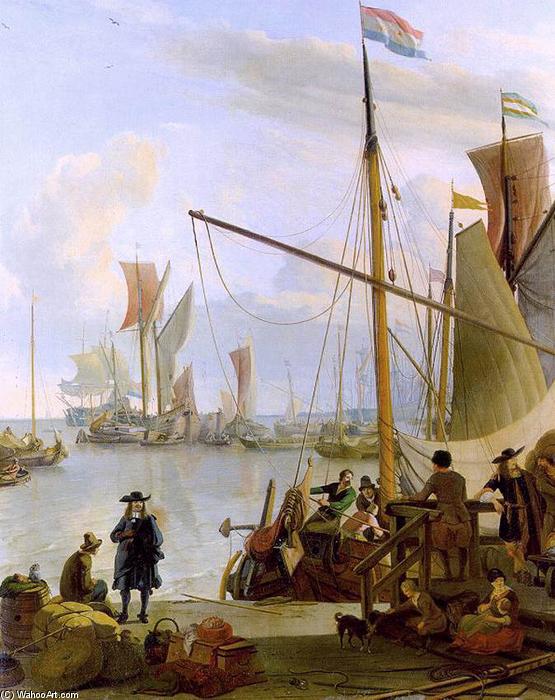
View from the Mussel Pier in Amsterdam


 Read More
Giclée / Art Print
Museum-quality giclée or canvas print with fast production and flexible finish options. ( Buy Hand Made Painting Buy Image)




P118B $10

P118H $10

P118W $10

P438Z $10

P508JH $12

P508YH $12

P805H $10

P805Z $10

P919BZ $10

P919G $10

P919XJ $10

P959ZH $10

P968JZ $12

W106C $8

W218G $10

W218JH $8

W218Y $10

W307PJ $10

W316G $10

W316PJ $8

W316Y $10

W398PJ $8

W4111J $10

W500HY $15

W500JH $15

W692G $12

W849H $8

W940BG $15

W953PJ $8




Pick from our preset sizes that match the artwork's original proportions.

You may enter your own dimensions to fit a specific frame or space. If your selected size does not match the original image's proportions, we will either crop the artwork or extend the image with a mirrored or solid-fill edge. A digital mockup will be sent for your approval before production begins.
Please note that the on-screen preview does not reflect the actual cropping or extension. Only the mockup will accurately show the final composition.
While custom sizes are available, we recommend selecting a dimension from the predefined list to preserve the original proportions.
Worldwide Delivery () in 2 weeks instead of standard 4/5 weeks. (25 August)

Free Worldwide Express Shipping

High-Quality Linen Canvas

Full Shipping Insurance

Customs Tax Refund Guarantee

True Color Matching Guarantee

60-Day Return Policy (Defects Only)

100% Money-Back Guarantee

Bulk Discount Offer
 Glass option is only available in size under 110 CM

View from the Mussel Pier in Amsterdam
Giclée / Art Print
Reproduction Size
-


Total Price
$ 63
Collectible Description
A Tempestuous Vision: Ludolf Backhuysen’s “View from the Mussel Pier in Amsterdam”
Ludolf Backhuysen's "View from the Mussel Pier in Amsterdam," painted in 1673, isn't merely a depiction of a harbor scene; it’s a visceral immersion into the heart of the Dutch Golden Age. This remarkable seascape, now housed within the Rijksmuseum in Amsterdam, pulsates with an energy born from Backhuysen’s meticulous observation of nature and his masterful command of oil paint. The painting immediately draws the eye to the churning sea – a dominant force rendered not as a serene backdrop but as a dynamic, almost sentient entity. Waves crash against the pier, threatening to engulf the small vessels clustered within, while dark clouds gather overhead, hinting at an impending storm. It’s a scene brimming with both danger and the industrious spirit that defined Amsterdam during its era of unparalleled maritime power.
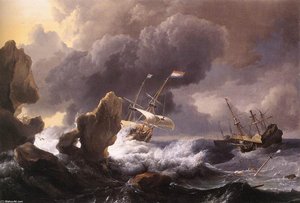
Backhuysen's artistic approach was revolutionary for his time. He abandoned the idealized, often static seascapes favored by earlier painters, opting instead for a brutally honest portrayal of the sea’s unpredictable nature. He achieved this through an innovative technique – he actually ventured out to sea in a small boat, braving perilous conditions to study the waves firsthand. This dedication to realism is evident in every brushstroke; the texture of the water, the foam clinging to the ship's hulls, and the subtle shifts in color all contribute to a remarkably convincing illusion of depth and movement. The artist’s use of impasto – applying thick layers of paint directly to the canvas – further enhances this tactile quality, inviting the viewer to almost feel the spray of the waves.
The Anatomy of a Dutch Masterpiece: Technique and Materials
The painting is executed in oil on canvas, a medium that allowed Backhuysen to capture the nuances of light and shadow with exceptional precision. He employed a layering technique known as glazing, applying thin washes of color over dried underlayers to build up depth and luminosity. This method is particularly evident in the depiction of the clouds – they are not simply painted as solid masses but rather as intricate patterns of light and dark, suggesting their volatile nature. The palette itself is restrained yet powerful, dominated by shades of blue, gray, and white, punctuated by flashes of red and yellow to highlight the danger and drama of the scene. The artist’s attention to detail extends beyond the seascape; even the figures on the pier – identifiable as sailors, merchants, and onlookers – are rendered with a remarkable degree of realism, each exhibiting individual characteristics and gestures.
Symbolism and Context: Amsterdam at its Zenith
“View from the Mussel Pier in Amsterdam” is deeply rooted in the historical context of the Dutch Golden Age. Amsterdam was then the undisputed center of global trade, a bustling hub connecting Europe with Asia and beyond. The mussel pier itself – a vital component of the city’s economy – represents this thriving maritime activity. The ships depicted are not just vessels; they symbolize Amsterdam's wealth, power, and ambition. The presence of various types of cargo – barrels, chests, and sacks – further underscores the scale of the trade being conducted. Moreover, the painting subtly reflects the prevailing worldview of the time: a belief in human mastery over nature, tempered by an awareness of its inherent dangers.
A Legacy of Storms and Seascapes
Ludolf Backhuysen’s “View from the Mussel Pier in Amsterdam” remains one of the most iconic works of Dutch marine painting. His dramatic compositions, coupled with his unparalleled realism, established a new standard for depicting the sea – a standard that continues to inspire artists today. Reproductions of this powerful image offer a captivating glimpse into a pivotal moment in history and a testament to Backhuysen’s extraordinary artistic vision. It's more than just a painting; it’s an experience—a reminder of the raw beauty, unpredictable power, and enduring legacy of the sea.
Related Artworks
Artist Biography
early life and training
ludolf backhuysen i, a german-born dutch painter, was born on december 28, 1630, in emden, east frisia. he moved to amsterdam around 1650, where he initially worked as a merchant's clerk and calligrapher. however, his true passion lay in art, and he soon devoted himself to painting, studying under the esteemed masters allart van everdingen and hendrik dubbels.rise to prominence
backhuysen's artistic talent quickly gained recognition, particularly in his maritime subjects. after willem van de velde the elder and younger left for england in 1672, backhuysen became the leading dutch painter of maritime art. his compositions, characterized by intense realism, often featured rough seas. to capture the effects of storms, he would frequently venture into the open sea in a small boat.notable works and legacy
some of backhuysen's notable works include:- ships in a storm (1670s-1690s)
- seascape and fishing boats (1708)
- battle of vigo bay (1702)
- dutchman embarking onto a yacht (1670-1679)
- johan de liefde, vice-admiral
later life and death
in 1699, backhuysen opened a gallery on the top floor of the famous amsterdam townhall. after a visit to england, he passed away in amsterdam on november 17, 1708. view more works by ludolf backhuysen i on ArtsDot.com: [https://ArtsDot.com/@/ludolf%20backhuysen%20i](https://ArtsDot.com/@/ludolf%20backhuysen%20i) explore the dutch golden age art movement on ArtsDot.com: /en/art/show/art-d3cph3-en/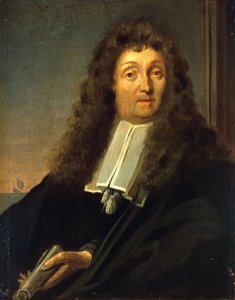
ludolf backhuysen i
1630 - 1708 , Germany
Quick Facts
- Artistic Movement Or Style: Dutch Baroque
- Artists Or Movements Influenced By This Artist: ['Maritime Art']
- Artists Who Influenced This Artist:
- Allart van Everdingen
- Hendrik Dubbels
- Date Of Birth: December 28, 1630
- Date Of Death: November 17, 1708
- Full Name: Ludolf Backhuysen I
- Nationality: Dutch
- Notable Artworks:
- Ships in a Storm
- Seascape and Fishing Boats
- Battle of Vigo Bay
- Place Of Birth: Emden, Germany
Related Articles
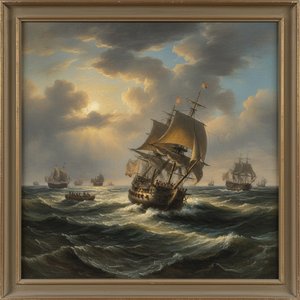
Ludolf Backhuysen I: Master of Dutch Marine Painting & Atmospheric Realism
Explore the captivating world of Ludolf Backhuysen I, a master of Dutch marine painting. Discover his signature realism, atmospheric seascapes & lasting influence on art history. Learn about collecting and appreciating this Golden Age artist.
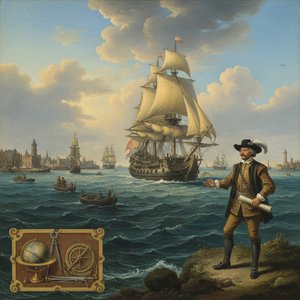
Abraham Hulk Senior: Pioneering Maritime Topography of the Dutch Golden Age
Explore the captivating seascapes of Abraham Hulk Senior, a leading Anglo-Dutch marine painter of the 19th century. Discover his signature style, family legacy & collectable artworks at ArtsDot.
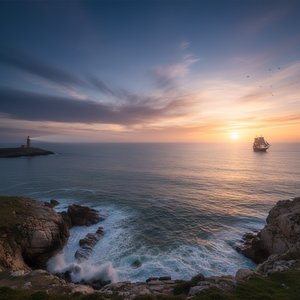
The Allure of the Horizon: A Comprehensive Exploration of Seascape Art Through History & Emotion
Explore the captivating world of seascape art! Discover its history, key artists & movements – from Dutch Masters to Impressionism. Expert insights for collectors and enthusiasts at ArtsDot.
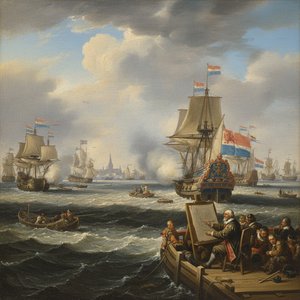
Willem van de Velde the Elder: Master of Maritime Painting & Chronicler of the Dutch Golden Age
Discover the captivating maritime paintings of Willem van de Velde the Elder, a master chronicler of the Dutch Golden Age. Explore his unparalleled realism and lasting influence on naval art history.
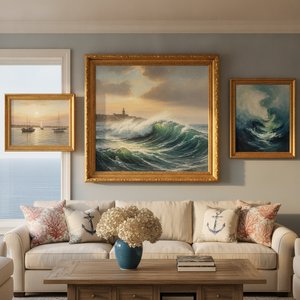
Bring the Ocean Home: Captivating Maritime Paintings to Transform Your Space with Timeless Elegance
Transform your home with breathtaking maritime oil paintings. From serene seascapes to dramatic nautical scenes, discover hand-painted reproductions that bring the ocean's soul to your space. Expertly crafted for collectors seeking timeless elegance and coastal tranquility.